It is 2:00 AM. The house is quiet, but your mind is loud. You’ve checked your notifications one last time, yet peace feels miles away. We often treat sleep as a physical switch, but in Islam, sleep is a journey of the soul—a “minor death” where we return to our Creator. What if the secret to a restful night isn’t a better pillow, but a specific set of words that lock your heart in a state of safety?
1. The Main Sony Ki Dua (Sleeping Prayer)
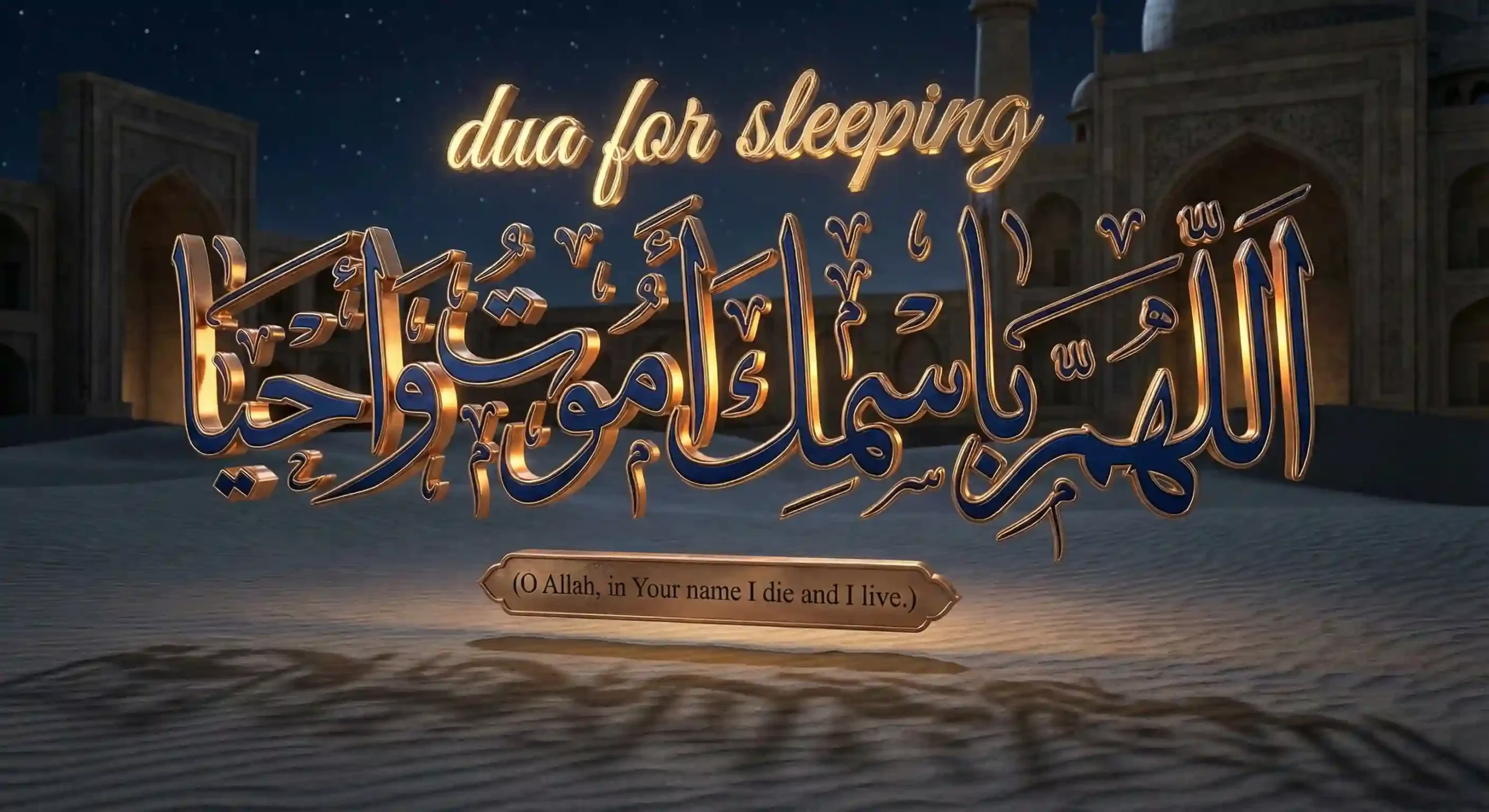
The most authentic dua for sleeping is “Allahumma bismika amutu wa ahya,” which means “O Allah, in Your name I die and I live.” It is a declaration of total trust in God.
This is the foundational supplication recorded in Sahih Al-Bukhari. It is short, powerful, and the very last thing the Prophet Muhammad (PBUH) would say before drifting off.
Scholar’s Note: Ibn Hajar Al-Asqalani mentions in Fath al-Bari that “dying” here refers to sleep, emphasizing that our souls remain in Allah’s care during the night.
| Language | Text |
| Arabic | اللَّهُمَّ بِاسْمِكَ أَمُوتُ وَأَحْيَا |
| Transliteration | Allahumma bismika amutu wa ahya |
| English (Saheeh Intl) | O Allah, in Your name I die and I live. |
| Urdu (Jalandhari) | اے اللہ! تیرے ہی نام کے ساتھ میں مرتا ہوں اور جیتا ہوں (یعنی سوتا اور جاگتا ہوں) |
2. The “Spiritual Shutdown” Routine (Sunnah Etiquette)
The Sunnah method for sleeping involves performing Wudu (ablution), dusting the bed, lying on the right side, and placing the right hand under the cheek.
Think of this as your “shut down” sequence. Just as you close apps on your phone to save battery, these physical actions signal to your body that the day is over.
The Steps of the Prophet (PBUH):
- Wudu: Sleeping in a state of purity.
- Dusting the Bed: Checking your environment (a physical safety check).
- Right Side: Scientifically proven to aid heart function and digestion, this position was preferred by the Messenger of Allah.
3. Protection for the Night: The 3 Quls & Ayatul Kursi
To protect yourself from nightmares and Shaytan, cup your hands, recite Surah Al-Ikhlas, Al-Falaq, and An-Nas, blow into your hands, and wipe over your body three times.
This is a spiritual shield. In a famous Hadith narrating the story of Abu Hurairah and the protector of the Zakat, it was confirmed that reciting Ayatul Kursi (Verse of the Throne) ensures a guardian angel stays with you, and no devil will approach you until morning.
Ayatul Kursi (Surah Al-Baqarah 2:255) Snippet:
| Language | Text |
| Arabic | اللَّهُ لاَ إِلَهَ إِلاَّ هُوَ الْحَيُّ الْقَيُّومُ… |
| English (Meaning) | Allah – there is no deity except Him, the Ever-Living, the Sustainer of [all] existence… |
| Urdu (Meaning) | اللہ (وہ معبود برحق ہے کہ) اس کے سوا کوئی عبادت کے لائق نہیں زندہ ہمیشہ رہنے والا… |
4. Jagne Ki Dua (Waking Up Prayer)
The dua for waking up is “Alhamdu lillahil-lathee ahyana ba’da ma amatana wa ilayhin-nushoor,” praising Allah for returning our souls after sleep.
When your eyes open, the very first thought should be gratitude. You have been granted another day—another chance.
| Language | Text |
| Arabic | الْحَمْدُ للهِ الَّذِي أَحْيَانَا بَعْدَ مَا أَمَاتَنَا وَإِلَيْهِ النُّشُورُ |
| Transliteration | Alhamdu lillahil-lathee ahyana ba’da ma amatana wa ilayhin-nushoor |
| English (Saheeh Intl) | All praise is due to Allah who gave us life after He had caused us to die, and to Him is the return. |
| Urdu (Jalandhari) | سب تعریف اللہ ہی کے لیے ہے جس نے ہمیں مارنے (سلانے) کے بعد زندہ (بیدار) کیا اور اسی کی طرف (قیامت کے دن) اٹھ کر جانا ہے |
The Heart of the Matter
Incorporating “Sony ki dua” isn’t just about reciting Arabic words; it is about the state of heart. When you say “In Your name, I die,” you are letting go of the stress, the grudges, and the anxieties of the day. You are handing them over to the Sustainer.
Try this tonight. Don’t just sleep—surrender.
FAQs:
If you are tossing and turning, recite the dua taught to Zaid ibn Thabit (RA): “Allahummah gharatin-nujum wa hada’atil ‘uyun, wa Anta Hayyun Qayyum…” (O Allah, the stars have set and eyes have rested, but You are the Ever-Living…). It is a plea for tranquility from the One who never sleeps.
Reciting SubhanAllah (33x), Alhamdulillah (33x), and Allahu Akbar (34x) before sleep is better than having a servant to help you. The Prophet (PBUH) taught this to his daughter Fatimah (RA) to give her strength for the next day’s burdens.
Yes, you can read sleeping duas from a phone screen without wudu, though having wudu is preferred. However, try to dim the blue light as it affects melatonin, combining spiritual advice with modern health science.

1 thought on “Dua for Sleeping – Allahumma Bismika Amutu wa Ahya”