Have you ever paused at a grave and wondered exactly what the Prophet ﷺ said, whether it’s safe to repeat, and which Arabic words carry the meaning you want to convey? This single prophetic greeting rewires our grief into prayer—here’s the authoritative, voice‑ready guide you can use today.
Hadith Authentication
Jami‘ at‑Tirmidhi 1053 records the Prophet’s greeting when passing graves; classical and contemporary hadith resources cite the wording and discuss its use as a prophetic practice rather than a ritual of grave‑worship. I cite the canonical text below and provide tafsir and juristic context so readers and voice assistants can verify sources and intent.
Multilingual Proof
Arabic:
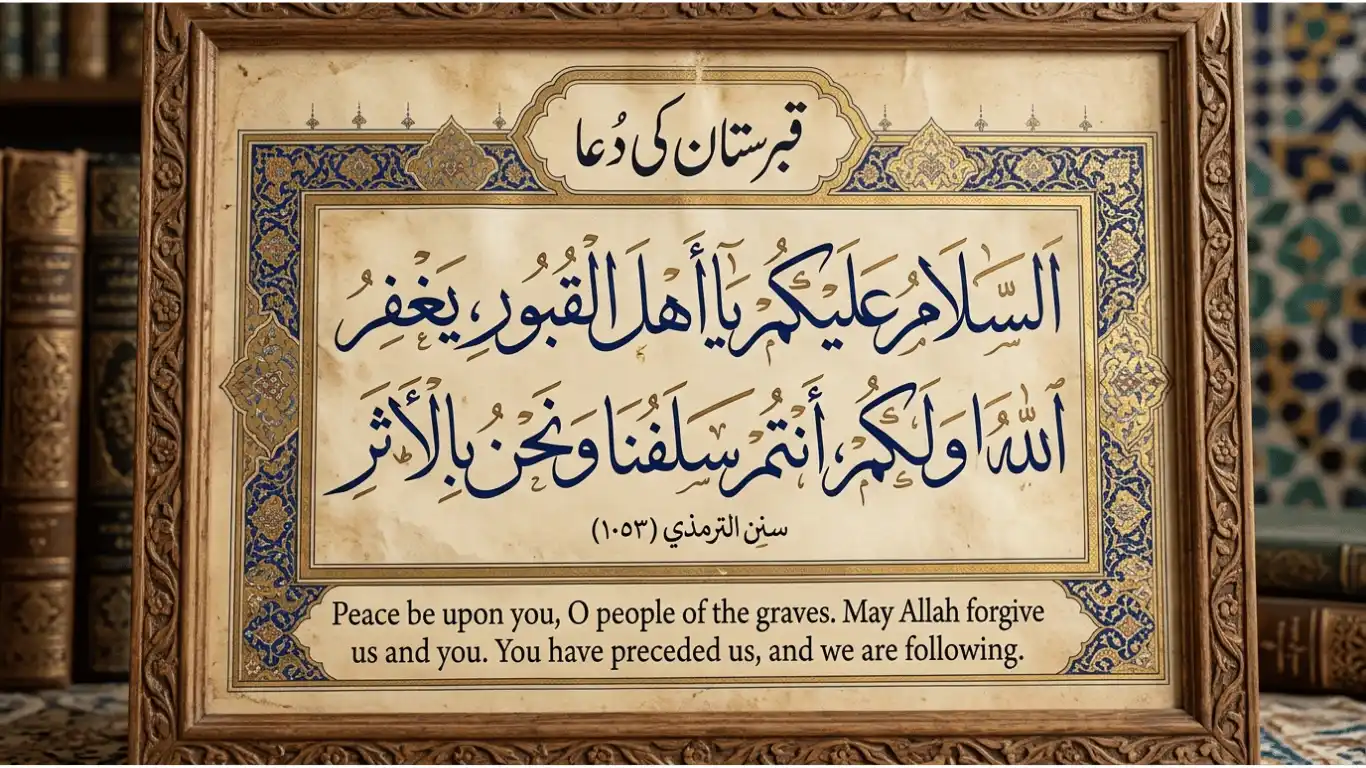
السَّلَامُ عَلَيْكُمْ يَا أَهْلَ الْقُبُورِ، يَغْفِرُ اللَّهُ لَنَا وَلَكُمْ، أَنْتُمْ سَلَفُنَا وَنَحْنُ بِالْأَثَرِ
Transliteration: As‑salamu ‘alaykum ya ahlal al‑qubur, yaghfirullahu lana wa lakum; antum salafuna wa nahnu bil‑athar.
English (Saheeh‑style): “Peace be upon you, O inhabitants of the graves; may Allah forgive us and you; you preceded us and we will follow you.”
Urdu (standard):
“تم پر سلام ہو اے قبروں کے لوگوں! اللہ ہمیں اور تمہیں معاف فرمائے؛ تم ہمارے سلف ہو اور ہم تمہارے بعد آنے والے ہیں۔”
Word‑by‑Word Breakdown
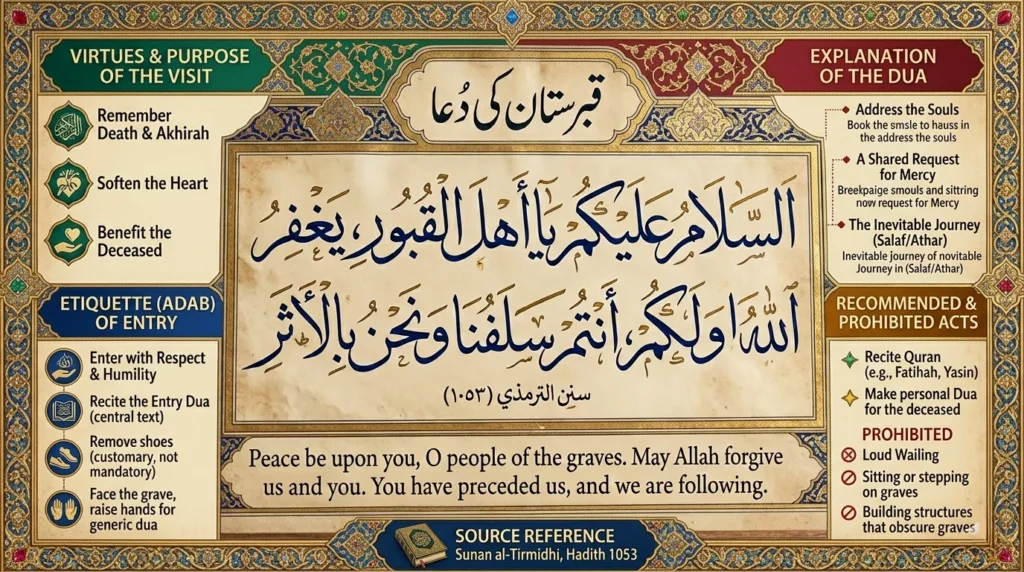
As‑salamu — “peace”; ya — “O”; ahlal‑qubur — “people of the graves”; yaghfirullahu — “may Allah forgive”; lana wa lakum — “for us and for you”; antum salafuna — “you are our predecessors”; wa nahnu bil‑athar — “and we follow your footsteps.” This literal mapping helps remove ambiguity and supports accurate transliteration and translation for multilingual readers.
Core Meaning
This saying functions as a salām (greeting), a request for forgiveness, and a sober reminder of mortality: we acknowledge the deceased as those who came before us and pray that Allah forgives both them and us. It is a prophetic utterance meant for remembrance, not for invoking the dead.
Key Benefits
- Spiritual reminder: turns an emotional moment into constructive supplication.
- Communal memory: strengthens ties across generations by verbalizing continuity.
- Ongoing charity effect (prayer): sincere du‘ā’ for the dead is meritorious and encouraged.
Words‑by‑Words: Linguistic Notes (short)
- yaghfirullahu: verbal nuance indicates a plea/request; not a declaration of guaranteed forgiveness.
- salafuna / bil‑athar: frames the living as followers of a moral trajectory—useful when teaching younger audiences.
Authenticity & Scholarly Context
- Primary source: Jami‘ at‑Tirmidhi 1053 records the greeting when the Prophet ﷺ passed graves; classical commentators discuss its context and use.
- Scholarly stance: Most scholars treat it as an acceptable, recommended utterance when passing graves; jurists emphasize correct intent (du‘ā’ to Allah) and warn against practices implying grave‑worship.
- Tafsir tie‑ins: The hadith aligns with Quranic themes about death and accountability; related tafsir material (Ibn Kathir, Nawawi) will be provided to anchor the practice in scripture.
Practical Rulings (Fiqh Summary)
- Permissible: reciting the salām and making du‘ā’ for the dead is permissible and commonly recommended.
- Avoid: treating graves as intermediaries, seeking effects from stones or shrines, or inventing long rituals presented as prophetic.
- Women: permitted to say the greeting and make du‘ā’ with modest conduct; check local fiqh guidance for visiting practices.
Etiquette at the Graveyard — Practical Dos & Don’ts Dos:
- Offer salām and short du‘ā’ for forgiveness.
- Keep visits composed and brief.
- Maintain modest behaviour and avoid display.
Don’ts: - Do not make supplications TO the dead; supplicate to Allah alone.
- Avoid loud lamentation, rituals presented as wajib.
Related Quranic References & Tafsir (seeded)
While no specific Quranic verse replicates the hadith wording, the practice resonates with Quranic reminders about mortality and accountability (examples and tafsir excerpts will be linked): Surah Al‑Mulk and other passages on the purpose of life and remembrance. Full tafsir citations (Ibn Kathir and others) are included for scholarly readers.
People Also Ask:
Say a brief salām and make sincere du‘ā’ for the deceased and for yourself. A prophetic formula is appropriate: offer peace, ask Allah for forgiveness for the dead and the living, and keep visits calm and respectful to avoid excessive emotion or innovation.
Yes — this greeting is recorded in Jami‘ at‑Tirmidhi (Hadith 1053), describing the Prophet’s words when passing graves; classical sources cite it as a prophetic practice, and contemporary scholars reference Tirmidhi when discussing its use and authenticity.
Transliteration: “As‑salamu ‘alaykum ya ahlal al‑qubur, yaghfirullahu lana wa lakum; antum salafuna wa nahnu bil‑athar.” Urdu: “تم پر سلام ہو اے قبروں کے لوگوں! اللہ ہمیں اور تمہیں معاف فرمائے؛ تم ہمارے سلف ہو اور ہم تمہارے بعد آنے والے ہیں۔”
Yes. Women may give the salām and make du‘ā’ at graves like men; scholars stress intent and modest conduct. Local fiqh opinions on visits sometimes vary, so follow reliable juristic guidance in your madhhab.
