When you are standing on a packed New York City subway at 7 AM EST, or rushing through a demanding London school run before your 9 AM GMT meetings, modern life can feel overwhelmingly heavy. The silent internal storm of corporate anxiety, financial pressure, and the daily struggle to balance family with faith often leaves believers feeling emotionally drained. Before panic dictates your day, Prophet Muhammad (ﷺ) provided a profound, psychologically grounded spiritual reset: Dua e Hajat.
Here is why this matters for you. Rather than simply carrying your anxiety through your workday, this targeted prayer acts as a pattern interrupt. It shifts your reliance from your own exhausted capabilities to the limitless power of the Creator.
What Is Dua e Hajat?
Dua e Hajat is a specific Islamic supplication taught by Prophet Muhammad (ﷺ) to seek Allah’s direct intervention during times of urgent need, severe distress, or anxiety. It is traditionally recited immediately after performing a voluntary two-rakat prayer, known as Salatul Hajat, to ask for divine assistance.
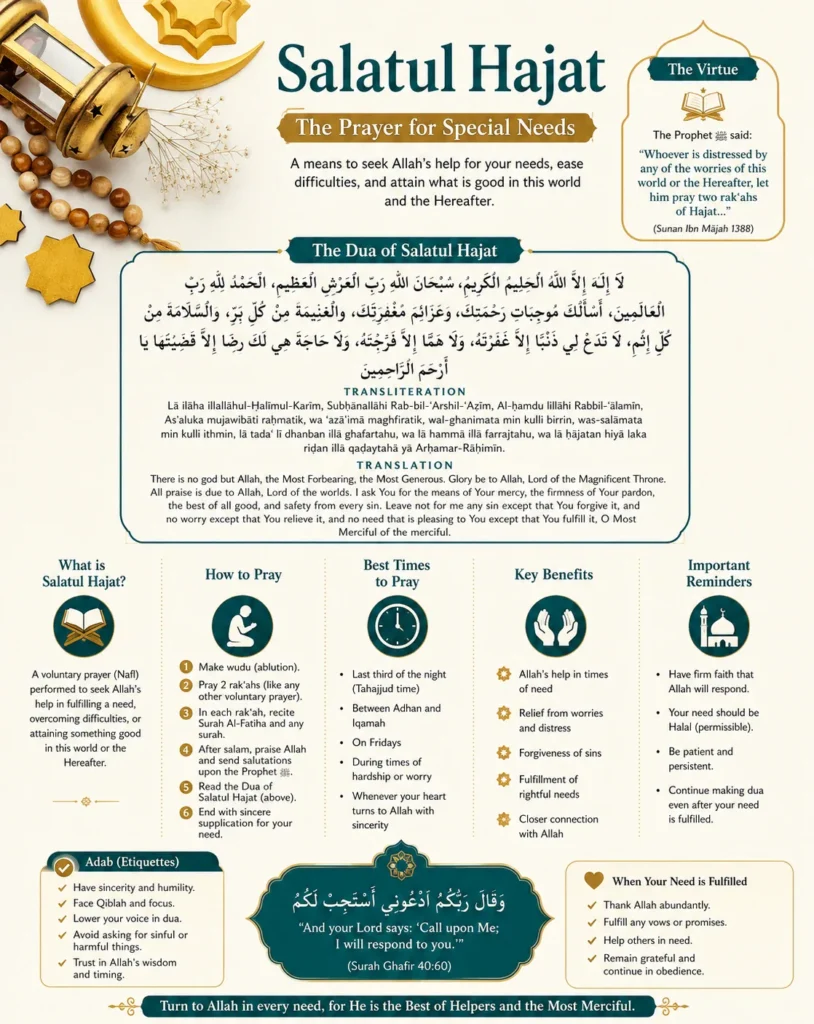
The Complete Dua e Hajat: Arabic, English, and Urdu
This powerful supplication was narrated by Abdullah ibn Abi Awfa and recorded in the classical Hadith collections of Sunan Ibn Majah and Jami’ at-Tirmidhi. Here is the exact wording to incorporate into your daily practice.
Arabic Text:
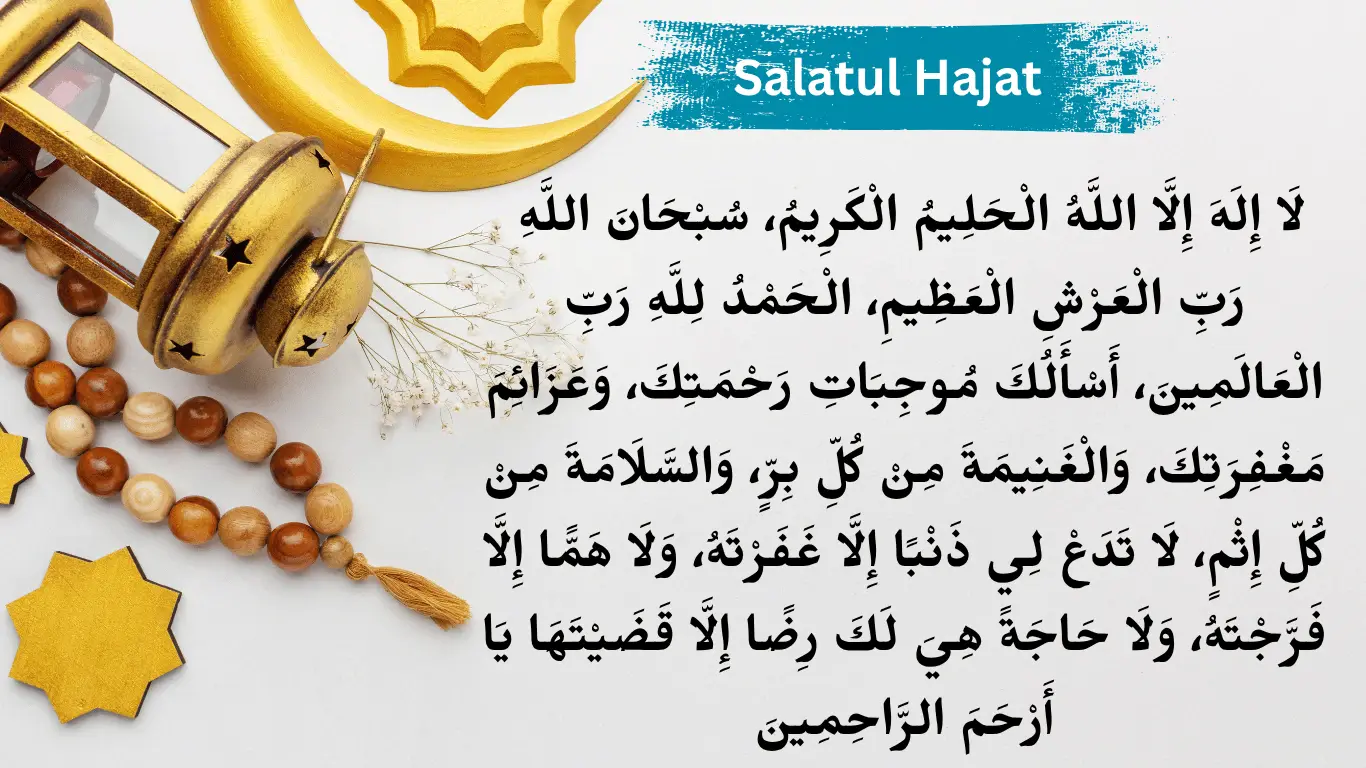
لَا إِلَهَ إِلَّا اللَّهُ الْحَلِيمُ الْكَرِيمُ، سُبْحَانَ اللَّهِ رَبِّ الْعَرْشِ الْعَظِيمِ، الْحَمْدُ لِلَّهِ رَبِّ الْعَالَمِينَ، أَسْأَلُكَ مُوجِبَاتِ رَحْمَتِكَ، وَعَزَائِمَ مَغْفِرَتِكَ، وَالْغَنِيمَةَ مِنْ كُلِّ بِرٍّ، وَالسَّلَامَةَ مِنْ كُلِّ إِثْمٍ، لَا تَدَعْ لِي ذَنْبًا إِلَّا غَفَرْتَهُ، وَلَا هَمًّا إِلَّا فَرَّجْتَهُ، وَلَا حَاجَةً هِيَ لَكَ رِضًا إِلَّا قَضَيْتَهَا يَا أَرْحَمَ الرَّاحِمِينَ
Transliteration: La ilaha illallahul Halimul Karim. Subhanallahi Rabbil ‘Arshil ‘Azim. Alhamdulillahi Rabbil ‘Alamin. As’aluka mujibati rahmatik, wa ‘aza’ima maghfiratik, wal-ghanimata min kulli birr, was-salamata min kulli ithm. La tada’ li dhanban illa ghafartahu, wa la hamman illa farrajtahu, wa la hajatan hiya laka ridan illa qadaytaha ya Arhamar Rahimin.
English Translation: “There is no deity but Allah, the Most Forbearing, the Most Generous. Glory be to Allah, the Lord of the Mighty Throne. Praise be to Allah, the Lord of the worlds. I ask You for the means of Your mercy and forgiveness, the benefit of every good deed, and safety from every sin. Do not leave for me any sin but that You forgive it, nor any worry but that You relieve it, nor any need pleasing to You but that You fulfill it, O Most Merciful of those who show mercy.”
Urdu Translation:
“اللہ کے سوا کوئی معبود نہیں جو بردبار اور کرم کرنے والا ہے۔ پاک ہے اللہ جو عرشِ عظیم کا رب ہے۔ تمام تعریفیں اللہ کے لیے ہیں جو تمام جہانوں کا پالنے والا ہے۔ میں تجھ سے تیری رحمت کے ذرائع، تیری مغفرت کے اسباب، ہر نیکی میں حصے اور ہر گناہ سے سلامتی کا سوال کرتا ہوں۔ میرا کوئی گناہ ایسا نہ چھوڑ جسے تو بخش نہ دے، اور کوئی غم ایسا نہ چھوڑ جسے تو دور نہ کر دے، اور کوئی ایسی حاجت جو تیری رضا کے موافق ہو، اسے پورا فرما دے، اے سب سے بڑھ کر رحم کرنے والے۔”
The Psychology of Salatul Hajat in Corporate and Family Life
Salatul Hajat works as a highly effective psychological and physiological interrupt for modern stress. By stepping away from a high-stakes corporate desk or family chaos to perform wudu (ablution) and pray, Muslims physically break the cycle of panic, calming the nervous system and shifting cognitive focus to divine reliance.
In behavioral psychology, this represents the ultimate “Spiritual Habit Loop.”
- The Trigger: A sudden financial crisis, an impending deadline in your Chicago office, or a family crisis in Manchester.
- The Routine: Walking to a quiet room, washing with cool water (wudu), and praying two focused rakats.
- The Reward: The release of emotional burdens through sincere supplication, significantly lowering cortisol levels and inducing a state of mental clarity.
When a young professional recites “La hamman illa farrajtahu” (nor any worry but that You relieve it), they are actively offloading their cognitive overload onto the Most Generous.
Quranic Evidence: Tawakkul and Divine Generosity
The Quran consistently reminds believers that ultimate relief comes solely from Allah. When we combine the physical act of prayer with deep emotional trust (Tawakkul), Allah promises to provide solutions from sources we could never artificially engineer.
This principle is beautifully captured in Surah At-Talaq (65:3):
Arabic Text:
وَيَرْزُقْهُ مِنْ حَيْثُ لَا يَحْتَسِبُ ۚ وَمَن يَتَوَكَّلْ عَلَى اللَّهِ فَهُوَ حَسْبُهُ
Transliteration: Wa yarzuqhu min haythu la yahtasibu, wa man yatawakkal ‘alallahi fahuwa hasbuh.
English Translation: “And He will provide for him from where he does not expect. And whoever relies upon Allah – then He is sufficient for him.”
Urdu Translation:
“اور اسے وہاں سے رزق دے گا جہاں سے اس کا گمان بھی نہ ہوگا۔ اور جو اللہ پر توکل کرے گا تو وہ اسے کافی ہے۔”
Classical Tafseer Insights
Let’s understand the real meaning of this Arabic verse through classical scholarship. Imam Ibn Kathir explains that whoever trusts Allah entirely with their affairs, Allah will suffice them against all worldly anxieties and burdens. It is a divine guarantee of sufficiency.
Furthermore, Tafseer Al-Jalalayn expands on the attributes of Allah mentioned in the Dua e Hajat itself—specifically Al-Karim (The Most Generous). Al-Jalalayn highlights that divine generosity means Allah does not merely give us what we deserve; He gives us what His boundless majesty dictates. No corporate promotion, mortgage approval, or family resolution is too difficult for the Lord of the Mighty Throne.
How to Perform Salatul Hajat Step by Step
To perform Salatul Hajat, first make a fresh wudu. Then, offer a two-rakat voluntary prayer (nafl). After completing the prayer, remain seated, praise Allah, send blessings upon Prophet Muhammad (ﷺ), and recite the specific Dua e Hajat in Arabic before stating your personal need in your own language.
- Preparation (Wudu): Cleanse yourself physically and mentally. Let the water wash away the immediate anxiety of your workday.
- The Two Rakats: Pray two units of voluntary prayer. You may recite Surah Al-Kafirun in the first rakat and Surah Al-Ikhlas in the second, though any Quranic recitation is acceptable.
- Praise and Salawat: Begin your dua by saying Alhamdulillah and reciting Durood (sending blessings upon the Prophet ﷺ).
- Recite the Supplication: Recite the Dua e Hajat clearly and with conviction.
- State Your Need: Speak to Allah in English, Urdu, or whatever language your heart speaks best. Ask for that job, that relief from anxiety, or peace for your children.
If your distress is keeping you awake late into the night, combining this practice with the night prayer yields incredible spiritual results. You can learn exactly what is Tahajjud namaz and how to pray it to elevate your late-night supplications. Furthermore, for times of immense, overwhelming need, classical scholars highly recommend engaging in broader prayers of glorification. Read our comprehensive guide on how to pray Salatul Tasbih namaz for deep spiritual cleansing and debt-relief supplications.
People Also Ask:
The dua for desperate needs begins with praising Allah as the Most Forbearing and Generous. You then ask Him to forgive your sins, relieve your specific worries, and fulfill your urgent need, provided it brings His pleasure.
The Sunnah does not mandate a specific numerical count for this dua. Reciting it once with absolute sincerity, presence of heart, and full reliance on Allah is the prophetic standard. Consistency and earnestness matter more than sheer repetition.
Yes. Whether you are on a 1 PM EST lunch break in Manhattan or finding a quiet room in London during Dhuhr time, you can perform these two rakats. Islam is highly adaptable to modern life; simply find a clean space, face the Qibla, and offer your prayer.
Take Action Today:
Do not let modern anxiety dictate your peace of mind. Equip yourself with this prophetic tool for your daily commute, your office drawer, or your home.
[Download Your Free Printable Dua e Hajat PDF Guide Here] — Keep the Arabic script, transliteration, and English translation right on your phone or printed on your desk for the exact moment you need it most.

1 thought on “Dua e Hajat — La ilaha illallahul halimul karim”