Have you ever felt spiritually stuck—like truth is right there, yet you can’t quite see it? Surah Yaseen Ayat 9 speaks directly to this experience. It describes a spiritual barrier that blocks vision, and understanding it can transform how you approach faith in daily life.
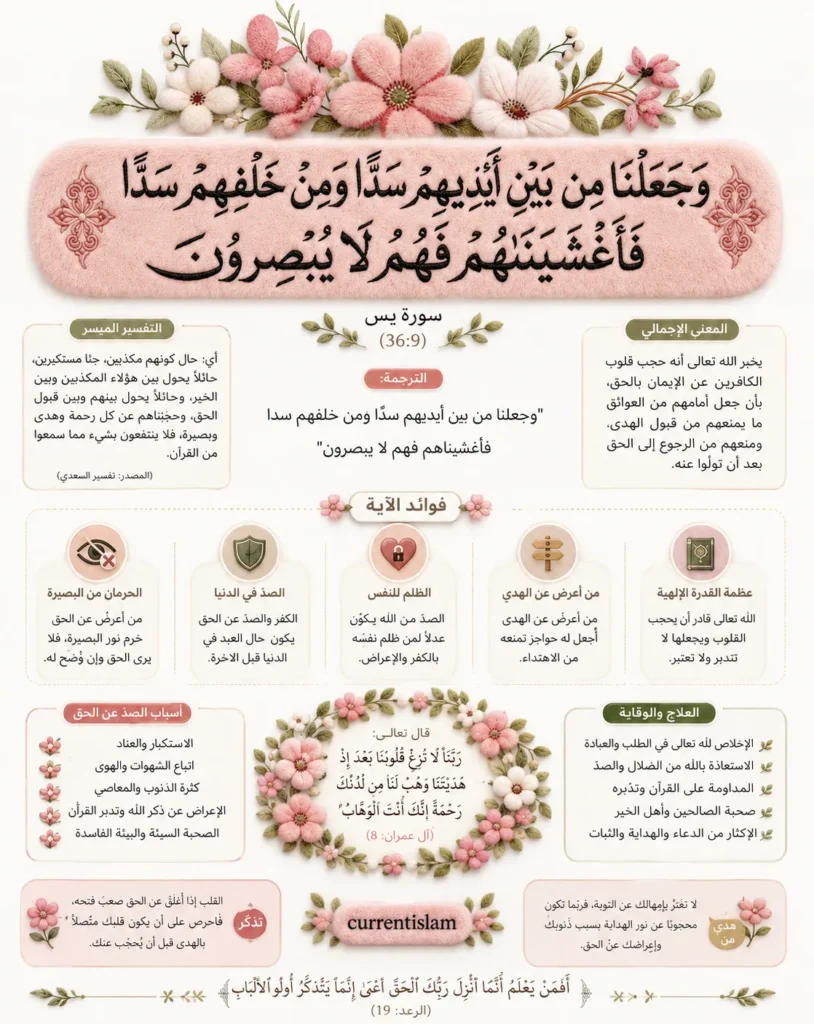
Surah Yaseen Ayat 9 means: “And We have put before them a barrier and behind them a barrier and covered them, so they do not see.” This verse describes spiritual blindness caused by rejecting truth. Classical scholars explain this as a metaphor for how pride and worldly attachment block guidance from reaching the heart.
What Does Surah Yaseen Ayat 9 Mean?
Surah Yaseen Ayat 9 describes how Allah placed barriers before and behind certain people, covering them so they cannot see the truth. This is not physical blindness but spiritual blindness caused by stubborn rejection of guidance.
The Arabic text reads:
Arabic:
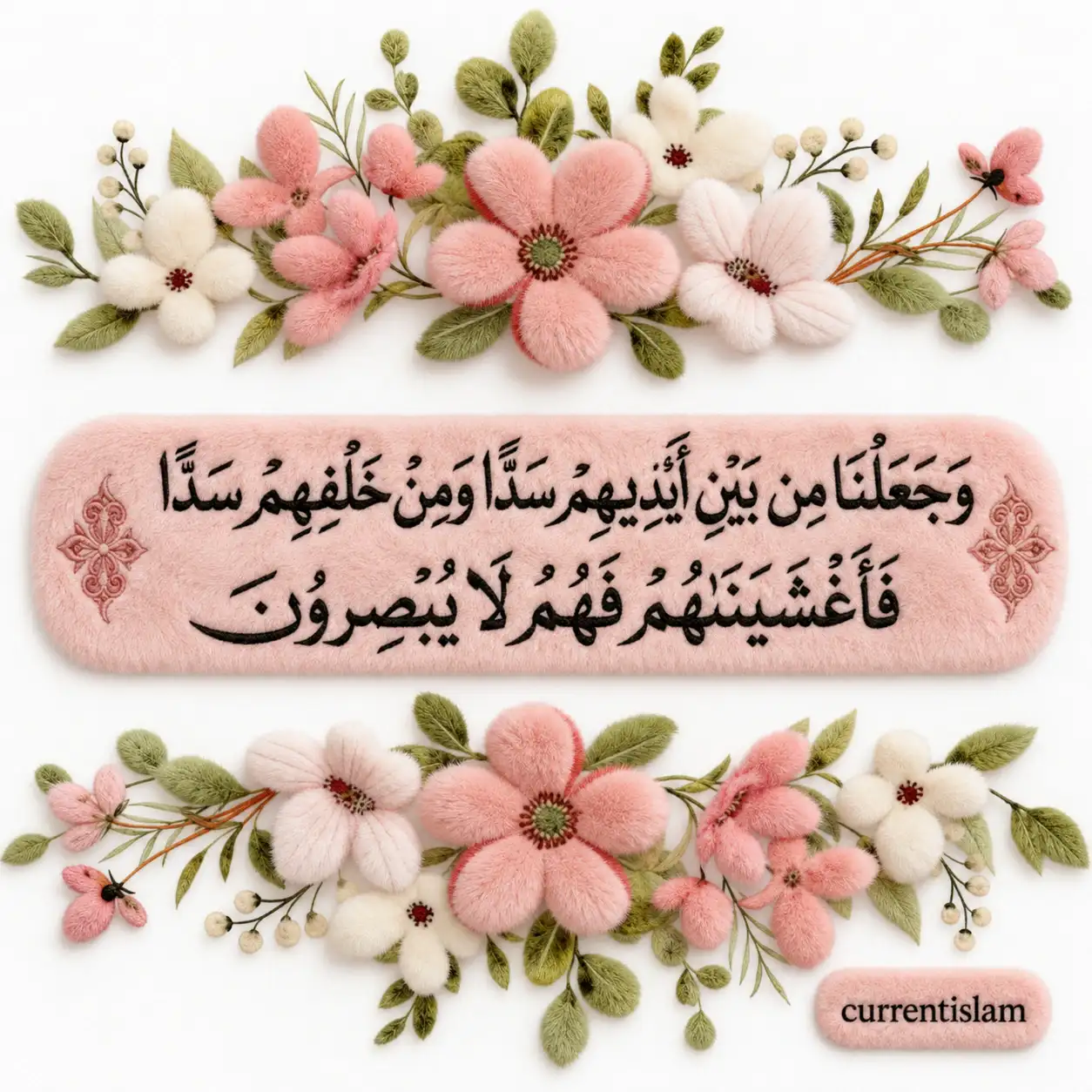
وَجَعَلْنَا مِن بَيْنِ أَيْدِيهِمْ سَدًّا وَمِنْ خَلْفِهِمْ سَدًّا فَأَغْشَيْنَاهُمْ فَهُمْ لَا يُبْصِرُونَ
Transliteration:
Waja’alna min bayni aydeehim saddan wa min khalfihim saddan fa-aghshaynahum fahum la yubsiroon
English Translation:
“And We have put before them a barrier and behind them a barrier and covered them, so they do not see.”
Urdu Translation:
“اور ہم نے ان کے آگے بھی دیوار بنا دی اور ان کے پیچھے بھی۔ پھر ان پر پردہ ڈال دیا تو یہ دیکھ نہیں سکتے”
Word-by-Word Explanation of Wajaalna Mim Baini Aidihim
Understanding each word helps you grasp the full meaning:
| Arabic Word | Transliteration | Meaning |
|---|---|---|
| وجعلنا | Waja’alna | And We have made/placed |
| من | min | from |
| بین | bayni | between |
| أيديهم | aydeehim | their hands (before them) |
| سدا | saddan | a barrier/block |
| ومن | wa min | and from |
| خلفهم | khalfihim | behind them |
| فأغشيناهم | fa-aghshaynahum | so We covered them |
| فهم | fahum | so they |
| لا يبصرون | la yubsiroon | do not see |
The phrase “wajaalna mim baini aidihim” literally means “We placed before them a barrier.” This becomes important when you look at how classical scholars interpret it spiritually.
Classical Tafsir: What Do the Scholars Say?
Ibn Kathir & Abul Ala Maududi
Both scholars explain this verse as a parable of disbelief. The barrier before them represents attachment to worldly life, which prevents them from seeing faith. The barrier behind them represents their inability to learn from past history or consider future consequences.
Maududi writes: “Their prejudices have so covered them from every side and their misconceptions have so blinded them that they cannot see even those glaring realities which are visible to every right-thinking and unbiased person”.
Tafsir Ahsan al-Bayan
This tafsir clarifies that the world’s adornment is like a barrier in front—they see only worldly pleasures. The concept of the Hereafter seems impossible to imagine, acting as a barrier behind, so they neither repent nor take admonition.
Imam Razi’s Insight
Imam Razi identified two kinds of barriers: one that prevents seeing oneself, and another that prevents seeing surroundings. For disbelievers, both barriers existed—they couldn’t see their own state or the truth around them.
Is There a Hadith About Surah Yaseen Ayat 9?
There is no authentic hadith specifically about Ayat 9 alone. However, some weak narrations mention events where Abu Jahl and others came to attack the Prophet ﷺ, but Allah cast a curtain over their eyes. Most scholars note these narrations are weak and cannot form the basis of tafsir.
What is authentic: Surah Yaseen is called “the heart of the Quran,” and reciting it brings blessings. Any specific wazifa for Ayat 9 comes from scholarly practice, not direct hadith.
Benefits of Reciting Surah Yaseen Ayat 9
Spiritual Protection
Many recite this verse seeking protection from harm—physical, emotional, and spiritual. It’s believed to protect from negative influences and misguidance.
Removal of Obstacles
When you face life barriers, reciting this verse with sincere dua can help remove hindrances. The irony is powerful: the verse describing barriers becomes a means of Allah removing your barriers.
Guidance & Clarity
This wazifa brings divine assistance, clarity, and guidance. Earnest dua after recitation asks Allah to unlock the heart for truth.
Home Protection Wazifa
Some scholars, including Shaykh Mehmet Rabbani, recommend reciting Ayat 9 7 times for home protection. This is famous as the “home protection wazifa“.
How Many Times to Recite: Wazifa Guidelines
Recommended Recitation Counts
| Purpose | Times to Recite | When |
|---|---|---|
| Protection | 3, 7, or 21 times | After each Salah |
| Home Protection | 7 times | Daily |
| Removing Obstacles | 21 times | When stopped/hindered |
| General Spiritual Benefit | 3 times | Morning/Evening |
How to Perform the Wazifa
- Perform wudu and pray 2 rakat nafl (optional but recommended)
- Recite Ayat 9 the chosen number of times with focus
- Make earnest dua asking Allah to remove barriers and guide your heart
- Complete Surah Yaseen after reciting the ayat (recommended)
Important: Always recite with sincere intention and trust in Allah, not as magic. The verse’s power comes from Allah’s will, not mechanical repetition.
The Spiritual Habit Loop: Applying Ayat 9 Today
Here’s why this matters for modern life. The “Spiritual Habit Loop” works like this:
Cue: You feel stuck, confused, or spiritually blind
Routine: Recite Ayat 9 + reflect on what barriers exist in your life
Reward: Greater clarity, humility, and openness to guidance
This becomes important when you look at social media, groupthink, or daily distractions that create spiritual barriers. Ayat 9 reminds us to check: What barriers have I allowed before me and behind me?
Modern Application: Correcting Moral Blindness
In Digital Life
When scrolling endlessly, asking “does this help me see truth or block it?” applies Ayat 9’s lesson. The digital world can create barriers before us (entertainment) and behind us (ignoring consequences).
In Relationships
Prejudices and stubbornness create barriers between people. Ayat 9 teaches humility—recognizing when we’ve been “covered” and can’t see others’ perspectives.
In Personal Growth
The verse warns against making the Hereafter “impossible to imagine.” When we stop thinking about accountability, we’ve built the barrier behind us.
In Business & Career
When pride blocks feedback or stubbornness prevents learning, you’ve recreated the barrier Ayat 9 describes. Humility removes it.
Why This Verse Matters for Your Daily Faith Journey
Many people search for “Surah Yaseen Ayat 9” seeking quick spiritual fixes. But this ayah teaches something deeper: spiritual clarity comes from recognizing our own barriers first.
When you feel overwhelmed by life’s challenges, Ayat 9 reminds you that Allah controls all barriers. The same Divine Power that can place barriers can also remove them when you turn to Him sincerely.
The Origin Context: Makki Surah Revelation
Surah Yaseen is a Makki surah, revealed in Makkah during intense persecution of early Muslims. The context of verses 7-12 describes disbelievers who stubbornly rejected the Prophet ﷺ despite clear signs. Ayat 9 specifically addresses their spiritual condition—not as permanent condemnation, but as a warning to all believers.
Understanding this origin helps you see why the verse uses such strong imagery. It’s meant to shock readers into self-reflection, not to condemn anyone permanently.
Common Misunderstandings to Avoid
Misconception 1: “This verse is a magic formula for protection“
Reality: While recitation brings blessings, the Quran’s power comes from Allah’s will, not mechanical repetition. Always combine recitation with sincere dua and good actions.
Misconception 2: “This verse only applies to disbelievers from Prophet’s time”
Reality: The lesson applies to anyone who becomes spiritually blind through pride, stubbornness, or worldly attachment. The barriers can exist in any generation.
Download
Download: Get our free printable multilingual 1-page reflection sheet (English/Urdu/Arabic) with Ayat 9, translation, and reflection questions
📥 Download Free Reflection Sheet (PDF)Final Reflection
Ayat 9 is not a curse—it’s a wake-up call. When we recognize our barriers, we’ve already begun removing them. The same Allah who placed the barrier can remove it when we sincerely ask.
Start today: recite Ayat 9 three times, then ask yourself honestly: What barriers have I built around my heart? That question alone begins the Spiritual Habit Loop of transformation.
This article serves English- and Urdu-speaking Muslims seeking reliable, multilingual Islamic content. All translations verified from trusted sources. For scholarly consultation, contact our team.
