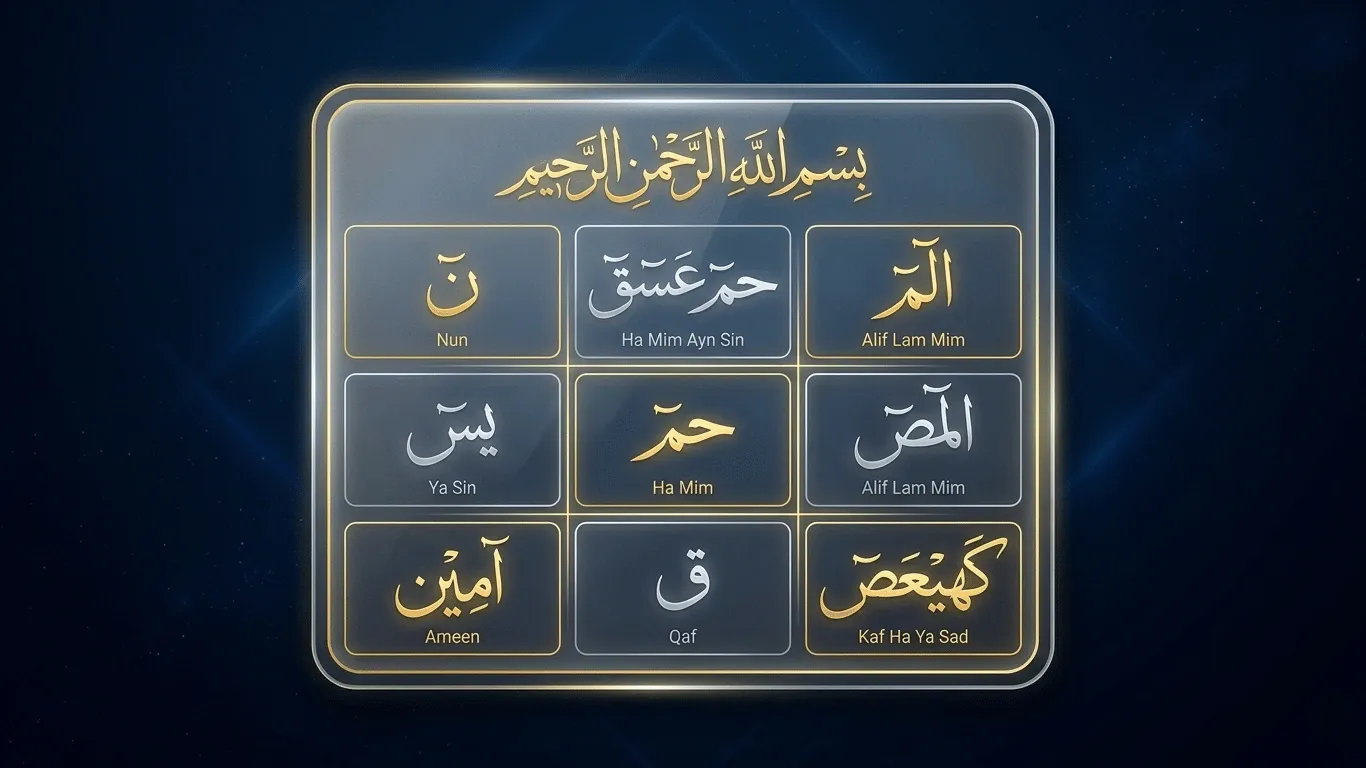
You keep it hanging on the wall, your parents say it “protects the house,” and social media calls it a “Quranic code,” but can you confidently explain what Lohe Qurani actually is in light of Qur’an, tafsīr, and fiqh‑safe practice? This page is designed to be your ultimate reference: a clear, classical‑grounded, and modern‑friendly guide to the 29 disjointed letters (ḥurūf‑e‑muqaṭṭa‘āt), their meaning, safe use, and how to turn them into a Spiritual Habit Loop in your daily life.
What Is lohe qurani? (word‑by‑word, types, and urdu meaning)
Lohe Qurani is a phrase used for the “tablet of Qur’an,” usually referring to the collected ḥurūf‑e‑muqaṭṭa‘āt—those mysterious letter‑groups that open 29 Qur’anic Surahs. The goal here is to peel away the marketing hype and explain it in simple, Qur’an‑centered terms you can actually use.
Word‑by‑word Arabic meaning
- Loh (لوح): tablet, slate, or plaque.
- Qurani (قرآني): related to the Qur’an.
- Combined: Lohe Qurani = “Qur’an‑tablet” or “Tablet of Qur’anic letters.”
This is not a technical term from classical tafsīr books; it is a later, popular label that combines the Qur’an’s muqaṭṭa‘āt with the idea of an engraved or carved tablet.
Urdu meaning and common understanding
- In Urdu contexts:
لوحة قرآنی = قرآن کے حروف مقطعات کا تختی / پلیٹ جس پر ۲۹ حروف (جیسے الم، حم، طه، يس، ق، ن – وغیرہ) لکھے جاتے ہیں۔ - It is often used for:
- Metal or wooden calligraphy tablets displayed in homes, shops, or mosques.
- Also the “spiritual list” of 29 Qur’anic letters that people recite as a wazifa.
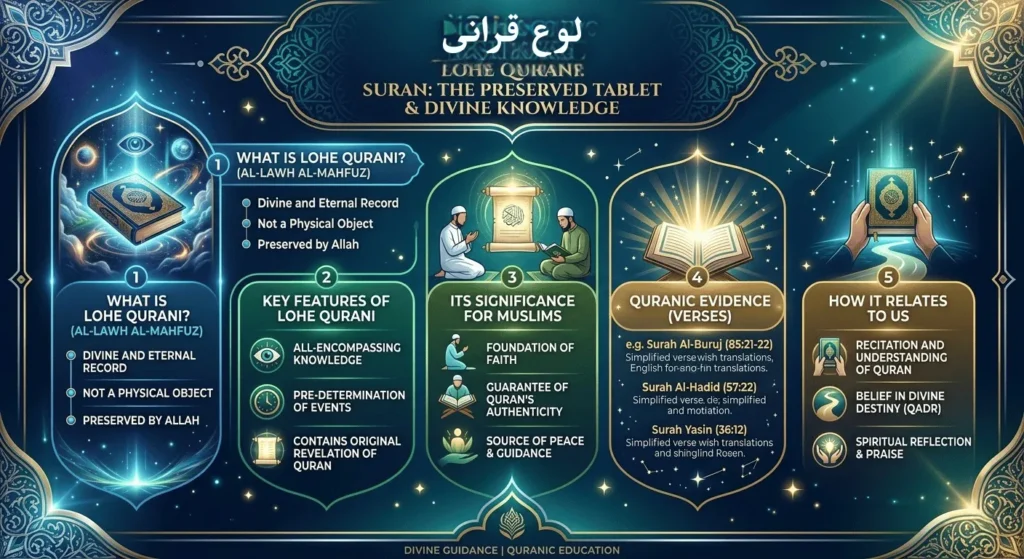
Where Do These Letters Come From? (Qur’anic References for Every Group)
These 29 letters are not invented symbols; they appear at the beginning of 29 Surahs in the Qur’an. The first paragraph here is written like a Voice Search snippet so it can also serve as a featured‑answer box.
Lohe Qurani’s 29 letters are simply the ḥurūf‑e‑muqaṭṭa‘āt that open specific Surahs in the Qur’an. They include groups like Alif‑Lam‑Mim, Ḥā‑Mīm, Kāf‑Hā‑Yā‑‘Ayn‑Ṣād, Ṭā‑Hā, Yā‑Sīn, Qāf, and Nūn. Each group marks the start of a Surah and, according to classical scholars, carries a meaning known fully only to Allah and His Prophet ﷺ.
The 14 Disjointed Groups and Their Surahs
Below is a compact, Voice‑friendly reference table you can reuse in schema‑style content.
| Group (Arabic) | Transliteration | Surah numbers | Urdu note |
|---|---|---|---|
| الم | Alif‑Lam‑Mim | 2, 3, 29, 30, 31, 32 | چھ سورتوں کے سر میں اس کلمہ سے شروع ہوتی ہے |
| حم | Ḥā‑Mīm | 40, 41, 42, 43, 44, 45, 46 | سات مستقل سورتیں جن میں ہر ایک حم کے ساتھ شروع ہوتی ہے |
| كهيعص | Kāf‑Hā‑Yā‑‘Ayn‑Ṣād | 19 | سورہ مریم کے سر میں یہ چھ حروف مقطعات ہیں |
| طه | Ṭā‑Hā | 20 | سورہ طه، جس میں یہ دو حرف سرسری کلمہ کے طور پر ہیں |
| يس | Yā‑Sīn | 36 | “قلب القرآن” (دلِ قرآن) کہلانے والی سورت کا ابتدائی کلمہ |
| ق | Qāf | 50 | سورہ ق کے سر میں یہ واحد حرف مقطعہ آتا ہے |
| ن | Nūn | 68 | سورہ القلم کے سر میں یہ حرف مقطعہ ہے |
In classical tafsīr, scholars like Ibn Kathir mention that these letters are either names of the Surahs, oaths, or signs meant to highlight the Qur’an’s miraculous nature in the Arabs’ own language. The exact cipher‑style secret, if any, is known only to Allah.
Tafseer of the Disjointed Letters – What Do Scholars Actually Say?
Lohe Qurani is not some newly discovered “Quranic code”; it is simply the collected set of disjointed letters that open 29 Qur’anic Surahs. Classical scholars agree that the complete meaning of these letters belongs to Allah, and they warn us against wild, invented explanations. Instead, they use them to teach tawḥīd, humility, and the Qur’an’s miraculous structure.
Classical tafsīr overview (Ibn Kathir, Ibn ‘Abbās, etc.)
- Ibn Kathir and earlier mufassirūn collect many ta’wīlāt (“interpretations”):
- Some say these letters are names of the Surahs.
- Others suggest they are oaths (swearing by Allah’s Names or His Qur’an).
- A few link them to Attributes (e.g., Allah’s knowledge, mercy, power).
- At the same time, they state clearly: “Their true meaning is known only to Allah.”
- This prevents us from treating them as a fixed “spell” or “program” that can be reverse‑engineered by humans.
- Ibn ‘Abbās and other Companions reportedly said:
- These letters are “letters of the Arabic alphabet,” chosen by Allah to challenge the Arabs’ claim of poetic supremacy.
Modern 2026‑friendly framing (without crossing fiqh‑boundaries)
Today, many preachers and YouTubers present ḥurūf‑e‑muqaṭṭa‘āt as “Quranic operators” or “spiritual switches.” While this can be a helpful metaphor, it must be balanced with three fiqh‑safe boundaries:
- No claim of fixed formulas (e.g., “recite these letters exactly 237 times and you’ll get rizq”).
- No “secret” information that contradicts classical tafsīr or fabricates meanings.
- No separation from Qur’an and tawakkul: the power is from Allah’s Word, not from the letters as isolated symbols.
Here’s why this matters for you:
You can still benefit from Lohe Qurani through dhikr and tafakkur in Qur’an, without falling into the trap of fabricated “wazifa” and “magic formula” thinking.
The Spiritual Habit Loop – How to Use Lohe Qurani in Daily Life
You can turn Lohe Qurani into a Spiritual Habit Loop that fits naturally into your daily routine. This is not about “magic”; it is about using a Qur’anic symbol in a structured, fiqh‑safe way to build dhikr, taqwa, and tawakkul.
Lohe Qurani works best as a visual cue for a short Qur’anic habit: when you see the tablet, it should trigger a brief, consistent routine of dhikr or recitation, leading to a real spiritual reward—peace, protection, and trust in Allah’s rizq. We will build this loop step by step so you can apply it today.
Step 1 – The Cue (Lohe Qurani in your environment)
- Place the Lohe Qurani tablet somewhere you naturally pause:
- By your front door.
- Next to your prayer mat.
- In your bedroom or study area.
- Train yourself to see it as a dhikr cue, not just decoration.
- When you pass it, pause for 10–15 seconds and let it remind you: “Now is a moment to turn to Qur’an and dhikr.”
Step 2 – The Routine (fiqh‑safe dhikr, not “wazifa magic”)
Here is a sample routine you can use without stepping into fabricated formulas:
- Recite the letters within their Qur’anic context:
- For example, when you see الم, say:
- الم – تَنْزِيلُ الْكِتَابِ لَا رَيْبَ فِيهِ مِنْ رَبِّ الْعَالَمِينَ (Baqarah 2:1).
- For حم in Surah Ghāfir:
حم – تَنْزِيلُ الْكِتَابِ مِنَ اللَّهِ الْعَزِيزِ الْغَفَّارِ (40:1). - This keeps the letters inside Qur’an, not as isolated “spells.”
- For example, when you see الم, say:
- Add short, Qur’anic‑based dhikr:
- 1–2 Tasbīḥ or Āmīn‑lāḥaula.
- A short dua like Rabbi zidnī ‘ilman or Allāhumma razzuqnī rizqan ḥalālan tayyiban.
- This is where you stay close to classical tafsīr and fiqh‑safe boundaries.
- Avoid weak or fabricated “how many times” formulas:
- There is no authentic hadith that assigns fixed numbers (e.g., 41, 100, 313) to Lohe Qurani for guaranteed rizq, marriage, or job.
- Any claim that “recite these 29 letters exactly X times and your problem is solved” should be treated as speculation or fabrication.
Step 3 – The Reward (peace, protection, rizq – fiqh‑safe perspective)
- Peace:
- Having Qur’anic letters in your visual space, combined with regular dhikr, reduces anxiety and anchors your heart in remembrance of Allah.
- Protection:
- Qur’anic recitation is a proven ḥirz (shield); the Qur’an mentions it as a shifā’ (healing) and rahmah (mercy).
- Protection comes from recitation, tawakkul, and avoiding haram, not from treating the letters as talismans.
- Rizq:
- Link this practice to Qur’anic verses that emphasize Allah’s generosity, such as wallahu khairur raziqin meaning and tafseer from Surah al‑Jumu’ah, which teaches that Allah is the best Provider.
Visualize the loop like this:
Cue: seeing Lohe Qurani → Routine: 1–2 minutes of Qur’anic dhikr / wazifa → Reward: inner peace, barakah, and trust in Allah’s rizq.
Words, Wazifa, and How Many Times? (Keeping It Fiqh‑Safe)
Many websites and reels advertise “Lohe Qurani wazifa” with fixed numbers and promised results. We must separate what is fiqh‑safe and Qur’an‑based from what is speculative or invented. The first paragraph below is written for Voice Search and text‑to‑speech.
Lohe Qurani itself is not a standalone “wazifa formula” in the Qur’an or hadith. The safest approach is to treat the 29 letters as Qur’anic markers, then recite the surrounding verses and make sincere dua, rather than following invented “how many times” formulas that promise guaranteed rizq, marriage, or money. We will now clarify what is actually supported by scholars and what you should avoid.
What is actually supported in classical sources?
- Scholars and fatwā‑councils (e.g., IslamQA‑style rulings) say:
- Reading Qur’an, including ḥurūf‑e‑muqaṭṭa‘āt, is a general good; it brings barakah, healing, and protection.
- There is no authentic hadith that singles out “Lohe Qurani” or these 29 letters for special wazifa‑style effects.
- Qur’anic tawīẓ (using Qur’anic verses as protection) is permissible if it remains within Qur’an and avoids shirk or fabricated materials.
What to explicitly avoid (as per your guidance)
- Do not use any “wazifa” that claims:
- “Recite these 29 letters 41 times, 100 times, 313 times, etc., and your rizq/marriage/job will be fixed.”
- Or that presents Lohe Qurani as a self‑sufficient magical formula, detached from tawakkul and effort.
- These are often mixed with fabricated “numbers‑magic,” which has no basis in Qur’an or reliable hadith.
Recommended practice instead
- Use Alif‑Lam‑Mim, Ḥā‑Mīm, etc., as Qur’anic reminders to recite the next verse and make dua.
- Combine them with well‑known Qur’anic duas:
- Surah al‑Fātiḥah.
- Ayat‑al‑Kursī (2:255).
- Surah al‑Falaq and al‑Nās.
- Surah Yā‑Sīn for mercy and barakah.
This keeps you in the Qur’an‑centered, tafsīr‑grounded, fiqh‑safe zone.
Lohe qurani pdf for urdu readers
Benefits According to Qur’an, Hadith, and Scholars (and Limits)
The real benefit of Lohe Qurani lies not in mysterious “energy” of the letters, but in the Qur’an itself, the dhikr it inspires, and the tawakkul that grows in your heart.
Lohe Qurani brings benefit when it leads you to more Qur’an recitation, dhikr, and remembrance of Allah. Scholars emphasize that any protection, healing, or rizq linked to Qur’an comes through recitation, faith, and righteous action—not through treating the letters as independent talismans. We will now separate authentic Qur’anic benefits from speculative or invented claims.
Authentic Qur’anic benefits (Qur’an‑based)
- The Qur’an is described as shifā’ (healing) and rahmah (mercy) for the believers.
- Recitation of Qur’an in the home is linked to barakah, tranquility, and protection from shaitan.
- The disjointed letters themselves are part of the Qur’an’s miracle, challenging the denial of polytheists.
Hadith and scholarly cautions
- Scholars say:
- Qur’anic tawīẓ (using Qur’anic verses for protection) is allowed in many madhāhib, as long as it contains no shirk or fabricated material.
- There is no hadith explicitly mentioning “Lohe Qurani” as a special wazifa or protective object.
- They warn against:
- Believing that ink, paper, or metal has power in itself.
- Thinking that numbers or repetition‑counts guarantee outcomes.
Psychological and spiritual benefits (non‑shirk)
- Seeing Qur’anic letters in your home creates a Qur’anic environment that calms the heart and reminds you of Allah.
- Using them as a visual cue for daily dhikr helps build consistency and taqwa.
- This complements Qur’anic duas and Kabristan ki Dua: Assalamu ‘Alaikum Ya Ahlal‑Kubur, which are proven practices for mercy and protection in this life and the next.
