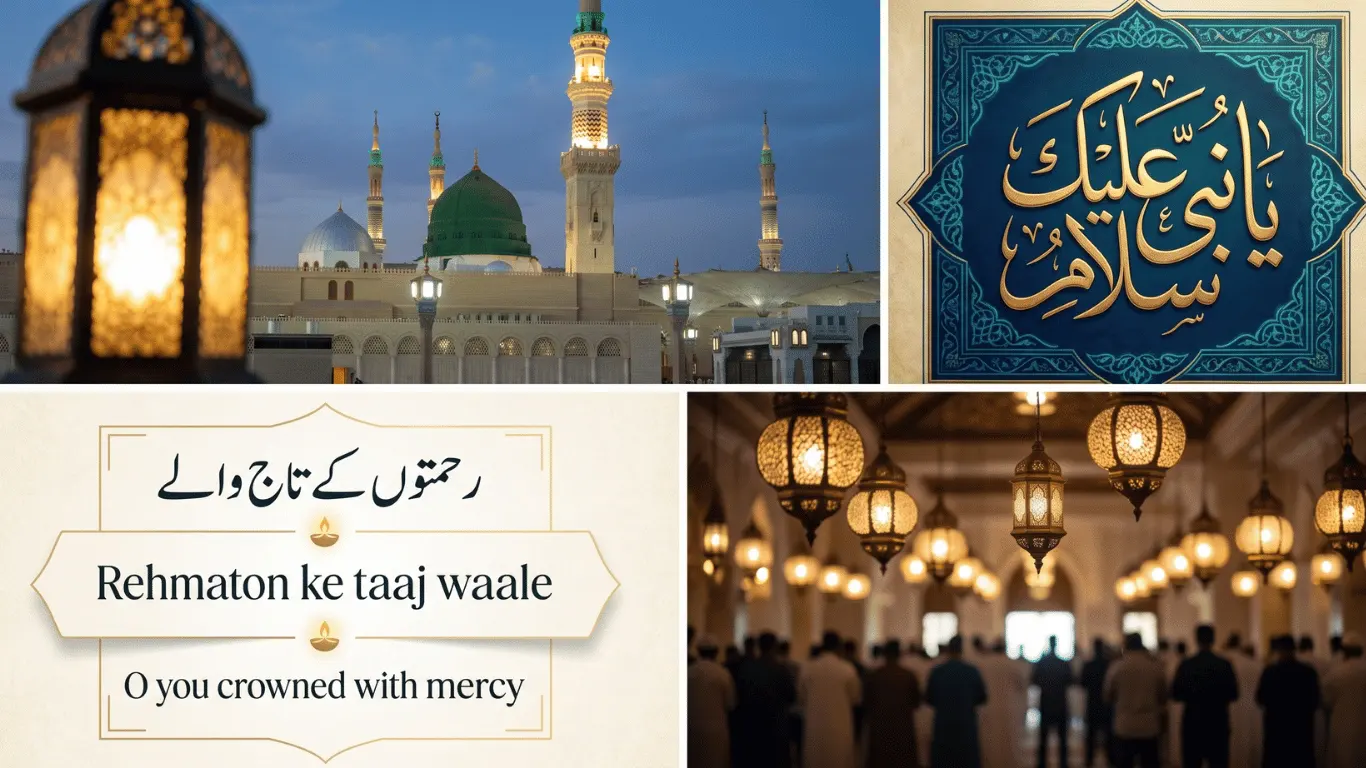
“Ya Nabi Salam Alaika” is the most universally recognized Salat-o-Salam (salutation) across the Islamic world. Recited universally in a Mehfil-e-Milad (gathering to celebrate the Prophet’s birth) and after Friday prayers, it is a profound expression of Ishq-e-Rasool (love for the Prophet ﷺ).
Whether you are looking to memorize the verses, understand their deep spiritual meaning, or recite them in a gathering, here are the complete lyrics presented block-by-block in Urdu, Roman English, Hindi, and English translation.
The Complete Lyrics & Translation

1. The Arabic Refrain (Chorus)
This is the core of the salam, recited collectively by the gathering while standing in reverence (Qiyam).
| Language / Script | Ya Nabi Salam Alaika Lyrics |
| Urdu | یا نبی سلام علیک یا رسول سلام علیک یا حبیب سلام علیک صلوات اللہ علیک |
| Roman Urdu | Ya Nabi salam ‘alaika Ya Rasool salam ‘alaika Ya Habeeb salam ‘alaika Salawatullah ‘alaika |
| Hindi | या नबी सलाम अलैका या रसूल सलाम अलैका या हबीब सलाम अलैका सल्वातुल्लाह अलैका |
| English Translation | O Prophet, peace be upon you. O Messenger, peace be upon you. O Beloved, peace be upon you. May the blessings of Allah be upon you. |
2. The Crown of Mercy
This stanza highlights the exalted, cosmic status of the Prophet ﷺ as the sovereign of both worlds and the protector of sinners.
| Language / Script | Verse 1 Lyrics |
| Urdu | رحمتوں کے تاج والے دو جہاں کے راج والے عرش کی معراج والے عاصیوں کی لاج والے |
| Roman Urdu | Rehmaton ke taaj waale Do jahan ke raaj waale Arsh ki meraj waale Aasiyon ki laaj waale |
| Hindi | रहमतों के ताज वाले दो जहां के राज वाले अर्श की मेराज वाले आसियों की लाज वाले |
| English Translation | O you crowned with mercy, Sovereign of both worlds. The one who ascended to the Divine Throne, The protector of the honor of sinners. |
3. The Light of Amina
A beautiful transition into the Prophet’s ﷺ earthly birth to his mother, Bibi Amina, and the fortune he brought to the marginalized.
| Language / Script | Verse 2 Lyrics |
| Urdu | آمنہ کے دل کے تارے ہم غریبوں کے سہارے ہوگئے وارے نیارے آگئے جب تم ہمارے |
| Roman Urdu | Amina ke dil ke taare Hum ghareebon ke sahaare Hogaye waare nyaare Aagaye jab tum humaare |
| Hindi | आमेना के दिल के तारे हम गरीबों के सहारे होगए वारे न्यारे आगए जब तुम हमारे |
| English Translation | The star of Amina’s heart, The support of us poor ones. Our fortunes were entirely transformed, The moment you became ours. |
4. Seeking Refuge
The final verses act as a deeply personal plea for intercession and protection.
| Language / Script | Verse 3 Lyrics |
| Urdu | جان کر کافی سہارا لے لیا ہے در تمہارا خلق کے وارث خدارا لو سلام اب یہ ہمارا |
| Roman Urdu | Jaan kar kaafi sahaara Le liya hai darr tumhaara Khalq ke waaris khudaara Lo salaam ab yeh humaara |
| Hindi | जान कर काफी सहारा ले लिया है दर तुम्हारा खल्क़ के वारिस खुदारा लो सलाम अब यह हमारा |
| English Translation | Knowing it to be a sufficient refuge, We have taken shelter at your door. O inheritor of creation, for God’s sake, Accept this salutation of ours. |
The Deep Meaning: Why Do We Recite It?
This specific salam bridges the gap between majestic theology and intimate devotion. The Arabic chorus grounds the reciter in classical Islamic tradition, using direct address (“Ya” meaning “O!”) to signify that the Prophet ﷺ is spiritually present and hears the greetings of his followers.
The Urdu stanzas transition into highly emotional, culturally resonant poetry. Words like Aasi (sinner) and Ghareeb (poor/dependent) highlight the believer’s humility, contrasting beautifully with the Prophet’s titles as the Taaj waale (crowned one) and intercessor on the Day of Judgment.
The Adab (Etiquette) of Qiyam
You will notice that during a Mehfil, the entire gathering stands up to recite this specific salutation. This act of standing is called Qiyam.
It is a profound mark of respect. Just as one stands when a highly revered guest or dignitary enters a room, Muslims stand during this salam out of supreme reverence, expressing joy at the symbolic presence and memory of the Prophet ﷺ.
FAQs:
The core Arabic phrasing traces back centuries and is a standard part of classical Mawlid texts, including the famous Mawlid al-Barzanji. The popular Urdu verses added to it were written by various prominent South Asian scholars and Sufi poets over time to make the devotion accessible to local populations.
While it can be recited at any time to invoke blessings, it is most traditionally recited at the conclusion of a Milad gathering, on Fridays, and after daily prayers.
The Arabic connects the reciter to the original language of the Quran and Hadith, while the Urdu verses allow South Asian reciters to engage with the deep, emotional meaning of the poetry in their native tongue.

2 thoughts on “Naat ya nabi salam alaika – (urdu, roman, hindi & translation)”