Have you ever experienced a sudden wave of calm wash over you during a chaotic day, simply by hearing a familiar, rhythmic recitation? For millions of Muslims around the world, the gentle chant of “Allahumma salli ala…” is more than just poetry; it is a spiritual reset button. In an era filled with digital noise and relentless anxiety, returning to the praise of the Prophet Muhammad (Peace Be Upon Him) offers an immediate anchor for a restless heart.
This timeless Kalam seamlessly weaves the majesty of Arabic Salawat with the profound, emotional devotion of Urdu and Punjabi poetry. Let’s understand the real meaning behind these verses, explore the exact lyrics, and learn how integrating this beautiful recitation into your daily routine can transform your spiritual well-being.
What is the Allah Huma Sale Ala Naat?
The “Allah Huma Sale Ala” Naat is a globally cherished Islamic recitation that blends the traditional Arabic Durood with deeply emotional Urdu and Punjabi verses. It serves as a continuous spiritual anchor, guiding the listener to ask Allah to send eternal peace and blessings upon Prophet Muhammad (PBUH).
This specific composition is unique because it uses the sacred Arabic invocation as a rhythmic refrain (Radif). Between each recitation of the Durood, the reciter delivers powerful verses about the beauty of the Prophet’s creation, the mercy he brought to the world, and the longing of the human heart to connect with him. It is frequently recited in gatherings of remembrance (Mahfil-e-Milad) and has become a staple of South Asian Islamic heritage.
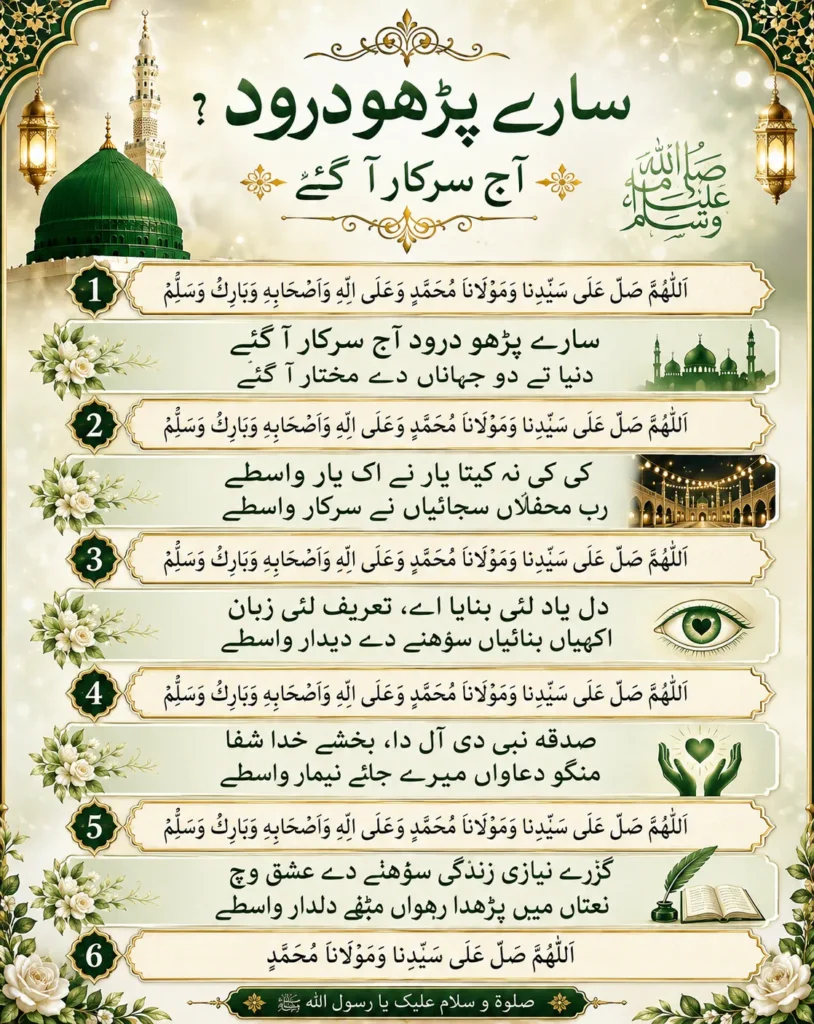
The Complete Allah Huma Sale Ala Naat Lyrics
Here’s why this matters: Having the accurate text ensures your pronunciation and understanding remain intact, allowing the Zikr to penetrate your heart rather than just remaining on your tongue.
The Sacred Refrain (Durood Sharif)
This Arabic chorus is recited collectively after every stanza.
Arabic:
اَللّٰھُمَّ صَلِّ عَلٰی سَیِّدِنَا وَمَوْلَانَا مُحَمَّدٍ وَّعَلٰی اٰلِہٖ وَاَصْحَابِہٖ وَبَارِکْ وَسَلِّمْ
Roman English: Allahumma salli ala Sayyidina wa Maulana Muhammadin, Wa ala aalihi wa ashabihi wa baarik wa sallim.
English Translation: O Allah, send blessings upon our Master and Leader, Muhammad, and upon his family and companions, and bestow peace upon them.
Urdu and Punjabi Verses
Verse 1:
سارے پڑھو درود آج سرکار آ گئے دنیا تے دو جہاناں دے مختار آ گئے
Sare parho durood aj sarkar aa gaye Dunya te do jahanon de mukhtar aa gaye
(English): Everyone, recite the Durood, for the Master has arrived today. The chosen authority of both worlds has graced the earth.
Verse 2:
کی کی نہ کیتا یار نے اک یار واسطے رب محفلاں سجائیاں نے سرکار واسطے
Ki ki na keeta yaar ne ik yaar waaste Rab mehfilan sajaiyan ne sarkar waaste
(English): What has the Beloved (Allah) not done for His Beloved (the Prophet)? The Lord Himself has decorated the gatherings of the universe for the Master.
Verse 3:
دل یاد لئی بنایا اے، تعریف لئی زبان اکھیاں بنائیاں سوہنے دے دیدار واسطے
Dil yaad layi banaya ae, tareef layi zaban Akhiyan banaiyan sohnay de deedar waaste
(English): This heart was created to remember him, this tongue to praise him. These eyes were crafted solely to behold the Beautiful One.
Verse 4:
صدقہ نبی دی آل دا، بخشے خدا شفا منگو دعاواں میرے جئے بیمار واسطے
Sadqa Nabi di aal da, bakhshe Khuda shifa Mango duawan mere jaye beemar waaste
(English): For the sake of the Prophet’s family, may God grant healing. Pray for a spiritually and physically ailing one like me.
Verse 5:
گزرے نیازی زندگی سوہنے دے عشق وچ نعتاں میں پڑھدا رہواں مِٹھے دلدار واسطے
Guzre Niazi zindagi sohnay de ishq vich Naatan main parhda rahwan mithe dildar waaste
(English): O Niazi, may my entire life pass in the love of the Beautiful One. May I continue reciting Naats for my sweet Beloved forever.
The Divine Command: Quranic Roots of Sending Salawat
The practice of reciting Salawat is directly commanded by Allah in the Quran. It is the only act of worship that Allah and His angels perform before commanding the believers to do the same, highlighting the supreme spiritual status of Prophet Muhammad (PBUH).
To ground our understanding in absolute scholarly truth, we must look at the primary source of this practice.
Arabic Text:
إِنَّ ٱللَّهَ وَمَلَـٰٓئِكَتَهُۥ يُصَلُّونَ عَلَى ٱلنَّبِىِّ ۚ يَـٰٓأَيُّهَا ٱلَّذِينَ ءَامَنُوا۟ صَلُّوا۟ عَلَيْهِ وَسَلِّمُوا۟ تَسْلِيمًا
Transliteration: Inna Allaha wamalaikatahu yusalloona ‘ala annabiyyi, ya ayyuha allatheena amanoo salloo ‘alayhi wasallimoo tasleema.
English Translation: Indeed, Allah confers blessing upon the Prophet, and His angels [ask Him to do so]. O you who have believed, ask [Allah to confer] blessing upon him and ask [Allah to grant him] peace. (Surah Al-Ahzab, 33:56)
Urdu Translation:
بے شک اللہ اور اس کے فرشتے نبی پر درود بھیجتے ہیں۔ اے ایمان والو! تم بھی ان پر درود بھیجا کرو اور خوب سلام بھیجا کرو۔
Respectful Interpretation: This verse is the theological foundation of the entire Naat. It reveals a profound reality: human words are inherently limited and cannot adequately praise the Prophet. Therefore, by saying “Allahumma Salli Ala” (O Allah, You send blessings upon…), we humbly delegate the act of ultimate praise to the Creator. It is an acknowledgment of our limits and a celebration of His infinite grace.
Hadith References: The Power of Durood in Modern Life
According to authentic prophetic traditions, reciting Durood brings exponential spiritual rewards. For every single blessing a believer sends upon the Prophet, Allah sends ten blessings upon the believer, forgives ten sins, and raises their spiritual rank by ten degrees.
This becomes important when you look at the daily struggles we face. We are constantly seeking solutions to anxiety, financial stress, and emotional fatigue. The Hadith provides a clear, divine remedy.
Arabic Text:
مَنْ صَلَّى عَلَيَّ صَلَاةً صَلَّى اللَّهُ عَلَيْهِ بِهَا عَشْرًا
Transliteration: Man salla ‘alayya salatan salla Allahu ‘alayhi biha ‘ashran.
English Translation: “Whoever sends blessings upon me once, Allah will send blessings upon him tenfold.” (Sahih Muslim)
Urdu Translation:
جو مجھ پر ایک مرتبہ درود بھیجے گا، اللہ اس پر دس رحمتیں نازل فرمائے گا۔
Respectful Interpretation: This beautiful Hadith illustrates the reciprocal nature of divine love. When you take a moment out of your busy schedule to recite the Allah huma sale ala chorus, you are not just honoring the Prophet; you are actively drawing divine mercy into your own life. It is a spiritual transaction where the return on investment is immediate and infinite.
The Spiritual Habit Loop: Integrating the Digital Sunnah
We live in an age characterized by endless notifications, screen time fatigue, and chronic rushing. How do we find peace? We can map this beautiful Naat to a modern framework: The Spiritual Habit Loop.
Every habit consists of three parts: a cue, a routine, and a reward. Here is how you can transform your listening of this Kalam from a passive activity into an active, life-changing Sunnah.
1. The Cue (Trigger)
Identify a specific moment in your daily routine that usually involves passive waiting or mild stress. This could be your morning commute, folding laundry, or waiting to pick up your children. Let this moment be your trigger.
2. The Routine (Action)
Instead of opening a social media app, play the audio of the Allah huma sale ala Naat. Engage with the [virtues of Durood Sharif] by actively moving your lips to the Arabic refrain. When the reciter sings the Urdu verses, reflect on the translations provided above.
3. The Reward (Result)
The psychological and spiritual reward is immediate. The rhythmic, meditative quality of the Zikr lowers your heart rate, shifts your focus from worldly anxieties to divine love, and fulfills the promise of the Hadith mentioned earlier—drawing ten divine blessings directly into your current situation.
By practicing this Digital Sunnah, you turn your smartphone into an instrument of spiritual elevation rather than a source of distraction.
Sare Parho Durood Aj Sarkar Aa Gaye
Now let’s connect this to the emotional resonance of the Kalam. The most famous verse of this Naat—Sare parho durood aj sarkar aa gaye—is not merely an announcement of the Prophet’s birth. It is an invitation to communal joy.
In South Asian Islamic culture, the arrival of the Prophet is viewed as the ultimate relief for humanity. The poetry uses relatable, deeply human metaphors. When the poet says, “Akhiyan banaiyan sohnay de deedar waaste” (These eyes were crafted solely to behold the Beautiful One), it echoes a profound Sufi concept. It suggests that the physical body—the eyes, the heart, the tongue—only fulfills its true existential purpose when it is directed toward the love and remembrance of Allah and His Messenger.
Understanding this depth transforms the way you listen to the audio. It shifts from a simple melody to a profound declaration of spiritual identity.
People Also Ask:
Allahumma Salli Ala Sayyidina” translates to “O Allah, send blessings upon our Master.” It is the opening phrase of the Durood (Salawat), a prayer asking God to bestow eternal peace and honor upon Prophet Muhammad (PBUH).
Wa Maulana Muhammadin” means “and our Leader, Muhammad.” Using terms of deep respect like Sayyidina (our Master) and Maulana (our Leader) is a tradition of expressing immense love, reverence, and spiritual loyalty to the Prophet.
While you can recite this Naat at any time, it is highly recommended to recite Salawat frequently on Fridays. Many Muslims also find immense peace listening to or reciting it during their morning commute, after Fajr prayers, or before sleeping.
The traditional verses attached to this specific chorus have been recited by generations of Naat Khawans. The exact poetic origins are often attributed to various classical Sufi poets of the Indian subcontinent, with modern additions by poets like Abdul Sattar Niazi, creating a beautifully evolved oral tradition.
Your Next Step in Prophetic Love
The recitation of Allahumma Salli Ala is a bridge between the heavens and the earth. It is a remedy for the anxious heart and a testament to the enduring love the Ummah holds for Prophet Muhammad (Peace Be Upon Him).
We encourage you to make this a part of your daily Spiritual Habit Loop. Bookmark this page to keep the accurate lyrics and translations close at hand. As you go through your day, let the rhythmic praise of the Beloved Prophet bring tranquility to your mind and blessings to your home.
If you found this exploration of the lyrics beneficial, take a moment to explore our comprehensive guide on the [history of Prophetic praise] and discover more ways to illuminate your heart through authentic Islamic traditions.

1 thought on “Allah huma sale ala Naat lyrics with meaning”