Have you ever felt spiritually strong one day and strangely distant the next? That is exactly why this du’a touches the heart so deeply: it is a reminder that hearts can turn, and only Allah can keep them firm.
What Does Ya Muqallib al-Qulub Mean?
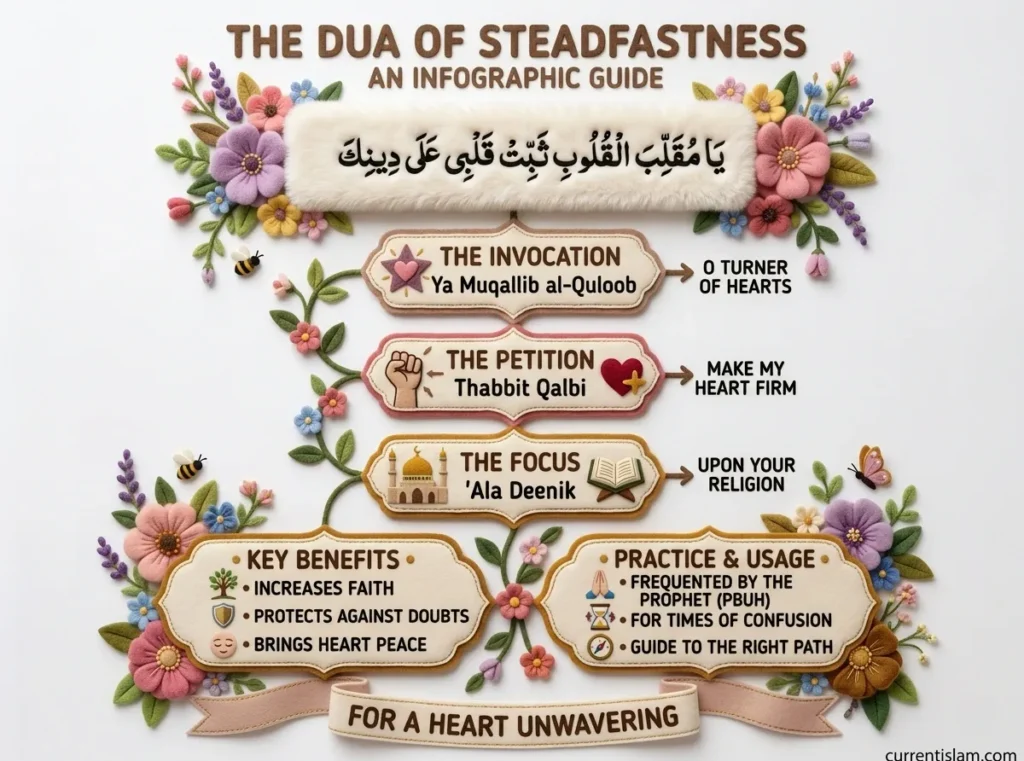
Ya Muqallib al-Qulub means “O Turner of the hearts.” It is a beautiful supplication asking Allah to keep the heart steady upon faith, truth, and obedience. The complete du’a asks Allah to make the heart firm upon His religion.
This phrase is deeply personal. It is not only about reciting words; it is about admitting that guidance, consistency, and sincerity all come from Allah.
Word-by-Word Meaning
The phrase breaks down simply: “Ya” means O, “Muqallib” means Turner or Controller, “al-Qulub” means the hearts, “Thabbit” means keep firm, “Qalbi” means my heart, and “ala dinik” means upon Your religion. Together, it becomes a plea for steadfast faith.
- Ya = O
- Muqallib = Turner / Controller
- al-Qulub = the hearts
- Thabbit = make firm / keep steady
- Qalbi = my heart
- Ala dinik = upon Your religion
The Full Dua in Arabic, Transliteration, English, and Urdu
The full du’a is commonly recited as: “Ya Muqallib al-Qulub, thabbit qalbi ‘ala dinik.” It asks Allah to stabilize the heart on faith and protect it from spiritual drift.
Arabic:
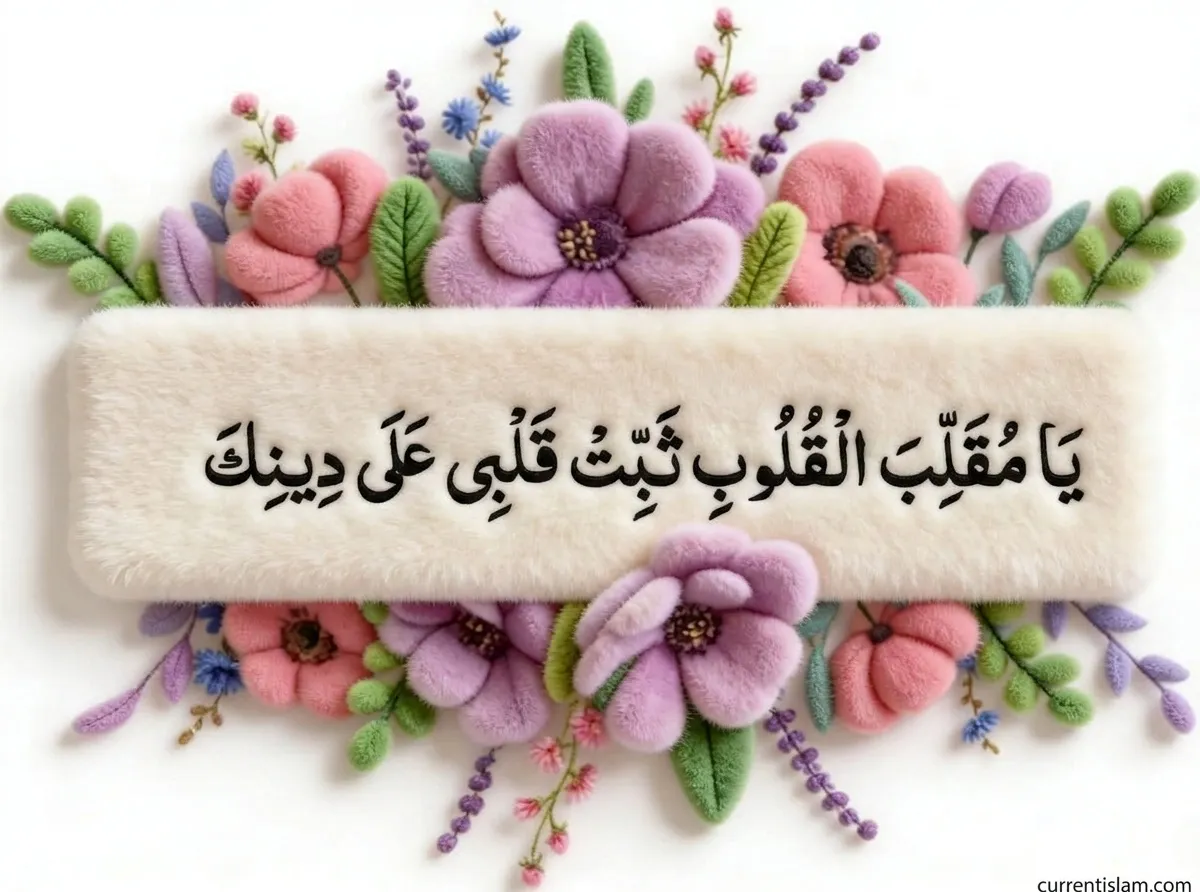
يَا مُقَلِّبَ الْقُلُوبِ ثَبِّتْ قَلْبِي عَلَى دِينِكَ
Transliteration:
Ya Muqallib al-Qulub, thabbit qalbi ‘ala dinik
English meaning:
O Turner of the hearts, keep my heart firm upon Your religion.
Urdu meaning:
اے دلوں کو پھیرنے والے! میرے دل کو اپنے دین پر ثابت قدم رکھ۔
Hadith Reference and Authenticity
This du’a is reported in the Sunnah and is well known for being frequently recited by the Prophet Muhammad ﷺ. It appears in the hadith tradition as a supplication for firmness of heart.
The hadith teaches that the heart is under Allah’s control, which is why the Prophet ﷺ asked for steadfastness. Imam Nawawi discusses similar supplications in the broader theme of asking Allah for firmness, and this aligns with the prophetic concern for the state of the heart.
Why This Hadith Matters
This hadith matters because it teaches humility. No matter how strong a believer seems, the heart can change, so the most important request is not comfort or success alone, but steadfastness on religion.
That lesson is timeless. In a distracted digital age, this du’a works like a spiritual reset button, reminding the believer to return to Allah again and again.
Is It in the Quran?
The exact words of this du’a are not a Qur’anic verse, but its meaning is strongly connected to the Quran’s teaching about hearts and remembrance. The closest and most important Qur’anic anchor is Surah Ar-Ra’d 13:28.
Arabic:
الَّذِينَ آمَنُوا وَتَطْمَئِنُّ قُلُوبُهُمْ بِذِكْرِ اللَّهِ ۗ أَلَا بِذِكْرِ اللَّهِ تَطْمَئِنُّ الْقُلُوبُ
Transliteration:
Alladhina amanu wa tatma’innu qulubuhum bidhikri Allah. Ala bidhikri Allahi tatma’innu al-qulub.
English:
Those who have believed and whose hearts are assured by the remembrance of Allah. Unquestionably, by the remembrance of Allah hearts are assured.
Urdu:
جو لوگ ایمان لائے اور جن کے دل اللہ کے ذکر سے اطمینان پاتے ہیں، سن لو! اللہ کے ذکر ہی سے دل اطمینان پاتے ہیں۔
Tafsir Connection
Classical tafsir on this verse explains that true peace is not produced by worldly stability alone, but by remembrance of Allah. This is why the du’a for a firm heart and the verse about tranquil hearts belong to the same spiritual family.
Ibn Kathir explains the verse as a statement that the heart finds true rest through dhikr, not through temporary worldly gains. That makes this du’a practical, because it asks for exactly the kind of inner steadiness the Quran praises.
Why This Dua Is Important
This du’a is important because faith is not static. A person may feel close to Allah one day and distracted the next, so asking for a firm heart is one of the most realistic and powerful acts of worship.
It teaches that spiritual life is not only about knowing the truth, but staying attached to it. That is why scholars and worshippers alike value this du’a so highly.
Modern Digital Sunnah Angle
In a Digital Sunnah framework, this du’a becomes a daily habit that protects the believer from attention overload, weak routines, and emotional ups and downs. It is a short prayer with a long-term effect on discipline.
Think of it as a heart-level habit loop: reminder, recitation, reflection, and return. That makes this du’a especially relevant for people who want faith that survives the pace of modern life.
Wazifa and How Many Times
There is no single fixed number in the core hadith for this du’a, but many people recite it regularly as a personal supplication for steadfastness. The strongest approach is consistency rather than a claimed magic number.
A practical routine is to recite it after salah, during sujood, or whenever the heart feels weak. If you want a simple habit, repeat it morning and evening with sincerity and focus.
Best Way to Read It
The best way to read this du’a is slowly, with awareness of its meaning, and with a sincere request for firmness in faith. A du’a becomes stronger when the heart understands what the tongue is saying.
You can also pair it with dhikr from Surah Ar-Ra’d 13:28, because that verse reinforces the same inner goal: a heart that finds peace through remembrance of Allah.
Benefits of the Dua
The main benefit of this du’a is spiritual firmness. It helps a believer ask Allah for stability in belief, consistency in worship, and protection from doubt, laziness and inner fluctuation.
Other benefits include greater humility, stronger connection to Allah, and a better awareness that faith must be preserved, not taken for granted.
- Encourages steadiness in iman.
- Reminds the believer that hearts change.
- Builds dependence on Allah instead of self-confidence.
- Strengthens daily dhikr habits.
- Supports a more mindful spiritual life.
Scholarly Reflection
Scholars treat this du’a as a model of prophetic humility and spiritual awareness. It shows that even the best servant asks Allah for firmness, which means the believer should never feel spiritually “finished.”
Imam Nawawi’s broader treatment of prophetic supplications emphasizes the value of asking for guidance, firmness, and protection of the heart. Ibn Kathir’s tafsir of 13:28 strengthens the same theme by tying heart-peace to remembrance of Allah.
People Also Ask
Ya Muqallib al-Qulub means “O Turner of the hearts” or “O Controller of the hearts.” The du’a asks Allah to keep the heart firm upon Islam and protect it from spiritual change or weakness.
Yes, this du’a is reported in hadith literature, including Sunan al-Tirmidhi 2140. Imam Tirmidhi graded it as hasan, and the narration is commonly cited for the Prophet’s ﷺ frequent supplication for steadfastness.
There is no fixed number established in the hadith itself. You may recite it as often as you like, especially after prayer, in sujood, or whenever you want firmness in faith.
The exact wording is not a Qur’anic verse, but its meaning is strongly supported by the Quran. The closest connection is Surah Ar-Ra’d 13:28, which says that hearts find rest in the remembrance of Allah.
Its Urdu meaning is: “اے دلوں کو پھیرنے والے! میرے دل کو اپنے دین پر ثابت قدم رکھ۔” This captures both the address to Allah and the request for steadfastness in religion.
Tafsir of Surah Ar-Ra’d 13:28 explains that real peace comes from Allah’s remembrance, not from worldly comfort alone. Ibn Kathir describes this verse as teaching that hearts become tranquil through dhikr and faith.
This du’a is important today because hearts are easily distracted, doubtful, and emotionally overloaded. It gives Muslims a short, powerful way to ask Allah for consistency, sincerity, and protection from inner drift.
