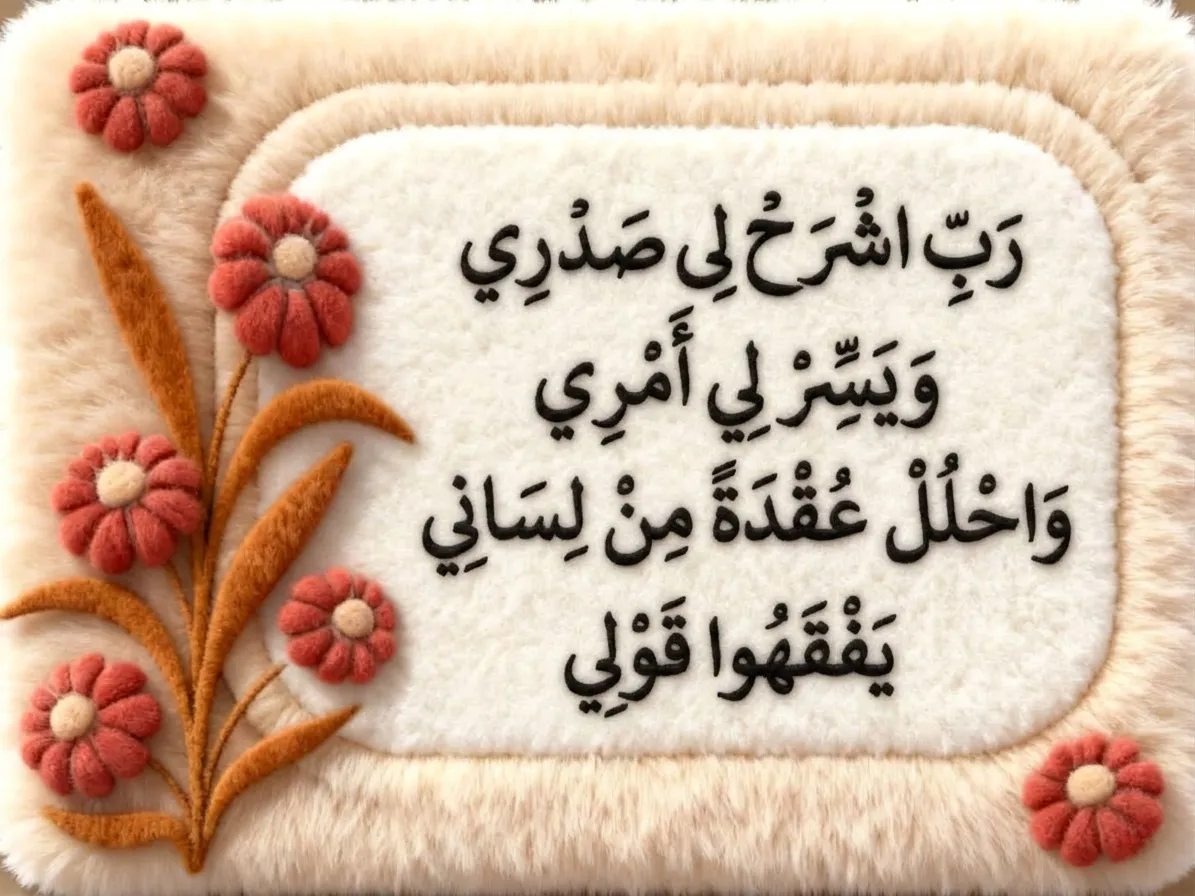
You open your mouth to speak, and suddenly your chest tightens, your tongue feels stuck, and your mind blanks.
If you fear being misunderstood, mock of your speech, or that your voice will never be heard clearly, this is the dua of Prophet Mūsā (peace be upon him) that Allah listens to before Pharaoh, and still answers for speech anxiety, stuttering, and fear of communication today.
1. What this dua is and why it matters
Rabbish raḥli ṣadrī, wa yassirli amrī, wa‑ūlu lu‑qdatan min lisānī yafqahu qawlī” is a du‘ā’ from Surah Ṭā‑Hā, verses 25‑28, where Prophet Mūsā (‘alayhi as‑salām) asks Allah to open his chest, ease his huge mission, and untie the knot in his tongue so people can understand him.
This verse is now a modern “confidence‑code” for anyone who struggles with speech anxiety, stuttering, or fear of being misunderstood.
Quranic reference & context
- Surah: Ṭā‑Hā (20), Verses 25–28.
- After receiving prophethood and being commanded to confront Fir‘awn, Mūsā turns to Allah with this heartfelt du‘ā’ of vulnerability and trust.
2. The verse itself: Arabic, transliteration, and translations
Arabic
رَبِّ اشْرَحْ لِي صَدْرِي وَيَسِّرْ لِي أَمْرِي وَاحْلُلْ عُقْدَةً مِنْ لِسَانِي يَفْقَهُوا قَوْلِي
رَبِّ اشْرَحْ لِي صَدْرِي وَيَسِّرْ لِي أَمْرِي وَاسْمَعْ لِي قَوْلِي وَاجْعَلْ لِي وَزِيرًا مِنْ أَهْلِي هَارُونَ أَخِي
(Qur’an 20:25‑28)
Transliteration (easy‑read)
Rabbish raḥli ṣadrī, wa yassirli amrī, wa‑ūlu lu‑qdatan min lisānī, yafqahu qawlī.
Rabbish raḥli ṣadrī, wa yassirli amrī, wasma‘ li‑qawlī, waj‘al lī wazīran min ahli Hārūna akhī.
English (Saheeh International)
“My Lord, expand for me my breast, and ease for me my task, and untie the knot from my tongue, that they may understand my speech and listen to my words. And appoint for me a helper from my family, Hārūn my brother.”
Urdu (Fateh Muhammad Jalandhri)
رَبِّ اشْرَحْ لِي صَدْرِي وَيَسِّرْ لِي أَمْرِي وَاحْلُلْ عُقْدَةً مِنْ لِسَانِي يَفْقَهُوا قَوْلِي
اے میرے رب! میرا سینہ کھول دے، میرا کام آسان کر دے، میری زبان کی گرہ کھول دے تاکہ وہ میری بات سمجھ سکیں۔
3. Word‑by‑word meaning (Arabic + English)
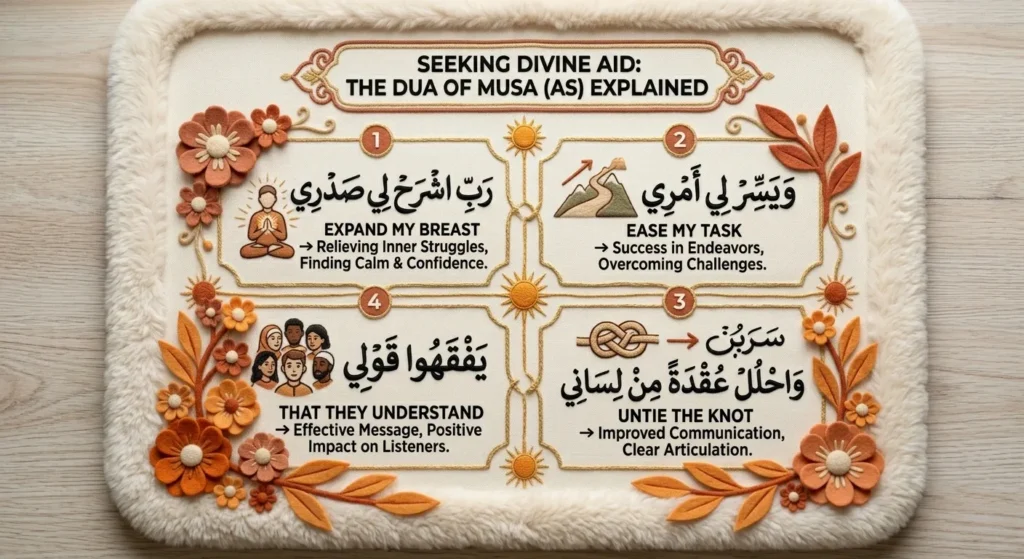
word‑by‑word meaning of Rabbish rahli sadri”
This short chain of words is a complete psychological toolkit:
- “Rabbish raḥli ṣadrī” → heal the heart,
- “wa yassirli amrī” → ease the task,
- “wa‑ūlu lu‑qdatan min lisānī…” → clean the speech.
4. Tafsīr (commentary) from classical mufassirūn
Classical scholars like Ibn Kathīr, Al‑Qurtubī, Ibn Juzayy, and Rāzi all explain that this du‘ā’ shows Prophet Mūsā’s deep awareness of his own limitations and his total trust in Allah before the gigantic mission of confronting Fir‘awn.
They highlight that opening the chest means removing fear and filling the heart with courage and light.
Key scholarly points
- Ibn Kathīr notes that this du‘ā’ comes right after Allah’s command to Mūsā to go to Fir‘awn; it reflects the prophet’s humility and desire for divine support, not just physical ease.
- Al‑Qurtubī and Ibn Juzayy emphasize that “ishraḥus‑ṣadr” is the inner transformation that makes the impossible task feel manageable.
- Rāzi explains that the “knot in the tongue” can be literal (speech impediment) or metaphorical (shyness, hesitation, confusion), and Allah’s help can untie both.
These classical insights show that this verse is not “magic formula” but a deep spiritual protocol for when fear, anxiety, or speech‑blocks show up.
5. The “Confidence‑Code of the Prophets”
The “Confidence‑Code of the Prophets” is a modern framework built on this du‘ā’ that:
- opens your chest (heart‑relief),
- eases the task (real‑world action), and
- unties the knot in your tongue (clear speech).
It turns Surah Ṭā‑Hā 25‑28 into a daily spiritual‑habit loop for people with speech anxiety, stuttering, or fear of being misunderstood.
How it works in practice
- TRIGGER (when you feel panic):
Before an exam, interview, speech, or any difficult conversation where you fear being misunderstood, pause and say this du‘ā’ once. - DU‘Ā’ (the core habit):
- BEHAVIOUR (small action step):
- REWARD (divine + psychological):
- The reward is not just fluency, but:
- reduced anxiety,
- clearer thinking,
- and the feeling that Allah is “with you” in the struggle.
- The reward is not just fluency, but:
By repeating this loop daily, especially for a 7‑day practice plan, you train the “Confidence‑Code of the Prophets” into a habit, not just an occasional supplication.
6. Wazifa, how many times & benefits
Common wazifa‑style practice is to recite “Rabbish raḥli ṣadrī, wa yassirli amrī, wa‑ūlu lu‑qdatan min lisānī, yafqahu qawlī” a fixed number of times daily, often 3, 7, 11, 40, or 100, depending on the person’s condition and capacity.
These repetitions are not obligatory in Sharī‘ah, but they help build focus, trust, and emotional relief for those with speech anxiety or stuttering.
Typical wazifa formats
- For general anxiety and communication nerves:
- 3–7 times after every Fajr and Maghrib, with clear intention (niyyah) to ease speech and fear.
- For children with speech‑delay or stuttering:
- For parents or caregivers:
- Recite it while looking at the child, touching their head lightly, and asking Allah for clarity and ease.
Documented benefits (from community and tafsīr‑based insights)
- Boosts confidence and self‑belief,
- Reduces nervousness and anxiety before speaking,
- Improves clarity and fluency in speech,
- Helps in exams, interviews, and presentations,
- Strengthens inner courage when confronting bullies or difficult people.
Crucially, this works alongside personal effort, speech therapy where needed, and tawak‑kul, not as a replacement.
7.healing and protection resources
If you also struggle with body‑pain, weak hearing, or fear of black magic and evil‑eye, this du‘ā’ can be combined with other powerful duas from the Qur’an and Sunnah that our scholars have already explained.
Below are the recommended links to your two existing pages.
Dua for healing the body and ears
- 1
- If you feel physical heaviness, weak hearing, or general fatigue affecting your speech, this du‘ā’ pairs beautifully with the dua for healing the body and ears – Allahumma afini fi badani Allahumma afini fi sam-i, which is dedicated to asking Allah for health in the body and hearing.
Dua for protection from black magic and evil‑eye
- If you also feel mentally scattered, unusually anxious, or suspect spiritual harm (like black magic or evil‑eye), you can complement this du‘ā’ with our guide on dua for protection from black magic and evil‑eye, which includes Surah al‑Falaq, An‑Nās, Ayat al‑Kursī, and other powerful Sunnah‑based supplications.
8. Why this verse is so important today
This verse is important because it turns speech anxiety, stuttering, and fear of being misunderstood into a spiritual dialogue with Allah, not a personal failure.
Modern Muslims feel immense pressure to “sound perfect” in sermons, Zoom meetings, exams, or even family conversations, and this du‘ā’ brings them back to the same vulnerability that Prophet Mūsā felt.
Three key reasons this verse resonates
- It normalises fear in the heart of a prophet
- Mūsā, the towering prophet who split the sea, still asked for his chest to be opened and his tongue to be loosened. This is a powerful reminder that fear and speech‑blocks are not “unfaithful”; they are human.
- It connects inner healing with outer speech
- Allah does not only fix Mūsā’s tongue; He first opens his chest. This shows that anxiety and fear must be addressed spiritually before fluency can fully arrive.
- It is a living, inter‑generational du‘ā’
- Across cultures, parents recite this for children with stuttering or speech‑delay, and students and speakers repeat it before exams, interviews, and public talks.
9.People Also Ask
This is a dua from Surah Ṭā‑Hā, verses 25–28, where Prophet Mūsā asks: “My Lord, expand for me my chest, ease for me my task, and untie the knot from my tongue that they may understand my speech.”
Many scholars and communities recommend 3, 7, 11, or 40 times daily, depending on your capacity and situation.
Start with a number you can sustain without pressure, and adjust as your heart calms and your speech improves.
Yes, this du‘ā’ is widely used for speech anxiety, stuttering, and other speech‑impediments, both for children and adults.
Some traditions combine it with blowing over water or short, repeated practice under medical or therapeutic guidance.
It is in Surah Ṭā‑Hā (20), verses 25–28, right after Allah’s command to Mūsā to go to Fir‘awn.
This position shows that Allah honours the prophet’s request for inner strength and clear speech before the massive mission.
Wa yassirli amrī” means “And ease for me my task / affair.”
It is Mūsā’s request for Allah to make his huge mission easier to carry out, both practically and emotionally, which is also a powerful dua for anyone overwhelmed by exams, work, or family responsibilities.
Yes, many scholars allow combining this du‘ā’ with other duas for shifa and healing, such as “Allahumma afini fi badani Allahumma afini fi sam‑i” for the body and ears.
This creates a full‑circle supplication: healing the body, opening the heart, and clarifying the speech.
Since this du‘ā’ asks that “they may understand my speech,” it addresses the fear of being misunderstood or mocked when speaking.
Reciting it with sincere intention helps calm the heart, improves clarity, and builds trust that Allah is the ultimate listener and judge of your words.
There is no widely‑known marfū‘ hadith attributed directly to the Prophet ﷺ about this exact verse, but its tafsīr and usage are well‑explained in classical commentaries like Ibn Kathīr and Al‑Qurtubī.
Scholars derive practical guidance mainly from the context and meaning, not a specific hadith on repetition.
You can download the “Rabbish Raḥli Ṣadrī – 7‑Day Practice Plan” from our website by visiting the free resources or dua‑guide section and clicking the PDF download button.
The PDF includes: a daily checklist, recommended times, number of repetitions, and reflection questions to track your progress.
10.Download the 7‑Day plan
To turn this verse into a disciplined 7‑day habit, download the “Rabbish Raḥli Ṣadrī – 7‑Day Practice Plan” PDF guide and follow the daily checklist along with your recitation.
