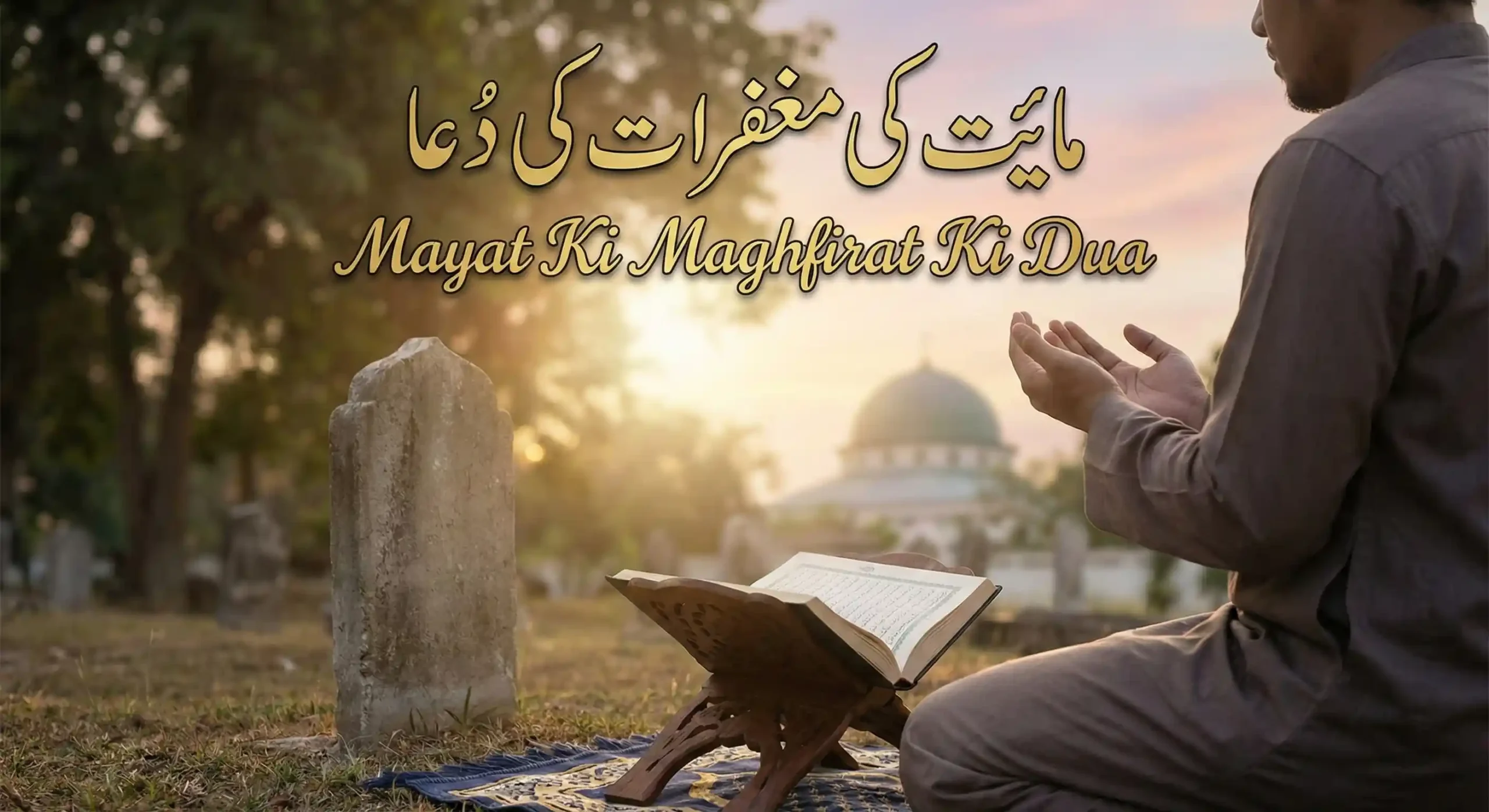
The last gift you can give is a prayer. When a loved one leaves this world, we often feel helpless. But in Islam, the connection never breaks. The Prophet Muhammad (ﷺ) taught us that a sincere mayat ki maghfirat ki dua (prayer for the deceased’s forgiveness) is a light that enters their grave, bringing comfort when they need it most.
Whether you are looking for the namaz e janaza dua or a short prayer to recite daily, this guide provides the authentic methods to send blessings to those who have passed.
1. The Best Mayat Ki Maghfirat Ki Dua (Authentic Sunnah)
The most powerful mayat ki maghfirat ki dua is the supplication taught by the Prophet (ﷺ) in Sahih Muslim. It asks Allah to forgive the deceased, have mercy on them, expand their grave, and cleanse them from sins like a white garment is cleansed of dirt.
When you receive news of a death, or when visiting a grave, recite this comprehensive Dua. It covers every stage of the afterlife journey.
The Prophet’s (ﷺ) Recommended Dua:
Arabic:
اللَّهُمَّ اغْفِرْ لَهُ وَارْحَمْهُ، وَعَافِهِ، وَاعْفُ عَنْهُ، وَأَكْرِمْ نُزُلَهُ، وَوَسِّعْ مُدْخَلَهُ، وَاغْسِلْهُ بِالْمَاءِ وَالثَّلْجِ وَالْبَرَدِ
Transliteration (Roman Urdu): “Allahummaghfir lahu warhamhu, wa ‘aafihi, wa’fu ‘anhu, wa akrim nuzulahu, wa wassi’ mudkhalahu, waghsilhu bil-maa’i wath-thalji wal-barad.”
English Translation (Saheeh International): “O Allah, forgive him and have mercy on him, grant him well-being and pardon him. Make his reception honorable, expand his entry, and cleanse him with water, snow, and hail.”
Urdu Translation (Fateh Muhammad Jalandhari):
اے اللہ! اس کی مغفرت فرما، اس پر رحم کر، اسے عافیت دے، اور اسے معاف کر دے۔ اس کی مہمانی باعزت کر، اس کی قبر کو کشادہ کر، اور اسے پانی، برف اور اولوں سے دھو دے۔”
Note: If the deceased is female, change “lahu” to “laha” and “warhamhu” to “warhamha”.
2. Short Dua for Dead Person (Easy to Memorize)
If you cannot memorize long prayers, a short dua for dead person is “Allahummaghfir lahu warhamhu” (O Allah, forgive him and have mercy on him). Scholars agree that even short, sincere invocations are accepted and benefit the soul of the deceased immediately.
Sometimes, grief makes it hard to remember long texts. Use this short but heavy-weighted Dua frequently throughout your day.
Arabic:
اللَّهُمَّ اغْفِرْ لِلْمُؤْمِنِينَ وَالْمُؤْمِنَاتِ
Transliteration: “Allahummaghfir lil-mu’mineena wal-mu’minaat.”
English: “O Allah, forgive the believing men and believing women.”
Urdu:
“اے اللہ! مومن مردوں اور مومن عورتوں کی مغفرت فرما۔”
3. Namaz e Janaza Dua (For the Funeral)
The Namaz e Janaza Dua is a specific prayer recited during the funeral Salah. It is a communal obligation (Fard Kifayah) that asks for forgiveness for the living, the dead, those present, and those absent. It reminds us that death is the destiny of all.
This is the standard Dua recited during the funeral prayer.
Arabic:
اللَّهُمَّ اغْفِرْ لِحَيِّنَا وَمَيِّتِنَا وَشَاهِدِنَا وَغَائِبِنَا وَصَغِيرِنَا وَكَبِيرِنَا وَذَكَرِنَا وَأُنْثَانَا
Transliteration: “Allahummaghfir li-hayyina wa mayyitina, wa shahidina wa gha’ibina, wa sagheerina wa kabeerina, wa dhakarina wa unthana.”
English: “O Allah, forgive our living and our dead, those present and those absent, our young and our old, our males and our females.”
Urdu:
“اے اللہ! ہمارے زندہ اور مردہ، حاضر اور غائب، چھوٹے اور بڑے، مرد اور عورت سب کی مغفرت فرما۔”
4. Dua When Entering the Graveyard (Qabristan ki Dua)
When entering a graveyard, the Prophet (ﷺ) taught us to greet the inhabitants of the graves. The specific dua for visiting graves is “As-salamu ‘alaykum ya ahlal-quboor” (Peace be upon you, O people of the graves). This prayer reminds us that we will one day follow them.
Whenever you pass by a graveyard or go to visit a specific grave, recite this Sunnah greeting. It is a prayer for their forgiveness and a reminder for your own soul.
The Dua (from Jami` at-Tirmidhi):
Arabic:
السَّلامُ عَلَيْكُمْ يَا أَهْلَ الْقُبُورِ، يَغْفِرُ اللَّهُ لَنَا وَلَكُمْ، أَنْتُمْ سَلَفُنَا وَنَحْنُ بِالأَثَرِ
Transliteration (Roman Urdu):
“As-salamu ‘alaykum ya ahlal-quboor, yaghfirullahu lana wa lakum, antum salafuna wa nahnu bil-athar.”
English Translation:
“Peace be upon you, O inhabitants of the graves. May Allah forgive us and you. You have gone before us, and we are following (in your footsteps).”
Urdu Translation:
“اے قبر والوں تم پر سلام ہو! اللہ ہماری اور تمہاری مغفرت فرمائے۔ تم ہم سے پہلے چلے گئے اور ہم تمہارے پیچھے آنے والے ہیں۔”
Etiquette (Adab) of Visiting Graves:
- Remove Shoes: If you are walking between the graves (on the soil), it is better to remove your shoes if possible.
- Do Not Sit: Do not sit on top of a grave.
- Face the Qibla: When making Dua for the deceased, face the Qibla (Kaaba), not the grave itself.
5. The 2026 “Digital Sadaqah Jariyah”
The Modern Sahaba Mindset: In the past, people built wells to generate ongoing reward (Sadaqah Jariyah) for the deceased. In 2026, we can combine tradition with technology.
The “Digital Charity” Habit Loop:
- The Trigger: Every time you unlock your phone or see a notification from a family group.
- The Action: Instead of scrolling, instantly recite “Rabbi irhamhuma kama rabbayani sagheera” (My Lord, have mercy upon them as they brought me up when I was small).
- The Reward: You create a stream of mayat ki maghfirat ki dua that flows constantly, not just on death anniversaries.
Pro Tip: Set a recurring calendar reminder on your phone for every Friday at Asr time labeled: “Send a Gift to [Name of Deceased].”
Five Sunnah-Based Prayers for Mercy, Forgiveness, and Eternal Peace (PDF Summary)
6: Final Thought: The Connection Remains
Death ends the life of the body, but it does not end the relationship. Every time you raise your hands for mayat ki maghfirat ki dua, you are proving that love in Islam is eternal. Do not let a day pass without sending this light to those who are waiting for it.
7: Frequently Asked Questions
Yes, according to the majority of Islamic scholars and authentic Hadith, the deceased benefit from the dua for deceased and are aware of the gifts of prayer sent to them by the living.
Yes, you can make maghfirat ki dua in any language. Allah looks at the sincerity of your heart (Niyyah), not just your pronunciation. However, reciting the Arabic prayers taught by the Prophet (ﷺ) holds special barakah (blessing).
You can pray at any time, but the most powerful times are during your Salah (in Sujood), on Fridays between Asr and Maghrib, and during the month of Ramadan.

1 thought on “Mayat Ki Maghfirat Ki Dua: 5 Powerful Prayers for the Deceased”