Have you ever felt paralyzed by the fear that every small mistake, forgotten duty, or passing negative thought is being permanently held against you? This silent anxiety destroys spiritual peace and drains your mental energy. But the Quran offers a precise, divine antidote designed to rewire how we process guilt and human error.
The supplication Rabbana la tuakhizna is not just a plea; it is a profound psychological release mechanism taught by Allah Himself.
Here is the complete, deeply researched guide to understanding, reciting, and applying this powerful verse to build cognitive resilience and attain divine mercy.
What Does Rabbana La Tuakhizna Mean?
“Rabbana la tuakhizna” is a powerful Quranic supplication found at the end of Surah Al-Baqarah (2:285/6). It is a direct plea asking Allah not to hold us accountable or punish us for our natural human forgetfulness and unintentional mistakes, granting the reciter immense spiritual relief and divine protection.
Let’s understand the real meaning by looking at the exact text.
Arabic:
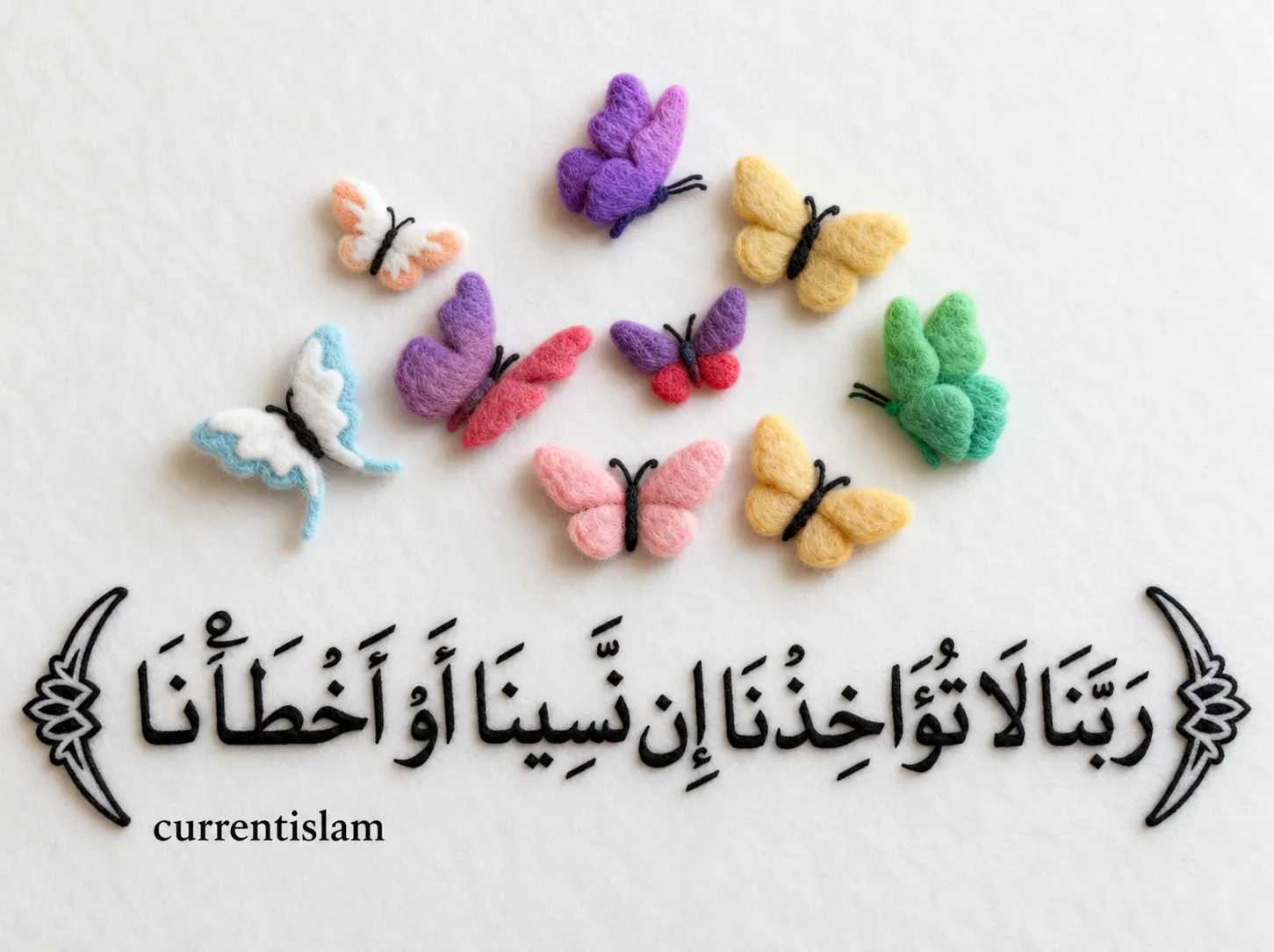
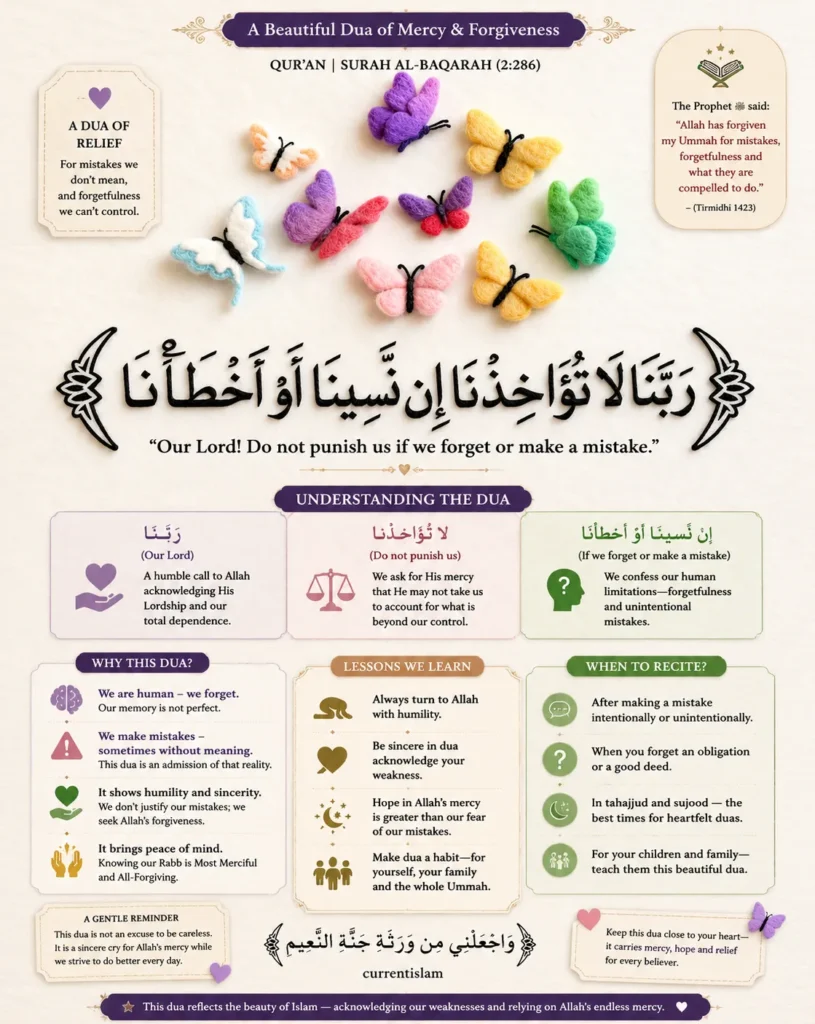
رَبَّنَا لَا تُؤَاخِذْنَا إِن نَّسِينَا أَوْ أَخْطَأْنَا
Transliteration:
Rabbana la tu’akhizna in nasina aw akhta’na.
English:
“Our Lord, do not impose blame upon us if we have forgotten or erred.”
Urdu:
اے ہمارے رب! اگر ہم بھول جائیں یا چوک جائیں تو ہماری گرفت نہ فرما۔
Hindi:
ऐ हमारे रब! अगर हम भूल जाएं या चूक जाएं तो हमारी पकड़ न फरमा।
Here’s why this matters. The Arabic root of tuakhizna implies being seized or gripped. We are asking our Creator not to seize us with strict justice for the slips of our mind.
The Origin and Classical Tafseer of the Verse
To truly grasp the weight of this supplication, we must look at its historical context through classical Islamic scholarship.
According to renowned scholar Ibn Kathir in his authoritative Tafsir, when the preceding verse (2:284) was revealed—stating that Allah will hold people accountable for what they conceal in their hearts—the companions of Prophet Muhammad (peace be upon him) were terrified. They realized that controlling fleeting, intrusive thoughts is impossible for a human being. They fell to their knees, burdened by the fear of inevitable damnation.
This becomes important when you look at how Allah responded. The revelation of Verse 286 established the eternal principle of divine mercy: “Allah does not burden a soul beyond that it can bear.” He then taught them the exact words to seek relief: Rabbana la tuakhizna…
In a highly authentic Hadith recorded in Sahih Muslim, Abu Huraira reported that when the Prophet (peace be upon him) recited this dua, Allah the Almighty responded to this specific plea by saying: “I have done so.” This confirms that Allah has officially pardoned the Muslim Ummah for unintentional mistakes and pure forgetfulness.
The Cognitive Resilience Framework
Now let’s connect this to daily life. In modern psychology, carrying the weight of perfectionism leads to cognitive overload, severe anxiety, and burnout. Many Muslims struggle with a form of religious perfectionism—fearing that a forgotten prayer component or an accidental slip of the tongue has ruined their faith.
This verse serves as a divine cognitive behavioral framework. It actively restructures how believers process guilt:
- Acceptance of Human Fallibility: By commanding us to say “if we forget or err,” the Quran normalizes human mistakes. You are designed to be forgetful (nasina). Acknowledging this reduces the anxiety of trying to be flawless.
- Shifting from Catastrophizing to Hope: Instead of spiraling into despair over a mistake, this dua provides an immediate, actionable step. You verbally hand the mistake over to the Sustainer (Rabb), trusting in His established promise not to penalize accidents.
- Building Spiritual Elasticity: Cognitive resilience is the ability to bounce back from failure. Reciting this verse builds spiritual elasticity, reminding you that your relationship with Allah is built on mercy, not a rigid points system waiting for you to fail.
When you combine this mindset with a structured dua for forgiveness, you build a solid foundation of mental peace and spiritual security that protects against despair.
How to Recite: Wazifa, Benefits, and Modern Application
Integrating this verse into your daily routine is one of the most highly recommended Sunnahs.
The Prophet (peace be upon him) explicitly advised reciting the last two verses of Surah Al-Baqarah every night before sleeping. He stated, “Whoever recites the last two verses of Surah Al-Baqarah at night, they will be sufficient for him” (Sahih al-Bukhari).
Sufficient here means they act as a shield against physical harm, spiritual distress, and the heavy psychological burdens accumulated throughout the day.
Practical Daily Wazifa:
- Timing: Make it a habit to recite this verse immediately after getting into bed.
- Method: Recite it with the conscious intention of forgiving yourself for the day’s accidental mistakes, and asking Allah to do the same.
- Complementary Practice: For those seeking the ultimate release from major sins or intentional wrongdoings, pairing this nighttime habit with the most powerful duas for forgiveness amplifies your spiritual healing and guarantees a clean slate.
People Also Ask:
The primary benefit is receiving guaranteed divine forgiveness for unintentional mistakes and forgetfulness. It also serves as spiritual protection during the night, bringing peace of mind and reducing anxiety regarding one’s shortcomings.
It is highly recommended from the Sunnah to recite the last two verses of Surah Al-Baqarah (including verse 286) at least once every night before going to sleep.
Yes. Because this dua directly asks Allah to remove burdens and overlook our natural flaws, reciting it frequently helps alleviate religious OCD (waswasa), guilt, and the cognitive weight of perfectionism.
According to Sahih Muslim, when the Prophet Muhammad (peace be upon him) recited “Our Lord, do not impose blame upon us if we have forgotten or erred,” Allah responded by saying, “I have done so,” meaning the request was granted for the believers.
Download Your Free Spiritual Resilience Guide
Take these powerful supplications wherever you go. We have compiled a beautifully formatted, easy-to-read document containing the Arabic, transliteration, and deep psychological benefits of the Quran’s greatest verses of forgiveness.
[Click Here to Download the Free PDF Guide]
