Last reviewed: October 19, 2026 | CurrentIslam.com Editorial Board
Quick answer
Poet: Gohar Jarchvi (گوہر جارچوی / गौहर जारचवी), who places his pen name (takhallus) in the concluding stanza.
Form: A manqabat celebrating the Nikah of Hazrat Ali (رضي الله عنه) and Syeda Fatima Zehra (رضي الله عنها).
In this guide: a six-part meaning in English, Urdu and Hindi, the poet’s background, key terms and recitation etiquette.
“Ali Ke Sath Hai Zehra Ki Shadi” is a widely recited Urdu manqabat. Many listeners hear it at an Islamic wedding or a Mehfil-e-Milad and search for the accurate words and meaning, but many pages credit the vocalist instead of the poet. This guide gives the correct attribution and a clear explanation. For more poetry, see our top 10 naats in Urdu.
Who wrote “Ali Ke Sath Hai Zehra Ki Shadi”?
The kalam was composed by the devotional poet Gohar Jarchvi. Following classical Urdu tradition, he placed his pen name “Gohar” in the maqta, the closing couplet where a poet signs his name.
Copyright note: Gohar Jarchvi belongs to the modern era and public-domain status needs estate verification, so this guide does not reproduce the full text. It explains all six parts in our own words.
Key literary terms
- Naat (نعت / नात): Poetry in praise of the Prophet Muhammad ﷺ.
- Hamd (حمد / हम्द): Poetry in praise of Allah.
- Manqabat (منقبت / मनक़बत): Poetry praising the Companions and the Prophet’s ﷺ household (Ahl al-Bayt). This kalam is a manqabat.
- Sher / Bayt (شعر / शेर): A two-line poetic couplet.
- Matla / Maqta: The opening couplet that sets the meter / the closing couplet that carries the poet’s pen name.
- Qafia & Radif (قافیہ / क़ाफ़िया): The rhyme pattern, and the word or phrase repeated at the end of lines.
- Munadi (مُنادی / मुनादी): A public proclamation or joyful announcement.
- Kounain (کَونَین / कौनेन): Both worlds, the physical world and the spiritual realm.
- Ismat (عِصمَت / इस्मत): Purity and moral protection.
- Bughz (بُغض / बुग़्ज़): Malice or hatred in the heart.
Six-part meaning in English, Urdu and Hindi
The manqabat moves from universal joy to the introduction of the couple, the proclamation of mercy, the wedding procession and the poet’s closing signature.
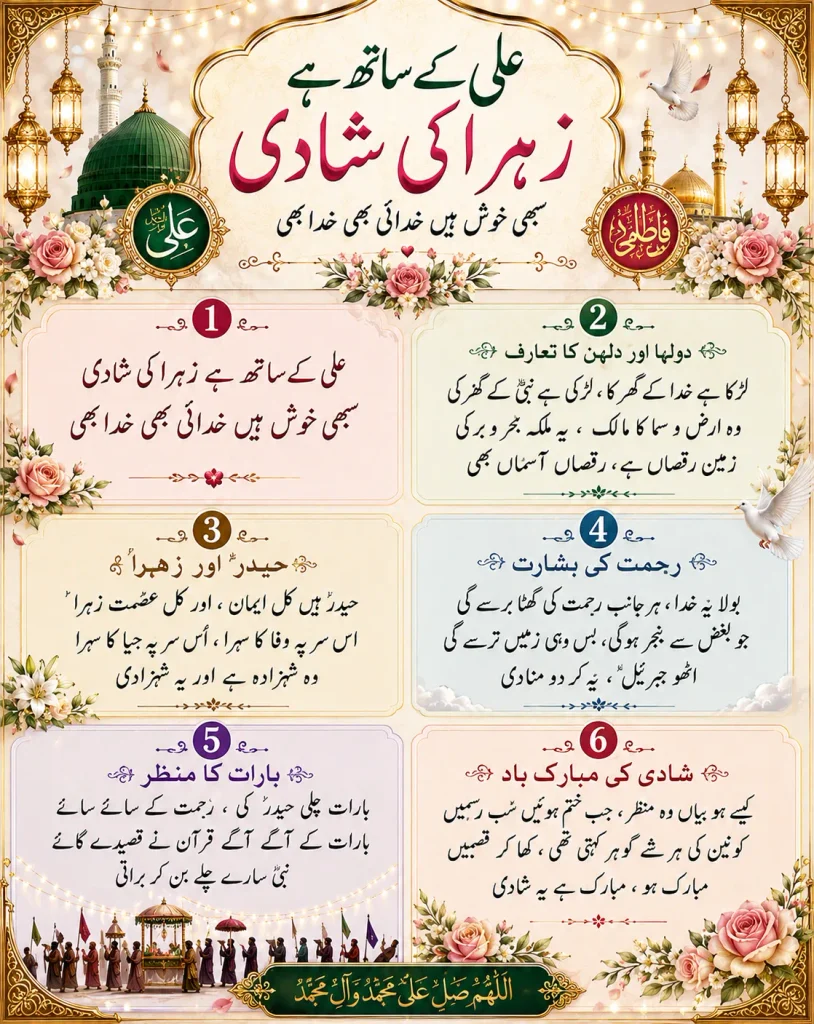
Part 1: Universal rejoicing over the sacred union
English: The opening announces the marriage of Syeda Fatima Zehra to Hazrat Ali. The poet says the whole creation (khudayi: humanity, angels, earth and sky) rejoices, and that the union also carries the special pleasure and blessing of Allah.
اردو مفہوم: کلام کا آغاز اس پرمسرت اعلان سے ہوتا ہے کہ سیدہ فاطمہ زہرا رضي الله عنها کا نکاح حضرت علی رضي الله عنه کے ساتھ ہو رہا ہے۔ اس مقدس رشتے پر صرف زمین و آسمان کی مخلوق ہی شادماں نہیں ہے بلکہ اس نکاح کو اللہ تعالیٰ کی خاص رضا اور خوشنودی بھی حاصل ہے۔
हिंदी अनुवाद: कलाम की शुरुआत इस ख़ुशी के ऐलान से होती है कि सैयदा फ़ातिमा ज़हरा رضي الله عنها का निकाह हज़रत अली رضي الله عنه के साथ हो रहा है। इस पाक रिश्ते पर सिर्फ़ सारी सृष्टि (ख़ुदाई) ही ख़ुश नहीं है, बल्कि इसे अल्लाह की ख़ास रज़ा और ख़ुशी भी हासिल है।
Part 2: Introduction of the groom and bride
English: The second stanza introduces the couple’s spiritual lineage. The groom is honored for his connection to the “House of God” (the Holy Kaaba), and the bride is celebrated as the beloved daughter of the “House of the Prophet ﷺ”. Earth and heavens are pictured dancing with joy (raqsan) across land and sea (behr-o-bar).
اردو مفہوم: دوسرے بند میں دولہا اور دلہن کا روحانی تعارف کرایا گیا ہے کہ دولہا کی نسبت ”خدا کے گھر“ (خانہ کعبہ) سے ہے اور دلہن ”نبی ﷺ کے گھر“ کی شہزادی ہیں۔ اس عظیم رشتے کی خوشی میں زمین اور آسمان رقصاں ہیں۔
हिंदी अनुवाद: दूसरे बंद में दूल्हा और दुल्हन का परिचय दिया गया है कि दूल्हा का ताल्लुक़ “ख़ुदा के घर” (काबा शरीफ़) से है और दुल्हन “नबी ﷺ के घर” की शहज़ादी हैं। इस महान रिश्ते की ख़ुशी में ज़मीन और आसमान झूम (रक़्सां) रहे हैं।
Theological note: Terms such as “malik” and “malika” in this stanza are poetic metaphor (majaz) denoting spiritual rank and honor. In Islamic creed (aqidah), true ownership and dominion over the heavens, earth, land and sea belong to Allah alone.
Part 3: Haider and Zehra, the union of faith and purity
English: Haider (a title of Hazrat Ali meaning “the Lion”) is praised as the embodiment of complete faith and loyalty, wearing the wedding crown of faithfulness (wafa ka sehra). Syeda Zehra is praised as the embodiment of purity (ismat), adorned with the wedding garland of modesty (haya ka sehra). He is the spiritual prince and she the spiritual princess. To read the Quranic basis for the purity of the Prophet’s ﷺ household, see our guide to Ayat-e-Tatheer (Quran 33:33).
اردو مفہوم: تیسرے حصے میں حضرت علی رضي الله عنه (حیدر) کو ایمان اور وفا کا کامل نمونہ اور سیدہ زہرا رضي الله عنها کو پاکیزگی (عصمت) اور حیا کی شہزادی قرار دیا گیا ہے، جن کے سروں پر وفا اور حیا کا سہرا سجا ہوا ہے۔
हिंदी अनुवाद: तीसरे हिस्से में हज़रत अली رضي الله عنه (हैदर) को ईमान और वफ़ा का प्रतीक और बीबी ज़हरा رضي الله عنها को पाकीज़गी (इस्मत) और हया की शहज़ादी बताया गया है, जिनके सर पर वफ़ा और हया का सेहरा सजा है।
Part 4: Good tidings of divine mercy
English: Clouds of divine mercy (rehmat ki ghata) shower in every direction, and Archangel Jibrael (عليه السلام) is imagined proclaiming the joyful news (munadi). The poet adds a moral reminder: only a heart made barren by malice and hatred (bughz) stays deprived of this rain of mercy.
اردو مفہوم: چوتھے بند میں ہر جانب رحمت کی گھٹا برسنے اور حضرت جبریل عليه السلام کے ذریعے خوشی کی منادی (اعلان) کا ذکر ہے۔ ساتھ ہی یہ سبق دیا گیا ہے کہ جو دل بغض اور کینے سے بنجر ہوگا، صرف وہی اس رحمت سے محروم رہے گا۔
हिंदी अनुवाद: चौथे बंद में हर तरफ़ रहमत की घटा बरसने और हज़रत जिब्रील عليه السلام द्वारा ख़ुशी के ऐलान (मुनादी) का ज़िक्र है। साथ ही यह सीख दी गई है कि जो दिल बुग़्ज़ (द्वेष और नफ़रत) से बंजर होगा, केवल वही इस रहमत से वंचित रहेगा।
Note: This is presented as devotional poetic imagery (takhayyul), not as a claim about a graded hadith.
Part 5: The spiritual scene of the wedding procession
English: The fifth stanza paints a metaphorical picture of Hazrat Ali’s wedding procession (barat) moving beneath the shade of divine mercy. Through poetic personification, the Holy Quran recites odes of praise (qaseede) ahead of the procession, and all the Prophets join as spiritual guests (barati).
اردو مفہوم: پانچویں بند میں حضرت علی رضي الله عنه کی بارات کا روحانی اور شاعرانہ منظر پیش کیا گیا ہے جو رحمتِ الٰہی کے سائے میں چل رہی ہے، جہاں قرآن کی عظمت کے قصیدے اور انبیاء کرام کی روحانی شرکت کو بطور باراتی تصور کیا گیا ہے۔
हिंदी अनुवाद: पांचवें बंद में हज़रत अली رضي الله عنه की बारात का रूहानी और शायराना मंज़र पेश किया गया है जो रहमत के साए में चल रही है, जहाँ क़ुरआन की शान के क़सीदे और नबियों की रूहानी शिरकत को बाराती के रूप में चित्रित किया गया है।
Historical note: The actual Nikah was simple and took place in Madinah in the presence of the Prophet Muhammad ﷺ and his noble Companions. The imagery of the Quran singing qasidas and past Prophets in the procession is spiritual celebration, not a literal physical event.
Part 6: Wedding felicitations and the poet’s signature
English: In the final stanza (maqta), Gohar Jarchvi signs his pen name and says that every creation across both worlds (kounain) joyfully offered heartfelt congratulations on this blessed marriage once the sacred rites were complete.
اردو مفہوم: آخری بند (مقطع) میں شاعر گوہر جارچوی اپنا تخلص استعمال کرتے ہوئے کہتے ہیں کہ جب شادی کی تمام پاکیزہ رسمیں مکمل ہوئیں تو دونوں جہاں (کونین) کی ہر شے نے خوشی سے اس مبارک شادی پر مبارک باد پیش کی۔
हिंदी अनुवाद: आख़िरी बंद (मक़्ता) में शायर गौहर जारचवी अपना तख़ल्लुस इस्तेमाल करते हुए कहते हैं कि जब शादी की तमाम पाक रस्में पूरी हुईं, तो दोनों जहाँ की हर चीज़ ने ख़ुशी से इस मुबारक शादी पर मुबारकबाद पेश की।
About Gohar Jarchvi and the history of the Nikah
Gohar Jarchvi is a celebrated Urdu devotional poet associated with the literary heritage of Jarcha, a historic town in Uttar Pradesh, India. His poetry is known for expressing deep spiritual ideas in simple, rhythmic language that ordinary listeners can memorize easily.
The marriage of Hazrat Ali ibn Abi Talib and Syeda Fatima Zehra took place in Madinah after the Hijrah. Rather than worldly display, it exemplified prophetic simplicity and modesty. Hazrat Ali offered his coat of mail (zirah) as the dower (mahr), and the Prophet ﷺ personally supplicated for blessings upon the couple.
The Messenger of Allah ﷺ said: “Fatima is the leader of the women of the people of Paradise.” (Sahih al-Bukhari 3767, graded Sahih.) The Quran also affirms the purity of the household in Surah Al-Ahzab. Read our Surah Ahzab Ayat 33 translation and tafsir.
Recitation guide: Parho, Samjho, Bayan Karo
- Parho (read): Practice the Arabic sounds in ismat (with ‘Ayn), bughz (with Ghayn) and qaseede (with Qaf).
- Samjho (understand): Appreciate the metaphors praising Hazrat Ali and Syeda Fatima while keeping the correct creed (aqidah).
- Bayan karo (recite with credit): Begin and end with salutations upon the Prophet ﷺ and his family, and always name the poet.
اللَّهُمَّ صَلِّ عَلَى مُحَمَّدٍ وَآلِ مُحَمَّدٍ
(Allahumma salli ‘ala Muhammadin wa Aali Muhammad)
Learn more in our guides to Durood Shareef and Surah Al-Ahzab Ayat 56.
Best occasions
Many families recite this manqabat at Nikah or Walima gatherings as an uplifting alternative to extravagance. Pair it with the dua Rabbana Hab Lana and the commentary on Surah Al-Furqan Ayat 74. Scholars hold varying views on the format of public gatherings, but all agree that praising the Sahabah and Ahl al-Bayt with modesty, truthful attribution and adherence to the Sunnah is a noble act.
Naat vs manqabat at a glance
| Genre | Praises | Example |
|---|---|---|
| Hamd | Allah | Classical hamd poetry |
| Naat | Prophet Muhammad ﷺ | Hum Ko Bulana Ya Rasool Allah |
| Manqabat | Companions and Ahl al-Bayt | Ali Ke Sath Hai Zehra Ki Shadi |
Frequently asked questions
1. Who is the poet of “Ali Ke Sath Hai Zehra Ki Shadi”?
This famous manqabat was written by the Urdu poet Gohar Jarchvi, who included his pen name “Gohar” in the sixth stanza.
یہ مشہور منقبت گوہر جارچوی نے لکھی ہے، جنہوں نے آخری بند (مقطع) میں اپنا تخلص ”گوہر“ استعمال کیا ہے۔
यह मशहूर मनक़बत गौहर जारचवी ने लिखी है, जिन्होंने आख़िरी बंद (मक़्ता) में अपना तख़ल्लुस “गौहर” इस्तेमाल किया है।
2. Is it a naat or a manqabat?
It is a manqabat. A naat praises the Prophet Muhammad ﷺ, while a manqabat praises the Companions and the Ahl al-Bayt. This poem celebrates the marriage of Hazrat Ali and Syeda Fatima.
ادبی اصطلاح میں یہ کلام منقبت ہے کیونکہ اس میں حضرت علی اور سیدہ فاطمہ زہرا کے نکاح اور فضائل کا بیان ہے۔
साहित्यिक रूप से यह कलाम एक मनक़बत है क्योंकि इसमें हज़रत अली और सैयदा फ़ातिमा ज़हरा के निकाह और फ़ज़ाइल का बयान है।
3. What does “Larka hai Khuda ke ghar ka, larki hai Nabi ke ghar ki” mean?
It highlights the noble lineage of the couple. “The boy belongs to the House of God” refers to Hazrat Ali’s special association with the Holy Kaaba, and “the girl belongs to the House of the Prophet ﷺ” honors Syeda Fatima as the Prophet’s beloved daughter.
اس مصرعے میں دولہا کی خانہ کعبہ سے نسبت اور دلہن کے بنتِ رسول ﷺ ہونے کا شرف بیان کیا گیا ہے۔
इस मिसरे में दूल्हे की काबा शरीफ़ से निस्बत और दुल्हन के नबी ﷺ की शहज़ादी होने का गौरव बताया गया है।
4. What does “Haider hain kul iman aur kul ismat Zehra” mean?
The poet pairs the couple’s defining virtues: Haider (Hazrat Ali) as the embodiment of faith and loyalty, and Zehra (Syeda Fatima) as the embodiment of complete purity and modesty.
یہاں حضرت علی کو ایمان و وفا کا کامل نمونہ اور سیدہ زہرا کو پاکیزگی (عصمت) اور حیا کی شہزادی کے طور پر بیان کیا گیا ہے۔
यहाँ हज़रत अली को ईमान और वफ़ा का प्रतीक और बीबी ज़हरा को पाकीज़गी (इस्मत) और हया की शहज़ादी बताया गया है।
5. What do “Munadi” and “Kounain” mean?
Munadi means a public proclamation or joyful announcement (the announcement by Archangel Jibrael in part 4). Kounain means both worlds, which rejoice in part 6.
”مُنادی“ کا مطلب عام اعلان یا خوشخبری سنانا ہے، اور ”کَونَین“ کا مطلب دونوں جہاں ہے۔
“मुनादी” का अर्थ आम ऐलान या ख़ुशख़बरी सुनाना है, और “कौनेन” का अर्थ दोनों जहाँ है।
6. Can we recite this manqabat at a Nikah or Walima?
Yes. It is a dignified way to celebrate marriage while remembering the union of Hazrat Ali and Syeda Fatima, provided the gathering observes Islamic modesty and etiquette.
جی ہاں، نکاح یا ولیمے کی تقریب میں شرعی آداب کے ساتھ یہ منقبت پڑھنا باعثِ برکت ہے۔
जी हाँ, निकाह या वलीमे की महफ़िल में अदब के साथ यह मनक़बत पढ़ना बरकत का सबब है।
7. How many parts does this guide explain?
Six: (1) universal rejoicing, (2) introduction of groom and bride, (3) Haider and Zehra, (4) good tidings of mercy, (5) the scene of the barat, and (6) the felicitations and poet’s signature.
اس گائیڈ میں منقبت کو 6 موضوعاتی حصوں میں تقسیم کیا گیا ہے۔
इस गाइड में मनक़बत को 6 हिस्सों में बाँटा गया है।
8. Which Durood Shareef is on the poster?
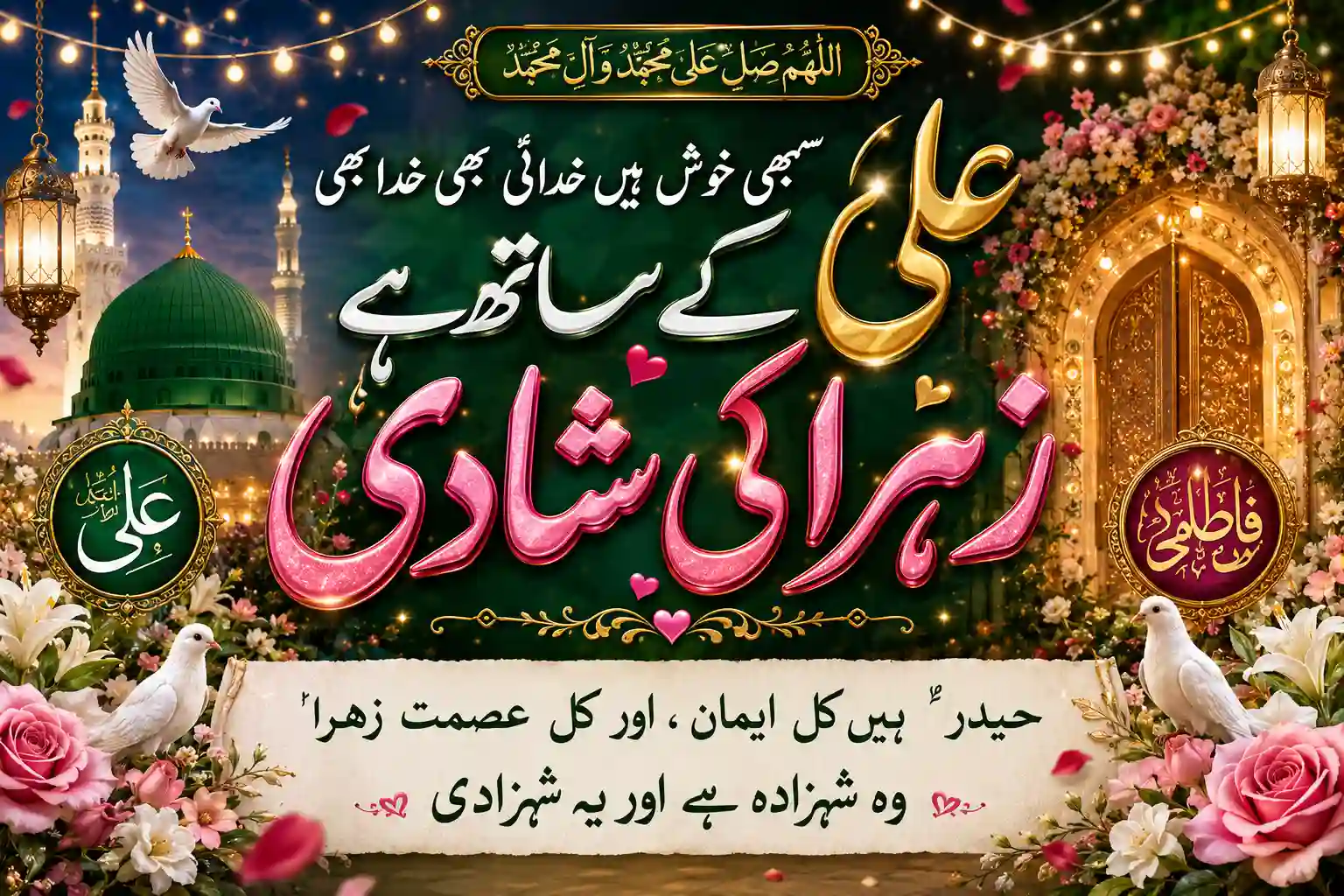
The banner reads اللَّهُمَّ صَلِّ عَلَى مُحَمَّدٍ وَآلِ مُحَمَّدٍ (“O Allah, send blessings upon Muhammad ﷺ and the family of Muhammad ﷺ”).
پوسٹر کے آخر میں درودِ پاک «اللَّهُمَّ صَلِّ عَلَى مُحَمَّدٍ وَآلِ مُحَمَّدٍ» درج ہے۔
पोस्टर के नीचे दुरूद शरीफ़ «اللَّهُمَّ صَلِّ عَلَى مُحَمَّدٍ وَآلِ مُحَمَّدٍ» लिखा गया है।
Keep reading
To report a correction, scholarly note or copyright inquiry, contact our editorial desk via our Contact page. We review within 48 hours.
