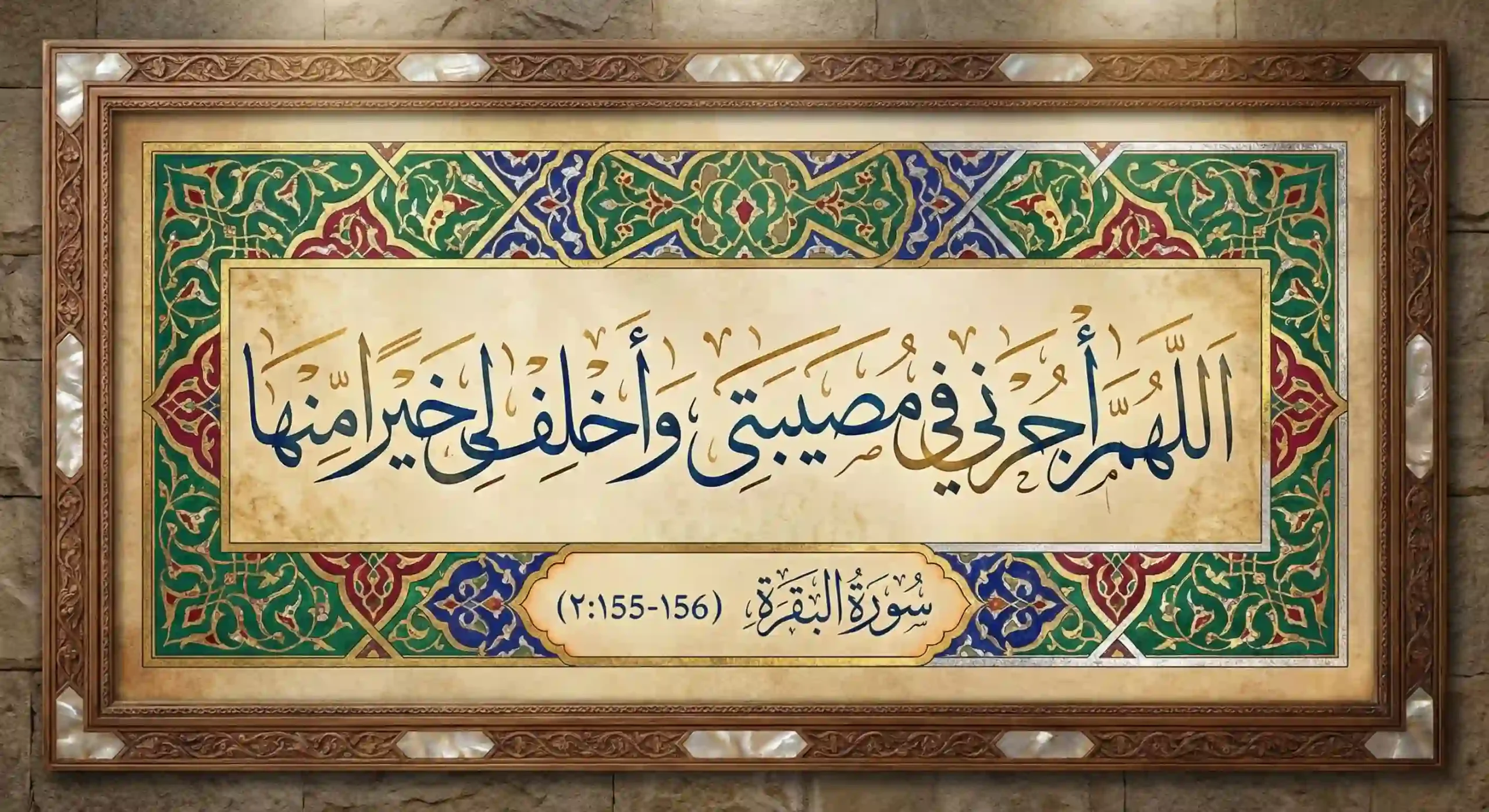
Have you ever felt a loss so heavy that “sorry” felt empty, and the future looked like a bolted door? In our fast-paced world of instant updates and constant noise, we often forget that the most powerful healing isn’t found in a podcast or a pill.
It is found in eleven ancient Arabic words that have the power to alchemize a tragedy into a triumph.
This is not just a prayer for sadness. It is a divine strategy for upgrading your life when everything seems to be falling apart.
The Divine Formula: Allahumma Ajirni Fi Musibati
At its core, this prayer is a shift from despair to anticipation. It translates to: “O Allah, reward me in my affliction and compensate me with something better than it.”
It is a legal claim on a divine promise—a request for a spiritual and worldly upgrade.
The Words of Power
Arabic: اللَّهُمَّ أْجُرْنِي فِي مُصِيبَتِي، وَأَخْلِفْ لِي خَيْرًا مِنْهَا
Transliteration: Allahumma-jurni fi musibati, wa-khlif li khayran minha.
English Meaning: “O Allah! Retribute me for my affliction and give me in exchange something better than it.”
Urdu Translation: اے اللہ! مجھے میری اس مصیبت میں اجر عطا فرما اور مجھے اس کے بدلے میں اس سے بہتر چیز عطا فرما۔
The Origin Story: Proof It Works
Reference: Sahih Muslim, Book 11, Hadith 918
History provides the ultimate proof of concept. The Dua was narrated by Umm Salama, a woman who faced the devastating loss of her husband, Abu Salamah—a man she believed had no equal.
Prophet Muhammad (ﷺ) taught her these words. She recited them, despite wondering, “Who could possibly be better than Abu Salamah?”
The result? Allah did not just give her peace; He gave her the Prophet (ﷺ) himself in marriage. She lost a soulmate, but she gained the leader of all humanity. This teaches us a vital lesson: Your logic is limited; Allah’s replacement is unlimited.
The Divine Foundation: Surah Al-Baqarah
The spiritual backbone of this Dua comes from the Quran (2:155-156). Allah guarantees that life will include testing—fear, hunger, and loss.
But the Quranic response isn’t panic; it is perspective.
Surah Al-Baqarah (2:156) Verse 156.
Arabic:
الَّذِينَ إِذَا أَصَابَتْهُم مُّصِيبَةٌ قَالُوا إِنَّا لِلَّهِ وَإِنَّا إِلَيْهِ رَاجِعُونَ
1. Transliteration (Roman Script)
Allatheena iza asabathum museebatun qaloo inna lillahi wa inna ilayhi raji’oon.
2. Urdu Translation (Tarjuma)
“وہ لوگ کہ جب ان پر کوئی مصیبت پڑتی ہے تو کہتے ہیں: بیشک ہم اللہ ہی کے ہیں اور ہمیں اسی کی طرف لوٹ کر جانا ہے۔”
3. English Translation
“Who, when disaster strikes them, say, ‘Indeed we belong to Allah, and indeed to Him we will return.'”
The “Resilience Loop for 2026
In 2026, we move beyond passive patience. We apply the Modern Sahaba Mindset. This strategy treats every Musibah (calamity) not as a dead end, but as a transaction.
Here is how to run the loop:
- Acknowledge (The Sabr Phase): Feel the pain. Do not suppress it or fake a smile. Islam honors your grief.
- Invest (The Ajr Phase): Recite the Dua. By saying Ajirni (reward me), you are literally depositing your pain into a divine account. You are asking for payment for your suffering.
- Upgrade (The Khairan Phase): This is the pivot. You stop looking back at what was stolen and start looking forward to the “better version” Allah is preparing. You shift from a “Victim Mindset” to a “Trust Mindset.”
Why This Works in the Age of Toxic Positivity
We live in an era where we are told to “just be happy” or “manifest good vibes.” This is often shallow and invalidating.
This Dua works because it is real.
- It acknowledges that the Musibah hurts.
- It acknowledges that you have lost something.
- But then, it empowers you to demand (with humility) a better outcome.
Whether you are a student who failed a critical exam, an entrepreneur facing bankruptcy, or a parent grieving a child, these words are your bridge from the ruins of today to the blessings of tomorrow.
Common Questions:
Al-la-hum-ma Aj-ir-nee Fee Moo-see-ba-tee. (Focus on the deep ‘h’ in Allahumma and the soft ‘s’ in Musibati).
The “First Strike.” The Prophet (ﷺ) taught that true patience is at the first stroke of a calamity. Say it the moment the glass breaks, the email arrives, or the news hits.
Absolutely. The word Musibah covers every spectrum of affliction. Scholars confirm that Allah promises compensation for any genuine pain, whether it is a broken heart or a broken bank account.
My Personal Recommendation
If you want to integrate this into your life effectively, I recommend the “Pause and Pivot” Technique:
When something goes wrong, give yourself a 90-second window.
- Seconds 0-30: Feel the shock or anger. Don’t speak yet.
- Seconds 31-60: Take a deep breath and recite Inna lillahi wa inna ilayhi raji’un. Remind yourself that you don’t own the thing you lost; you were just its guardian.
- Seconds 61-90: Recite Allahumma Ajirni Fi Musibati… with full conviction. Visualize Allah taking the broken pieces from your hands and handing you something wrapped in light in return.
Do this for even small inconveniences (like traffic or a spilled coffee). It trains your brain so that when the “Big One” hits, your spiritual reflex is ready.
