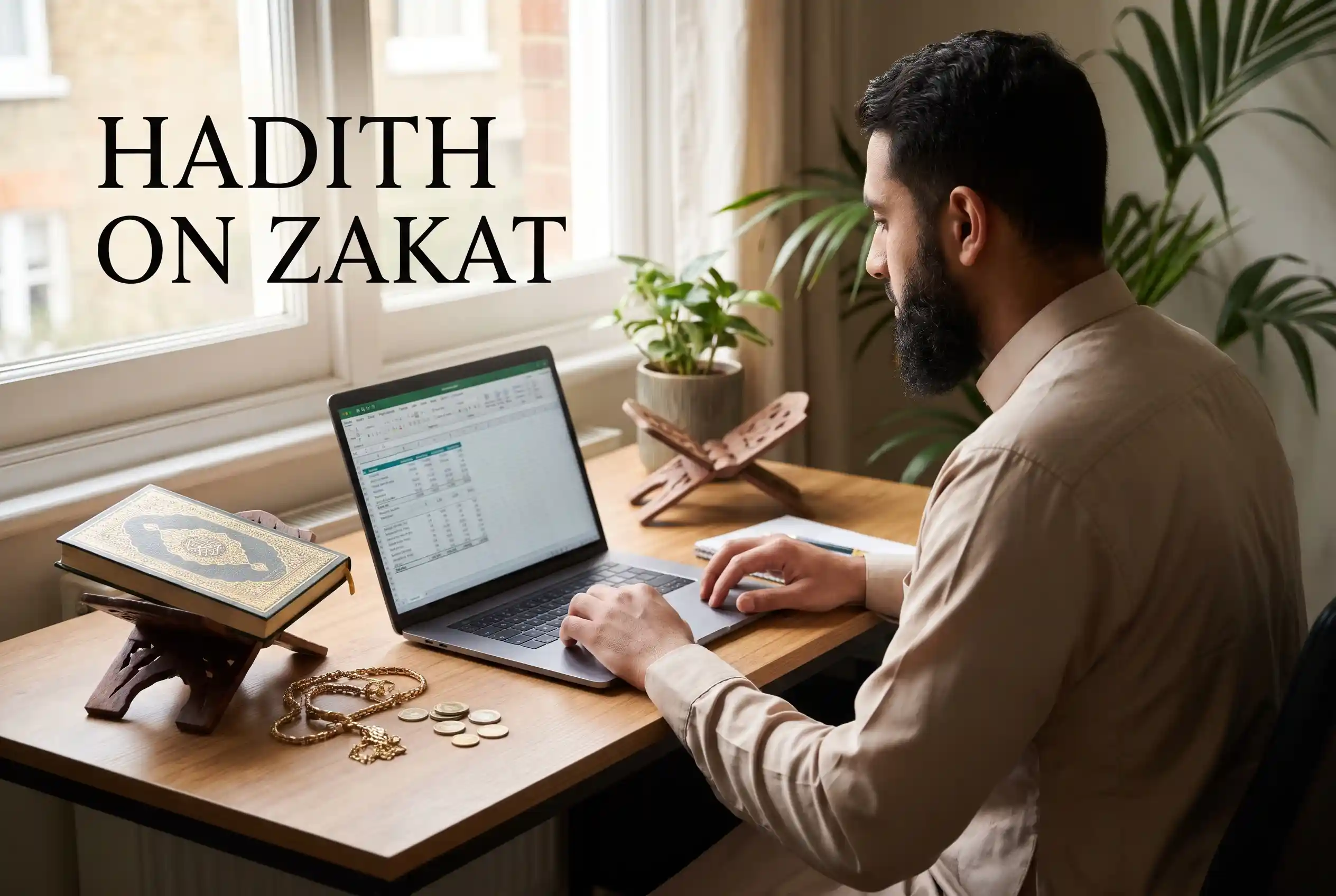
You have worked hard to build your savings, secure a 401(k), and perhaps invest in some gold or crypto. Yet, as the Islamic lunar year circles back, a quiet anxiety sets in. You want to fulfill your religious duty, but calculating Zakat on modern assets feels overwhelming, and frankly, parting with 2.5% of your hard-earned wealth triggers a subtle fear of loss. You are not alone in this scarcity mindset. The prophetic tradition provides the exact spiritual remedy for this anxiety, transforming Zakat from a heavy tax into a deeply purifying investment.
Quick Answer: Zakat in Brief
- The Core Rule: Zakat is the third pillar of Islam, mandating a 2.5% annual deduction on qualifying surplus wealth.
- The Condition: It is only due if your wealth meets the minimum threshold (Nisab) and you have held it for one lunar year (Hawl).
- The Warning: Authentic Hadiths strictly warn against hoarding wealth, reminding us that all sustenance is ultimately from Allah.
Why is Zakat the Third Pillar of Islam?
Zakat is structurally equal to the five daily prayers. It is the economic heartbeat of the Muslim community, designed to keep wealth circulating rather than stagnating in the accounts of the elite.
Translation: “Islam is based on (the following) five (principles): To testify that none has the right to be worshipped but Allah and Muhammad is Allah’s Messenger; to offer the (compulsory congregational) prayers dutifully and perfectly; to pay Zakat (i.e. obligatory charity); to perform Hajj (i.e. Pilgrimage to Mecca); to observe fast during the month of Ramadan.” (Sahih al-Bukhari 8)
The Prophet (ﷺ) inextricably linked prayer—your physical connection to Allah—with Zakat—your economic responsibility to society. To claim faith while hoarding surplus wealth breaks this covenant.
The Severe Warning for Hoarding Wealth
The prophetic warnings against withholding Zakat are stark, designed to jolt the believer out of materialism. If you refuse to purify your wealth, that very wealth becomes a spiritual and psychological burden.
Translation: “Whoever is made wealthy by Allah and does not pay the Zakat of his wealth, then on the Day of Resurrection his wealth will be made like a bald-headed poisonous male snake with two black spots over the eyes. The snake will encircle his neck and bite his cheeks and say, ‘I am your wealth, I am your treasure.'” (Sahih al-Bukhari 1403)
The Spiritual Psychology of the “Bald Snake”
The imagery here is terrifying but purposeful. A person who hoards does so for security. The Hadith subverts this: your hoarded capital will not protect you; it will suffocate you. The “bald snake” signifies a serpent so venomous it has lost its scales. This highlights the absolute necessity of relying on Al-Musawwir (The Fashioner) and the Ultimate Provider, rather than your bank balance.
Understanding Nisab: The Minimum Threshold
Islam does not burden the poor. You only pay Zakat if your surplus wealth (beyond basic needs and immediate debts) reaches a specific threshold (Nisab) and remains above it for one lunar year.
Translation: “No Zakat is due on property mounting to less than five Uqiyas (of silver)…” (Sahih al-Bukhari 1405)
Zakat on Gold vs. Silver
Historically, the Nisab was set at 87.48 grams of gold or 612.36 grams of silver. Today, because silver is much cheaper, most scholars advise using the silver threshold to calculate your Nisab. This ensures more people contribute to the social safety net. If you only own gold jewelry for personal use, scholarly opinions differ, but many assert that zakat on gold in islam is mandatory if it exceeds the 87.48-gram threshold.
Modern Assets: Stocks, 401(k)s, and Crypto
How do we apply Hadiths about camels and silver coins to modern portfolios? The underlying legal principle (Illah) remains the same: wealth that has the potential to grow is subject to Zakat.
| Asset Type | Zakat Ruling (General Consensus) |
| Cash in Bank | 2.5% on the total amount held for a lunar year. |
| Gold & Silver | 2.5% on current market value if above Nisab. |
| Stocks (Trading) | 2.5% on the total current market value of the portfolio. |
| Stocks (Dividend/Hold) | 2.5% on the dividend income, and sometimes the liquid asset value of the company (consult a local scholar). |
| 401(k) / Retirement | Generally 2.5% on the accessible amount (minus early withdrawal penalties/taxes). |
The 2.5% Mindset Shift
Do not view the 2.5% as a loss. The Arabic word Zakat means to purify and to grow. When you prune a tree, you cut away a small percentage of branches so the tree can bear more fruit next season. Zakat prunes your wealth of greed.
When you feel the sting of parting with your money, turn to Allah and recite the beautiful dua for distress and hardship: Allahumma rahmataka arju. Call upon Ya Wahabu (The Bestower) to replace what you have given with something better. Remind yourself of the opening verses of the Quran, Alif laam meem zalikal kitabu, which affirm that guidance is for those who believe in the unseen and spend out of what Allah has provided them.
Zakat Calculator: Calculate Your Obligatory Charity
Annual Zakat Calculator
Total Zakat Due (2.5%)
$0.00
Net Zakatable Wealth: $0.00
The “Start Tonight” Practice Plan
Do not delay your Zakat. The Prophet (ﷺ) warned against letting charity mix with your wealth, lest it destroy it.
1.Determine Your Hawl Date:
Pick a specific date on the Islamic lunar calendar (many choose Ramadan for multiplied rewards) to evaluate your wealth every year.
2.Calculate Your Total Assets:
Sum up your cash, gold, tradable stocks, and crypto on that exact date.
3.Deduct Immediate Debts:
Subtract bills and debts due immediately (not your entire 30-year mortgage).
4.Pay the 2.5%:
If the remaining number is above the silver Nisab (approx. $400-$500 USD, check daily rates), distribute 2.5% to eligible recipients immediately.
FAQ: Zakat Answered
What if my wealth drops below Nisab during the year?
If your wealth drops below the threshold during the year, your Hawl (lunar year count) breaks. You restart the one-year count on the day your wealth reaches the Nisab again.
Do I pay Zakat on my primary home or car?
No. Zakat is not due on personal items used for daily living, including your primary residence, your car, or your clothes, regardless of their value.
Can I give Zakat to my relatives?
Yes, and it is highly encouraged to give it to poor relatives first, provided they are not your immediate dependents (like your wife, children, or parents whom you are already legally obligated to support).
Call to Action: Has this clarified your duty?
Read our next post to understand the exact 8 categories of people eligible to receive your Zakat.
Last reviewed by: Shahab Khan
