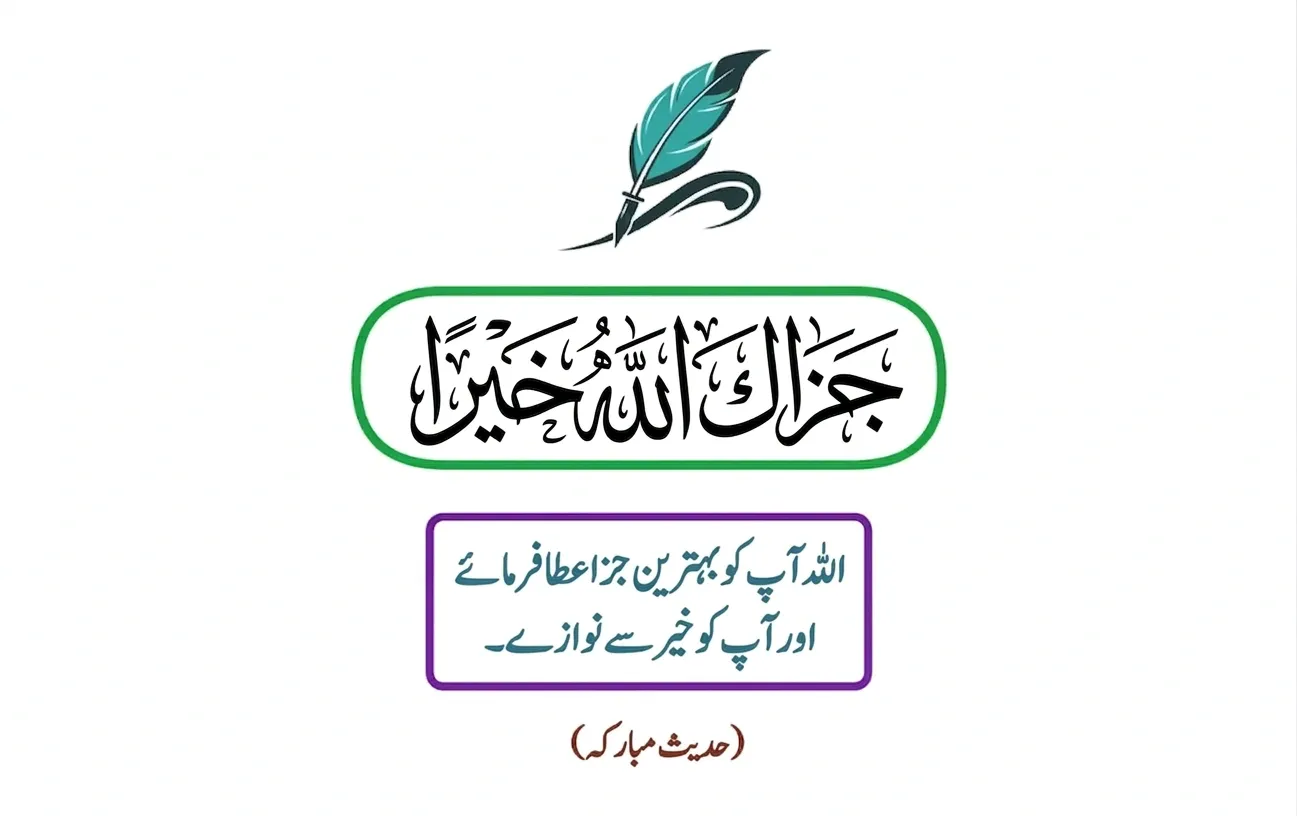
Jazakallahu Khairan means “May Allah reward you with goodness.” It is one of the most beautiful Islamic expressions of gratitude, because it turns thanks into a dua and reminds the heart that real reward comes from Allah.
Jazakallahu Khairan Meaning
Jazakallahu Khairan is an Arabic phrase used to thank someone by asking Allah to reward them with goodness. It is more than a polite thank-you, because it carries a prayer for blessing, reward, and mercy. Muslims use it to respond to kindness in a way that reflects faith, gratitude, and love for الخير.
Jazakallahu Khairan means “May Allah reward you with goodness.” It is a dua, not just a compliment. Muslims say it to thank someone while asking Allah to give them reward for their kindness.
Word by Word
Jazakallahu Khairan can be understood word by word for easier learning.
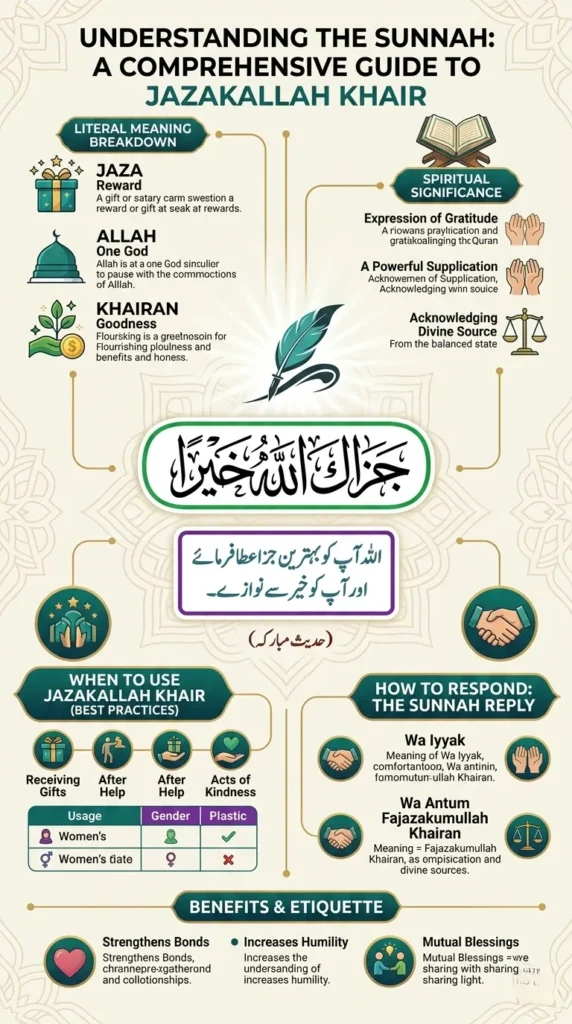
- Jaza means reward.
- Allah means Allah.
- Khairan means goodness or better reward.
So the full meaning becomes: “May Allah reward you with goodness.” This simple breakdown helps beginners remember both the meaning and the spiritual depth of the phrase.
Word by word, the phrase asks Allah to reward the person with good. The key idea is not only gratitude but also dua. That is why the phrase is widely loved in Muslim speech.
Arabic, Transliteration, Urdu
Arabic:
جَزَاكَ ٱللَّٰهُ خَيْرًا
Transliteration: Jazakallahu khairan
English: May Allah reward you with goodness.
Urdu:
اللہ آپ کو بہترین جزا دے / اللہ آپ کو خیر سے نوازے
The Arabic form is short, powerful, and full of meaning. The Urdu translation helps readers understand that it is a sincere prayer for reward. The phrase is easy to say, but its spiritual value is very deep.
Pronunciation
The pronunciation is usually read as Jah-zaa-kal-lahu khay-ran. In smooth everyday speech, many Muslims say it in a natural and fast way. The important part is clarity of intention, not perfection of accent.
Say it slowly first: Jazakallahu Khairan. Then repeat it naturally until it feels easy. The phrase is short, so it becomes part of daily Muslim etiquette very quickly.
When to Say It
You should say Jazakallahu Khairan when someone helps you, gives you a gift, teaches you something beneficial, or does any good deed for you. It is especially beautiful after acts of service, support, advice, or kindness. It works well in both spoken conversation and written messages.
Say Jazakallahu Khairan whenever you want to thank someone in an Islamic way. It is suitable for daily life, family, friends, teachers, and anyone who has done something good for you. It makes gratitude into worship.
How to Reply
A simple reply to Jazakallahu Khairan is “Wa iyyak” for a male, or “Wa iyyaki” for a female, meaning “And to you as well.” You can also reply with “Wa iyyakum” when speaking to a group. Another polite reply is to say “Ameen, wa iyyaakum” or simply express thanks with dua.
The most common reply is “Wa iyyak” or “Wa iyyaki.” This means “and to you as well.” It keeps the exchange short, respectful, and spiritually balanced.
Hadith Evidence
The phrase is supported by the hadith reported from Usamah ibn Zaid, where the Prophet ﷺ said that if someone does good to you and you say Jazakallahu khairan, then you have praised them well. This is one of the clearest proofs that the phrase is not just cultural, but grounded in Islamic etiquette.
This teaching shows that thanking people in a dua form is better than ordinary words alone. It encourages Muslims to remember Allah even while speaking to people. That is why scholars mention this phrase as an excellent way of responding to kindness.
The strongest evidence for this phrase is a hadith praising the one who says Jazakallahu Khairan in return for kindness. The Prophet ﷺ encouraged this style of gratitude because it combines good manners with dua.
Quranic Meaning
Jazakallahu Khairan is not quoted as a direct verse from the Quran, but its meaning matches Quranic principles very closely. The Quran repeatedly teaches gratitude, reward, goodness, and returning good with good. The phrase fits the Quran’s moral spirit even though it is a hadith-based expression rather than a direct Quranic quotation.
One important Quranic idea is that Allah rewards goodness with goodness. Another important principle is that gratitude should be shown toward people while remembering the ultimate giver of all blessings is Allah. That is exactly what makes this phrase so meaningful in Muslim life.
This phrase is not a direct Quran verse, but it matches Quranic values of gratitude and reward. The Quran encourages goodness, thankfulness, and noble speech. Jazakallahu Khairan reflects all three.
Why It Matters
Jazakallahu Khairan matters because it raises the quality of Muslim speech. Instead of a plain thank-you, it turns gratitude into dua, which benefits both the speaker and the one being thanked. It also teaches believers to connect daily conversation with remembrance of Allah.
This is especially important today, when people often speak quickly and without reflection. A phrase like this restores spiritual depth to ordinary language. It is a small sentence, but it carries big meaning in relationships, adab, and faith.
This phrase matters because it upgrades gratitude into worshipful speech. It teaches Muslims to thank people while asking Allah to reward them. That makes everyday language more beautiful and more meaningful.
Benefits
Using Jazakallahu Khairan has many spiritual and social benefits. It builds good manners, encourages sincere appreciation, spreads dua in daily life, and reminds both people that reward comes from Allah. It can also soften the heart and reduce cold, transactional communication.
It is especially useful in homes, classrooms, Islamic groups, and online communities. When Muslims normalize this phrase, they create a culture of kindness and remembrance. That is one reason it is so beloved among students of knowledge and everyday believers.
The benefits of this phrase are spiritual, social, and emotional. It strengthens gratitude, increases dua in speech, and improves Muslim manners. It also makes simple conversation more rewarding.
Scholarly Reflection
Classical scholars generally value phrases that combine gratitude with prayer. Imam Nawawi’s works on adab and hadith emphasize good character, noble speech, and sincere supplication. This phrase fits that broader scholarly spirit because it is both polite and devotional.
Scholars also note that Muslims should preserve expressions that carry clear Islamic meaning. Jazakallahu Khairan is strong because it avoids shallow praise and directs the heart toward Allah. That is one reason it has remained popular across generations.
Scholars appreciate this phrase because it combines gratitude with dua. It is simple, sound, and spiritually rich. That is why it has stayed in Muslim usage for so long.
Modern Usage
In today’s world, Jazakallahu Khairan works beautifully in messages, comments, emails, class groups, Islamic pages, and family chats. It is a practical example of a grateful habit loop: kindness happens, gratitude is expressed, and Allah is remembered immediately. This makes it a perfect phrase for a digital Muslim lifestyle.
It also fits the idea of digital sunnah, where Islamic etiquette is preserved in modern communication. A short message with this phrase can carry warmth, dignity, and reward. That is why it remains relevant in 2026 and beyond.
This phrase is very useful in modern digital communication. It lets Muslims thank others while keeping the language Islamic. That makes it perfect for chats, posts, and everyday online interaction.
Word Meaning in Simple English
If you want the simplest meaning, say: “May Allah reward you with goodness.”
If you want a softer everyday meaning, say: “Thank you, and may Allah bless you.”
These are close explanations, though the Arabic phrase is more exact and spiritually richer. The main point is that it is both gratitude and supplication in one sentence.
The simplest English meaning is “May Allah reward you with goodness.” You can also understand it as a thankful prayer. That is the heart of the expression.
People Also Ask:
It means “May Allah reward you with goodness.” It is a dua used to thank someone sincerely.
The common reply is “Wa iyyak” for one male, “Wa iyyaki” for one female, or “Wa iyyakum” for a group.
No, it is not a direct Quran verse. It is supported by hadith and fits Quranic values of gratitude and goodness.
Say it when someone does a good deed, helps you, teaches you, or gives you a favor.
It is more spiritually rich than a simple thank you because it includes a prayer for reward from Allah.
Related Islamic Phrases
Jazakallahu Khairan belongs to a wider family of Islamic expressions that keep speech connected to Allah. It sits naturally beside phrases of gratitude, dua, praise, and remembrance.
For example, readers who enjoy Islamic meanings may also want to understand Quranic reminders about blessing and provision. This is a good place to link to related Islamic content such as What is Lohe Qurani
And
Wallahu Khairur Raziqin meaning Surah Jumuah 62:11 using natural anchor text. That helps readers move from one faith-based topic to another without feeling forced.
Final Reflection
Jazakallahu Khairan is more than a polite phrase. It is a dua, a habit of gratitude, and a reminder that every good deed deserves prayer, not just response. When Muslims use it sincerely, they keep kindness alive and bring Allah into daily speech.
Make this phrase part of your tongue, your messages, and your home. Small words can carry great reward when they are spoken with faith.
