You wake up worried.
Your bank balance is low.
Your health feels unstable.
Your family is stressed.
And yet, in five different surahs, Allah repeats the same line:
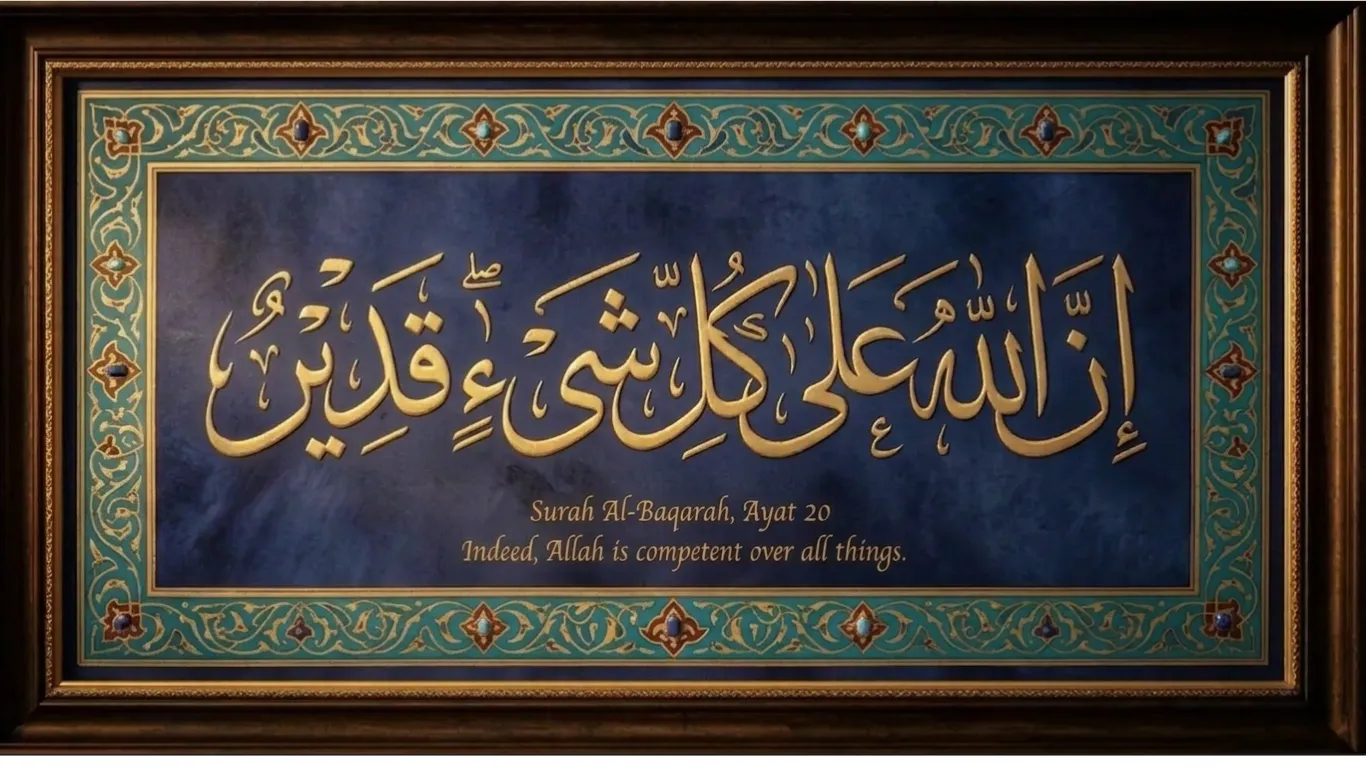
“Innallāha ‘alā kulli shay’in qadīr.”
If Allah is truly capable of all things, then why do you still feel powerless?
This article is not just a tafsīr checklist. It is a practical roadmap to turn “innallāha ‘alā kulli shay’in qadīr” into a daily spiritual habit that reshapes your anxiety, your decisions, and your trust in Allah.
1. The Tawakkul Loop: How “Qadīr” Becomes Your Daily Habit
The phrase “Innallāha ‘alā kulli shay’in qadīr” means Allah has power over everything. Using it in the Tawakkul Loop (Intention → Action → Trust → Repeat) turns it into a daily spiritual habit that helps you trust Allah after Fajr, during anxiety, and through every decision.
The Tawakkul Loop (Step by Step)
- Intention (Niyyah):
- Decide: “Today I will rely on Allah’s power, not my own control.”
- This is the first step in the Tawakkul Loop.
- Action (‘Amal):
- After Fajr or when anxiety hits, recite “innallāha ‘alā kulli shay’in qadīr” with heart‑focused dhikr.
- Do your practical steps (work, study, dua) as if you are carrying your share of responsibility.
- Trust (Tawakkul):
- Place the outcome in Allah’s hands and repeat: “You are powerful over all things.”
- This is where the Tawakkul Loop becomes real in your life.
- Repeat (Daily Reset):
- Incorporate this loop into your daily routine to build consistent spiritual trust.
2. Verse‑by‑Verse Deep Dive: “Innallāha ‘Alā Kulli Shay’in Qadīr”
We will now examine each verse with Arabic, transliteration, English, Urdu, word‑by‑word, meaning, wazifah, how many times, benefits, hadith, and tafseer.
2.1 Surah al‑Baqarah 2:20
Arabic:
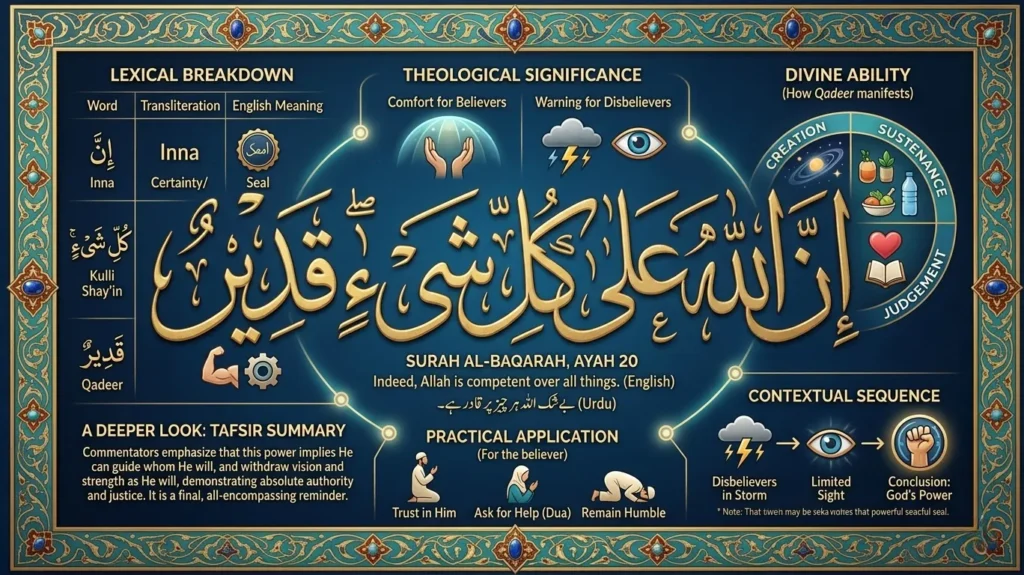
إِنَّ اللَّهَ عَلَىٰ كُلِّ شَىْءٍۢ قَدِيرٌ
Transliteration:
Innallāha ‘alā kulli shay’in qadīr
English (Saheeh International):
Indeed, Allah is over all things competent.
Urdu (Fateh Muhammad Jalandhari):
بےشک اللہ تمام چیزوں پر قادر ہے۔
Word‑by‑Word:
- إِنَّ = Indeed
- اللَّهَ = Allah
- عَلَىٰ = over
- كُلِّ = every
- شَىْءٍ = thing
- قَدِيرٌ = competent
Meaning:
Allah has absolute power over every single thing.
Wazifah:
- Recite 7 times after Fajr.
- Repeat 100 times for anxiety relief.
How Many Times:
- 7 times daily for general trust.
- 100 times for anxiety relief.
Benefits:
- Strengthens trust in Allah’s power.
- Reduces anxiety and fear.
Hadith:
- Sahih Bukhari recounts that the Prophet ﷺ said that saying “La ilaha illallah” 100 times brings great rewards, emphasizing Allah’s power and mercy.
Tafseer:
This verse comes after the description of hypocrites who waver between faith and doubt. Allah reminds them that He could take away their hearing and sight, but He restrains Himself out of mercy.
2.2 Surah al‑Baqarah 2:106–109
Arabic:
مَا نَنسَخْ مِنْ آيَةٍ أَوْ نُنْسِهَا نَأْتِ بِخَيْرٍ مِّنْهَا أَوْ مِثْلِهَا ۗ أَلَمْ تَعْلَمْ أَنَّ اللَّهَ عَلَىٰ كُلِّ شَىْءٍۢ قَدِيرٌ
Transliteration:
Mā nansakh min āyatin aw nunsīhā na’ti bi‑khayrin minhā aw mithlihā. Alam ta‘lam anna llāha ‘alā kulli shay’in qadīr?
English (Saheeh International):
Nothing of our revelation do we abrogate or cause to be forgotten but that We bring forth something better than it or similar to it. Do you not know that Allah is over all things competent?
Urdu (Jalandhari):
کیا آپ نہیں جانتے کہ اللہ تمام چیزوں پر قادر ہے؟
Meaning:
Allah has the power to change or abrogate verses, and He will bring something better or similar.
Wazifah:
- Recite 11 times after Fajr.
- Repeat 100 times for clarity in difficult decisions.
How Many Times:
- 11 times daily for guidance.
- 100 times for clarity in decisions.
Benefits:
- Provides clarity in challenging situations.
- Reinforces trust in Allah’s wisdom.
Hadith:
- Sahih Bukhari reports that the Prophet ﷺ said that following the guidance of the Quran brings great rewards.
Tafseer:
This verse explains the concept of abrogation (naskh) in the Quran. It reassures the believers that Allah’s power includes changing laws and rulings for their ultimate benefit.
2.3 Surah al‑Mulk 67:1
Arabic:
تَبَارَكَ الَّذِي بِيَدِهِ الْمُلْكُ وَهُوَ عَلَىٰ كُلِّ شَىْءٍۢ قَدِيرٌ
Transliteration:
Tabārakalladhī biyadihi l‑mulk, wa huwa ‘alā kulli shay’in qadīr.
English (Saheeh International):
Blessed is the One in Whose hand is sovereignty, and He is over all things competent.
Urdu (Jalandhari):
بَڑی بَرَکَت مند ہے وہ ذات جس کے دستِ قدرت میں بادِشاہی ہے اور وہ ہر شے پر قادر ہے۔
Meaning:
Allah’s sovereignty is in His hand, and He has absolute power over everything.
Wazifah:
- Recite 7 times before sleep.
- Repeat 100 times for protection and security.
How Many Times:
- 7 times nightly for protection.
- 100 times for spiritual security.
Benefits:
- Enhances spiritual protection.
- Promotes a sense of security.
Hadith:
Tafseer:
This verse begins Surah al‑Mulk, emphasizing Allah’s absolute sovereignty and power over all creation. It sets the tone for the entire surah’s focus on Allah’s control over life and death.
2.4 Surah Āl‑‘Imrān 3:189
Arabic:
لِلَّهِ مُلْكُ السَّمَاوَاتِ وَالْأَرْضِ ۗ وَاللَّهُ عَلَىٰ كُلِّ شَىْءٍۢ قَدِيرٌ
Transliteration:
Lillāhi mulku s‑samāwāti wal‑arḍ. Wa Allāhu ‘alā kulli shay’in qadīr.
English (Saheeh International):
To Allah belongs the kingdom of the heavens and the earth; and Allah is over all things competent.
Urdu (Jalandhari):
آسمان و زمین کی بادِشاہی اللہ کے لئے ہے اور اللہ ہر شے پر قادر ہے۔
Meaning:
Allah’s sovereignty extends over the heavens and the earth.
Wazifah:
- Recite 11 times for guidance and success.
- Repeat 100 times for clarity in life’s journey.
How Many Times:
- 11 times for guidance.
- 100 times for clarity.
Benefits:
- Provides guidance and success.
- Enhances clarity in life decisions.
Hadith:
- Sahih Muslim reports that the Prophet ﷺ emphasized the importance of reciting verses that affirm Allah’s power and sovereignty.
Tafseer:
This verse reinforces the idea that Allah’s kingdom is absolute and unchallenged. It connects His sovereignty with His power over all things.
2.5 Surah al‑Anfāl 8:41
Arabic:
وَاعْلَمُوٓاْ أَنَّمَا غَنِمْتُم مِّن شَيْءٍۢ فَأَنَّ لِلَّهِ خُمُسَهُۥ وَلِلرَّسُولِ وَلِذِي الْقُرْبَىٰ وَٱلْيَتَٰمَىٰ وَٱلْمَسَٰكِينِ وَٱبْنِ ٱلسَّبِيلِ إِن كُنتُمْ ءَامَنتُم بِٱللَّهِ وَمَاۤ أَنزَلَنَا عَلَىٰ عَبْدِنَا يَوْمَ ٱلْفُرْقَانِ يَوْمَ ٱلْتَقَى ٱلْجَمْعَانِ ۗ وَاللَّهُ عَلَىٰ كُلِّ شَىْءٍۢ قَدِيرٌ
Transliteration:
Wa‘lamū annamā ghanimtum min shay’in fa’anna lillāhi khumusuhū wa lil‑Rasūl wa lidhi l‑qurbā wal‑yatāmā wal‑masākīn wa ibni s‑sabīl, in kuntum āmantum bi‑llāhi wa mā anzalnā ‘alā ‘abdīnā yawma l‑furqāni yawma l‑taqā l‑jam‘ān. Wa Allāhu ‘alā kulli shay’in qadīr.
English (Saheeh International):
Know that whatever spoils you obtain, then surely one‑fifth of it is for Allah and for the Messenger, and for his close relatives, and the orphans, and the needy, and the traveler, if you believe in Allah and in what We sent down upon Our servant on the Day of the Criterion, the day when the two groups met. And Allah is over all things competent.
Urdu (Jalandhari):
ہر ایک کو معلوم ہو کہ جو مال تمہیں غنیمت میں ملے، اس کا پانچواں حصہ اللہ کے لیے اور اس کے رسول کے لیے اور رشتہ داروں، یتیموں، مسکینوں اور مسافر کے لیے ہے، اگر تم اللہ پر اور اس پر یقین رکھتے ہو جو ہم نے اپنے بندہ پر فرقان کے دن نازل کیا، جس دن دو جماعتیں ملیں۔ اور اللہ ہر چیز پر قادر ہے۔
Meaning:
Allah has power over all things, including the distribution of war spoils.
Wazifah:
- Recite 7 times after Fajr.
- Repeat 100 times for barakah in wealth and resources.
How Many Times:
- 7 times daily for wealth barakah.
- 100 times for barakah in resources.
Benefits:
- Increases barakah in wealth.
- Reinforces trust in Allah’s power over material gains.
Hadith:
- Sahih Bukhari reports that the Prophet ﷺ encouraged the distribution of spoils in the way of Allah, bringing great rewards.
Tafseer:
This verse emphasizes that Allah’s power extends even to the distribution of war spoils, reinforcing that all wealth ultimately belongs to Him.
2.6 Surah Fāṭir 35:1
Arabic:
الْحَمْدُ لِلَّهِ فَاطِرِ ٱلسَّمَٰوَٰتِ وَٱلْأَرْضِ جَاعِلِ ٱلْمَلَٰٰٓىِٕكَةِ رُسُلًا أُوْلِىٓ أَجْنِحَةٍۢ مَّثْنَىٰ وَثُلَٰثَ وَرُبَٰعَ ۖ يَزِيدُ فِى ٱلْخَلْقِ مَا يَشَآءُ ۚ إِنَّ ٱللَّهَ عَلَىٰ كُلِّ شَىْءٍۢ قَدِيرٌ
Transliteration:
Al‑ḥamdu lillāhi Fāṭiri s‑samāwāti wal‑arḍ, jā‘ili l‑malā’ikati rusulan, ulī ajniḥatin mathnā wa thulātha wa rubā‘; yazīdu fī l‑khalqi mā yashā’; innallāhu ‘alā kulli shay’in qadīr.
English (Saheeh International):
All praise is due to Allah, Originator of the heavens and the earth, Who made the angels messengers, having two, three, or four wings. He increases in creation as He wills; indeed, Allah is over all things competent.
Urdu (Jalandhari):
تمام تعریفیں اللہ کے لیے ہیں جو آسمانوں اور زمین کا پیدا کرنے والا ہے اور جس نے ملکوں کو پیغام لے جانے والے فرشتوں کی شکل میں بھیجا، دونقل، تین قل، چار قل پرندوں والے، وہ جو چاہے اپنی مخلوق میں اضافہ کرے، بےشک اللہ ہر شے پر قادر ہے۔
Meaning:
Allah’s power includes the creation and increase of angels and all creation.
Wazifah:
- Recite 7 times after Fajr.
- Repeat 100 times for clarity in life’s path.
How Many Times:
- 7 times daily for clarity.
- 100 times for path clarity.
Benefits:
- Increases clarity in life decisions.
- Reinforces belief in Allah’s creative power.
Hadith:
- Sahih Bukhari reports that the Prophet ﷺ emphasized the importance of reciting verses that affirm Allah’s power over creation.
Tafseer:
This verse highlights Allah’s power over creation, including the angels and their varying forms. It connects His creative power with His absolute competence.
Innallāha ‘alā kulli shay’in qadīr” means “Indeed, Allah is over all things competent.” It affirms that Allah has absolute power over every creation, situation, and outcome in the universe.
This phrase appears in multiple places, including Surah al‑Baqarah (2:20), Surah al‑Baqarah (2:106), Surah Āl‑‘Imrān (3:189), Surah al‑Anfāl (8:41), Surah Fāṭir (35:1), Surah al‑Ḥadīd (57:2), and Surah at‑Taghābun (64:1).
This phrase appears in Surah al‑Baqarah, Surah Āl‑‘Imrān, Surah al‑Anfāl, Surah Fāṭir, Surah al‑Ḥadīd, and Surah at‑Taghābun, among others, each time reinforcing Allah’s absolute power over all things.
The tafseer teaches that Allah’s power is complete and unrestricted over hearing, sight, life, death, creation, legislation, and destiny. He can change, abrogate, or increase anything according to His perfect wisdom and mercy.
A common wazifah is to recite “Innallāha ‘alā kulli shay’in qadīr” 7–11 times after Fajr, and 100 times when anxious, focusing on trust in Allah. This is a spiritual practice to strengthen tawakkul and calm the heart.
So the next time anxiety tightens your chest, or life feels out of control, remember this: the same verse that appears in five different surahs—“Innallāha ‘alā kulli shay’in qadīr”—is not just poetry; it is your permission to let go.
Today is not the day to analyze more. It is the day to act.
After Fajr, after a setback, after bad news—say it once, slowly, from your heart. Then place your outcome in His Hands.
Because if Allah is truly Qadīr over all things, then your helplessness is not the final word. His power is.
And every time you return to this phrase, you are not repeating words.
You are re‑entering the Tawakkul Loop—
**intention with Allah,
action with trust,
and peace in His promise:
“Innallāha ‘alā kulli shay’in qadīr.”
