Have you ever felt trapped by your past sins, as if you’ve made the same mistake too many times to be forgiven? The phrase “innallaha ghafoor ur raheem” is not just a line in the Quran — it is Allah’s direct reply to your shame, fear, and regret. It reminds you that His mercy is always greater than your sins, and His forgiveness is always closer than you think.
What Does “Innallaha Ghafoor Ur Raheem” Mean?
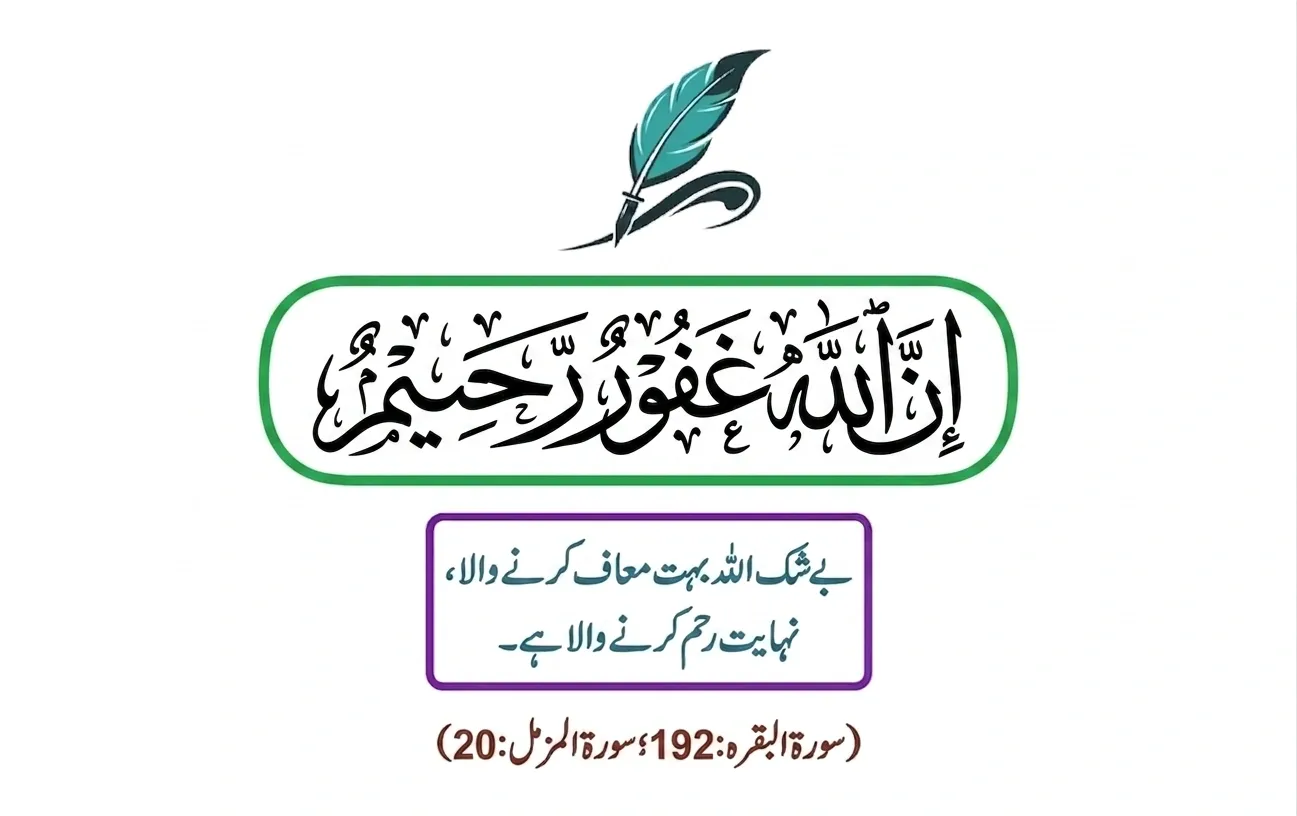
Innallaha ghafoor ur raheem” means: ‘Indeed, Allah is the Most Forgiving and the Most Merciful.’ It declares that Allah continuously covers sins and shows kindness, even when the believer falls short. This phrase is a powerful reminder that Allah’s mercy is always open, no matter how many mistakes a person has made.
Innallaha Ghafoorur Raheem Meaning in Arabic, English & Urdu
Arabic
إِنَّ اللَّهَ غَفُورٌ رَحِيمٌ
Transliteration
Innallāha Ghafūrun Raḥīm
English Translation
“Indeed, Allah is Most Forgiving, Most Merciful.”
Urdu Meaning
بے شک اللہ بہت بخشنے والا، نہایت رحم کرنے والا ہے۔
Word‑by‑Word Meaning of the Phrase
To truly feel the meaning, break it down word by word:
- إِنَّ (Inna): “Indeed” — it draws attention and emphasizes truth.
- ٱللَّهَ (Allaha): “Allah” — the name of the One true God.
- غَفُورٌ (Ghafoor): “The Most Forgiving” — the One who repeatedly forgives and covers sins.
- رَّحِيمٌ (Raheem): “The Most Merciful” — the One who shows continuous, special mercy to His servants.
Together, these words form a short, powerful declaration that Allah is not only forgiving, but also deeply kind and loving toward those who seek His pardon.
Urdu Translation & Simple Meaning
In Urdu, “innallaha ghafoor ur raheem” means: “بے شک اللہ بہت بخشش کرنے والا، بہت مہربان ہے۔” This phrase is easy to say and remember, making it perfect for daily dhikr, even for beginners who are not fluent in Arabic. It gives the heart a simple, clear hope in Allah’s mercy.
Urdu Explanation (Jalandhari‑style tone):
- بے شک = “Indeed”
- اللہ = “Allah”
- بر خشش کرنے والا = “The One who forgives”
- مہربان = “The Merciful”
Where Does This Phrase Appear in the Quran?
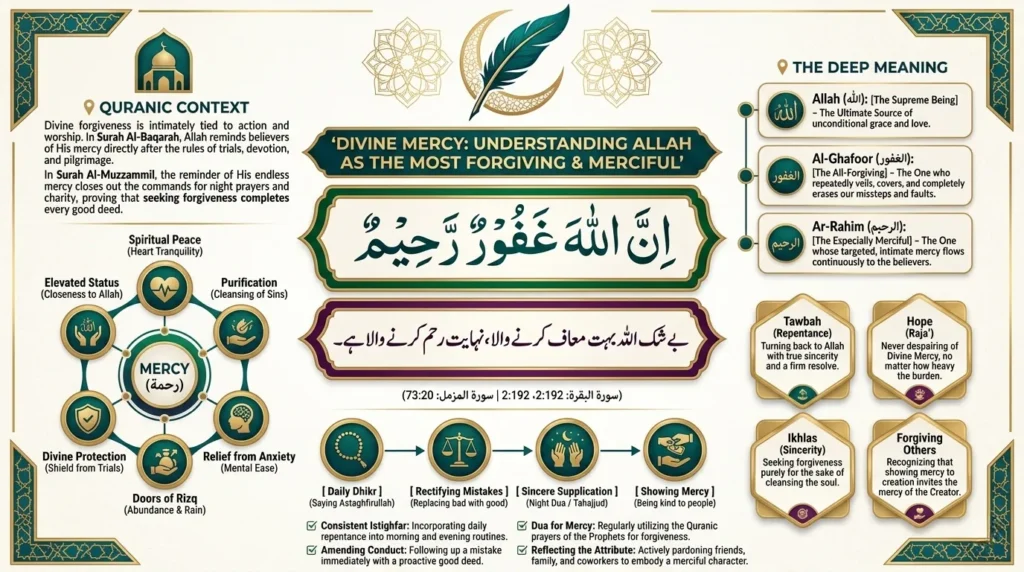
This phrase appears many times in the Quran, but three key verses are in Surah Al‑Baqarah 2:192 and 2:199, and in Surah Al‑Muzzammil 73:20. Each time it appears, it reminds believers that Allah’s forgiveness and mercy are available in every situation — whether in war, pilgrimage, or nightly worship.
Key Verses in a Glance:
- Surah Al‑Baqarah 2:192: After rules of fighting, if the enemy stops, then Allah is forgiving and merciful.
- Surah Al‑Baqarah 2:199: After Hajj instructions, the command to seek forgiveness ends with Allah’s mercy.
- Surah Al‑Muzzammil 73:20: After easing the Prophet’s night‑prayer, the verse reminds believers to seek forgiveness and affirm Allah’s mercy.
These verses show that Allah’s mercy is not limited to one moment — it is available in all phases of life.
Surah Al‑Baqarah 2:192 – In War and Mercy
In Surah Al‑Baqarah 2:192, this phrase appears after the command to fight those who oppress Muslims. If the enemy stops aggression and disbelief, then Allah is forgiving and merciful to them if they repent. This verse teaches the believer that military permission is conditional, but Allah’s mercy is always open.
Multilingual Quadrant for 2:192
- Arabic:فَإِنِ ٱنْتَهَوْا فَإِنَّ ٱللَّهَ غَفُورٌ رَّحِيمٌ
- Transliteration:Fa‑ini intahaw fa‑inna Allaha ghafoorun raheem.
- English (Saheeh International):“If they cease, then indeed Allah is Forgiving and Merciful.”
- Urdu (Jalandhari‑style):“اگر وہ رک جائیں تو بے شک اللہ بخشنے والا، مہربان ہے۔”
Tafsir (Ibn Kathir & Tabari Insight):
This verse comes after the permission to fight in self‑defense. It teaches believers not to continue fighting out of vengeance once the enemy stops. The ending with “Allah is forgiving and merciful” shows that Allah is willing to accept the repentance of former enemies and that the believer’s heart must be aligned with Allah’s mercy, not personal hatred.
Surah Al‑Baqarah 2:199 – Mercy in Hajj and Worship
In Surah Al‑Baqarah 2:199, this phrase appears after the rules of Hajj and the command to remember Allah at the Sacred Monument. It reminds pilgrims that even in the highest acts of worship, they are still in need of Allah’s forgiveness. This verse links mercy with humility.
Multilingual Quadrant for 2:199 (Key Phrase)
- Arabic:فَاذْكُرُوا ٱللَّهَ كَمَا هَدَاكُمْ … إِنَّ ٱللَّهَ غَفُورٌ رَّحِيمٌ
- Transliteration:Fa‑dhkuru Allaha kama hadakum … inna Allaha ghafoorun raheem.
- English (Saheeh International):“So remember Allah as He has guided you … Indeed, Allah is Forgiving and Merciful.”
- Urdu (paraphrased):“پس اللہ کو یاد کرو جیسے اس نے تمہیں ہدایت دی… بے شک اللہ بخشنے والا، مہربان ہے۔”
Tafsir Insight:
Even while performing Hajj, a believer’s heart is not perfect. The verse reminds pilgrims that despite their sacrifice and effort, they still need Allah’s forgiveness. It teaches that worship is not enough by itself; it must be accompanied by constant repentance and awareness of Allah’s mercy.
Surah Al‑Muzzammil 73:20 – Mercy in Night Prayer and Weakness
In Surah Al‑Muzzammil 73:20, this phrase appears after Allah eases the Prophet’s night‑prayer and commands him to seek forgiveness. It teaches that Allah’s mercy is balanced with worship — Allah knows human weakness and still covers sins. This verse is a comfort for every struggling believer.
Multilingual Quadrant for 73:20
- Arabic:فَٱسْتَغْفِرُوا ٱللَّهَ … إِنَّ ٱللَّهَ غَفُورٌ رَّحِيمٌ
- Transliteration:Fastaghfiru Allaha … inna Allaha ghafoorun raheem.
- English (Saheeh‑style):“So seek forgiveness of Allah … Indeed, Allah is Forgiving and Merciful.”
- Urdu (paraphrased):“پس اللہ سے بخشش مانگو… بے شک اللہ بخشنے والا، مہربان ہے۔”
Tafsir (Ibn Kathir & Tabari Snapshot):
This verse follows the command to ease the long night prayers because the community includes the sick, travelers, and those busy in Allah’s cause. Allah instructs the Prophet to seek forgiveness and then affirms His mercy. The message: Allah is not harsh toward human limitation; He provides concessions and still forgives when you turn back to Him.
Daily Wazifa Routine: The Spiritual Habit Loop
One simple way to use this dhikr is to recite “innallaha ghafoor ur raheem” 100 times daily, after Fajr or before sleep, with the intention of seeking forgiveness. This creates a daily habit loop: trigger (a fixed prayer time), routine (recitation), and reward (inner peace and trust in Allah).
Recommended Count & Niyyah
- Beginners: 50–100 times per day.
- Advanced: 100–300 times if easy on you.
- Niyyah (intention):
“I recite this dhikr seeking Allah’s forgiveness and mercy, hoping for His pardon and protection.”
If you cannot complete the full number, even 10–20 times with full focus is better than repeating without presence.
Best Times to Recite
- After Fajr, when the heart is fresh.
- After Maghrib, when the day ends.
- Before sleeping, to cleanse the sins of the day.
- After any sin or mistake, as an immediate shield.
How to Make It a Habit (The Spiritual Habit Loop)
- Trigger: Link the dhikr to an existing habit (e.g., after Adhān, after Wudhu).
- Routine: Sit for 2–5 minutes and repeat 50–100 times.
- Reward: Pause and feel the quiet in your chest; this is the reward of closeness to Allah.
This habit loop is not magic; it is a sunnah‑based practice of turning to Allah whenever the heart feels heavy.
Benefits of Reciting “Innallaha Ghafoor Ur Raheem”
Regularly reciting “innallaha ghafoor ur raheem” softens the heart, increases hope in Allah, and reduces fear of sins. It does not erase worldly consequences, but it cleanses the soul, strengthens repentance, and reminds you that Allah’s mercy is always greater than your mistakes.
Key Spiritual Benefits
- Hope in forgiveness: When guilt feels heavy, this phrase becomes a lifeline.
- Humility: It reminds you that you are not perfect, but Allah is always ready to forgive.
- Continuity of repentance: It keeps you returning to Allah, not sticking to one sin.
Psychological & Emotional Benefits
- Reduced guilt and anxiety about past sins.
- Increased emotional relief and trust in Allah’s mercy.
- A calmer, more hopeful heart, especially in times of stress.
Family‑Level Benefits
- Parents can teach this phrase to children as a short dhikr.
- Spouses can recite it together after nightly prayers.
- It builds a “house of mercy” culture where mistakes are not hidden but taken to Allah.
Why Is “Innallaha Ghafoor Ur Raheem” So Important?
This phrase is important because it constantly reminds the believer that Allah’s door is always open. It stops despair, breaks arrogance, and builds a relationship based on hope and fear. In modern life, this phrase protects the heart from guilt, social media pressure, and spiritual burnout.
Why It Matters in Daily Life
- Against despair: When someone feels their sins are too big, this phrase gives hope.
- Against arrogance: When someone feels their good deeds are enough, this phrase reminds them of constant need.
- In the digital age: It balances online mistakes (harsh words, lies, waste) with a living reminder of Allah’s mercy.
This phrase is not just for scholars; it is for every general practitioner, every new Muslim, and every Urdu‑speaking family.
Hadith About Allah’s Forgiveness and Mercy
Several authentic hadith explain that Allah is forgiving and merciful, especially toward those who repent. The Prophet ﷺ said that Allah’s mercy is greater than His anger and that He rejoices when a servant returns to Him. These hadith match the meaning of “innallaha ghafoor ur raheem.”
Key Hadith (Collected in Bukhari, Muslim, Tirmidhi, Ibn Majah)
- Hadith on Allah’s mercy:
The Prophet ﷺ said: “Allah’s mercy is greater than His anger.” (Bukhari, Muslim)
This shows that Allah’s default is forgiveness, not punishment. - Hadith on repentance:
The Prophet ﷺ said: “Allah loves the repentant servant.” (Tirmidhi, Ibn Majah)
This connects directly to the phrase “Allah is forgiving and merciful.”
These hadith, when paired with the Quranic verses, show that Allah’s mercy is not just a concept; it is a lived reality for those who turn back to Him.
People Also Ask:
It means: “Indeed, Allah is the Most Forgiving and the Most Merciful.” It declares that Allah abundantly covers sins and shows kindness to His believers.
50–100 times is a good starting point, and 100–300 times is recommended for advanced practice. Even 10–20 times with full focus is better than repeating without presence.
Yes. This dhikr can be recited for any hardship, whether it is sin‑related, financial, emotional, or family‑related. The key is to combine it with sincere repentance and trust in Allah’s mercy.
Yes. It appears in Surah Al‑Baqarah 2:192 and 2:199, and in Surah Al‑Muzzammil 73:20. Each verse shows Allah’s mercy in a different context.
The phrase is a powerful reminder of Allah’s mercy, but forgiveness also requires sincere repentance, avoiding sin, and making amends where possible. Saying this dhikr strengthens your bond with Allah’s mercy.
The best times are after Fajr, after Maghrib, and before sleeping. You can also recite it whenever you feel guilty or after committing a sin.
By building a daily habit of “innallaha ghafoor ur raheem,” you are not just reciting words — you are aligning your heart with Allah’s infinite mercy.

2 thoughts on “What is the meaning of Innallaha ghafoor ur raheem?”