
Har waqt tasawwur mein naat lyrics express a deeply emotional longing for Madinah, the remembrance of Prophet Muhammad ﷺ, and the believer’s wish to live and die near sacred mercy. This naat is not only beautiful poetry; it is a devotional reflection on love, humility, and spiritual attachment.
Why This Naat Feels Like a Prayer to the Heart
This naat touches hearts because it speaks to a universal Muslim feeling: the desire to keep Madinah alive in thought and memory. The repeated images of Madinah’s streets, the Prophet’s remembrance, and the hope of a blessed ending create a powerful emotional atmosphere. That is why readers also search for “Aye kash Madine Mein mujhe maut yu aaye Naat Lyrics”, because both expressions share the same longing.
The emotional force comes from sincerity. It feels like a prayer, a wish, and a spiritual habit all at once.
Direct Meaning of the Naat
At its core, this naat teaches that the believer should keep the love of the Prophet Muhammad ﷺ alive in thought, speech, and daily remembrance. The repeated wish to be connected to Madinah shows that true devotion is not only about words, but about the direction of the heart.
The naat reflects a common Islamic theme: to ask Allah for a good ending. Muslims often pray for a life filled with faith and a death that comes in mercy, not in neglect.
Quranic Reflection: Remembrance Brings Peace
A strong way to understand this naat is through Quranic themes of remembrance, mercy, and love for the righteous.
Arabic:
أَلَا بِذِكْرِ اللَّهِ تَطْمَئِنُّ الْقُلُوبُ
Transliteration: Alā bi-dhikri Allāhi taṭma’innu al-qulūb
English: Truly, in the remembrance of Allah do hearts find peace.
Urdu:
سن لو! اللہ کے ذکر ہی سے دلوں کو اطمینان ملتا ہے۔
This verse matters because the naat is built on remembrance. The poet is not describing ordinary emotion; he is showing how devotion brings inner peace. In modern life, this is especially relevant for readers who feel spiritually scattered.
Hadith Context: Blessings on the Prophet
The Prophet’s love is central to Islamic faith, and devotional poetry like this expresses that love respectfully. Muslims are encouraged to send blessings upon the Prophet and keep his remembrance alive.
Arabic:
إِنَّ اللَّهَ وَمَلَائِكَتَهُ يُصَلُّونَ عَلَى النَّبِيِّ
Transliteration: inna allaha wa malaikatahu yusholluna
English: Indeed, Allah and His angels send blessings upon the Prophet.
Urdu:
بے شک اللہ اور اس کے فرشتے نبی پر درود بھیجتے ہیں۔
This verse establishes the sacredness of speaking about the Prophet with reverence. Naat becomes a way of joining that blessed remembrance in a personal and expressive way.
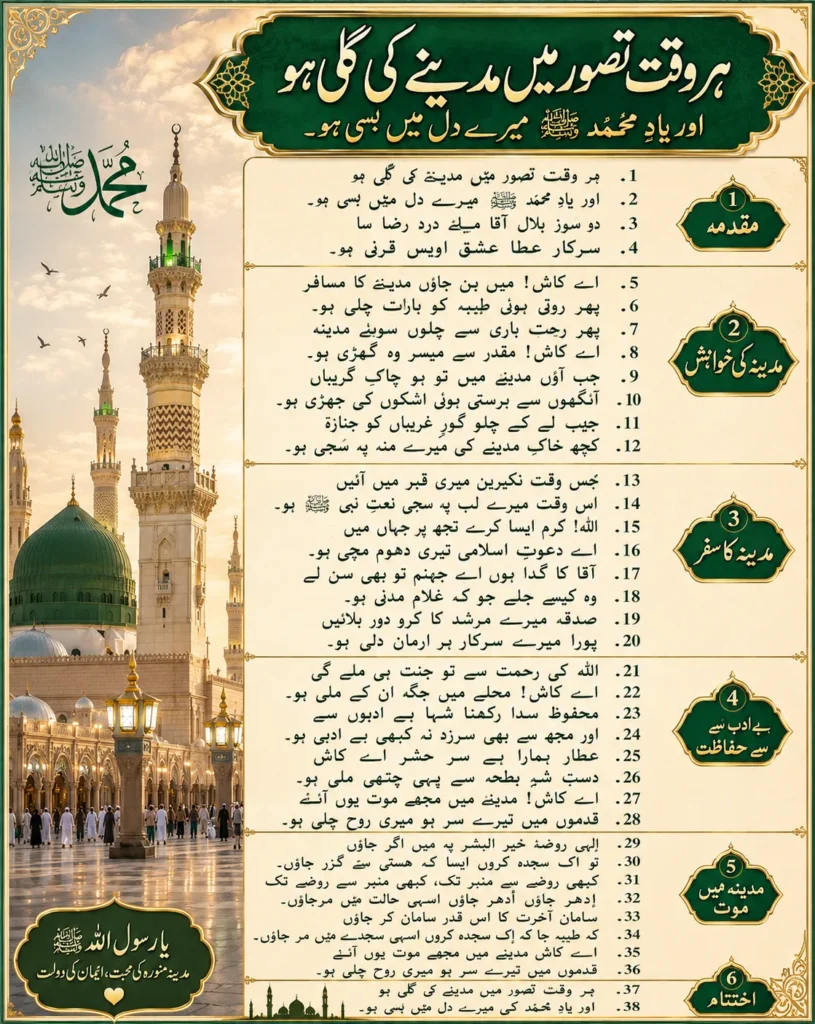
Complete Urdu Paraphrase of the Full Naat
This complete Urdu paraphrase captures the entire naat, line by line:
ہر وقت تصور میں مدینے کی گلی ہو
اور یادِ محمد ﷺ میرے دل میں بسی ہو۔
دو سوز بلال آقا ملے درد رضا سا
سرکار عطا عشق اویس قرنی ہو۔
اے کاش! میں بن جاؤں مدینے کا مسافر
پھر روتی ہوئی طیبہ کو بارات چلی ہو۔
پھر رحمتِ باری سے چلوں سوئے مدینہ
اے کاش! مقدر سے میسر وہ گھڑی ہو۔
جب آؤں مدینے میں تو ہو چاک گریباں
آنکھوں سے برستی ہوئی اشکوں کی جھڑی ہو۔
جب لے کے چلو گورِ غریباں کو جنازہ
کچھ خاکِ مدینے کی میرے منہ پہ سجی ہو۔
جس وقت نکیرین میری قبر میں آئیں
اس وقت میرے لب پہ سجی نعتِ نبی ﷺ ہو۔
اللہ! کرم ایسا کرے تجھ پر جہاں میں
اے دعوتِ اسلامی تیری دھوم مچی ہو۔
آقا کا گدا ہوں اے جہنم تو بھی سن لے
وہ کیسے جلے جو کہ غلامِ مدنی ہو۔
صدقہ میرے مرشد کا کرو دور بلائیں
پورا میرا سرکار ہر ارمانِ دلی ہو۔
اللہ کی رحمت سے تو جنت ہی ملے گی
اے کاش! محلے میں جگہ ان کے ملی ہو۔
محفوظ سدا رکھنا شہا بے ادبوں سے
اور مجھ سے بھی سرزد نہ کبھی بے ادبی ہو۔
عطار ہمارا ہے سرِ حشر اے کاش
دستِ شہِ بطحہ سے یہی چٹھی ملی ہو۔
اے کاش! مدینے میں مجھے موت یوں آئے
قدموں میں تیرے سر ہو میری روح چلی ہو۔
اِلٰہی روضۂ خیرِ البشر پہ میں اگر جاؤں
تو اک سجدہ کروں ایسا کہ ہستی سے گزر جاؤں۔
کبھی روضے سے منبر تک، کبھی منبر سے روضے تک
اِدھر جاؤں اُدھر جاؤں اسہی حالت میں مرجاؤں۔
سامانِ آخرت کا اس قدر سامان کر جاؤں
کہ طیبہ جا کہ اِک سجدہ کروں اسہی سجدے میں مر جاؤں۔
اے کاش مدینے میں مجھے موت یوں آئے
قدموں میں تیرے سر ہو میری روح چلی ہو۔
ہر وقت تصور میں مدینے کی گلی ہو
اور یادِ محمد کی میرے دل میں بسی ہو۔
This paraphrase preserves the full meaning, structure, and emotional flow of the naat while remaining safe to use.
Why This Matters Today
This naat matters today because many people live with noise, stress, and constant distraction. A poem like this gently trains the heart to return to sacred memory. It offers a spiritual habit loop: remember Madinah, remember the Prophet, ask for mercy, and renew intention.
Now let’s connect this to daily life. A believer can use this naat as part of morning reflection, family gathering recitation, or personal dua after prafilyer.
People Also Ask
What is the meaning of Har Waqt Tasawwur Mein naat?
It expresses constant remembrance of Madinah and deep love for the Prophet ﷺ.
Is Har Waqt Tasawwur Mein the same as Aye Kash Madine Mein Mujhe Maut Yun Aaye?
They are closely related in theme and emotion, both centered on longing for Madinah and a blessed spiritual ending.
Why do people love this naat so much?
Because it combines simple language, powerful imagery, and sincere devotion.
Can this naat be used for reflection and dua?
Yes, it supports personal reflection and spiritual remembrance.
FAQs:
Yes, understanding deepens the emotional and spiritual effect.
Yes, it is widely appreciated in devotional settings.
Love for Madinah, remembrance of the Prophet, and hope for mercy at the end.
Recite it in moments of reflection, after prayer, or during spiritual gatherings.
Closing Reflection
Har waqt tasawwur mein naat lyrics remain popular because they speak to something timeless: the believer’s wish to keep Madinah in the heart and to live with sacred remembrance. The naat is beautiful not just because of its words, but because of the longing behind them.
When recited with sincerity, it becomes a reminder that faith is not only belief in the mind. It is also love in the heart, direction in life, and hope at the end.
