You feel trapped. Maybe it’s a mountain of debt, a failing relationship, or a depression that just won’t lift. You feel like you are buried under layers of darkness, suffocating.
Prophet Yunus (AS) felt this too—literally. Trapped inside a whale, at the bottom of the ocean, in the middle of the night. But he didn’t scream for help. He used a specific, 3-part “code” that didn’t just save his life; it broke the laws of nature to rescue him.
This isn’t just a Dua; it is a Spiritual Algorithm designed to rewire your brain from “Panic Mode” to “Solution Mode.” Here is the deep analysis of the Ayat-e-Karima that you won’t find on any other site.
1. The Meaning: Decoding the “Dua of Yunus”
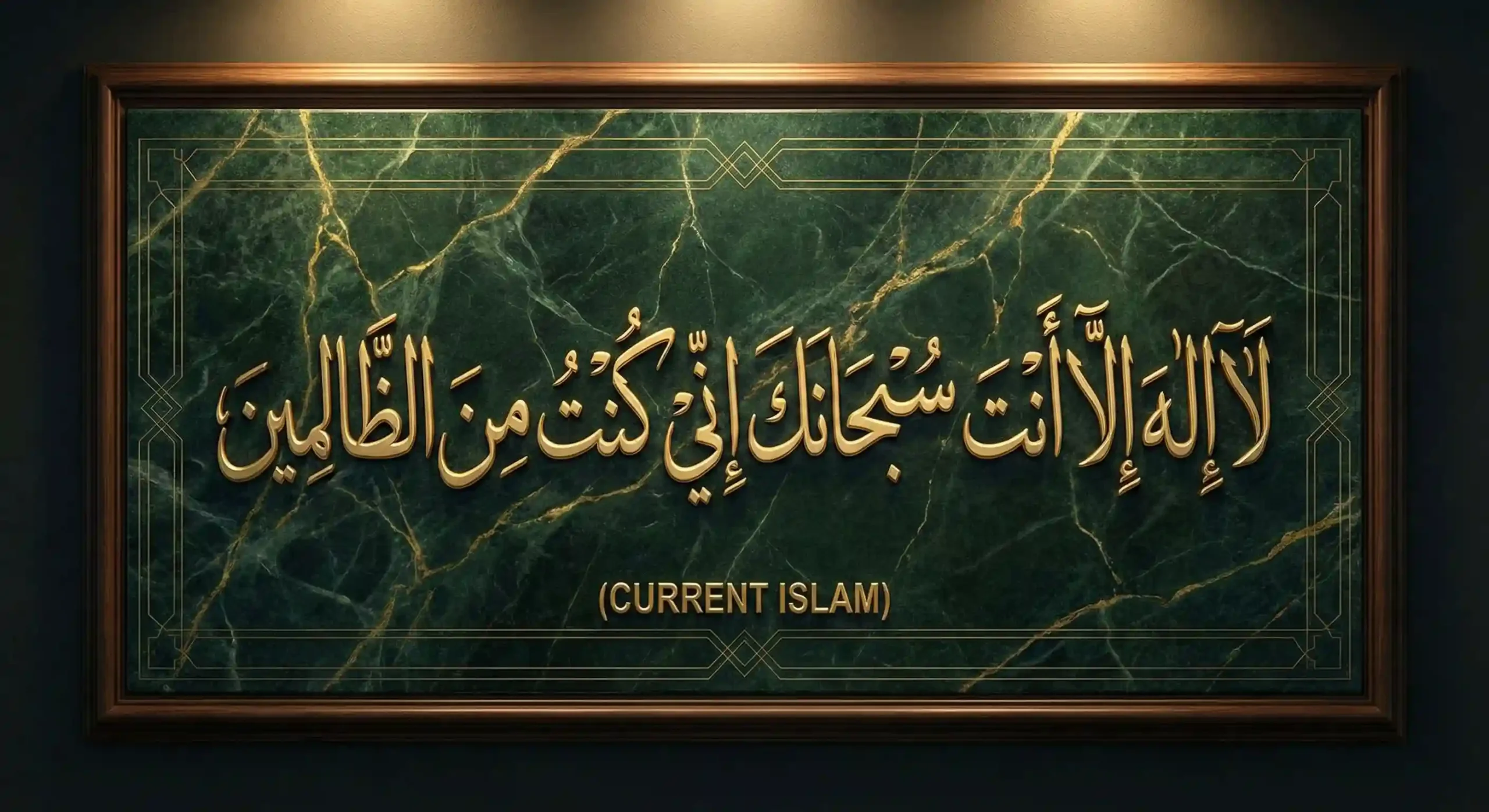
“La ilaha illa anta subhanaka inni kuntu minaz-zalimeen” is known as Ayat-e-Karima or the Dua of Yunus. It translates to “There is no deity except You; exalted are You. Indeed, I have been of the wrongdoers.” It is found in Surah Al-Anbiya (21:87) and is the ultimate prayer for escaping distress.
Most people recite this robotically. But to unlock its power, you need to understand the “Code” contained in the Arabic words.
The Multilingual Evidence (Surah Al-Anbiya 21:87)
- Arabic Text:لَّا إِلَٰهَ إِلَّا أَنتَ سُبْحَانَكَ إِنِّي كُنتُ مِنَ الظَّالِمِينَ
- Transliteration:“La ilaha illa anta subhanaka inni kuntu minaz-zalimeen”
- English Translation (Sahih International):“There is no deity except You; exalted are You. Indeed, I have been of the wrongdoers.”
- Urdu Translation (Fateh Muhammad Jalandhari):“تیرے سوا کوئی معبود نہیں تو پاک ہے (اور) بےشک میں قصوروار ہوں۔”
2.The 3-Step “Spiritual Algorithm”
The Dua of Yunus works by guiding the mind through three psychological stages: First, affirming God’s power to stop panic; second, removing blame from God (Tasbeeh); and third, taking radical accountability for one’s own mistakes. This shifts a person from a “victim mindset” to an “action mindset.”
This is the New Strategy for 2026. Instead of treating this Dua as a magic spell, think of it as a cognitive restructuring tool. Ibn Qayyim (RA) mentioned that this Dua “extracts the heart from the prison of the self.”
Here is how the algorithm works:
Step 1: The Panic Stop (La ilaha illa anta)
When crisis hits, your brain screams “The problem is too big!” By saying “There is no deity except You,” you are effectively deleting the problem’s power. You are telling your anxiety: “This debt is not my god. This depression is not my master. Only Allah is in charge.”
Step 2: The Pivot (Subhanaka)
Human nature loves to blame. “Why did God do this to me?” “This is unfair.” These thoughts block mercy.
Subhanaka means “You are Flawless.” You are admitting: “O Allah, my suffering is not because You are cruel. You don’t make mistakes.” This removes bitterness from your heart.
Step 3: Radical Accountability (Inni kuntu minaz-zalimeen)
This is the game-changer. You stop being a victim. You say, “Indeed, I was wrong.”
You aren’t beating yourself up; you are taking ownership. The moment you admit you played a part in the mess, you empower yourself to be part of the solution.
3. Benefits & The “Wazifa” (125,000 Times Method)
The primary benefit of reciting Ayat-e-Karima is relief from grief and the acceptance of prayers. While the Prophet (ﷺ) did not specify a fixed number, many scholars and spiritual gatherings in South Asia recite it 125,000 times (Sawa Lakh) as a collective Wazifa for severe crises.
In Pakistan and India, the “Khatam-e-Ayat-e-Karima” is a powerful cultural and spiritual tradition.
- The Hadith Evidence:The Prophet (ﷺ) said: “No Muslim ever prays to his Lord with these words for anything, but He will answer his prayer.” (Sunan At-Tirmidhi)
- The 125,000 Tradition:While not explicitly in the Sunnah, elders and Sufi scholars have used the count of 125,000 in gatherings to create a focused environment of Dhikr.
- My Expert Advice: Do not get obsessed with the number. One sincere recitation with the “3-Step Mindset” is heavier than thousands recited without focus.
4. People Also Ask
There is no fixed number in the Hadith. You can read it 40 times (as suggested by some scholars for illness) or simply repeat it constantly throughout your day until your heart feels peace.
Yes, it is a Dua and Dhikr, so Wudu is not mandatory. However, reciting it with Wudu increases spiritual focus (Khushoo) and respect for the Quranic verses.
Dhun-Nun” is a title for Prophet Yunus (Jonah), meaning “The One of the Fish.” This Dua is called that because he recited it while trapped inside the belly of the whale.
Yes, the phrase “Inni kuntu minaz-zalimeen” is a direct repentance (Tawbah). If said with true regret and a promise not to repeat the sin, it is a powerful tool for forgiveness.
