Do you ever feel torn between chasing your career goals and focusing on your spiritual life? It’s the modern struggle: we want financial freedom and a happy family (Dunya), but we also want inner peace and Paradise (Akhirah). Often, we feel like we have to choose one over the other.
But what if you didn’t have to choose?
There is one supplication in the Quran that refuses to separate worldly success from spiritual salvation. It is the Dua of Balance. It is the most frequent prayer of the Prophet Muhammad (ﷺ). Let’s unlock the power of Rabbana Atina.
What is the Full Meaning of Rabbana Atina?
Voice Search Answer:
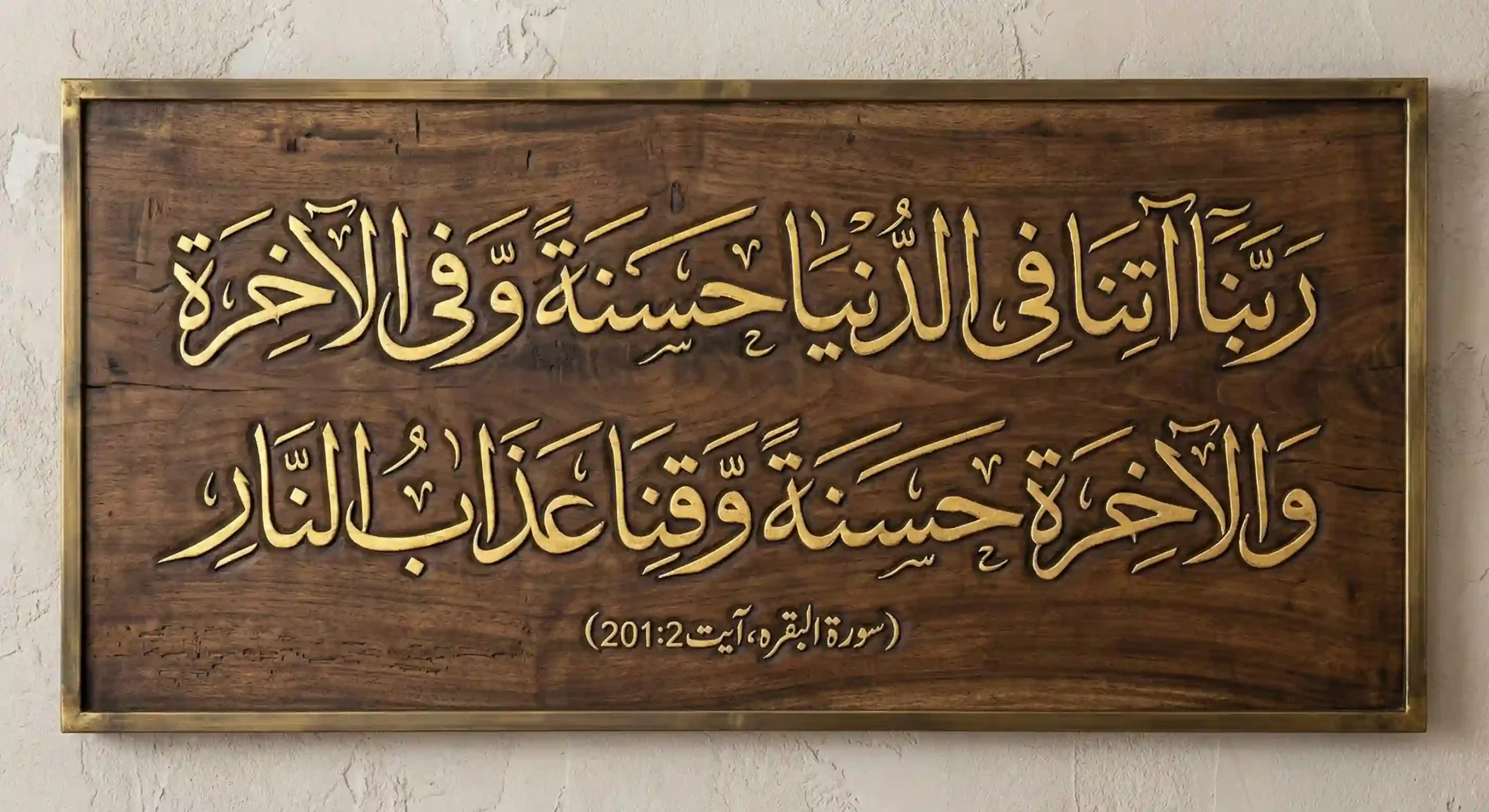
“Rabbana atina fid dunya hasanah is a comprehensive Quranic supplication found in Surah Al-Baqarah, verse 201. It translates to ‘Our Lord, give us in this world that which is good and in the Hereafter that which is good, and protect us from the punishment of the Fire.’ It is a request for total well-being in this life and the next.”
This verse (Ayat) is unique because it teaches us that asking for worldly blessings isn’t selfish—it’s necessary, provided they help us reach the Hereafter safely.
The Multilingual Breakdown
To truly connect with this Dua, we must look at it through the lens of the original Arabic and authoritative translations.
| Language | Text / Translation |
| Arabic (Quran) | رَبَّنَا آتِنَا فِي الدُّنْيَا حَسَنَةً وَفِي الآخِرَةِ حَسَنَةً وَقِنَا عَذَابَ النَّارِ |
| Transliteration | Rabbana atina fid-dunya hasanatan wa fil ‘akhirati hasanatan waqina ‘adhaban-nar. |
| English (Saheeh Intl) | “Our Lord, give us in this world [that which is] good and in the Hereafter [that which is] good and protect us from the punishment of the Fire.” |
| Urdu (Jalandhari) | اے ہمارے پروردگار! ہمیں دنیا میں بھی بھلائی دے اور آخرت میں بھی بھلائی اور ہمیں دوزخ کے عذاب سے بچا |
| Roman Urdu | Ae hamare Parwardigar! Hamein dunya mein bhi bhalai de aur akhirat mein bhi bhalai aur hamein dozakh ke azab se bacha. |
Deep Tafseer: What Does “Hasanah” Actually Mean?
“In Islamic theology, ‘Hasanah’ refers to any blessing that brings happiness and benefit. Scholars like Ibn Kathir explain that Hasanah in the Dunya includes health, lawful income, and a righteous family, while Hasanah in the Akhirah refers to an easy reckoning on Judgment Day and entry into Paradise.”
Many of us rush through this prayer, thinking “Hasanah” just means “good.” But the word is much deeper.
Imam Ibn Kathir, the renowned classical scholar, broke it down beautifully. When you ask for Hasanah in the Dunya, you are implicitly asking for:
- Rizq Halal: Income that is pure and sufficient.
- Health: Physical and mental capability to worship.
- Peace: A righteous spouse and obedient children who bring tranquility.
- Knowledge: Understanding of the Deen.
When you ask for Hasanah in the Akhirah, you are asking for:
- Safety from the terror of Judgment Day.
- Receiving your book of deeds in your right hand.
- The Ultimate Reward: Gazing upon the Face of Allah.
The “Waqina” Factor (Protection)
Notice the Dua ends with a specific protection: “Save us from the Fire.”
You might wonder, “If I have good in the Hereafter, doesn’t that imply I am safe?” Not exactly. In Islamic theology, a believer might eventually enter Paradise but still face temporary punishment for their sins. This part of the Dua is your spiritual insurance policy—asking for a direct pass to Jannah without ever touching the Fire.
Word-by-Word Analysis for Deep Reflection
“The phrase ‘Rabbana Atina’ breaks down into ‘Rabbana’ meaning ‘Our Lord’ and ‘Atina’ meaning ‘Grant us.’ The key term ‘Al-Dunya’ refers to the present life, while ‘Al-Akhirah’ refers to the afterlife. ‘Waqina’ is a powerful verb meaning ‘Protect us’ or ‘Shield us’ specifically from the torment of Hellfire.”
To pray with Khushu (focus), you need to know what every syllable means.
- Rabbana (رَبَّنَا): Our Lord. The use of “Na” (Our) indicates a collective, humble plea.
- Atina (آتِنَا): Give us. A direct request from a slave to the Master.
- Fid-Dunya (فِي الدُّنْيَا): In this lower world (near life).
- Hasanah (حَسَنَةً): Goodness, excellence, beauty.
- Wa (وَ): And.
- Qina (قِنَا): Save/Protect us.
- Adhab (عَذَابَ): Punishment/Torment.
- An-Nar (النَّارِ): The Fire.
Benefits & When to Recite
“The best times to recite Rabbana Atina are during Tawaf in Hajj or Umrah (between the Yemeni Corner and the Black Stone), inside the daily Salah (prayer) before the Tasleem, and anytime you are feeling anxious about the future. It was the most frequently recited supplication of Prophet Muhammad (ﷺ).”
The 360-Degree Success Model
Here is a new way to look at this Dua for 2026. Think of it as your daily “Life Audit.”
In our modern hustle culture, we often obsess over the Dunya part (promotion, new car, house). Or, we isolate ourselves and ignore our worldly responsibilities.
Reciting this Dua aligns your mindset. It reminds you:
- It is okay to be rich: As long as that wealth is a “Hasanah” (used for good).
- It is okay to enjoy life: As long as it doesn’t compromise the “Akhirah.”
Actionable Tip: Try reciting this 10 times after every Fard prayer, specifically visualizing your current worldly goal (e.g., a new job) and immediately visualizing your afterlife goal (Jannah). Connect them mentally.
People Also Ask
Yes, you can recite Rabbana Atina during Sujood in your voluntary (Nafl) prayers. The Prophet (ﷺ) encouraged making personal Dua during Sujood as it is when the servant is closest to their Lord.
While it is not specific only to marriage, it is excellent for it. “Hasanah in the Dunya” is interpreted by many scholars, including Ibn Abbas, to specifically mean “a righteous spouse.” So yes, recite it with the intention of finding a good partner.
This Dua is found in Surah Al-Baqarah, Chapter 2, Verse 201 of the Holy Quran.
Yes. Islamic scholars interpret the word “Hasanah” (Good) in this world to include Rizq Halal (lawful provision), financial stability, and freedom from debt. By reciting this, you are asking Allah not just for money, but for wealth that brings peace and does not distract you from your spiritual duties.
Anas bin Malik reported that this was the Prophet’s most frequent invocation (Sahih Al-Bukhari & Muslim) because it leaves nothing out. It covers protection, provision, health, and salvation in one short sentence.
Final Thought
You don’t have to live a life of scarcity to be a good Muslim. Allah does not want you to suffer in the Dunya to gain the Akhirah. He is Rabbul Alameen (Lord of both worlds).
Next time you raise your hands, don’t be shy. Ask for the promotion, ask for the health, ask for the happiness—but seal it with the request for Jannah. That is the true “Hasanah.”
