What if the moment you felt most forgotten… was actually the moment Allah was elevating you?
Not publicly. Not loudly. But in a way that would echo for centuries.
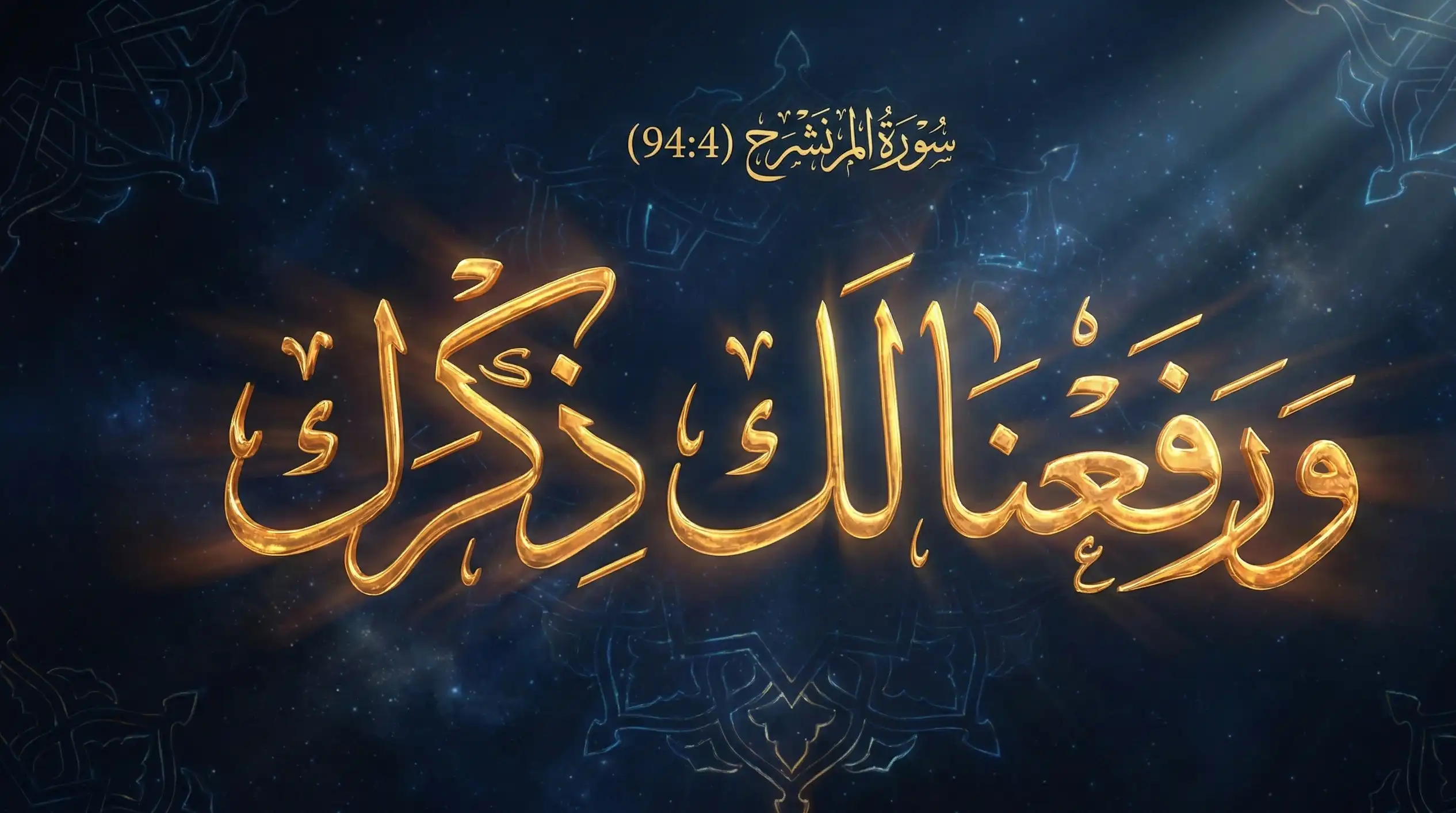
This single Qur’anic sentence — وَرَفَعْنَا لَكَ ذِكْرَكَ — rewrites how Muslims understand honor, legacy, and recognition. And it wasn’t revealed at a moment of worldly success.
Here’s why that matters for you.
What Does “Wa Rafa‘nā Laka Dhikrak” Mean?
“Wa rafa‘nā laka dhikrak” means “And We raised for you your mention.” Allah promises that the Prophet Muhammad ﷺ’s name, honor, and remembrance would be permanently elevated—on tongues, in worship, and across generations—without him seeking fame or recognition.
The Ayah in Full Context (Surah Ash-Sharh 94:4)
Arabic
وَرَفَعْنَا لَكَ ذِكْرَكَ
Transliteration
Wa rafa‘nā laka dhikrak
English (Saheeh International)
And We raised for you your mention.
Urdu (Fateh Muhammad Jalandhari)
اور ہم نے تمہارا ذکر بلند کر دیا۔
Where Is This Ayah Found in the Qur’an?
This verse appears in Surah Ash-Sharh (Surah Al-Inshirah), Chapter 94, Verse 4, revealed in Makkah during a period when the Prophet ﷺ faced ridicule, isolation, and emotional pressure—before public victory or political strength.
Why the Timing Matters
Surah Ash-Sharh was revealed when:
- The Prophet ﷺ was mocked as insignificant
- His message was resisted
- His followers were few
Yet Allah speaks in the past tense: “We raised” — as if the outcome was already sealed.
This is Qur’anic reassurance at its finest.
Word-by-Word Breakdown (For Deeper Understanding)
Each word in the ayah carries intentional depth. Allah uses linguistic precision to show that true elevation comes directly from Him, not society, power, or platforms.
| Word | Meaning | Insight |
|---|---|---|
| وَ | And | A continuation of divine favors |
| رَفَعْنَا | We raised | Allah Himself is the source of honor |
| لَكَ | For you | Personal, exclusive elevation |
| ذِكْرَكَ | Your mention | Name, reputation, remembrance |
ذِكر here doesn’t mean memory alone — it means honorable mention repeated with reverence.
How Did Allah Raise the Prophet’s ﷺ Mention?
Allah raised the Prophet ﷺ’s mention by permanently linking his name with core acts of worship—so that faith itself cannot be practiced without remembering him.
Practical Manifestations (Seen Daily)
- Shahadah: Muhammad ﷺ named with Allah
- Adhan: His name called globally, five times daily
- Salah: Salawat mandatory in every prayer
- Khutbah & Du‘a: His name precedes guidance
This fulfills the ayah literally and continuously.
Supporting Hadith on the Elevation of His Name
Authentic narrations explain that Allah elevated the Prophet ﷺ’s name by pairing it with His own, making remembrance of one incomplete without the other.
Arabic
قال رسول الله ﷺ:
قال الله تعالى: “إذا ذُكِرْتُ ذُكِرْتَ معي.”
Transliteration
Qāla Allāhu Ta‘ālā: Idhā dhukirtu dhukirta ma‘ī
Meaning (English)
Allah said: “When I am mentioned, you are mentioned with Me.”
(Classical meaning reported by scholars of tafsir, including Ibn Kathir)
What Ibn Kathir Says About This Ayah
Ibn Kathir explains that Allah elevated the Prophet ﷺ’s mention both in this world and the next, making his name inseparable from guidance, worship, and salvation.
Tafsir Summary (Simplified)
- Raised in speech (tongues remember him)
- Raised in law (his Sunnah preserved)
- Raised in status (leader of all prophets)
- Raised in legacy (his name never fades)
This was not earned through self-promotion — it was divine decree.
Here’s Why This Matters for You Today
This ayah teaches that Allah elevates people who remain sincere during obscurity. Honor is not always immediate, public, or visible—but it is guaranteed when Allah wills it.
The Spiritual Elevation Principle (Modern Framework)
We live in an age of:
- Algorithms
- Likes
- Followers
- Visibility obsession
But this ayah introduces a different law:
Allah raises names through obedience, not exposure.
The Prophet ﷺ didn’t chase recognition.
Allah made recognition chase him.
A Quiet Pattern Most People Miss
- Hardship → Expansion
- Pressure → Elevation
- Sincerity → Lasting honor
Surah Ash-Sharh places “raising the mention” right after removing burden.
That sequence is not accidental.
Benefits of Reflecting on Warafana Laka Zikrak Ayat
Reflecting on “Wa rafa‘nā laka dhikrak” strengthens patience, heals feelings of invisibility, and realigns success with Allah’s standards rather than society’s applause.
Spiritual Benefits
- Relief from comparison anxiety
- Trust in divine timing
- Motivation to stay sincere
- Inner dignity without arrogance
This ayah doesn’t promise fame.
It promises worth.
People Also Ask:
It means Allah personally elevated the Prophet Muhammad ﷺ’s honor and remembrance, ensuring his name is respected, repeated, and preserved forever.
Yes. It directly addresses emotional pressure and reassures that ease and honor follow difficulty.
Yes. Allah raises the rank and remembrance of sincere believers—sometimes in hearts, sometimes in history, sometimes in the Hereafter.
Because Allah Himself decreed it as a sign of honor, authority, and guidance for humanity.
A Personal Reflection for You
If you feel unseen…
If your efforts feel unnoticed…
If your sincerity feels heavy…
Remember:
Allah raises mentions after patience — not before it.
Final Heart Practice
Take one minute today and quietly say:
“O Allah, raise my worth in Your sight, even if the world never notices.”
That du‘a is straight from Surah Ash-Sharh.
And Allah never ignores sincerity.
