
The Marriage & Rizq Sunnah Framework for Financial Hardship, Delayed Marriage & Life Instability
What do you say when you have no money, no job, no marriage proposal, no stability — and no one to turn to?
One sentence.
Not a long dua.
Not a detailed list.
Just quiet surrender.
That is what Prophet Musa (Moses) said in the darkest moment of his life.
And everything changed.
📖 Where This Dua Appears in the Qur’an
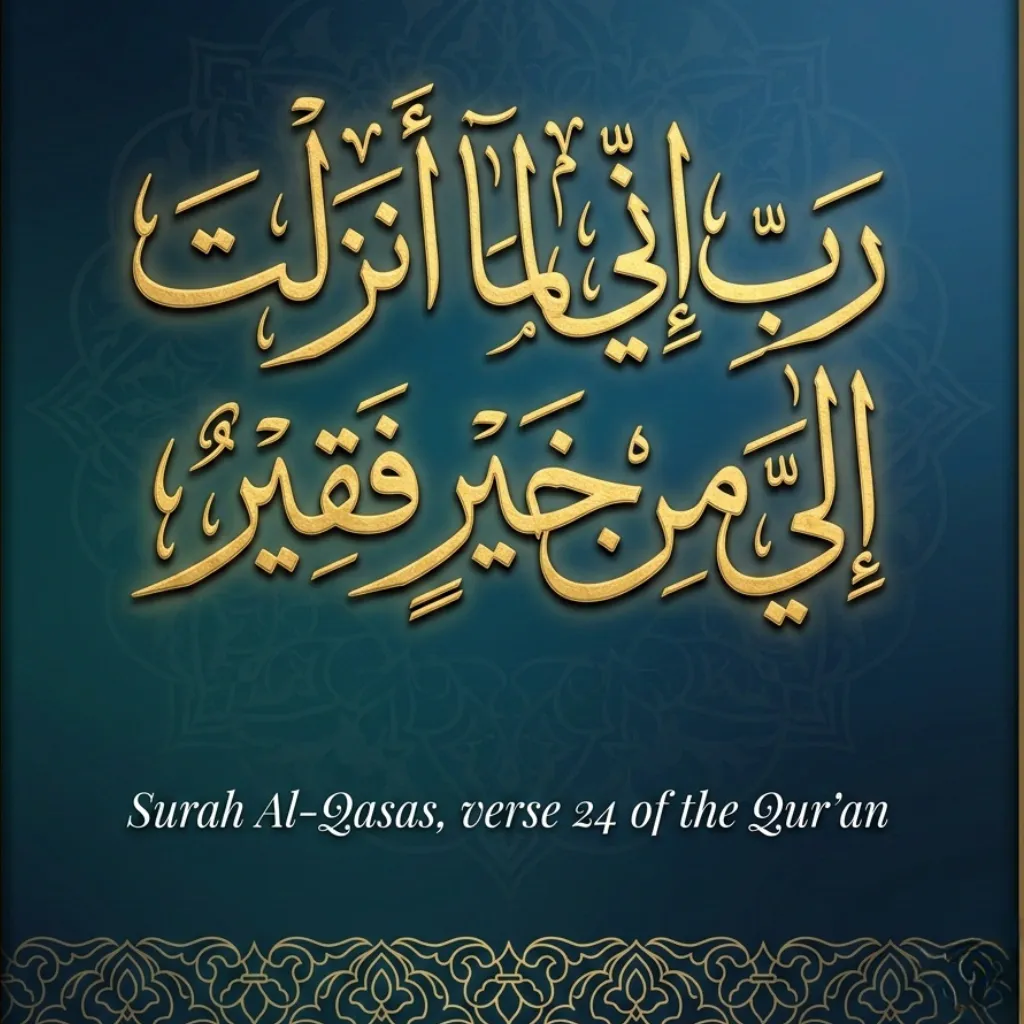
“Rabbi inni lima anzalta ilayya min khairin faqir” appears in Surah Al-Qasas, verse 24 of the Qur’an. It was recited by Prophet Musa (AS) after fleeing Egypt, when he was homeless, unemployed, alone, and in desperate need of Allah’s help.
Reference
From the Qur’an – Surah Al-Qasas (28:24)
🕋 The Full Story Context (From Earlier Verses)
Prophet Musa (AS) fled Egypt after unintentionally killing a man. He arrived in Madyan with nothing. He helped two women draw water. Then he sat alone under a tree and made this dua. Shortly after, Allah gave him shelter, employment, and marriage.
Arabic (28:24)
رَبِّ إِنِّي لِمَا أَنْزَلْتَ إِلَيَّ مِنْ خَيْرٍ فَقِيرٌ
Transliteration
Rabbi inni lima anzalta ilayya min khairin faqir.
English (Saheeh International)
“My Lord, indeed I am, for whatever good You would send down to me, in need.”
Urdu (Fateh Muhammad Jalandhari)
اے میرے پروردگار! جو نعمت بھی تو مجھ پر نازل کرے میں اس کا محتاج ہوں۔
🧠 Word-by-Word Meaning
This dua expresses total dependence on Allah. It does not specify what is needed. It declares poverty before the Provider. The word “faqir” shows humility. The phrase “min khair” includes any type of goodness — wealth, marriage, stability, guidance.
| Word | Meaning | Reflection |
|---|---|---|
| Rabbi | My Lord | Intimate relationship |
| Inni | Indeed I | Emphasis & sincerity |
| Lima | For whatever | Open-ended request |
| Anzalta | You send down | Rizq comes from above |
| Ilayya | To me | Personal need |
| Min khair | Of good | Any halal blessing |
| Faqir | Completely needy | Ego destroyed |
📚 Classical Tafseer Depth
Classical scholars explain that Musa (AS) did not ask for food or money specifically. He asked for any form of goodness. Allah responded by granting him work, marriage, and safety. This shows that Allah’s response may exceed the request.
According to Ibn Kathir
He states Musa (AS) was hungry and exhausted, yet did not complain. His humility attracted divine assistance.
According to Al-Qurtubi
The word “faqir” implies extreme need — not minor difficulty. It reflects surrender without entitlement.
💍 The Marriage Manifestation Sunnah Framework
This dua is powerful for delayed marriage because Musa (AS) received a spouse shortly after reciting it. The framework combines service, dua, tawakkul, and patience. Marriage is granted through obedience, not desperation.
The Pattern
- He helped the two women first.
- He made dua privately.
- He did not demand.
- Allah opened doors.
Within verses 25–27:
- Job offered.
- Marriage proposed.
- Stability granted.
This is Sunnah sequence:
Service → Sincerity → Sabr → Spouse
💰 Rizq & Financial Hardship Connection
This dua is also effective for financial hardship. It acknowledges that provision comes from Allah alone. It activates reliance and removes anxiety. Rizq may come as a job, opportunity, partnership, or unexpected help.
Supporting Ayah 1
From Surah At-Talaq (65:2–3)
Arabic:
وَمَن يَتَّقِ ٱللَّهَ يَجْعَل لَّهُۥ مَخْرَجًا وَيَرْزُقْهُ مِنْ حَيْثُ لَا يَحْتَسِبُ
Transliteration:
Wa man yattaqillaha yaj‘al lahu makhraja. Wa yarzuqhu min haythu la يحتasib.
English:
“And whoever fears Allah – He will make for him a way out and provide for him from where he does not expect.”
Urdu:
اور جو اللہ سے ڈرتا ہے اللہ اس کے لیے نکلنے کی راہ بنا دیتا ہے اور اسے وہاں سے رزق دیتا ہے جہاں سے اسے گمان بھی نہیں ہوتا۔
Supporting Ayah 2
Surah Adh-Dhariyat (51:58)
Arabic:
إِنَّ ٱللَّهَ هُوَ ٱلرَّزَّاقُ ذُو ٱلْقُوَّةِ ٱلْمَتِينُ
English:
“Indeed, it is Allah who is the [continual] Provider, the firm possessor of strength.”
🔁 Structured Wazifa Program (Scholarly Safe Approach)
Important Note
Specific numbers are not established in Sunnah but permissible as structured dhikr if one believes the power is from Allah alone — not the number.
🌿 7-Day Program (For Immediate Hardship)
Recite the dua 100 times daily after Fajr for seven days. Combine it with one act of charity or service daily. Make personal dua after completion.
- 100 times daily
- Istighfar 70 times
- Two rak‘ah Salat al-Hajah
🌙 21-Day Marriage & Stability Program
For delayed marriage or long-term instability, recite 313 times daily for 21 days. Recite with calm presence. Follow with Surah At-Talaq verses 2–3.
- 313 times daily
- After Isha or Tahajjud
- Fast Mondays if possible
🔥 1000 Times (Extreme Desperation Phase)
Reciting 1000 times is a voluntary spiritual discipline for intense need. Break into sets of 100. Maintain sincerity. Do not treat it as mechanical formula.
🌍 Modern Application (Immigration, Career, Youth Crisis)
Here’s why this matters for you:
- Immigration uncertainty → Musa was displaced.
- Joblessness → Musa was unemployed.
- Marriage delay → Musa was single.
- Youth confusion → Musa was starting over.
This dua is not ancient history.
It is survival guidance.
🎙️ People Also Ask:
It strengthens tawakkul and invites barakah in rizq. Results depend on sincerity and obedience, not repetition alone.
Yes. Prophet Musa (AS) received marriage shortly after making it. Combine with taqwa and action.
There is no fixed Sunnah number. Many read 100, 313, or more as voluntary dhikr.
It is from the Qur’an and was recited during hardship. It builds reliance on Allah, which is the root of rizq.
📩 Submit Your Personal Dua Request
If you are:
- Struggling financially
- Waiting for marriage
- Facing immigration uncertainty
- Feeling spiritually lost
You may submit your personal dua request for inclusion in collective prayers.

1 thought on “Rabbi Inni Lima Anzalta ilayya Min Khairin Faqir in Arabic and Urdu”