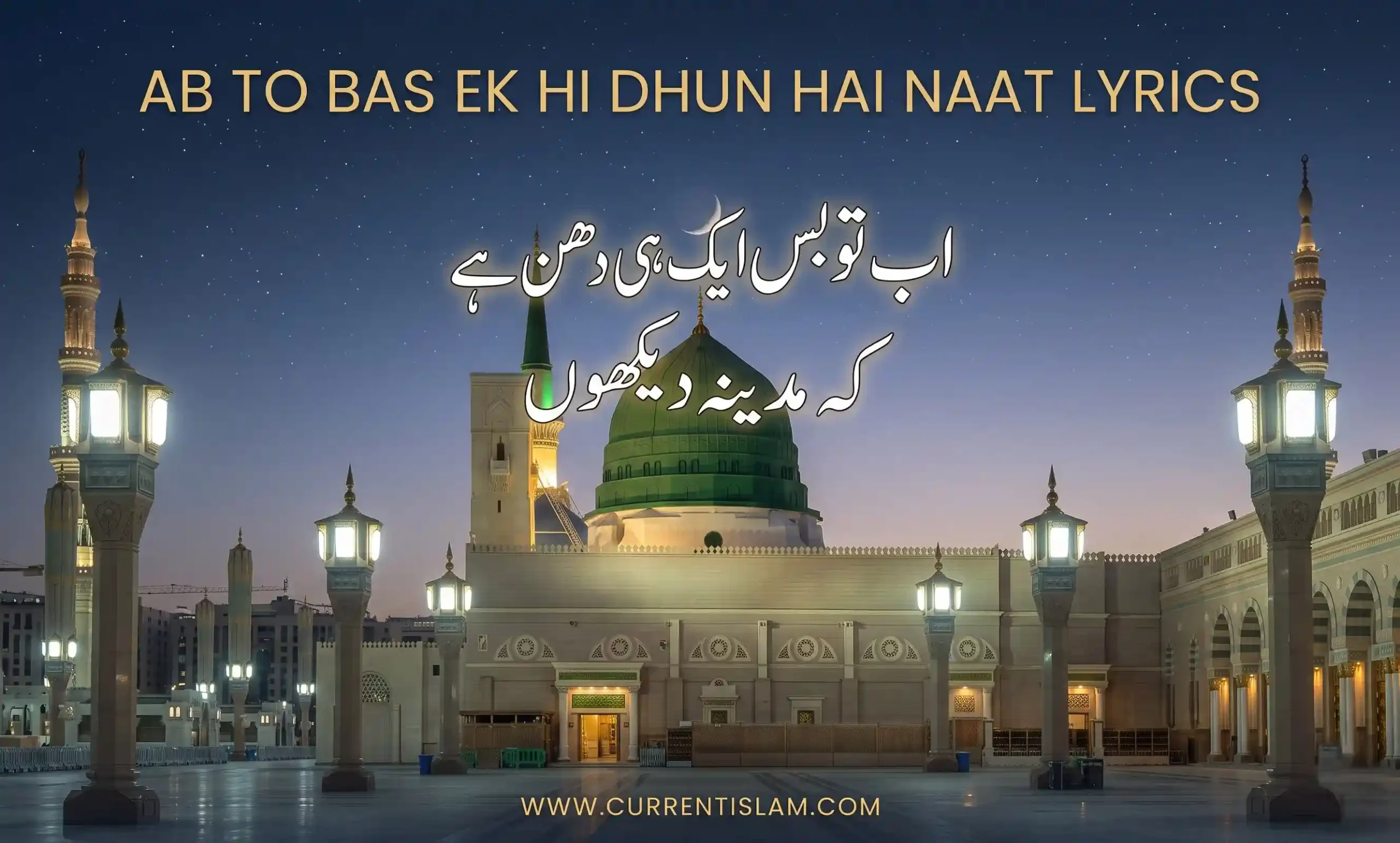
Imagine closing your eyes amid the noise of your daily routine, and the only sound your heart echoes is a quiet, desperate plea to see the Green Dome of Madinah. That is the exact spiritual state captured in this beautiful Kalam. When a believer’s heart detaches from material distractions and focuses entirely on the love of Prophet Muhammad ﷺ, poetry like this is born.
Here is a comprehensive, deeply researched, and spiritually enriching exploration of the famous Naat lyrics, designed to bring peace to your heart and clarity to your mind.
What is the Core Message of Ab To Bas Ek Hi Dhun Hai?
The core message of this Naat is the overwhelming, singular obsession (Dhun) of a believer to visit the city of Madinah. It expresses a profound detachment from worldly desires, replacing them with the ultimate yearning to witness the Green Dome and rest in the Prophet’s city.
Here’s why this matters. In Islamic spiritual traditions, the love for the Prophet Muhammad ﷺ is not just an emotion; it is a foundational pillar of faith. This poetry beautifully articulates the vulnerability of a lover who feels entirely unworthy yet asks Allah for the ultimate invitation to the sacred sanctuary.
The Concept of Ishq-e-Nabi in Modern Times
In modern times, Ishq-e-Nabi (love for the Prophet) serves as a spiritual anchor. It provides emotional stability and a sense of belonging in a hyper-connected yet deeply isolating world, redirecting human desires toward divine connection and eternal peace.
Let’s understand the real meaning behind these emotions. We are constantly chasing goals—careers, wealth, and social status. This Naat acts as a pattern-interrupt. It reminds the believer that the ultimate success and serenity lie in the footsteps of the Prophet ﷺ.
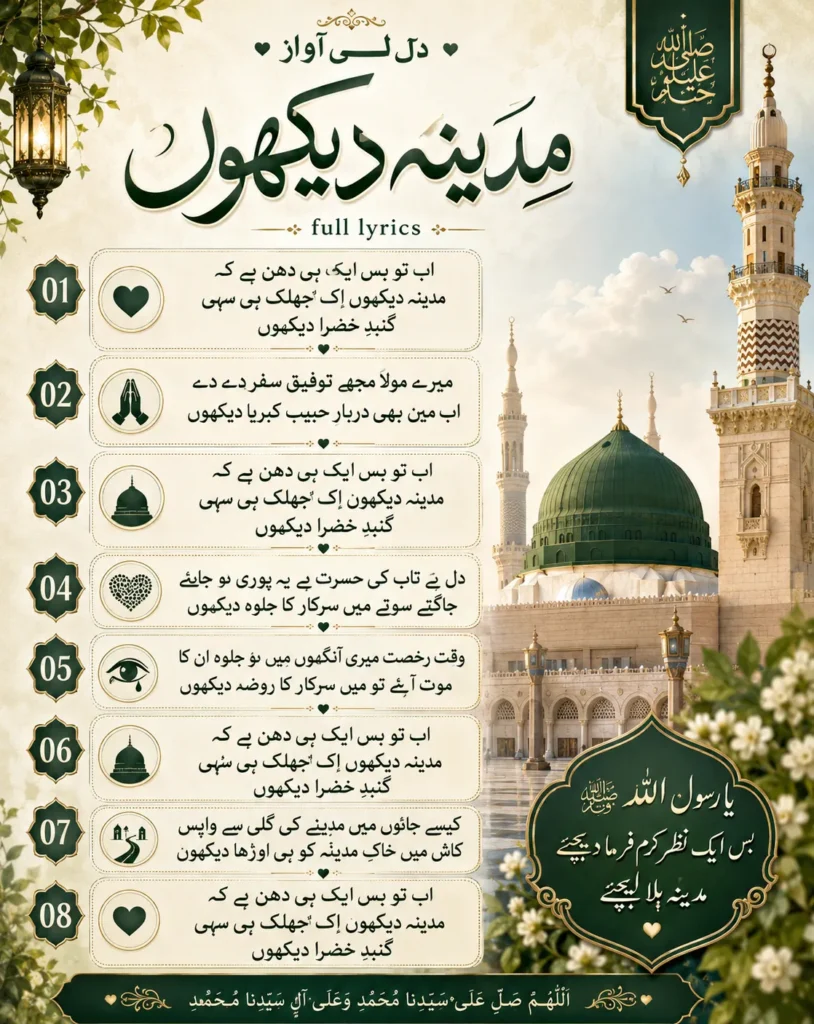
Full Urdu Lyrics, Transliteration, and English Translation
To fully grasp the beauty of this Kalaam, it is essential to read the original Urdu text alongside its pronunciation and meaning.
| Urdu Lyrics | Roman Urdu (Transliteration) | English Meaning |
| اب تو بس ایک ہی دھن ہے کہ مدینہ دیکھوں | Ab to bas ek hi dhun hai ke Madinah dekhun | Now I have only one obsession: to see Madinah. |
| اِک جھلک ہی سہی گنبدِ خضرا دیکھوں | Ik jhalak hi sahi Gumbad-e-Khazra dekhun | Even if it is just a glimpse, let me see the Green Dome. |
| میرے مولا مجھے توفیقِ سفر دے دے اب | Mere Maula mujhe taufeeq-e-safar de de ab | O my Lord, grant me the ability to make this journey now. |
| میں بھی دربارِ حبیبِ کبریا دیکھوں | Main bhi darbar-e-Habeeb-e-Kibriya dekhun | So that I too may witness the court of the Beloved of the Almighty. |
| دلِ بے تاب کی حسرت ہے یہ پوری ہو جائے | Dil-e-betaab ki hasrat hai yeh poori ho jaye | It is the longing of my restless heart that this wish is fulfilled. |
| جاگتے سوتے میں سرکار کا جلوہ دیکھوں | Jaagte sote main Sarkar ka jalwa dekhun | Waking or sleeping, may I behold the vision of the Master ﷺ. |
| وقتِ رخصت میری آنکھوں میں ہو جلوہ ان کا | Waqt-e-rukhsat meri aankhon mein ho jalwa unka | At the time of departure (death), may His vision be in my eyes. |
| موت آئے تو میں سرکار کا روضہ دیکھوں | Maut aaye to main Sarkar ka Roza dekhun | When death approaches, may I be looking at the Master’s Shrine. |
| کیسے جاؤں میں مدینے کی گلی سے واپس | Kaise jaun main Madinay ki gali se wapas | How can I ever return from the blessed streets of Madinah? |
| کاش میں خاکِ مدینہ کو ہی اوڑھا دیکھوں | Kash main khaak-e-Madinah ko hi orha dekhun | I wish to see myself draped in the sacred dust of Madinah. |
Deep Spiritual Analysis of the Verses
Every stanza of this Naat carries layers of meaning deeply rooted in Islamic theology and Sufi traditions.
The Spiritual Habit Loop
The spiritual habit loop in this context refers to the continuous cycle of remembering Madinah, feeling an intense longing, making heartfelt Du’a (supplication), and finding internal peace. It transforms a simple desire into a constant state of worship.
- The Obsession (Dhun): The opening lines establish the premise. The mind is no longer scattered. The word “Dhun” is powerful—it implies a tune that plays on repeat in the subconscious mind.
- The Divine Permission (Taufeeq): The poet acknowledges that money or physical health cannot take you to Madinah. It requires Taufeeq—the divine facilitation from Allah. You only go when you are called.
- The Final Moments (Waqt-e-Rukhsat): A believer’s greatest anxiety is their state at the time of death. The poet asks for the ultimate comfort: to have the vision of the Prophet’s Roza when the soul leaves the body, ensuring a peaceful transition into the afterlife.
This becomes important when you look at how classical scholars defined true success. It is not about how you live, but the spiritual state in which you pass away.
The Writer of Ab To Bas Ek Hi Dhun Hai
The specific author of this traditional Naat is often debated. In classical Islamic poetry, many writers chose to remain anonymous out of profound humility, writing solely for divine acceptance rather than worldly fame. Today, this beloved Kalaam is globally recognized thanks to soul-stirring recitations by legendary Sana Khawans like Alhaj Owais Raza Qadri. Regardless of the author’s exact identity, their true legacy lives on through the timeless spiritual impact these words continue to have on millions of hearts.
Faith in Modern Life: A Digital Sanctuary
Creating a digital sanctuary involves using technology to consume content that nourishes your soul. Listening to or reading Naats online helps modern Muslims build a protective spiritual environment amidst daily digital distractions.
We are bombarded with anxiety-inducing news and endless social media scrolling. Taking a few minutes to read or listen to “Ab To Bas Ek Hi Dhun Hai” interrupts this cycle. It forces the mind to pause, breathe, and remember the eternal sanctuary of Madinah. It is a practical application of mindfulness, rooted entirely in Islamic tradition.
People Also Ask
What does “Dhun” mean in Urdu poetry?
In Urdu poetry, “Dhun” refers to a continuous tune, an obsession, or a singular train of thought. It describes a state where the mind is intensely focused on one specific desire or goal, ignoring all other distractions.
Who wrote the Naat “Ab To Bas Ek Hi Dhun Hai”?
While frequently recited by numerous renowned Sana Khawans (Naat reciters) globally, it is a traditional piece of devotional poetry that has been passed down and embraced by the masses for its pure simplicity and deep emotional resonance.
Why is the Green Dome (Gumbad-e-Khazra) so important?
The Green Dome is the iconic structure built above the resting place of Prophet Muhammad ﷺ in Al-Masjid an-Nabawi, Madinah. It is a universal symbol of peace, love, and sanctuary for Muslims around the world.
FAQs:
Yes, it is highly encouraged and Sunnah to pray for passing away in the blessed city of Madinah. Many prominent companions of the Prophet ﷺ, including the second Caliph Umar ibn al-Khattab, explicitly prayed for this honor, as it carries specific intercessory blessings.
You can apply this message by incorporating the abundant recitation of Salawat (Darood) into your daily routine. Let the “Dhun” (constant tune) of your heart be the sending of peace and blessings upon the Prophet ﷺ while you commute, work, or rest.
While it has been recited in various melodies by different artists, the most impactful recitations utilize a slow, melancholic, and deeply reflective tone. This pacing allows the listener to absorb the heavy emotional weight of the words and connect deeply with the longing for Madinah.
