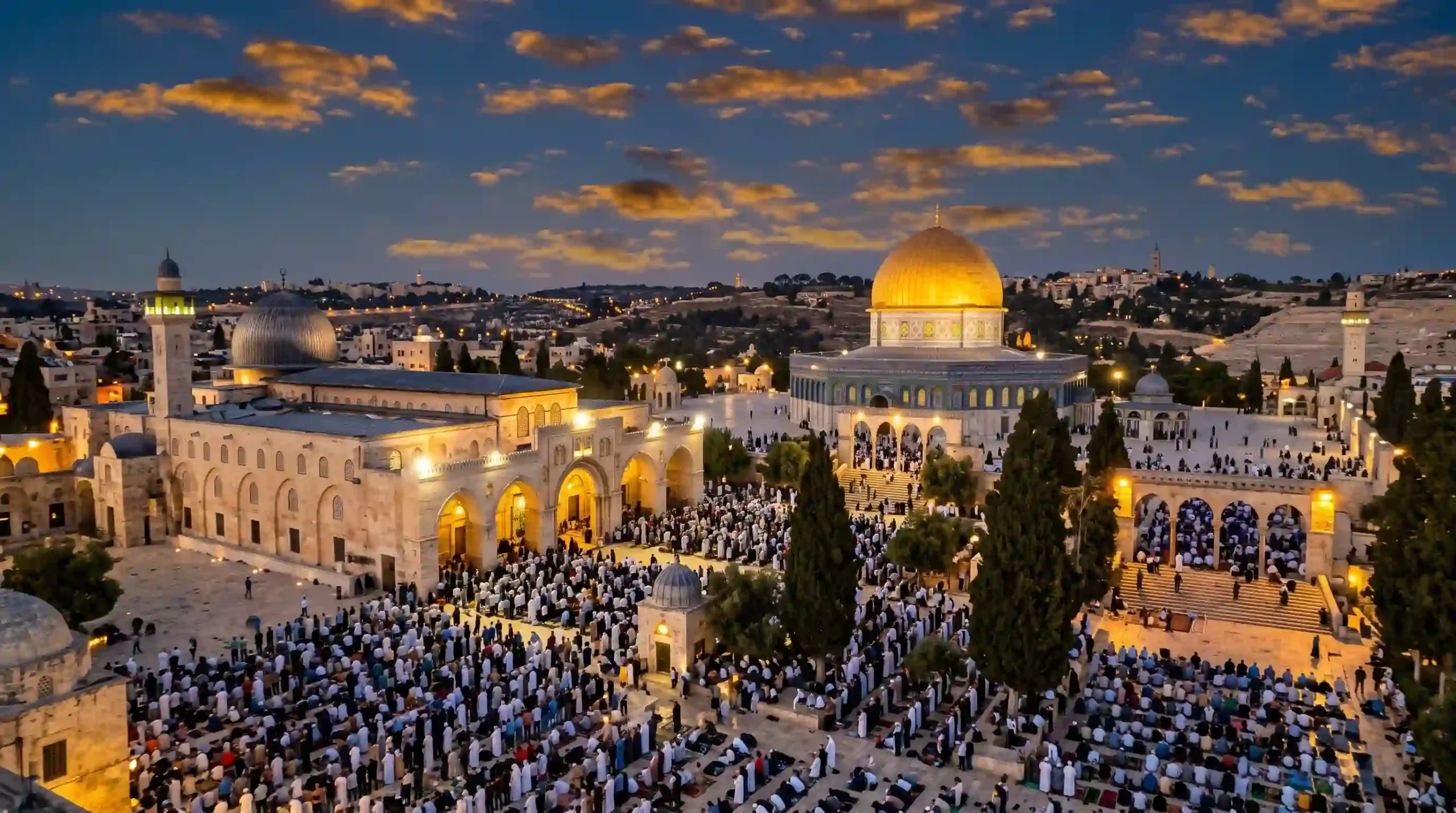
You wake up feeling overwhelmed, scrolling through endless news cycles. Your heart feels heavy, disconnected, and burdened by the trials facing our Ummah today. In our heavily secularized, hyper-connected society, it is dangerously easy to lose our spiritual anchor. We feel the collective pain of the Muslim world, yet often lack a daily, actionable way to channel that grief into spiritual strength and reliance on God (Tawakkul).
Grounding your daily spiritual habit loop in the reality of Masjid Al-Aqsa is a time-tested remedy. By understanding the monumental Islamic significance of this sanctuary and incorporating specific, authentic practices into your routine, you transform passive worry into active, spiritually rewarded solidarity.
What Is Masjid Al-Aqsa and Baitul Muqaddas?
Masjid Al-Aqsa is the third holiest site in Islam, a 35-acre sacred compound located in the Old City of Jerusalem. Historically known as Baitul Muqaddas, it served as the first Qibla for Muslims and the miraculous destination of the Prophet Muhammad (PBUH) during the Night Journey.
Many Muslims mistakenly believe Masjid Al-Aqsa is just the single building with the silver dome (the Qibli Mosque) or the iconic golden Dome of the Rock. Linguistically, Al-Aqsa translates to “The Farthest,” referencing its geographic distance from Mecca at the time of revelation. The term Baitul Muqaddas literally means “The Holy House” or “The Purified House.” Classical scholars like Ibn Kathir emphasize that the purification refers to the spiritual cleansing of those who pray within its precincts.
From a psychological standpoint, establishing a mental connection to a sacred space outside of your immediate physical environment broadens your worldview. It pulls you out of localized anxiety and grounds you in a global, historic brotherhood. When we discuss the holy house in the old city of Jerusalem, we are talking about the entire sanctuary. Every inch of this plaza is sacred ground, walked upon by countless Prophets.
Here is why this matters for your daily routine. Understanding the profound history of this site bridges the gap between ancient revelation and your modern life. You can read our complete guide on understanding Isra and Miraj for a deeper timeline of these miraculous events and how they validate the sanctity of the compound.
The Quranic Evidence of Its Sanctity
Surah Al-Isra explicitly establishes the sacred nature of Masjid Al-Aqsa and its blessed surroundings. It records the Night Journey, proving that the spiritual link between Mecca and Jerusalem is divinely decreed and permanently binding upon all Muslims.
Let’s break down the exact meaning of this verse. The phrase “whose surroundings We have blessed” refers not only to the physical fertility of the Levantine land but to the perpetual spiritual blessings cascading from the Prophets who are buried there.
Arabic Text:
سُبْحَانَ الَّذِي أَسْرَىٰ بِعَبْدِهِ لَيْلًا مِّنَ الْمَسْجِدِ الْحَرَامِ إِلَى الْمَسْجِدِ الْأَقْصَى الَّذِي بَارَكْنَا حَوْلَهُ
Transliteration:
Subḥāna alladhī asrā bi-‘abdihi laylan min al-masjid al-ḥarām ilā al-masjid al-aqṣā alladhī bāraknā ḥawlahu…
English Translation:
Exalted is He who took His Servant by night from al-Masjid al-Haram to al-Masjid al-Aqsa, whose surroundings We have blessed…
Urdu Translation:
پاک ہے وہ ذات جو اپنے بندے کو راتوں رات مسجد حرام سے مسجد اقصیٰ تک لے گئی، جس کے ماحول کو ہم نے برکت دی ہے…
Hindi Translation:
वह ज़ात पाक है जो अपने बंदे को रातों रात मस्जिद अल-हराम से मस्जिद अल-अक़्सा तक ले गई, जिसके आस-पास को हमने बरकत दी है…
The Spiritual Habit Loop: Why This Mosque Matters Today
Praying for and defending Masjid Al-Aqsa is not merely a political stance; it is a core Islamic practice. The Prophet (PBUH) designated it as one of only three mosques worldwide where believers are specifically encouraged to travel for massive spiritual reward.
Building a spiritual habit loop requires tangible actions. When you implement daily supplications for the people of Palestine, you practice active empathy. This micro-transformation takes only 90 seconds after your obligatory prayers but tightly aligns your heart with the broader Ummah. It creates a psychological “cue-routine-reward” loop: the cue is finishing your Salah, the routine is making dua for Al-Aqsa, and the reward is the profound peace of fulfilling a Sunnah.
If you need practical templates for this implementation, integrate these morning duas for American Muslims into your commute or early routines.
The spiritual incentives provided by our faith are immense, designed to keep this specific mosque at the forefront of our consciousness.
Arabic Text:
لَا تُشَدُّ الرِّحَالُ إِلَّا إِلَى ثَلَاثَةِ مَسَاجِدَ: الْمَسْجِدِ الْحَرَامِ، وَمَسْجِدِ الرَّسُولِ ﷺ، وَمَسْجِدِ الْأَقْصَى
Transliteration:
Lā tushaddu ar-riḥālu illā ilā thalāthati masājid: al-masjid al-ḥarām, wa-masjid ar-rasūli ﷺ, wa-masjid al-aqṣā.
English Translation:
Do not set out on a journey except for three Mosques: Al-Masjid-Al-Haram, the Mosque of the Messenger ﷺ, and the Mosque of Al-Aqsa. (Sahih Bukhari 1189)
Urdu Translation:
ان تین مسجدوں کے سوا کسی اور جگہ کے لیے سفر نہ کیا جائے: مسجد حرام، میری یہ مسجد (مسجد نبوی)، اور مسجد اقصیٰ۔
Hindi Translation:
इन तीन मस्जिदों के सिवा किसी और जगह के लिए सफर न किया जाए: मस्जिद अल-हराम, मेरी यह मस्जिद (मस्जिद ए नबवी), और मस्जिद अल-अक़्सा।
Visualizing the Sunnah Rewards
How much is a prayer actually worth in these locations? An authentic Hadith narrated by Abu Darda clarifies the multiplication of good deeds for worshippers, proving that Allah has geographically anchored His mercy in these three sites.
| Sacred Sanctuary | Location | Spiritual Reward | Primary Significance |
| Al-Masjid Al-Haram | Mecca | 100,000x | The current Qibla and site of the Kaaba. |
| Al-Masjid An-Nabawi | Medina | 1,000x | The Prophet’s (PBUH) Mosque and resting place. |
| Masjid Al-Aqsa | Jerusalem | 500x | The first Qibla and site of Isra and Mi’raj. |
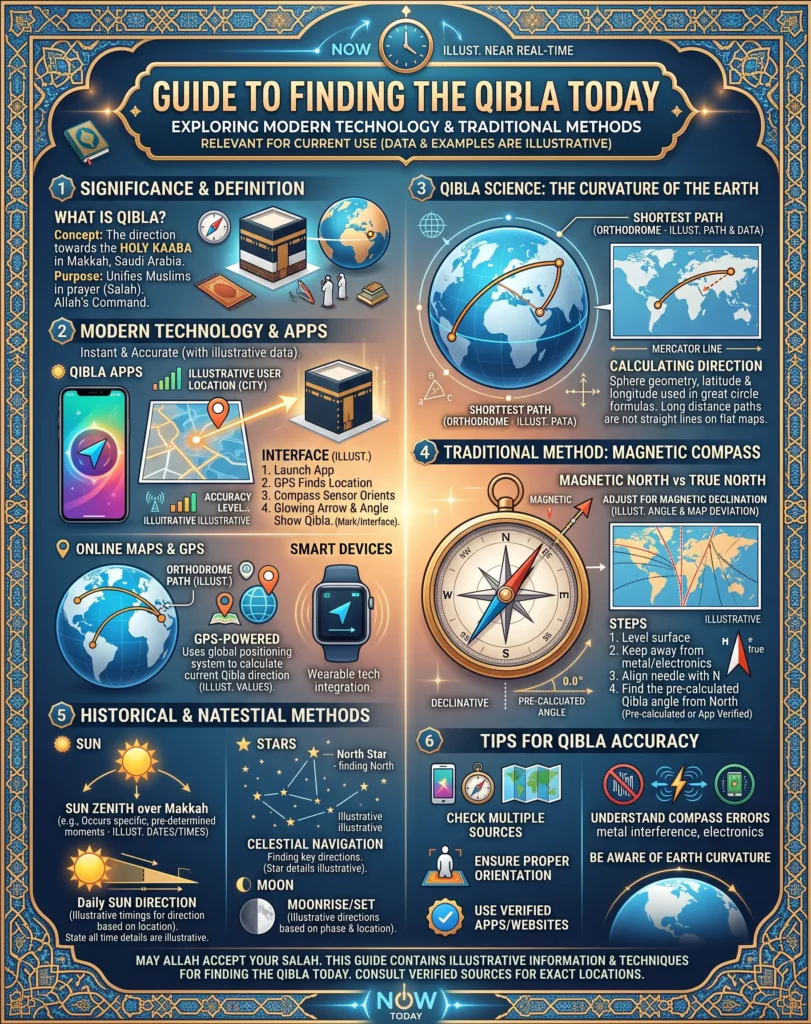
Qibla in Islam: past and present
624 CE: The Qibla Change and Lessons in Sabr
In 624 CE, roughly 16 months after the Hijrah, Allah commanded the Prophet Muhammad (PBUH) to change the direction of prayer (Qibla) from Baitul Muqaddas to the Kaaba in Mecca. This event was a profound test of faith and patience for early Muslims.
Before this moment, early Muslims faced Jerusalem for every single prayer. The historical context (Asbab al-Nuzul) reveals that certain tribes in Medina mocked the Muslims for sharing their prayer direction while rejecting their broader theology. The Prophet (PBUH) yearned to face the Kaaba, the house built by Ibrahim (AS), frequently looking up at the sky in anticipation of divine revelation.
When the command came down during the Asr prayer (or Dhuhr, according to some narrations) at what is now known as Masjid al-Qiblatayn, the congregation physically turned 180 degrees mid-prayer. This requires immense Sabr (patience) and unquestioning Tawakkul (reliance on God).
But how do we apply this at work or school? When life forces a sudden pivot—a lost job, a broken relationship, a health crisis—we must mirror that immediate obedience. We turn our hearts toward Allah without hesitation, trusting His divine timing over our own logic. The shift away from Jerusalem did not diminish its sanctity; it merely established Mecca as the central axis, while Al-Aqsa remained the historic gateway to the heavens.
What is the Latest Situation in the Holy House?
The latest situation in Baitul Muqaddas remains highly volatile, marked by heavy military presence, restricted access for Palestinian worshippers, and ongoing political tension. Protecting its sacred identity requires global Muslim awareness, continuous prayer, and vocal advocacy.
Today, entering the sanctuary is frequently restricted based on age, residency, and political friction. While the physical administration officially falls under the Jerusalem Islamic Waqf, the reality on the ground drastically limits freedom of worship. This is not merely a regional issue; it is a spiritual test for the global Muslim community. The Prophet (PBUH) tied the liberation and maintenance of this mosque directly to the health of the Ummah.
You can support the holy site through ethical awareness and targeted charity. A famous Hadith regarding Al-Aqsa advises that if one cannot travel there to pray, they should send “oil to light its lamps.” Today, this translates to supporting the upkeep of the mosque and the survival of the indigenous population defending it. Consult our guide to Islamic giving and Zakat to find vetted ways to assist and automate your charitable habit loop.
People Also Ask
What is Baitul Muqaddas?
Baitul Muqaddas (or Bayt al-Maqdis) translates to “The Holy House” and refers to the entire 35-acre sanctuary in the Old City of Jerusalem, encompassing the Dome of the Rock, the Qibli Mosque, and the surrounding courtyards. It is synonymous with the Al-Aqsa Mosque compound.
How much reward is there for praying in Masjid Al-Aqsa?
According to authentic Hadith traditions, offering one prayer within the compound of Masjid Al-Aqsa yields 500 times the spiritual reward of praying in an ordinary mosque, solidifying its rank as the third holiest site in Islam.
Which Quran verse says about Masjid Al-Aqsa?
The most prominent mention of the sanctuary is in Surah Al-Isra (Chapter 17, Verse 1). The verse describes the miraculous Night Journey (Isra) of the Prophet Muhammad (PBUH) from the Sacred Mosque in Mecca to the Farthest Mosque in Jerusalem.
What happened in 624 CE regarding the Qibla?
In 624 CE, Allah revealed verses instructing Muslims to change their direction of prayer (Qibla) from Jerusalem to the Kaaba in Mecca. This shift tested the obedience of the early believers and established Mecca as the permanent spiritual center of Islam.
