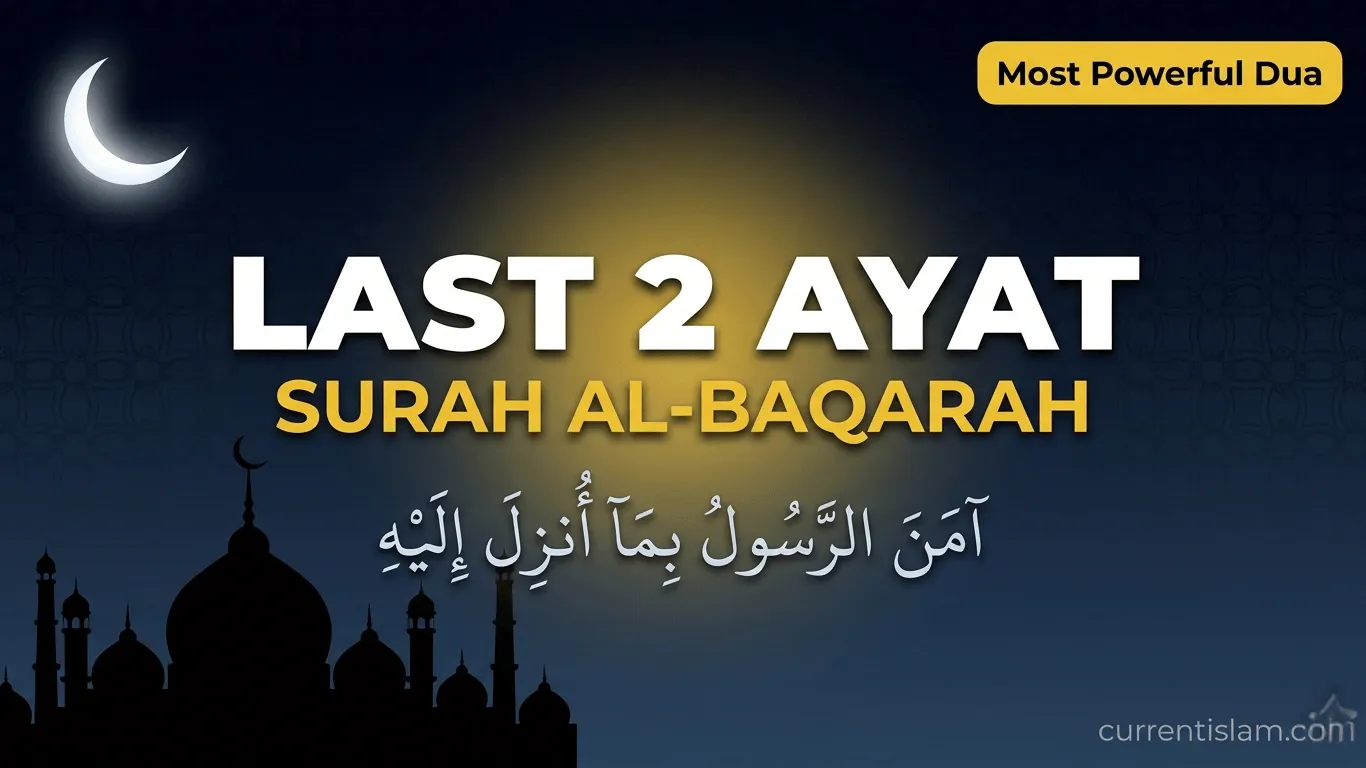
The final two verses of Surah Al‑Baqarah (2:285–286) are among the most powerful in the Qur’an. They are not only a creed of faith, but also a nightly dua and a spiritual shield. For many believers, reciting these verses before sleep brings comfort, protection, and hope in Allah’s mercy.
Arabic Text, Transliteration, and Translation
Ayah 285 – Arabic
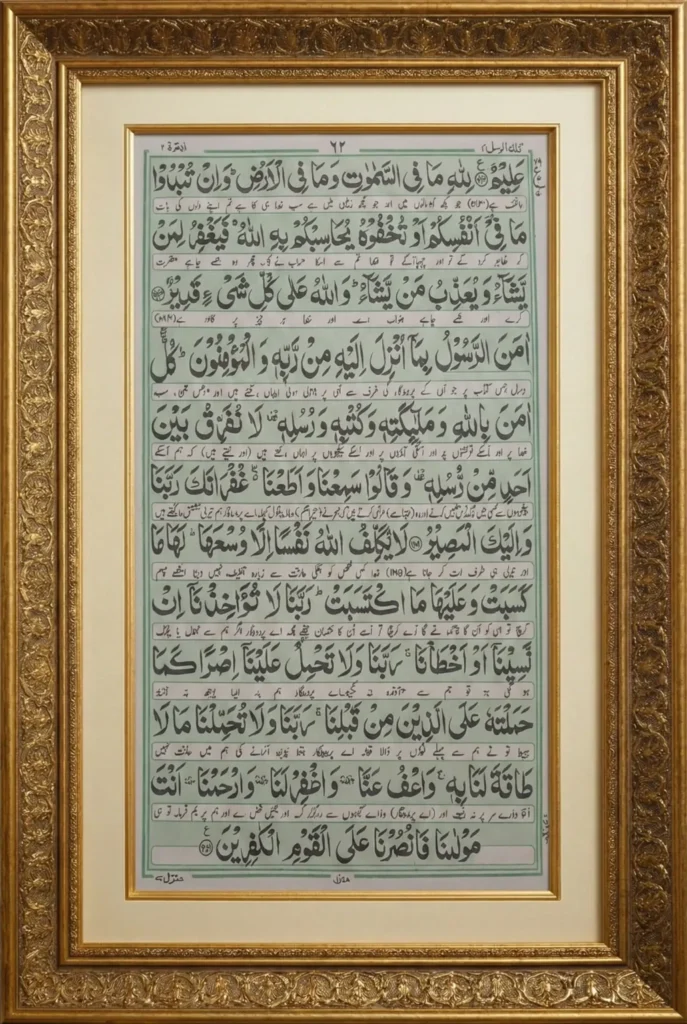
آمَنَ ٱلرَّسُولُ بِمَآ أُنزِلَ إِلَيْهِ مِن رَّبِّهِۦ وَٱلْمُؤْمِنُونَ ۚ كُلٌّ ءَامَنَ بِٱللَّهِ وَمَلَـٰٓئِكَتِهِۦ وَكُتُبِهِۦ وَرُسُلِهِۦ لَا نُفَرِّقُ بَيْنَ أَحَدٍۢ مِّن رُّسُلِهِۦ ۚ وَقَالُوا۟ سَمِعْنَا وَأَطَعْنَا ۖ غُفْرَانَكَ رَبَّنَا وَإِلَيْكَ ٱلْمَصِيرُ
Transliteration (Roman)
Āmana r‑rasūlu bimā unzila ilayhi min rabbihī wal‑mu’minūn, kullun āmana billāhi wa malāʾikatihī wa kutubihī wa rusulihī, lā nufarriqu bayna aḥadin min rusulihī, wa qālū samiʿnā wa aṭaʿnā, ghufrānaka rabbanā wa ilayka al‑maṣīr.
English (Saheeh International)
The Messenger has believed in what was revealed to him from his Lord, and [so have] the believers. All of them have believed in Allah and His angels and His books and His messengers, [saying], “We make no distinction between any of His messengers.” And they say, “We hear and we obey. [We seek] Your forgiveness, our Lord, and to You is the final destination.”
Urdu (Fateh Muhammad Jalandhari)
رسول اس (کتاب) پر ایمان لایا جو اس کے رب کی طرف سے اس پر نازل ہوئی اور ایمان والے بھی، سب کے سب اللہ پر اور اس کے فرشتوں پر اور اس کی کتابوں پر اور اس کی رسولوں پر ایمان لائے، (یہ کہتے ہوئے) کہ ہم اس کے پیغمبروں میں سے کسی میں فرق نہیں کرتے، اور وہ کہتے ہیں کہ ہم نے سنا اور مان لیا، اے ہمارے رب! ہم تیری بخشش کے طلبگار ہیں اور تیری ہی طرف لوٹ کر جانا ہے۔
Ayah 286 – Arabic
لَا يُكَلِّفُ ٱللَّهُ نَفْسًا إِلَّا وُسْعَهَا ۚ لَهَا مَا كَسَبَتْ وَعَلَيْهَا مَا ٱكْتَسَبَتْ ۗ رَبَّنَا لَا تُؤَاخِذْنَآ إِن نَّسِينَآ أَوْ أَخْطَأْنَا ۚ رَبَّنَا وَلَا تَحْمِلْ عَلَيْنَآ إِصْرًا كَمَا حَمَلْتَهُۥ عَلَى ٱلَّذِينَ مِن قَبْلِنَا ۚ رَبَّنَا وَلَا تُحَمِّلْنَا مَا لَا طَاقَةَ لَنَا بِهِۦ ۖ وَٱعْفُ عَنَّا وَٱغْفِرْ لَنَا وَٱرْحَمْنَآ ۚ أَنتَ مَوْلَىٰنَا فَٱنصُرْنَا عَلَى ٱلْقَوْمِ ٱلْكَـٰفِرِينَ
Transliteration (Roman)
Lā yukallifu llāhu nafsan illā wusʿahā, lahā mā kasabat wa ʿalayhā mā ik’tasabat. Rabbanā lā tu’ākhidhnā in nasīnā aw akhṭaʾnā, rabbanā wa lā taḥmil ʿalaynā iṣran kamā ḥamaltahū ʿalā lladhīna min qablina, rabbanā wa lā tuḥammilnā mā lā ṭāqata lanā bih, waʿfu ʿannā, waghfir lanā, warḥamnā, anta mawlānā fa‑nṣurnā ʿalā l‑qawmi l‑kāfirīn.
English (Saheeh International)
Allah does not charge a soul except [with that within] its capacity. It will have [the consequence of] what [good] it has gained, and it will bear [the consequence of] what [evil] it has earned. “Our Lord, do not impose blame upon us if we forget or make a mistake. Our Lord, and lay not upon us a burden like that which You laid upon those before us. Our Lord, and burden us not with that which we have no ability to bear. And pardon us; and forgive us; and have mercy upon us. You are our Protector, so give us victory over the disbelieving people.”
Urdu (Fateh Muhammad Jalandhari)
اللہ کسی جان پر اس کی طاقت سے زیادہ بوجھ نہیں ڈالتا، جو نیکی وہ کمائے گی وہ اسی کے لئے ہے، اور جو برائی وہ کمائے گی وہ اسی کے ذمہ ہے۔ (ایمان والے یوں دعا کرتے ہیں:) اے ہمارے رب! اگر ہم بھول جائیں یا غلطی کر بیٹھیں تو ہمیں نہ پکڑنا، اے ہمارے رب! ہم پر وہ بوجھ نہ ڈال جو تو نے ہم سے پہلے لوگوں پر ڈالا، اے ہمارے رب! اور ہم پر وہ بوجھ نہ ڈال جس کی ہمیں طاقت نہیں، اور ہمیں معاف فرما دے، اور ہمیں بخش دے، اور ہم پر رحم کر، تو ہی ہمارا کارساز ہے، پس ہمیں کافروں پر غلبہ عطا فرما۔
These verses are often recited in daily prayers, night dhikr, and as a separate wazifa. They combine a creed of faith with a powerful dua for forgiveness, mercy, and protection.
Virtues and Hadith about the Last Two Verses
The Prophet ﷺ highlighted the special status of these ayat. In a hadith recorded in Sahih al‑Bukhari (5009), he said:
“Whoever recites the last two verses of Surah Al‑Baqarah at night, they will suffice him.”
Scholars explain “will suffice him” in three main ways:
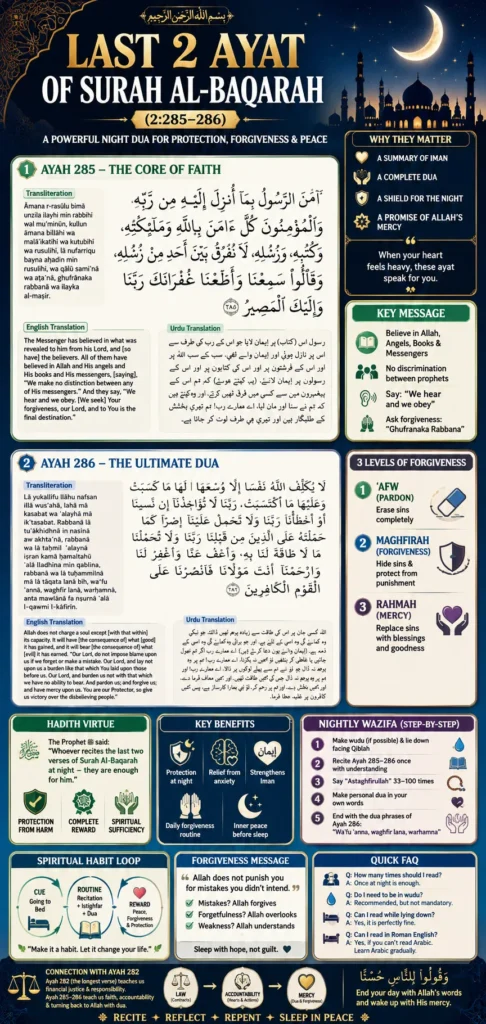
- Protection from harm and evil at night.
- Sufficient reward for that night, especially if one is too tired for long night prayers.
- A spiritual shield that covers the one who recites them with sincerity.
Another narration mentions that these verses were taken from a “treasure beneath the Throne” of Allah, showing that they are a special gift of mercy for the Ummah of Muhammad ﷺ.
When combined with the five daily prayers, these verses are described as one of Allah’s greatest favors, offering forgiveness for major sins for those who avoid shirk.
Key Spiritual Benefits of Reciting Them
Reciting 2:285–286 nightly brings several important benefits:
Protection from harm at night
Many scholars and teachers note that these verses “guard” the believer against evil when recited before sleep. For a busy Muslim who cannot perform long qiyam every night, this is a great mercy.
Divine sufficiency and reward
The phrase “they will suffice him” indicates a comprehensive coverage: Allah grants protection, reward, and spiritual benefit to the one who makes this a habit.
Mercy, pardon, and forgiveness
Ayah 286 is packed with duas for forgiveness, mercy, and relief from unbearable burdens. Reciting them with awareness turns bedtime into a nightly session of tawbah.
Relief from anxiety and fear
The line “Allah does not burden a soul beyond its capacity” is a universal comfort for those facing trials. Repeating it in context helps shift the heart from despair to trust.
Strengthening iman and obedience
Ayah 285 praises those who say, “We hear and we obey.” This contrasts with earlier nations who said, “We hear and we disobey.” The verse trains the believer to combine belief with action.
Clarifying thoughts and accountability
Earlier verses mention being taken to account for what is in the heart, which worried the Companions. These closing verses clarify that forgetfulness and genuine mistakes are not punished like deliberate sins.
Barakah in life and deen
Overall, Surah Al‑Baqarah is known for barakah, protection from shaytān, and healing. The last two verses act like a seal of that barakah for those who recite them regularly.
Opening the Doors of Forgiveness
These two verses are a powerful forgiveness wazifa that can be turned into a nightly ritual.
1. “We seek Your forgiveness, our Lord” (Ayah 285)
After declaring faith and obedience, the believers immediately ask:
غُفْرَانَكَ رَبَّنَا وَإِلَيْكَ ٱلْمَصِيرُ
This teaches that even when you try your best, you still rely on Allah’s maghfirah, not your own deeds. For someone heavy with guilt, this is a lifeline.
2. “Do not hold us for what we forget or mistake” (Ayah 286)
رَبَّنَا لَا تُؤَاخِذْنَآ إِن نَّسِينَآ أَوْ أَخْطَأْنَا
Classical tafsir explains that Allah accepted this plea: unintentional slips are treated with mercy, not strict accountability.
3. Triple plea: pardon, forgive, have mercy
وَٱعْفُ عَنَّا وَٱغْفِرْ لَنَا وَٱرْحَمْنَآ
Scholars describe the three levels:
- ʿAfw (pardon): erase the sin as if it never happened.
- Maghfirah (forgiveness): cover the sin and remove punishment.
- Rahmah (mercy): replace darkness with light and goodness in your life.
4. A special gift for this Ummah
Some narrations link these verses with the five daily prayers and promise forgiveness for those who avoid shirk. This shows that they are part of Allah’s mercy package for the Ummah of Muhammad ﷺ.
5. From guilt to hopeful regret
Regular recitation helps shift the heart from:
- “Allah will never forgive me” → “Allah Himself taught me these words for forgiveness.”
- Obsession with every thought → healthy focus on choices, while still asking Allah to overlook slips.
A Simple Nightly Wazifa Routine
You can turn these verses into a nightly forgiveness routine:
Step 1 – Set the cue
Link the recitation to a fixed time: when you lie down, or after turning off the light. Consistency turns this into a habit.
Step 2 – Recite 2:285–286 once
Recite slowly in Arabic (or with transliteration/audio if needed), focusing on:
- “Ghufrānaka rabbanā” – “We seek Your forgiveness.”
- “La tu’ākhidhnā in nasīnā aw akhṭaʾnā” – “Do not punish us for forgetfulness or mistakes.”
- “Waʿfu ʿannā, waghfir lanā, warḥamnā” – “Pardon, forgive, have mercy.”
Step 3 – Short istighfar
Say for example:
أَسْتَغْفِرُ ٱللَّهَ رَبِّي مِن كُلِّ ذَنبٍ وَأَتُوبُ إِلَيْهِ
Repeat “Astaghfirullah” 33, 50, or 100 times, as you can, with sincerity.
Step 4 – One‑minute personal dua
For 60–90 seconds, speak to Allah in your own language (Urdu, English, etc.):
- Admit 1–2 sins or weaknesses from the day.
- Connect them to the verses: “Ya Rabb, You taught us to say ‘do not hold us for what we forget or mistake’; I ask that for what I did today.”
Step 5 – End with the final dua phrases
Recite slowly:
رَبَّنَا لَا تُؤَاخِذْنَآ إِن نَّسِينَآ أَوْ أَخْطَأْنَا… وَٱعْفُ عَنَّا وَٱغْفِرْ لَنَا وَٱرْحَمْنَآ… أَنتَ مَوْلَىٰنَا فَٱنصُرْنَا عَلَى ٱلْقَوْمِ ٱلْكَـٰفِرِينَ
This ends your night on four pillars: pardon, forgiveness, mercy, and divine protection.
Classical Tafsir (Ibn Kathir and others)
Ibn Kathir on Ayah 285:
- Affirms the Prophet’s iman and praises the believers for accepting all of Allah’s angels, books, and messengers without distinction.
- Notes that “We hear and we obey” is a declaration of full surrender, not just words.
- Links these verses to the Prophet’s three great gifts: the five daily prayers, the last verses of Surah Al‑Baqarah, and forgiveness for those of his Ummah who avoid shirk.
Ibn Kathir on Ayah 286:
- Explains that “Allah does not burden a soul beyond its capacity” applies to both obligations and trials.
- Clarifies that reward and punishment are tied to chosen actions, not involuntary slips.
- Reports that Allah accepted the dua: “I have done so” – meaning the requests for forgiveness and relief were granted.
How Ayah 282 Connects to the Last Two Verses
Ayah 282 (the longest verse of the Qur’an) details financial justice, contracts, and written debts. It is followed by verses 283–286, which move from external responsibility (debt, contracts) → inner accountability (what is in the heart) → dua and mercy (285–286).
Together, they show that true iman is not only in worship, but also in justice, honesty, and then turning to Allah with humility and hope for forgiveness.
By making the last two verses of Surah Al‑Baqarah a non‑negotiable nightly habit,
Surah baqarah last 2 ayat with urdu translation (PDF)
People Also Ask:
Reading the last 2 ayat of Surah Baqarah provides protection from evil eye, black magic, and nightmares. It also serves as a complete worship for the night, meaning if you overslept and missed your night prayers (Tahajjud), the reward of these verses suffices for you.
Yes, listening to the last 2 ayat of Surah Baqarah is beneficial and soothing, but the specific promise of “protection” in the Hadith is linked to reciting them yourself. However, playing them in the house can help clear negative energy.
Yes, often when people say “last ruku,” they are referring to the section containing Ayat 284, 285, and 286. However, the specific protection Hadith highlights the last two verses (285-286) starting from Aamanar-rasoolu.
Millions of Muslims recite the last two verses of Surah Al-Baqarah every night because the Prophet ﷺ said they are “enough” for protection, peace, and reward.
These powerful ayat strengthen faith, teach complete reliance on Allah, and contain beautiful duas for forgiveness and mercy.
They remind believers that Allah never burdens a soul beyond its capacity and overlooks sincere mistakes and weaknesses.
For many hearts, these verses are a nightly source of comfort, hope, and spiritual protection before sleep.
