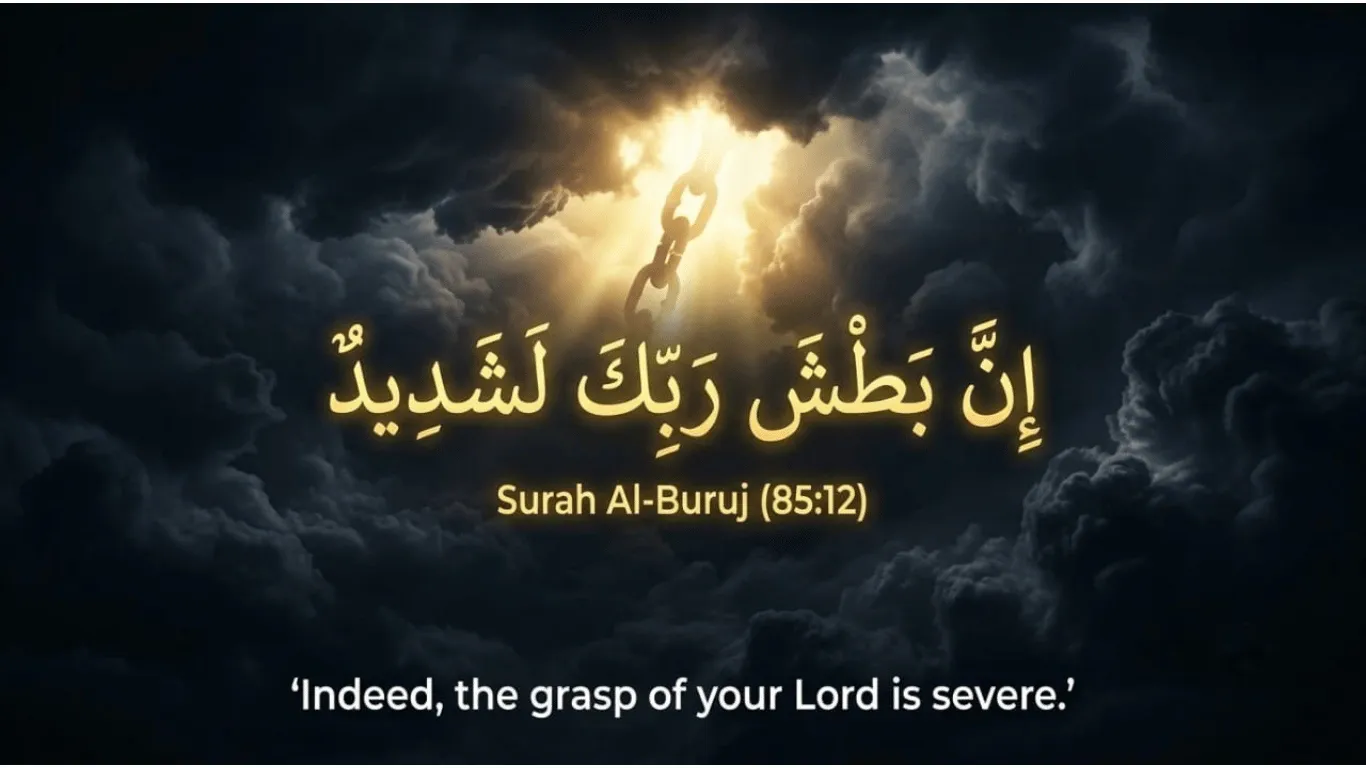
When you are commuting on the London Underground or stuck in morning traffic on the I-95 in US Eastern Time, the weight of workplace injustice or global news can feel paralyzing. Before you even reach your desk, anxiety takes hold. Incorporating this specific verse from the Quran into your morning habit loop acts as an instant spiritual shield. It reminds you that ultimate authority does not belong to your boss, the daily news cycle, or anyone who wrongs you.
Here is why this matters for you. As Western Muslims navigating high-pressure corporate environments or witnessing global hardships on our screens, we often feel helpless. Let’s understand how a single, powerful verse can transform that helplessness into unwavering spiritual resilience.
What is the Meaning of Inna Batsha Rabbika La Shadeed?
The verse Inna batsha rabbika la shadeed means, “Indeed, the grip of your Lord is severe.” It is a profound declaration from Surah Al-Buruj establishing that God’s justice is absolute, inescapable, and far more powerful than any worldly oppression.
To grasp its full weight, we must look at the exact linguistics and translations.
Quran 85:12 (Surah Al-Buruj)
- Arabic: إِنَّ بَطْشَ رَبِّكَ لَشَدِيدٌ
- Transliteration: Inna batsha rabbika lashadeed.
- English Translation: Indeed, the grip (or punishment) of your Lord is severe.
- Urdu Translation: بیشک تیرے رب کی پکڑ بڑی سخت ہے۔
(Surah Al-Buruj verse 12)
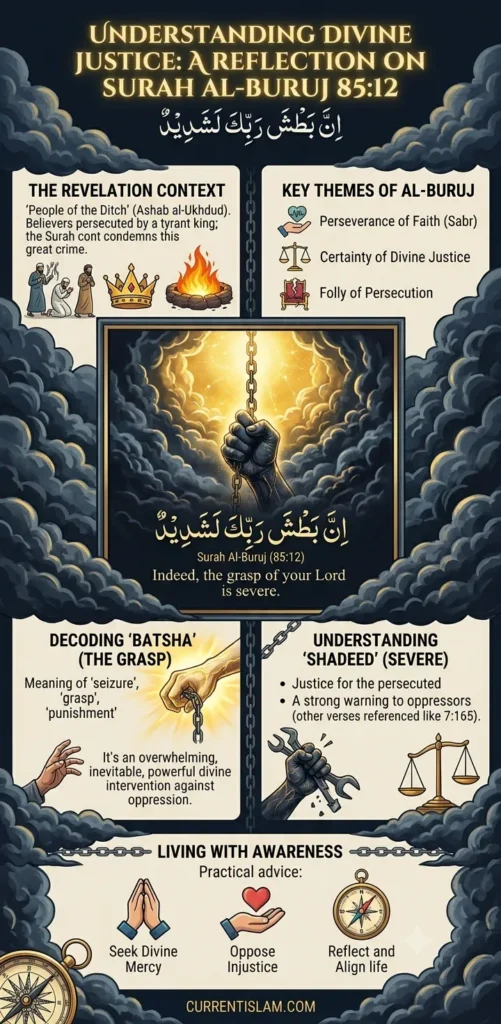
The word batsh signifies a sudden, overwhelming, and forceful seizure. When paired with Rabbika (your Lord), it provides a deeply personal reassurance. The Almighty is taking ownership of your protection and the ultimate execution of justice.
Applying Quran 85:12 in the West
Islamic spirituality is deeply practical. The Digital Sunnah—combining modern behavioral science with ancient faith—allows us to build a “Spiritual Habit Loop.” When a negative trigger occurs, you apply a specific spiritual routine to achieve a reward of inner peace.
Now let’s connect this to daily life at your office, school, or home.
Overcoming Workplace Injustice and Corporate Burnout
Corporate burnout in major hubs like New York, Los Angeles, or Manchester often stems from feeling powerless. You might be facing a toxic boss, subtle workplace discrimination, or office politics that block your career growth.
When you feel marginalized in a meeting, use this verse as an internal anchor. Reciting it shifts your mindset from victimhood to empowerment. You are reminded that the corporate hierarchy is temporary, and real power rests with Allah.
This mindset aligns perfectly with the authentic teachings of Prophet Muhammad (PBUH) regarding those who are wronged.
Sahih Bukhari (Book 46, Hadith 9)
- Arabic: اتَّقِ دَعْوَةَ الْمَظْلُومِ، فَإِنَّهُ لَيْسَ بَيْنَهَا وَبَيْنَ اللَّهِ حِجَابٌ
- Transliteration: Ittaqi da’watal-mazlum, fa innahu laysa baynaha wa baynallahi hijab.
- English Translation: Beware of the supplication of the oppressed, for there is no barrier between it and Allah.
- Urdu Translation: مظلوم کی بددعا سے بچو، کیونکہ اس کے اور اللہ کے درمیان کوئی پردہ نہیں ہوتا۔
Knowing that your silent prayers pierce the heavens without a barrier provides immense psychological relief and protects you from burnout.
Curing Global News Anxiety and Helplessness
It is common to wake up at 7 AM EST or 8 AM GMT, open your phone, and immediately feel crushed by global injustices and Islamophobia. This doom-scrolling creates a cycle of despair.
Instead of letting the news dictate your mental health, apply the Spiritual Habit Loop. When the trigger (distressing news) hits, recite Inna batsha rabbika la shadeed. The reward is instant perspective. The oppressors you see on your screen may seem untouchable today, but divine justice is guaranteed. This practice transforms panic into patient reliance, perfectly embodying the meaning of Innallaha ma sabireen (Indeed, Allah is with the patient).
Healing from Toxic Relationships
Dealing with unfair treatment in your personal life, community disputes, or feeling wronged by someone in a position of power creates heavy emotional baggage. Providing yourself with a daily wazifa (spiritual practice) focused on this verse helps you let go. You stop trying to exact revenge or obsessing over fairness, knowing that the “severe grip” of the Almighty is more than sufficient to handle your affairs.
Scholarly Depth: Ibn Kathir and Classical Tafsir
To fully appreciate this verse, we look to classical scholarship. In his renowned Tafsir, Imam Ibn Kathir explains the context of Surah Al-Buruj. The surah recounts the story of the Ashab al-Ukhdud (The People of the Ditch)—tyrants who burned believers alive simply for their faith in God.
The oppressors believed their fire was the ultimate display of power. However, Allah revealed Inna batsha rabbika la shadeed to sharply contrast human tyranny with Divine reality. Ibn Kathir notes that Allah’s punishment and grip on the oppressors are forceful and agonizing.
For the modern Western Muslim, this classical Tafsir provides a vital framework. The early believers faced literal fires; today, you might face the figurative fires of discrimination, stress, or slander. The promise remains identical: God sees, God records, and God’s justice will prevail.
How to Practice This Verse Daily
Building this into your day takes less than 90 seconds. Whether you are walking to the subway, driving your kids to school, or settling into your home office, here is how to make it a routine:
- Acknowledge the Trigger: Notice when your heart rate rises due to anger, stress, or unfairness.
- Recite with Conviction: Say the verse silently or aloud.
- Complete the Loop: Follow it up by physically handing the problem over to God.
To perfectly seal this practice, pair it with the beautiful declaration of reliance found in Surah Ghafir.
Quran 40:44 (Surah Ghafir)
- Arabic: وَأُفَوِّضُ أَمْرِي إِلَى اللَّهِ
- Transliteration: Wa ufawwidu amri ilallah.
- English Translation: And I entrust my affair to Allah.
- Urdu Translation: اور میں اپنا معاملہ اللہ کے سپرد کرتا ہوں۔
If your anxiety stems from the literal journey of commuting or traveling in an unpredictable world, you can also fortify your morning routine by reciting the safar ki dua before leaving your home.
People Also Ask
The morning dua is a supplication made upon waking to thank Allah for a new day. A common one is: “All praise is for Allah who gave us life after having taken it from us and unto Him is the resurrection.” While not a specific verse like Inna batsha rabbika la shadeed, reciting Quranic verses for protection is an essential part of the morning routine for Muslims in the West.
Surah Al-Buruj, verse 12 (Inna batsha rabbika la shadeed) is excellent for workplace stress related to injustice. It reminds the reader that ultimate power belongs to God, reducing the perceived power of toxic bosses or corporate politics.
There is no specific Sunnah count (like 33 or 100 times) mandated by the Prophet Muhammad (PBUH) exclusively for this single verse. You should recite it as many times as needed until your heart feels settled and you truly internalize its meaning.
Yes, before starting work, you can recite Wa ufawwidu amri ilallah (“And I entrust my affair to Allah”) to declare your reliance on God for your provision, success, and protection from workplace harm.
Empower Your Daily Routine
Transform the way you handle modern stress and injustice. Download our comprehensive Daily Dua Guide for the Modern Muslim to discover more quick, powerful spiritual habits tailored for your busy life. Keep these authentic, practical prayers right on your phone for whenever you need them.
