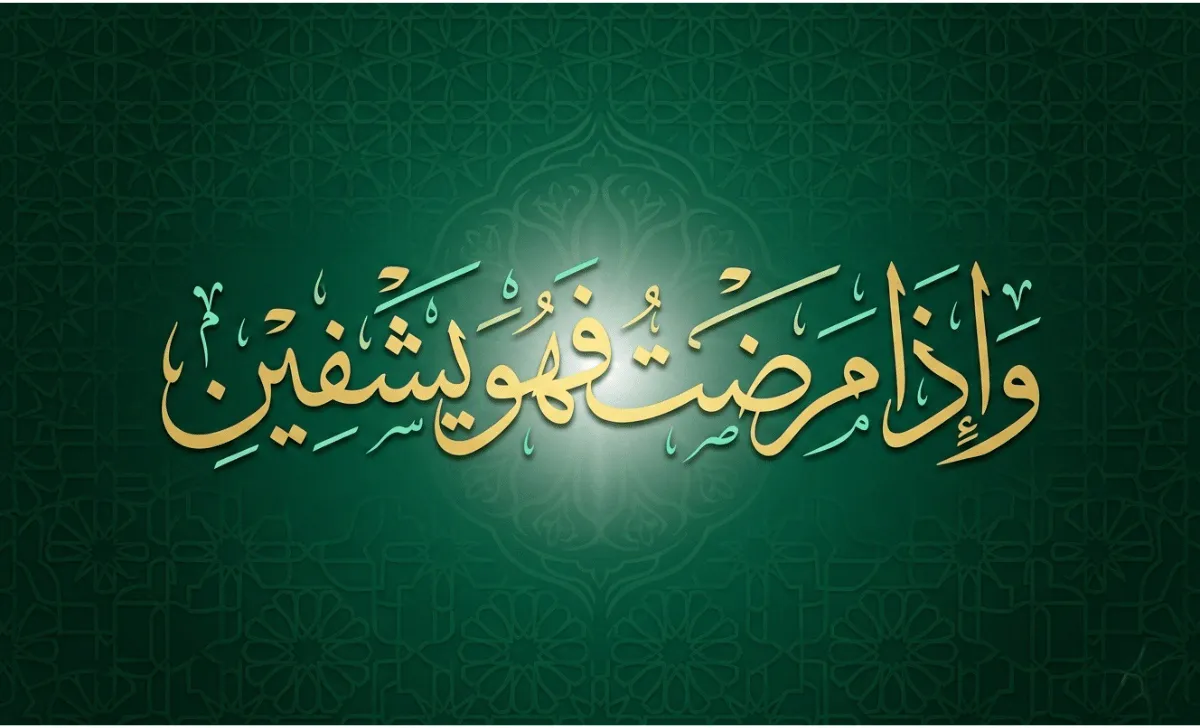
When sickness strikes the body, the heart quietly asks a deeper question: Who truly heals? Medicine treats symptoms, doctors provide care, but the Qur’an reminds believers of a profound truth — ultimate healing comes only from Allah. This powerful message appears in the words spoken by Prophet Ibrahim in the Qur’an.
In one beautiful verse, he declares absolute trust in Allah’s mercy and healing power.
What Does “Wa Iza Maridtu Fahuwa Yashfeen” Mean?
Wa Iza Maridtu Fahuwa Yashfeen” means “And when I am ill, it is He who cures me.” The verse teaches that while illness may occur in life, the true source of healing is Allah alone. Medicine and treatment are only means, but cure ultimately comes from Him.
This statement appears in the Qur’an in:
Wa Iza Maridtu Fahuwa Yashfeen
The Verse in Four Languages (Accessibility Section)
Arabic
وَإِذَا مَرِضْتُ فَهُوَ يَشْفِينِ
Transliteration
Wa iza maridtu fahuwa yashfeen
English (Saheeh International)
“And when I am ill, it is He who cures me.”
Urdu (Fateh Muhammad Jalandhari)
اور جب میں بیمار ہوتا ہوں تو وہی مجھے شفا دیتا ہے۔
Word-by-Word Meaning of the Verse
Understanding the verse word by word helps reveal the depth of its meaning. Each word emphasizes that illness happens in life, but healing belongs to Allah alone.
| Arabic | Meaning |
|---|---|
| وَإِذَا | And when |
| مَرِضْتُ | I become ill |
| فَهُوَ | Then He |
| يَشْفِينِ | cures me |
This powerful sentence reflects the humility and faith of Prophet Ibrahim, who attributed all healing to Allah.
Tafsir: Why Prophet Ibrahim Attributed Healing Only to Allah
Classical scholars explain that this verse teaches believers to recognize Allah as the ultimate healer. Illness may occur due to natural causes, but recovery comes only through Allah’s mercy and decree.
According to the famous Qur’anic commentator Ibn Kathir, Prophet Ibrahim intentionally attributed illness to himself (“when I become ill”) but attributed healing directly to Allah (“He cures me”). This reflects humility and perfect etiquette with Allah.
Scholars explain three important lessons:
1. Illness is part of human life
Even prophets experienced sickness.
2. Medicine is a means, not the healer
Doctors and treatments help, but the cure ultimately belongs to Allah.
3. Healing strengthens faith
When believers recover, they recognize Allah’s mercy more deeply.
The Quran Describes Itself as a Source of Healing
The Qur’an is not only guidance for life; it is also described as spiritual healing for hearts and souls. Reciting and reflecting on its verses can bring comfort, peace, and hope during times of illness.
Allah says in:
Surah Al‑Isra Ayat 82
Arabic
وَنُنَزِّلُ مِنَ الْقُرْآنِ مَا هُوَ شِفَاءٌ وَرَحْمَةٌ لِّلْمُؤْمِنِينَ
Transliteration
Wa nunazzilu minal-Qur’ani ma huwa shifa’un wa rahmatun lil-mu’mineen
English (Saheeh International)
“And We send down of the Qur’an that which is healing and mercy for the believers.”
Urdu (Fateh Muhammad Jalandhari)
اور ہم قرآن میں وہ چیز نازل کرتے ہیں جو مومنوں کے لیے شفا اور رحمت ہے۔
This verse shows that the Qur’an heals hearts, minds, and spiritual pain.
The Quran as Guidance and Cure for Believers
Another Qur’anic verse explains that the Qur’an becomes healing and guidance for those who believe. Faith strengthens the connection between the believer and the healing power of Allah’s words.
Allah says in:
Surah Fussilat Ayat 44
Arabic
قُلْ هُوَ لِلَّذِينَ آمَنُوا هُدًى وَشِفَاءٌ
Transliteration
Qul huwa lilladhina amanu hudan wa shifa
English (Saheeh International)
“Say, it is for those who believe a guidance and healing.”
Urdu (Fateh Muhammad Jalandhari)
کہہ دو کہ یہ ایمان والوں کے لیے ہدایت اور شفا ہے۔
This reminds believers that faith strengthens the healing effect of the Qur’an.
The Prophet Taught That Every Disease Has a Cure
Islam teaches believers to seek treatment while trusting Allah. The Prophet ﷺ explained that for every illness Allah has created a cure, encouraging Muslims to pursue both faith and medicine.
This teaching appears in the famous hadith recorded in:
Sahih al‑Bukhari
The Prophet ﷺ said:
“Allah has not sent down a disease except that He has also sent down its cure.”
This hadith encourages Muslims to:
• Seek medical treatment
• Make sincere dua
• Trust Allah for healing
The Quranic Healing Framework (A Practical Spiritual Strategy)
Islam offers a balanced approach to healing that combines spiritual devotion with practical effort. Believers rely on prayer, patience, and trust in Allah while also seeking treatment.
Here is a simple Quranic Healing Framework:
1. Turn to Allah in Dua
Supplication strengthens faith and invites Allah’s mercy.
2. Practice Tawakkul
Trust that Allah knows what is best for you.
3. Show Patience
Illness can erase sins and elevate spiritual rank.
4. Hope for Shifa
Healing may come through treatment, prayer, or divine mercy.
This spiritual mindset transforms illness into a moment of faith and spiritual growth.
A Powerful Quranic Dua for Healing
One of the most powerful prayers for relief from illness comes from the story of Prophet Ayyub, who remained patient during severe suffering and turned to Allah with humility.
Allah records his dua in:
Surah Al‑Anbiya
Arabic
رَبِّ إِنِّي مَسَّنِيَ الضُّرُّ وَأَنتَ أَرْحَمُ الرَّاحِمِينَ
Transliteration
Rabbi inni massaniya adh-durru wa anta arhamur-rahimeen
English (Saheeh International)
“Indeed, adversity has touched me, and You are the Most Merciful of the merciful.”
Urdu
اے میرے رب! مجھے تکلیف پہنچ گئی ہے اور تو سب سے بڑھ کر رحم کرنے والا ہے۔
This dua reflects humility, patience, and trust in Allah’s mercy.
Turning to Prayer During Hardship
Prayer strengthens a believer during moments of weakness and illness. Islam encourages turning to Salah when facing hardship, as prayer connects the heart directly to Allah’s mercy and healing.
For a deeper understanding of the call that invites believers to prayer, read:
Hayya Alas Salah – Come to Prayer
This phrase from the Adhan reminds Muslims that true success and peace come from responding to Allah’s call.
The Special Spiritual Power of Fajr Prayer
The early morning prayer holds special spiritual benefits and brings barakah to the day. Even during illness, remembering the importance of Fajr strengthens a believer’s connection with Allah.
The Adhan includes the beautiful phrase:
As-Salatu Khairun Minan Naum (Prayer is better than sleep).
Learning the deeper meaning of this phrase helps believers appreciate the spiritual strength that prayer brings to life.
People Also Ask:
It means “And when I am ill, it is He who cures me.” The verse teaches that while illness occurs in life, healing ultimately comes from Allah.
One of the most famous verses for healing is Wa Iza Maridtu Fahuwa Yashfeen from Surah Ash-Shu’ara. Other verses describe the Qur’an itself as healing for believers.
The Qur’an provides spiritual healing and comfort. Many Muslims recite its verses during illness for peace, hope, and blessings.
He said that when he becomes ill, Allah alone cures him, emphasizing complete reliance on Allah’s healing power.
The dua of Prophet Ayyub is widely recited:
“Rabbi inni massaniya adh-durru wa anta arhamur-rahimeen.”
Why This Verse Brings Comfort to Millions
Illness can feel frightening and uncertain. But the Qur’an offers a powerful reminder: healing ultimately belongs to Allah. When believers recite this verse with sincerity, they renew their hope in Allah’s mercy and wisdom.
The words of Prophet Ibrahim continue to inspire believers today:
“And when I am ill, it is He who cures me.”
These words transform sickness from a moment of fear into a moment of faith, patience, and trust in Allah.

2 thoughts on “Surah Ash Shuara Ayat 80— Waiza Mariztu Fahuwa Yashfeen”