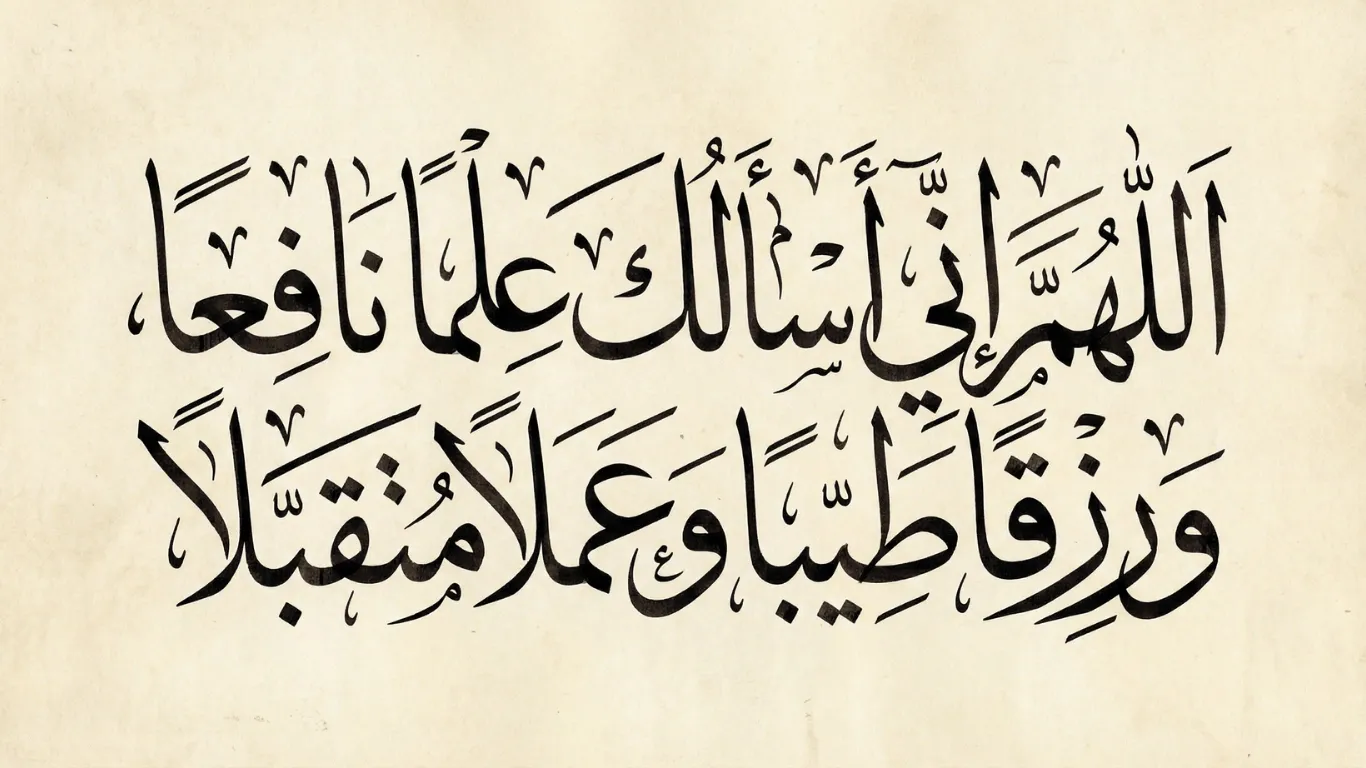
How many times have you raised your hands in dua, only to feel like your words are bouncing off the ceiling? In an era of digital burnout and constant financial anxiety, we often overcomplicate how we ask Allah for help. What if the secret to answered prayers isn’t about finding the longest Arabic script, but returning to a simple, three-second prophetic formula?
Let’s look at the heart of the issue and explore why Allahumma inni as’aluka is the ultimate master-key for your daily supplications.
What Does Allahumma Inni As’aluka Mean? A Word-by-Word Breakdown
Allahumma inni as’aluka means “O Allah, indeed I ask of You.” It is a comprehensive Arabic supplication taught by Prophet Muhammad (ﷺ). This phrase serves as a spiritual master-key to open your duas, combining the highest praise of Allah with absolute human vulnerability.
To truly grasp the weight of this phrase, we need to look at the Arabic syntax. It is brilliant in its simplicity:
- Allahumma (اللَّهُمَّ): O Allah. This isn’t just a standard call. Classical Arabic grammar tells us the “Meem” at the end encompasses all of Allah’s 99 Beautiful Names. You are calling upon the entirety of His majesty.
- Inni (إِنِّي): Indeed I, or Verily I. This is a particle of absolute certainty (Yaqeen). It removes all hesitation. You are standing firm in your need.
- As’aluka (أَسْأَلُكَ): I ask You. This is direct and unmediated. There is no middleman. It is a one-on-one conversation between a fragile human and the Lord of the Worlds.
Here is why this matters for you: when you combine these three words, you fulfill the primary conditions of an accepted dua—acknowledging His power, and admitting your weakness. But before you even make that request, you have to set the stage. A crucial part of prophetic etiquette is understanding the foundational power of praising Allah (Alhamdulillah) before presenting your needs.
The Micro-Invocation Framework: A 2026 Strategy for Duas
The Micro-Invocation Framework is a modern spiritual strategy using this dua as a three-second reset. When you feel overwhelmed by digital burnout or financial stress, uttering this short phrase instantly shifts your reliance from worldly means back to the Creator.
We live in a hyper-connected world where our attention spans are shattered. You might feel like you don’t have the energy for a twenty-minute dua session after a long, exhausting workday. The beauty of the Sunnah is that it is highly practical.
Think of Allahumma inni as’aluka as the ultimate “Digital Sunnah.” It is a micro-invocation. Before you open a stressful work email, before you check your bank balance, or before you walk into a difficult meeting, reciting this short phrase re-centers your heart. It reminds you that your Rizq (provision) and your peace of mind come from the heavens, not from your screen.
The Best Allahumma Inni As’aluka Duas from Hadith
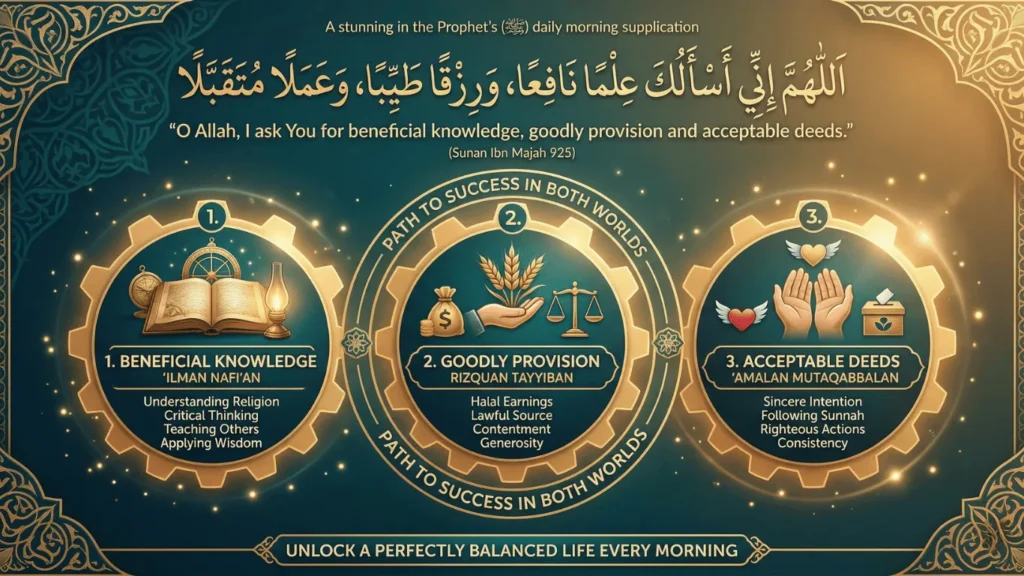
The best dua for morning blessings asks Allah for beneficial knowledge, pure provision, and accepted deeds. It is the perfect daily wazifa for rizq and success, setting a spiritual foundation for your day before you check your phone or emails.
The Prophet Muhammad (ﷺ) was given Jawami al-Kalim (concise speech with vast meaning). He used this exact opening to ask for the most critical things in life.
1. The Ultimate Wazifa for Rizq and Knowledge (Ibn Majah)
If you are looking for a reliable daily wazifa to increase your sustenance and barakah, this is the most authentic starting point. The Prophet (ﷺ) used to recite this every single morning after the Fajr prayer.
- Arabic: اللَّهُمَّ إِنِّي أَسْأَلُكَ عِلْمًا نَافِعًا، وَرِزْقًا طَيِّبًا، وَعَمَلًا مُتَقَبَّلًا
- Transliteration: Allahumma inni as’aluka ‘ilman nafi’an, wa rizqan tayyiban, wa ‘amalan mutaqabbalan.
- English: O Allah, I ask You for beneficial knowledge, goodly provision and acceptable deeds. (Saheeh International style)
- Urdu: اے اللہ! میں تجھ سے نفع بخش علم، پاکیزہ رزق اور قبول ہونے والے عمل کا سوال کرتا ہوں۔ (Fateh Muhammad Jalandhari style)
2. The Four Pillars of Holistic Success (Sahih Muslim)
When you are feeling lost or struggling with your faith and finances simultaneously, this hadith covers all bases—spiritual guidance and worldly self-sufficiency.
- Arabic: اللَّهُمَّ إِنِّي أَسْأَلُكَ الْهُدَى وَالتُّقَى وَالْعَفَافَ وَالْغِنَى
- Transliteration: Allahumma inni as’aluka al-huda, wat-tuqa, wal-‘afafa, wal-ghina.
- English: O Allah, I ask You for guidance, piety, chastity, and self-sufficiency. (Saheeh International style)
- Urdu: اے اللہ! میں تجھ سے ہدایت، تقویٰ، پاکدامنی اور بے نیازی مانگتا ہوں۔ (Fateh Muhammad Jalandhari style)
The 3-Second Prophetic Master-Key: Why Your Duas Should Always Start With These 3 Words
Arabic:
اللَّهُمَّ إِنِّي أَسْأَلُكَ مِنْ خَيْرِ مَا سَأَلَكَ مِنْهُ نَبِيُّكَ مُحَمَّدٌ صَلَّى اللَّهُ عَلَيْهِ وَسَلَّمَ، وَأَعُوذُ بِكَ مِنْ شَرِّ مَا اسْتَعَاذَ مِنْهُ نَبِيُّكَ مُحَمَّدٌ صَلَّى اللَّهُ عَلَيْهِ وَسَلَّمَ، وَأَنْتَ الْمُسْتَعَانُ، وَعَلَيْكَ الْبَلَاغُ، وَلَا حَوْلَ وَلَا قُوَّةَ إِلَّا بِاللَّهِ
Transliteration: Allahumma inni as’aluka min khayri ma sa’alaka minhu nabiyyuka Muhammadun (sallallahu ‘alayhi wa sallam), wa a’udhu bika min sharri masta’adha minhu nabiyyuka Muhammadun (sallallahu ‘alayhi wa sallam), wa antal-musta’an, wa ‘alaykal-balagh, wa la hawla wa la quwwata illa billah.
English: “O Allah, I ask You from the good of what Your Prophet Muhammad (ﷺ) asked You for, and I seek refuge in You from the evil of what Your Prophet Muhammad (ﷺ) sought refuge from. You are the One whose help is sought, and it is upon You to answer, and there is no power nor strength except through Allah.”
Urdu:
“اے اللہ! میں تجھ سے اس بھلائی کا سوال کرتا ہوں جو تیرے نبی محمد (صلی اللہ علیہ وسلم) نے تجھ سے مانگی، اور اس برائی سے تیری پناہ چاہتا ہوں جس سے تیرے نبی محمد (صلی اللہ علیہ وسلم) نے پناہ مانگی۔ تو ہی مددگار ہے، اور (دعاؤں کا) پہنچنا تجھ ہی تک ہے، اور اللہ کی مدد کے بغیر (گناہوں سے بچنے اور نیکی کرنے کی) کوئی طاقت نہیں۔”
The Top 3 Daily “Allahumma Inni As’aluka” Duas
If you are looking for the specific, shorter daily duas that use this exact opening, here are the three most powerful ones from the Sunnah to keep in your daily routine:
1. For Wealth, Knowledge, and Success (Recite after Fajr)
Allahumma inni as’aluka ‘ilman nafi’an, wa rizqan tayyiban, wa ‘amalan mutaqabbalan. “O Allah, I ask You for beneficial knowledge, goodly provision and acceptable deeds.”
2. For Complete Protection and Well-being
Allahumma inni as’aluka al-‘afwa wal-‘afiyah fid-dunya wal-akhirah. “O Allah, I ask You for forgiveness and well-being in this world and the Hereafter.”
3. For the Ultimate Goal (Paradise)
Allahumma inni as’aluka al-jannah, wa a’udhu bika min an-nar. “O Allah, I ask You for Paradise, and I seek refuge in You from the Fire.”
Classical Tafseer & Scholarship Depth
Classical scholars like Imam An-Nawawi and Ibn al-Qayyim highlight that the word Allahumma encompasses all of Allah’s beautiful names. Using this exact phrase ensures you invoke His ultimate majesty before making a request, perfectly bridging human need and divine generosity.
In his monumental work Al-Adhkar, Imam An-Nawawi emphasizes that the specific phrasing taught by the Prophet (ﷺ) carries a spiritual weight that our own fabricated words simply cannot match.
Furthermore, Ibn al-Qayyim explores the profound psychology of asking. He notes that the act of saying “I ask You” (as’aluka) is an act of worship in itself. It forces the ego to submit. You are admitting that despite your degrees, your job, and your efforts, you are entirely dependent on Allah. This isn’t just about getting what you want; it is about recognizing who you are in relation to the Divine.
Experiencing the Benefits and Spiritual Relief
To create a powerful daily wazifa for rizq, simply recite the morning dua of the Prophet immediately after your Fajr prayers. Consistency in asking Allah for pure provision builds an unbreakable spiritual shield around your finances, inviting immense daily blessings.
When you make these prophetic duas a consistent habit, the benefits extend far beyond just an increase in wealth. You begin to experience an emotional lightness. The anxiety of “how will I pay for this?” or “what will happen tomorrow?” begins to fade.
Why? Because you have officially handed the problem over to the One who controls the solution. Once the words Allahumma inni as’aluka leave your lips, the burden is no longer yours to carry alone. In fact, this transition from asking to trusting is beautifully captured when you discover the secret to surrendering your worries to Allah.
People Also Ask:
It directly translates to “O Allah, indeed I ask of You.” It is a powerful opening phrase used in many prophetic duas to show absolute reliance on Allah before making a request.
You can start your dua with “Allahumma inni as’aluka,” followed by your specific need. For example, asking for well-being by saying Allahumma inni as’aluka al-‘afwa wal-‘afiyah (O Allah, I ask You for forgiveness and well-being).
The Prophet (ﷺ) taught us to ask for the highest levels of Paradise by saying: Allahumma inni as’aluka al-jannah, wa a’udhu bika min an-nar (O Allah, I ask You for Paradise, and I seek refuge in You from the Fire), recorded in Abu Dawud.
Yes. Reciting the hadith from Ibn Majah—asking for beneficial knowledge, pure provision (rizqan tayyiban), and accepted deeds—every morning after Fajr is a proven and authentic Sunnah wazifa for daily blessings.
Build Your Daily Sunnah Shield
Are you ready to transform your daily routine and protect your peace of mind in this distracted world? Don’t let your mornings pass without these powerful micro-invocations. Join the Current Islam Daily Dhikr Newsletter today to receive bite-sized, actionable prophetic duas sent straight to your inbox, keeping your heart anchored and your Rizq blessed.
