Have you ever watched a single unkept promise quietly destroy a lifelong relationship? Surah Al-Baqarah Ayat 27 reveals a terrifying psychological and spiritual sequence: breaking faith with the Creator inevitably leads to breaking bonds with creation, ultimately corrupting the world around us.
Let’s look at the heart of the issue and understand how this profound verse applies to our modern lives, our daily habits, and our ultimate success.
What is the Core Message of Surah Al Baqarah Ayat 27?
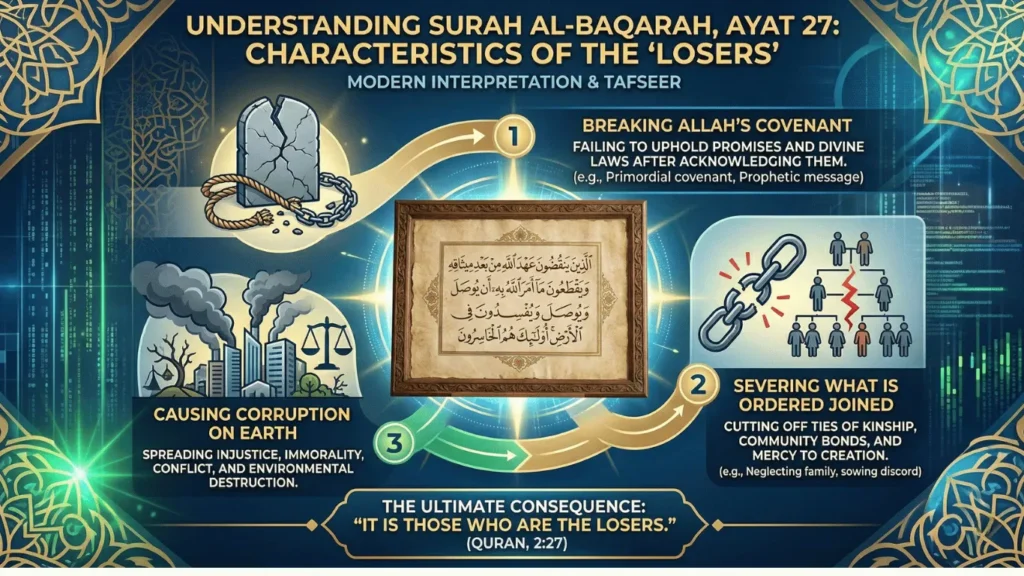
Surah Al Baqarah Ayat 27 describes the ultimate losers as those who break their covenant with Allah, sever family ties, and spread corruption. These three actions destroy a person’s spiritual foundation, cutting them off from divine mercy and societal harmony.
The Multilingual Quadrant: Primary Proof
Arabic:
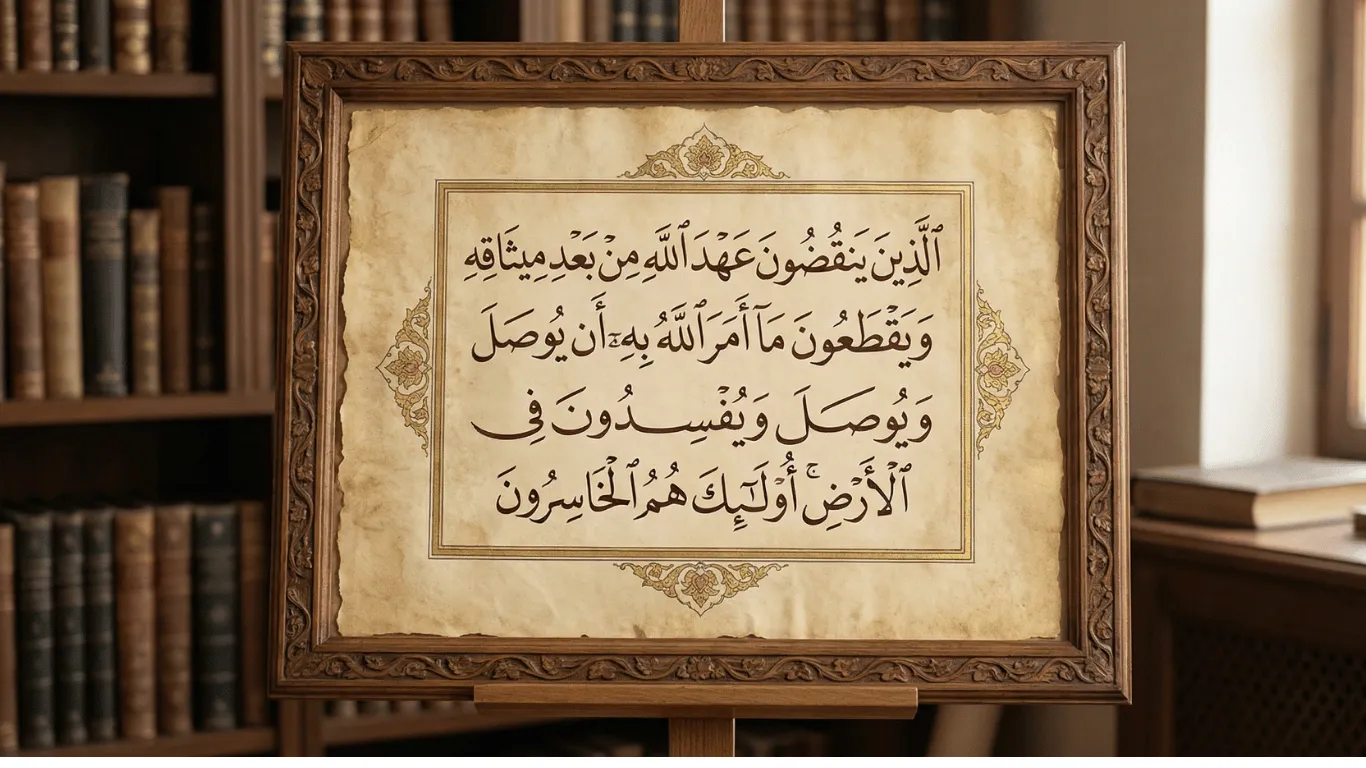
الَّذِينَ يَنقُضُونَ عَهْدَ اللَّهِ مِن بَعْدِ مِيثَاقِهِ وَيَقْطَعُونَ مَا أَمَرَ اللَّهُ بِهِ أَن يُوصَلَ وَيُفْسِدُونَ فِي الْأَرْضِ ۚ أُولَٰئِكَ هُمُ الْخَاسِرُونَ
Transliteration: Allatheena yanqudoona ‘ahda Allahi min ba’di meethaqihi wayaqta’oona ma amara Allahu bihi an yoosala wayufsidoona fee al-ardi ola-ika humu alkhasiroon.
English (Saheeh International): Who break the covenant of Allah after contracting it and sever that which Allah has ordered to be joined and cause corruption on earth. It is those who are the losers.
Urdu (Fateh Muhammad Jalandhari):
جو لوگ خدا کے عہد کو مضبوط کرنے کے بعد توڑ دیتے ہیں اور جس چیز کے جوڑنے کا خدا نے حکم دیا ہے اسے قطع کرتے ہیں اور زمین میں خرابی کرتے ہیں وہی نقصان اٹھانے والے ہیں۔
Word-by-Word Breakdown
Understanding the exact vocabulary of the Quran helps us internalize its weight. Here is the literal translation of the key phrases:
- الَّذِينَ يَنقُضُونَ (Allatheena yanqudoona): Those who break / unravel.
- عَهْدَ اللَّهِ (‘ahda Allahi): The covenant of Allah.
- مِن بَعْدِ مِيثَاقِهِ (min ba’di meethaqihi): After its binding / contracting.
- وَيَقْطَعُونَ (wayaqta’oona): And they sever / cut off.
- مَا أَمَرَ اللَّهُ بِهِ (ma amara Allahu bihi): What Allah has commanded it.
- أَن يُوصَلَ (an yoosala): To be joined / connected.
- وَيُفْسِدُونَ (wayufsidoona): And they cause corruption.
- فِي الْأَرْضِ (fee al-ardi): In the earth.
- أُولَٰئِكَ هُمُ (ola-ika humu): It is those who are.
- الْخَاسِرُونَ (alkhasiroon): The losers.
Deep Tafseer: The Scholarship Behind the Verse
Classical scholars explain that this covenant refers to our innate human nature to worship God. Breaking it leads directly to severing human rights, proving that our relationship with the Creator dictates our relationship with His creation.
Imam Ibn Kathir notes that the “covenant” refers to the primordial oath every soul took to recognize Allah as their Lord (Fitrah), as well as the explicit commands brought by the Prophets. When a person abandons this foundational truth, their moral compass shatters.
Here’s why this matters for you: the first step in upholding our spiritual covenant is recognizing the Lord of the worlds through profound gratitude, which guards the heart against arrogance and rebellion.
Furthermore, Imam Nawawi emphasizes the gravity of Silat ar-Rahim (maintaining the ties of kinship). He highlights that “what Allah has ordered to be joined” primarily refers to blood relatives. Severing these ties is not just a family dispute; it is an active rebellion against a divine command, placing a person in the category of the Fasiqoon (the defiantly disobedient) mentioned in the previous verse.
The Modern Angle: The Spiritual Habit Loop of Disconnection
Modern digital isolation often mirrors the spiritual corruption mentioned in this Ayat. When we stop communicating with Allah, we subconsciously withdraw from family and community, creating a negative habit loop of loneliness and decay.
We live in an era where we are more “connected” than ever through screens, yet physical family ties are frequently neglected. The progression in this Ayat is a timeless psychological truth:
- Internal Failure: You neglect your prayers and promises to Allah.
- Interpersonal Failure: Because your heart is hardened, you become easily irritated with parents, siblings, or relatives, eventually cutting them off.
- Societal Failure: This localized bitterness spreads, contributing to a fractured, corrupt society (Fasad fil ard).
Breaking this habit loop requires conscious, daily effort to re-establish the connection with both the Heavens and the earth.
Practical Benefits and Wazifa: Rebuilding the Ties
To heal severed ties and protect your faith, consistency in prayer and supplication is required. Reciting specific verses and making conscious efforts to reach out to alienated family members are the best remedies.
Actionable Steps:
- The Wazifa of Connection: Make it a daily practice after Fajr to recite this Ayat (2:27) as a reminder to guard your tongue and your relationships. Reflect on who you might be cutting off and send them a simple message of goodwill.
- Seek Protection: To protect oneself from falling into the traits of the Khasiroon (the losers), believers should consistently seek Allah’s protection and steadfastness through comprehensive prophetic supplications.
- Initiate the Peace: The Prophet Muhammad (ﷺ) taught that the one who maintains ties of kinship is not the one who merely reciprocates, but the one who connects with relatives even when they sever the ties with him.
People Also Ask:
Breaking a promise or covenant with Allah degrades your spiritual state. According to Surah Al Baqarah, it hardens the heart, leads to the mistreatment of others, and ultimately causes you to be among the losers in the Hereafter unless you repent.
The Quran speaks severely against cutting family ties. In Surah Al Baqarah Ayat 27 and Surah Muhammad Ayat 22-23, Allah explicitly links severing kinship with spreading corruption on earth and earning divine distance.
The “losers” (Al-Khasiroon) mentioned in early Surah Baqarah are those who deliberately break Allah’s commands, cut off relationships that Allah commanded to be maintained, and cause harm or corruption in society.
