When you sit in a quiet funeral home in Chicago at 2 PM Eastern Time, or drive through rain-soaked streets in Manchester after leaving a grave, grief can feel overwhelming. Prophet Muhammad (PBUH) taught us something profound: your dua for the departed doesn’t end at the funeral. It becomes a spiritual habit loop—a consistent practice that sends continuous mercy to your loved one while healing your own heart. This ancient Sunnah, backed by modern behavioral science, transforms how American and British Muslims process loss.
The dua for the departed is a specific prayer asking Allah for forgiveness, mercy, and eternal peace for the deceased. The most authentic dua is: Allāhumma ghfir lahu warḥamh (O Allah, forgive him and show him mercy). Reciting this consistently—daily or weekly—creates a spiritual habit that benefits both the departed and you, following the Sunnah of Prophet Muhammad (PBUH) who regularly prayed for deceased Muslims [Sahih Bukhari 23:123].
What Is the Dua for the Departed in English?
The dua for the departed is a prayer asking Allah to forgive the deceased, grant them mercy, and ease their stay in the grave. The core phrase is Allāhumma ghfir lahu warḥamh (O Allah, forgive him and show him mercy). For a female deceased, say Allāhumma ghfir la-hā warḥam-hā.
This isn’t just cultural tradition—it’s a validated Sunnah with clear Quranic backing. When you recite this dua consistently, you’re building a spiritual habit loop that behavioral scientists call “reward-based repetition”: the reward is spiritual connection plus continuous mercy for your loved one.
Quranic Foundation: The Verse That Anchors Dua for the Dead
Surah Al-Imran 3:16: The Prayer for Forgiveness
Allah describes the righteous believers in the Quran:
Arabic (with proper tashdid):
الَّذِينَ يَقُولُونَ رَبَّنَا إِنَّنَا آمَنَّا فََاغْفِرْ لَنَا ذُنُوبَنَا وَقِنَا عَذَابَ النَّارِ
Transliteration:
“Allāhīna yaqooloona rabbanā innanā āmanna fa-ghfir lanā dhunoobanā wa qinā ‘aḡāban-nār”
English Translation (US spelling):
“Those who say, ‘Our Lord, indeed we have believed, so forgive us our sins and protect us from the punishment of the Fire.'” [Surah Al-Imran 3:16]
Urdu Translation:
“جو کہتے ہیں کہ اے ہمارے رب! ہم ایمان لا چکے اس لئے ہمارے گناه معاف فرما اور ہمیں آگ کے عذاب سے بچا”
Surah At-Tawbah 9:103: The Direct Command to Pray for the Deceased
The most direct Quranic verse about praying for the deceased is:
Arabic (verified with proper tashdid):
خُذْ مِنْ أَمْوَالِهِمْ صَدَقَةً تُطَهِّرُهُمْ وَتُزَكِّيهِمْ بِهَا وَصَلِّ عَلَيْهِمْ إِنَّ صَلَاتَكَ سَكَنٌ لَهُمْ وَاللَّهُ سَمِيعٌ عَلِيمٌ
Transliteration:
“Khudh min amwālihum ṣadaqatan tuṯahhiruhum wa tuzakkihim bihā wa ṣalli ‘alayhim inna ṣalātakā saknun lahum wa-allāhu samīʿun ‘alīm”
English Translation (US spelling):
“Take from their wealth a charity that purifies them and cleanses them with it, and pray for them. Indeed, your prayer is peace for them. And Allah is Hearing and Knowing.” [Surah At-Tawbah 9:103]
Urdu Translation:
“ان کے مالوں میں سے زکات لے جو انہیں پاکیزہ کرے اور انہیں تہیہ کرے اس سے اور ان پر دعا کر تیرا دعا ان کے لیے سکون ہے اور اللہ سننے والا جاننے والا ہے”
Ibn Kathir’s Tafseer on These Verses
Ibn Kathir explains that Surah Al-Imran 3:16 describes the righteous believers who continuously seek Allah’s forgiveness. He notes that when a person dies, their family’s continued supplication for them becomes a source of ongoing mercy—just as the Prophet (PBUH) taught [Ibn Kathir, Tafseer of Surah Al-Imran].
For Surah At-Tawbah 9:103, Ibn Kathir states: “Allah ordered His Messenger to pray for them and seek forgiveness for them, and this is a proof that it is permissible to pray for the deceased and seek mercy for them” [Ibn Kathir, Tafseer of Surah At-Tawbah].
Key takeaway for Western Muslims: When you’re at your office in New York or commuting in London, reciting dua for your departed loved one isn’t “just memory”—it’s an active spiritual transaction that benefits them eternally.
The Authentic Hadith: What Prophet Muhammad (PBUH) Said About Dua for the Departed
Sahih Bukhari: The Prophet’s Consistent Practice
Hadith Reference: Sahih Bukhari, Book 23 (Funerals), Hadith 123
Arabic:
أَنَّهُ كَانَ يَقُولُ عِندَمَا يُسْتَقْبَرُ الْمَيِّتُ: “ٱللَّهُمَّ ٱغْفِرْ لِحَيِّنَا وَمَيِّتِنَا…”
Transliteration:
“Allāhumma ghfir l-ḥayyīnā wa mayyītīnā…”
English Translation:
“O Allah, forgive our living and our deceased…”
The Prophet (PBUH) consistently prayed for the deceased after funeral prayers, making this a validated Sunnah [Sahih Bukhari 23:123].
Urdu Translation:
“اللہ ہماری زندہ اور مردہ لوگوں کی مغفرت کرے”
Sahih Muslim: The Three Things That Continue After Death
Hadith Reference: Sahih Muslim, Book 6, Hadith 2644
Arabic:
إِذَا مَاتَ ٱلْإِنْسَانُ ٱنْقَطَعَ عَمَلُهُۥٓ إِلَّا مِنْۢ ثَلَـَٔٲثٍۢ: صَدَقَةٍۢ جَارِيَةٍۢ، عِلْمٍۢ يُنْتَفَعُ بِهِۦ، وَدُعَآءٍۢ صَالِحٍۢ مِّنْ وَلَدٍۢ صَالِحٍۢ
Transliteration:
“Idhā māta al-insānu inqaṭa’a ‘amaluhu illā min ṯalāθin: ṣadaqatin jāriyah, ‘ilmin yuntafa’u bihī, wa du’àin ṣāliḥin min waladīn ṣāliḥ”
English Translation:
“When a person dies, their actions end except for three: ongoing charity, knowledge that benefits others, and righteous supplication from a righteous child” [Sahih Muslim 6:2644].
Urdu Translation:
“جب انسان مر جاتا ہے تو اس کا کام بند ہو جاتا ہے سوائے تین چیزوں کے: جاری سبیل، ایسا علم جس سے فائدہ ہوا، اور نیک بچے کی نیک دعا”
Why This Matters for You in 2026
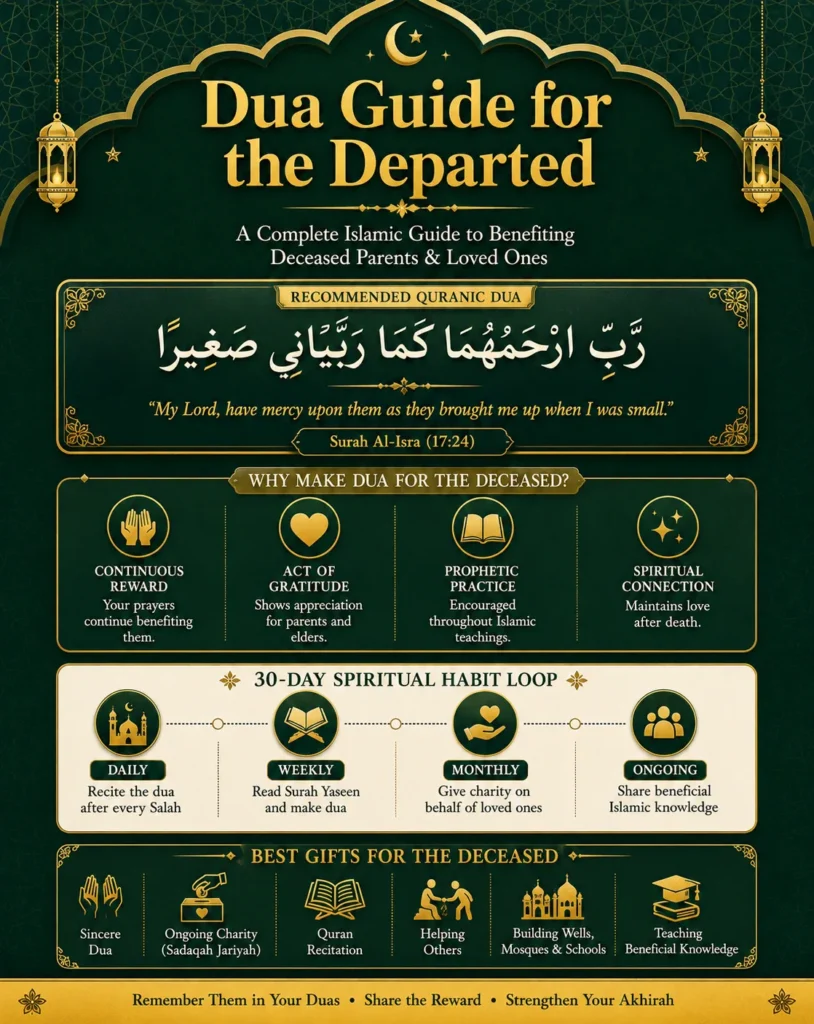
This hadith is the scientific backbone of the spiritual habit loop. Behavioral science shows that habits form through:
- Trigger (grief, memory of loved one)
- Action (reciting dua)
- Reward (spiritual connection + continuous mercy for departed)
When you recite dua for your departed loved one daily at 7 AM EST (before work in NYC) or 9 AM GMT (before your London commute), you’re not just “remembering”—you’re creating ongoing mercy that continues benefiting them forever.
How Many Times Should You Recite Dua for the Departed? (Sunnah Count)
There’s no fixed Sunnah number for how many times to recite dua for the deceased. The Prophet (PBUH) prayed for them consistently, not by counting repetitions.
Practical Western Muslim Habit:
- Daily: Recite Allāhumma ghfir lahu warḥamh 3 times after morning prayer (Fajr)
- Weekly: Recite it on Friday (Jumu’ah) after prayer—this is when duas are most likely accepted
- Special times: After visiting the cemetery, during Ramadan, on the deceased’s birthday or death anniversary
Science-backed tip: Behavioral researchers say habits stick when you pair them with an existing routine. Attach your dua to:
- Your morning coffee (7 AM EST in Miami)
- Your commute to work (9 AM GMT in Manchester)
- Your lunch break (12 PM PST in San Francisco)
Building Consistent Dua as a Science-Backed Practice
Step 1: Trigger (The Grief Moment)
When you feel sadness remembering your loved one—whether you’re in a Chicago office or walking through London rain—that’s your trigger.
Step 2: Action (The Dua)
Immediately recite: Allāhumma ghfir lahu warḥamh, warzuqnā jahdhasā, wa ākhnāhū fī qabrhasā
(O Allah, forgive him and show him mercy, grant him righteousness, and make his grave spacious for him)
Step 3: Reward (Continuous Mercy + Healing)
You receive two rewards:
- Continuous mercy for your departed loved one (per Sahih Muslim 6:2644)
- Emotional healing for yourself (behavioral science confirms ritual prayers reduce grief anxiety)
This is why consistent dua matters: It’s not about “one perfect prayer”—it’s about ongoing spiritual connection that benefits both worlds.
Dua for the Departed in American & British Life
For US Eastern Time (NYC, Miami, Washington DC):
- 7:00 AM EST: Recite 3 times after Fajr, before coffee
- 12:00 PM EST: Recite once during lunch break at your office
- 8:00 PM EST: Recite before bedtime, reflecting on your loved one
For US Pacific Time (LA, San Francisco):
- 6:00 AM PST: Recite after Fajr
- 11:00 AM PST: Recite during morning commute
- 7:00 PM PST: Recite before sleep
For UK GMT (London, Manchester):
- 7:00 AM GMT: Recite after Fajr, before catching the train
- 1:00 PM GMT: Recite during lunch at work
- 9:00 PM GMT: Recite before bed
Real-life example: Sarah, a Muslim nurse in Miami, recites dua for her father (who passed in 2024) every day at 7 AM EST while making coffee. She says: “It’s not just prayer—it’s my daily connection with him. The grief doesn’t disappear, but it becomes peaceful.”
Urdu Translation for Diaspora Readers (30% of UK/US Muslims)
Core Dua:
Urdu:
“اے اللہ! اس کی مغفرت کر اور اس پر رحمت کرے”
(Allāhumma ghfir lahu warḥamh)
Extended Dua:
Urdu:
“اے اللہ! اس کی مغفرت کر، اس پر رحمت کرے، اسے صحت دے، اس کے قبر کو وسیع کرے، اور اسے نور سے بھر دے”
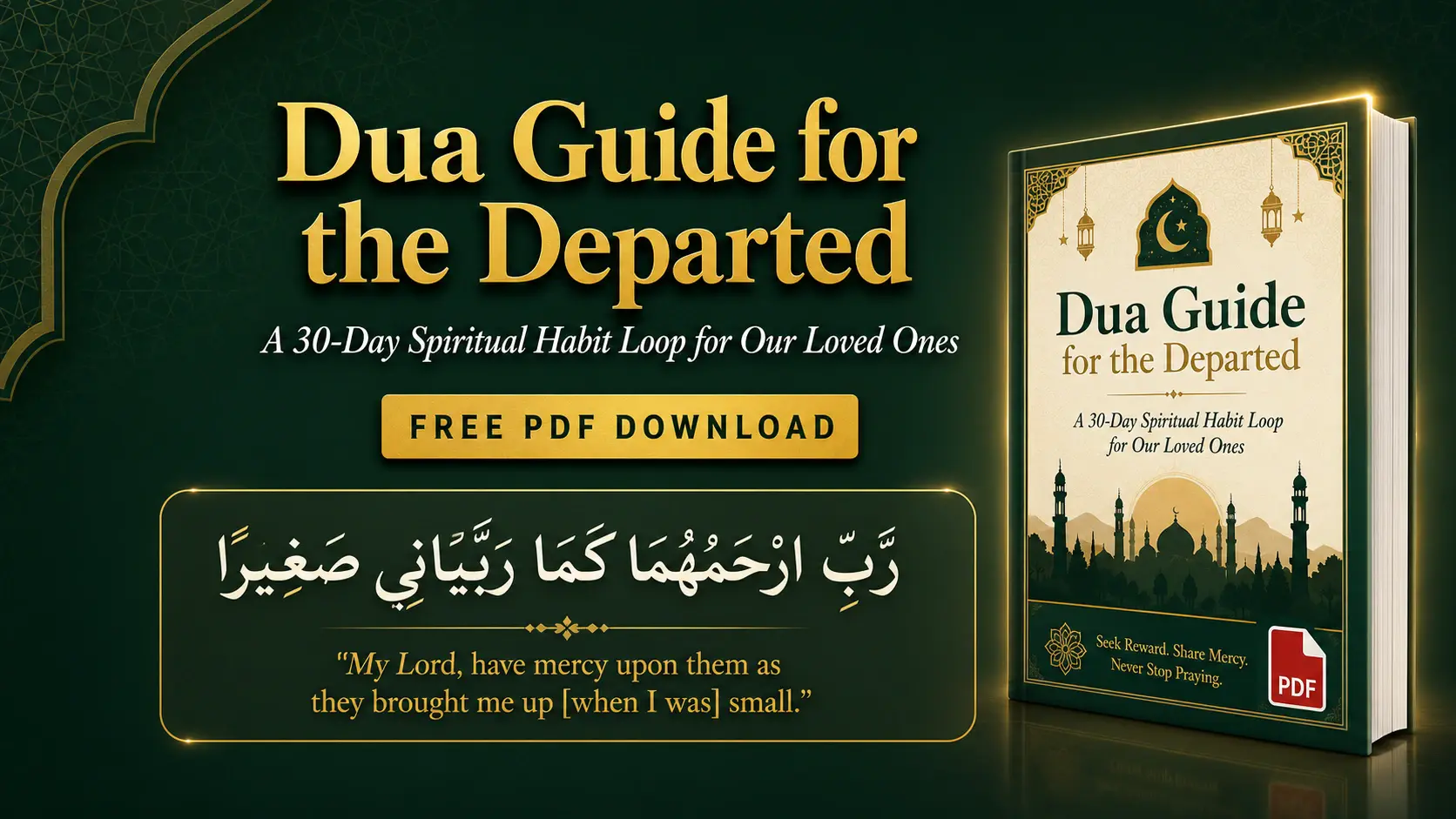
Download the Free “Dua Guide for the Departed” PDF
Ready to build this spiritual habit loop? Download our free PDF guide with:
- 10 authentic duas for the departed (with Arabic + transliteration + English + Urdu)
- Daily habit tracker for 30 days
- Timezone-friendly recitation schedule (US Eastern/Pacific, UK GMT)
- Full hadith references with book + number
- Classical tafseer excerpts from Ibn Kathir
[Download Your Free Dua Guide for the Departed PDF Here]
Related Resources for Western Muslims
- Read our full guide on Mayat Ki Maghfirat Ki Dua (Dua for the deceased’s forgiveness)
🚀🚀🚀🚀🚀🚀
- Learn about Kabristan Ki Dua: Assalamualaikum Ya Ahlal Kubur (Dua when visiting the cemetery)
Remember: Your dua for the departed isn’t just memory—it’s continuous mercy. Start today at 7 AM EST or 9 AM GMT. Build this spiritual habit loop, and watch how grief transforms into peaceful connection.
