Have you ever felt like you are standing exactly at your absolute breaking point—where one more inconvenience, one more piece of bad news, or one more trial will completely shatter you? You are not alone, and your Creator knows this feeling intimately. When life’s pressures mount, Islam provides a profound emotional and spiritual safety net.
Here is the exact framework to understand, internalize, and utilize the powerful plea: “Rabbana wala tuhammilna ma la taqata lana.”
What is the Meaning of Rabbana Wala Tuhammilna Ma La Taqata Lana?
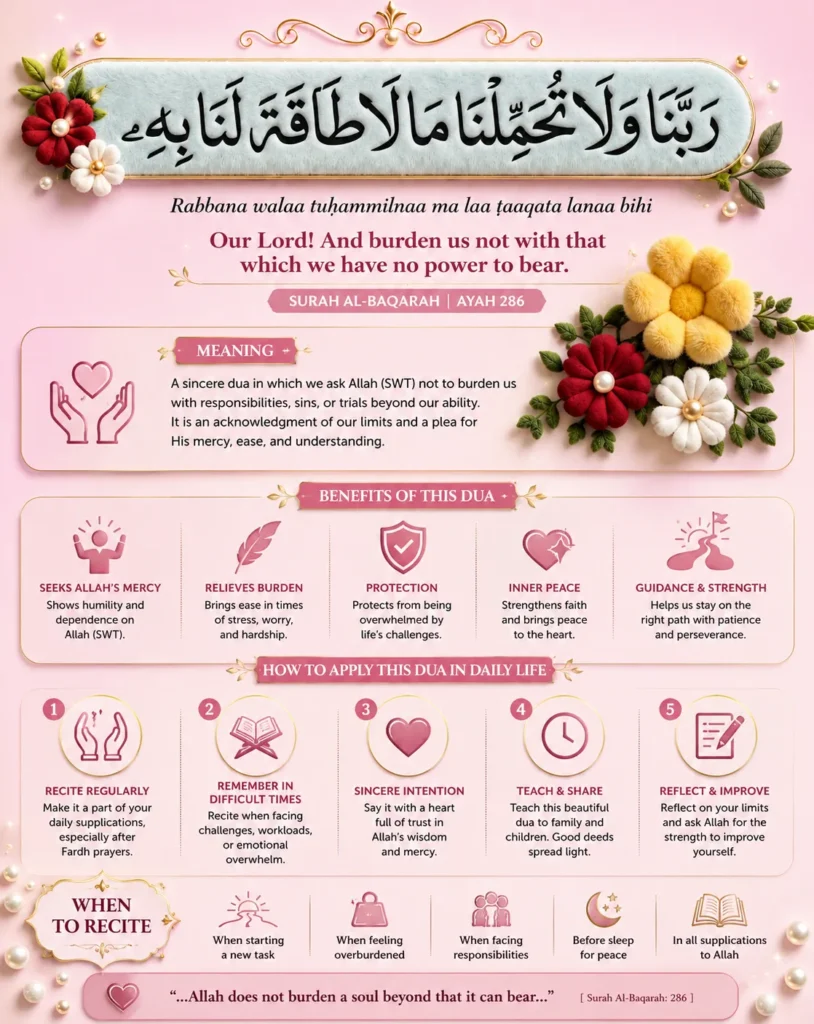
“Rabbana wala tuhammilna ma la taqata lana” is a powerful Quranic dua asking Allah not to place a burden on us that exceeds our physical, emotional, or spiritual breaking point. It forms the concluding, comforting plea within the final verse of Surah Al-Baqarah (2:286).
Multilingual Breakdown
Arabic Text:
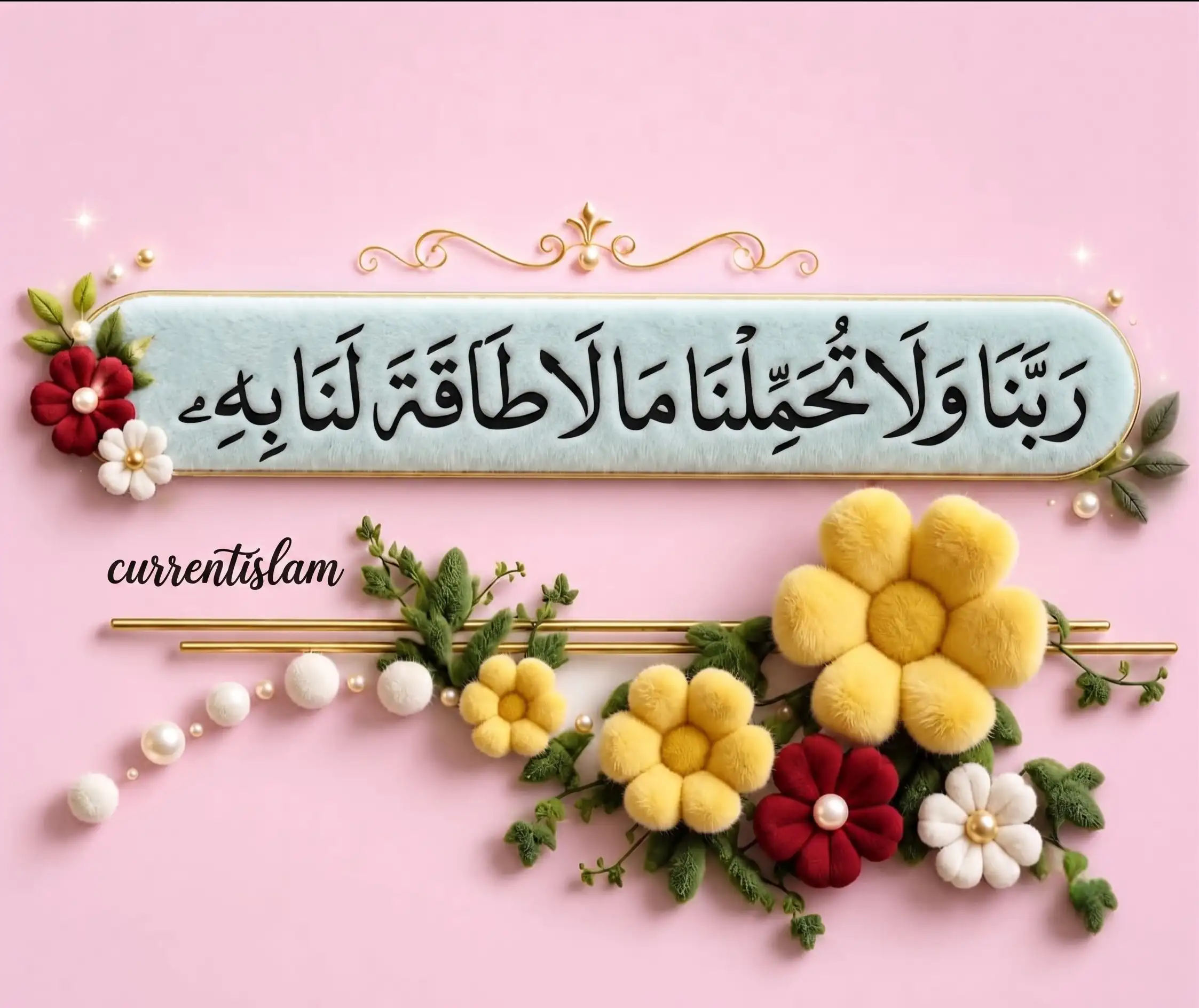
رَبَّنَا وَلَا تُحَمِّلْنَا مَا لَا طَاقَةَ لَنَا بِهِ
Transliteration:
Rabbana wala tuhammilna ma la taqata lana bihi.
English Translation:
“Our Lord, and burden us not with that which we have no ability to bear.”
Hindi Translation (हिंदी अनुवाद):
“ऐ हमारे रब! और हम पर वह बोझ न डाल जिसे उठाने की हम में ताक़त न हो।”
Urdu Translation (اردو ترجمہ):
“اے ہمارے رب! اور ہم پر وہ بوجھ نہ ڈال جسے اٹھانے کی ہم میں طاقت نہیں۔”
The Origin and Quranic Context of Surah Al-Baqarah 2:286
This verse carries extraordinary weight because of how it was revealed. Unlike most of the Quran, which was brought down by the Angel Jibreel to Earth, the Prophet Muhammad (peace be upon him) was directly given the final two verses of Surah Al-Baqarah during the Night Journey (Al-Isra wal-Mi’raj) from beneath the Throne of Allah.
Let’s understand the real meaning behind this revelation. In classical Tafseer (Quranic exegesis), such as Tafsir Ibn Kathir, scholars highlight the immense mercy embedded in these words. The companions of the Prophet (PBUH) were deeply anxious about an earlier revelation that stated they would be held accountable even for the passing thoughts in their minds. The revelation of verse 2:286 brought immense relief, explicitly stating that Allah does not burden a soul beyond its scope (La yukallifullahu nafsan illa wus’aha).
This becomes important when you look at the authentic Hadith literature.
Hadith Reference: Abu Mas’ud Al-Badri reported: The Messenger of Allah (PBUH) said, “Whoever recites the last two verses of Surah Al-Baqarah in the night, they will suffice him.” (Sahih al-Bukhari and Sahih Muslim).
Classical scholars explain that “suffice him” means these verses will protect the reciter from physical harm, spiritual evil, and even serve as a substitute if one misses the voluntary night prayer (Tahajjud).
A Closer Look at the Words: Acknowledging Human Limits
Breaking down the Arabic vocabulary reveals profound divine empathy. “Taqata” means the absolute maximum limit of human endurance. By reciting this dua, we acknowledge our inherent fragility while shifting our locus of control directly back to our Sustainer.
Here’s why this matters from both a spiritual and psychological perspective. The root of the word tuhammilna (Ha-Meem-Lam) implies carrying a back-breaking load. It represents a weight that physically or emotionally crushes a person. The word Taqata comes from a root meaning a heavy collar or shackle around the neck. It is the absolute ceiling of what a human being can survive.
By uttering this phrase, you are practicing profound spiritual vulnerability. Even though Allah has already promised not to break us, we are instructed to pray for ease. It is a declaration that says: “O Allah, even if my soul can technically survive this trauma, my human heart is weak. Please do not test me to my absolute limit.”
This dua actively prevents cognitive burnout. It normalizes the human experience of feeling overwhelmed and establishes a healthy psychological boundary by handing the heaviest burdens over to the Almighty. If you are exploring [spiritual strategies for mental health], this verse is the ultimate foundation.
Wazifa and Daily Practice
You should recite this dua every night before sleeping as part of the last two verses of Surah Al-Baqarah. It acts as a spiritual shield, relieving daytime anxieties, resetting your psychological state, and protecting your mind and soul during sleep.
Now let’s connect this to daily life through the Spiritual Habit Loop. Modern psychology teaches us that habits require a trigger, a routine, and a reward.
- The Trigger: The moment your head hits the pillow at night, or the exact moment a severe wave of anxiety hits your chest during the day.
- The Routine: Reciting Surah Al-Baqarah 2:285-286. Take a deep breath, and slowly vocalize “Rabbana wala tuhammilna ma la taqata lana.”
- The Reward: The prophetic guarantee that these verses will “suffice” you. You experience an immediate physiological drop in cortisol (stress hormone) as you actively surrender your unmanageable problems to the Ultimate Manager of affairs.
How Many Times Should You Recite It?
There is no fixed numerical wazifa or rigid limit prescribed in the Sunnah for repeating this specific phrase, making it beautifully accessible.
- For Daily Protection: Recite the complete last two verses of Surah Baqarah once every night before bed.
- During Hardships: When dealing with grief, financial ruin, or emotional exhaustion, you can repeat this specific segment (Rabbana wala tuhammilna ma la taqata lana) continuously as a dhikr (remembrance) throughout the day to find inner stillness.
People Also Ask:
Reciting the last two verses of Surah Al-Baqarah at night brings divine protection, peace of mind, and immense reward. The Prophet (PBUH) stated that these verses “suffice” the reciter, guarding them against evil and distress until morning.
Yes, the very same verse begins with the divine decree: “Allah does not burden a soul beyond that it can bear” (La yukallifullahu nafsan illa wus’aha). The subsequent dua is our humble human request for gentleness and ease, despite knowing we have the spiritual capacity to survive.
This dua helps alleviate anxiety by shifting the locus of control. It allows you to externally vocalize your limits and hand over overwhelming, uncontrollable life circumstances to Allah, effectively lifting the cognitive weight of trying to manage everything alone.
Yes, you can recite this dua from memory without Wudu. While being in a state of Wudu is highly recommended for holding the physical Mushaf (Quran), reciting verses from memory for protection and supplication during daily activities or in bed is perfectly permissible.
For further reading on building cognitive resilience through the Sunnah, explore our comprehensive guide on the [protective benefits of Ayatul Kursi].
