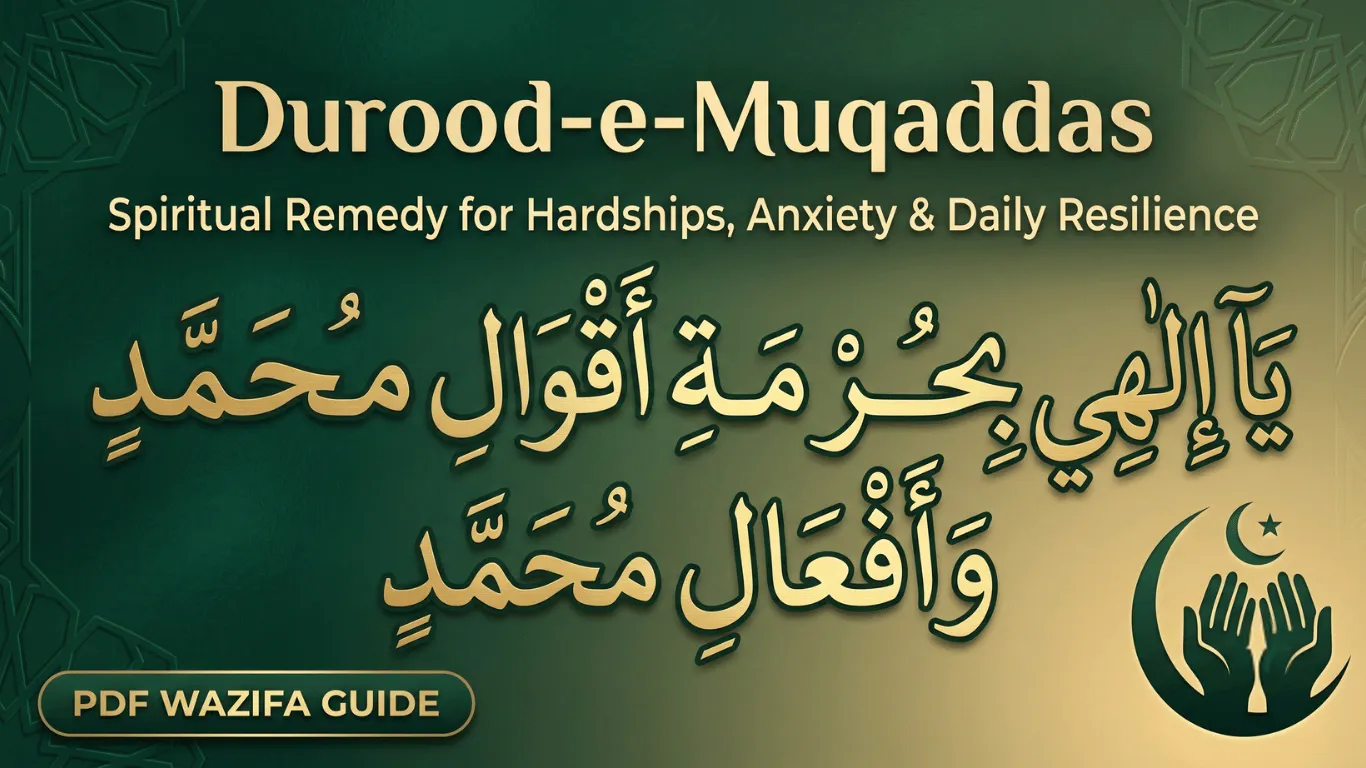
When life feels overwhelming, human nature rushes to find an anchor. For centuries, Muslims facing anxiety, health trials, or spiritual emptiness haven’t turned to complex philosophies—they have turned to the steady, rhythmic cadence of sending blessings upon the Prophet ﷺ.
Here is why this matters: spiritual practices are not just ancient rituals; they are the original emotional regulation tools. Today, we call it building cognitive resilience. Classical scholars called it sakina (tranquility). Let’s understand the real meaning, history, and practical benefits of Darood Muqadas, and how implementing it can transform your daily mental and spiritual state.
What is Durood e Muqaddas?
Durood e Muqaddas is a highly revered, composed Islamic supplication that sends blessings upon the Prophet Muhammad ﷺ. It uses a unique rhythmic structure to highlight his physical, spiritual, and historical sanctity, bringing deep emotional and cognitive relief to the reciter.
Unlike brief daily prayers, this specific invocation acts as a comprehensive spiritual assessment of the Prophet’s ﷺ life. It breaks down his existence—his words, his actions, his nightly prayers—and uses them as a means of beseeching Allah. This method is profoundly popular across the South Asian diaspora, serving as a beacon of comfort for families facing tangible, real-world struggles.
Complete Durood-e-Muqaddas (Arabic, Transliteration & Translations)
Verse 1: The Words and Actions
Arabic:
يَا إِلَهِي بِحُرْمَةِ أَقْوَالِ مُحَمَّدٍ وَأَفْعَالِ مُحَمَّدٍ وَأَحْوَالِ مُحَمَّدٍ وَأَصْحَابِ مُحَمَّدٍ صَلَّى اللهُ عَلَيْهِ وَسَلَّمَ
Transliteration: Yā ilāhī bi-ḥurmati aqwāli Muḥammadin wa afʿāli Muḥammadin wa aḥwāli Muḥammadin wa aṣ-ḥābi Muḥammadin, ṣallā Llāhu ʿalayhi wa sallam.
English Translation: O my Lord, by the sanctity of the words of Muhammad, the actions of Muhammad, the states of Muhammad, and the companions of Muhammad, may Allah send prayers and peace upon him.
Urdu Translation:
اے میرے رب! محمد ﷺ کے اقوال، محمد ﷺ کے افعال، محمد ﷺ کے احوال، اور محمد ﷺ کے اصحاب کی حرمت کے طفیل، اللہ ان پر درود و سلام نازل فرمائے۔
Hindi Translation: ऐ मेरे रब! मुहम्मद ﷺ के वचनों, मुहम्मद ﷺ के कर्मों, मुहम्मद ﷺ की अवस्थाओं और मुहम्मद ﷺ के साथियों की पवित्रता के सदक़े, अल्लाह उन पर दरूद और सलाम भेजे।
Verse 2: The Worship and Devotion
Arabic:
يَا إِلَهِي بِحُرْمَةِ تَوَلُّدِ مُحَمَّدٍ وَتَعَبُّدِ مُحَمَّدٍ وَتَهَجُّدِ مُحَمَّدٍ صَلَّى اللهُ عَلَيْهِ وَسَلَّمَ
Transliteration: Yā ilāhī bi-ḥurmati tawalludi Muḥammadin wa taʿabbudi Muḥammadin wa tahajjudi Muḥammadin, ṣallā Llāhu ʿalayhi wa sallam.
English Translation: O my Lord, by the sanctity of the birth of Muhammad, the worship of Muhammad, and the nightly prayers (Tahajjud) of Muhammad, may Allah send prayers and peace upon him.
Urdu Translation:
اے میرے رب! محمد ﷺ کی ولادت، محمد ﷺ کی عبادت، اور محمد ﷺ کے تہجد کی حرمت کے طفیل، اللہ ان پر درود و سلام نازل فرمائے۔
Hindi Translation: ऐ मेरे रब! मुहम्मद ﷺ के जन्म, मुहम्मद ﷺ की इबादत, और मुहम्मद ﷺ के तहज्जुद की पवित्रता के सदक़े, अल्लाह उन पर दरूद और सलाम भेजे।
Verse 3: The Praise and Generosity
Arabic:
يَا إِلَهِي بِحُرْمَةِ ثَنَاءِ مُحَمَّدٍ وَعَطَاءِ مُحَمَّدٍ وَسَخَاءِ مُحَمَّدٍ صَلَّى اللهُ عَلَيْهِ وَسَلَّمَ
Transliteration: Yā ilāhī bi-ḥurmati thanā’i Muḥammadin wa ʿaṭā’i Muḥammadin wa sakhā’i Muḥammadin, ṣallā Llāhu ʿalayhi wa sallam.
English Translation: O my Lord, by the sanctity of the praise of Muhammad, the bestowals of Muhammad, and the generosity of Muhammad, may Allah send prayers and peace upon him.
Urdu Translation:
اے میرے رب! محمد ﷺ کی ثناء، محمد ﷺ کی عطاء، اور محمد ﷺ کی سخاوت کی حرمت کے طفیل، اللہ ان پر درود و سلام نازل فرمائے۔
Hindi Translation: ऐ मेरे रब! मुहम्मद ﷺ की प्रशंसा, मुहम्मद ﷺ के दान, और मुहम्मद ﷺ की उदारता की पवित्रता के सदक़े, अल्लाह उन पर दरूद और सलाम भेजे।
Verse 4: The Truth and Inner Purity
Arabic:
يَا إِلَهِي بِحُرْمَةِ صِدْقِ مُحَمَّدٍ وَصَفَاءِ مُحَمَّدٍ وَسِرِّ مُحَمَّدٍ صَلَّى اللهُ عَلَيْهِ وَسَلَّمَ
Transliteration: Yā ilāhī bi-ḥurmati ṣidqi Muḥammadin wa ṣafā’i Muḥammadin wa sirri Muḥammadin, ṣallā Llāhu ʿalayhi wa sallam.
English Translation: O my Lord, by the sanctity of the truthfulness of Muhammad, the purity of Muhammad, and the spiritual secrets of Muhammad, may Allah send prayers and peace upon him.
Urdu Translation:
اے میرے رب! محمد ﷺ کی سچائی، محمد ﷺ کی صفائی (پاکی)، اور محمد ﷺ کے باطنی اسرار کی حرمت کے طفیل، اللہ ان پر درود و سلام نازل فرمائے۔
Hindi Translation: ऐ मेरे रब! मुहम्मद ﷺ की सच्चाई, मुहम्मद ﷺ की पवित्रता, और मुहम्मद ﷺ के आध्यात्मिक रहस्यों की पवित्रता के सदक़े, अल्लाह उन पर दरूद और सलाम भेजे।
Verse 5: The Gratitude and Remembrance
Arabic:
يَا إِلَهِي بِحُرْمَةِ زُهْدِ مُحَمَّدٍ وَذِكْرِ مُحَمَّدٍ وَشُكْرِ مُحَمَّدٍ صَلَّى اللهُ عَلَيْهِ وَسَلَّمَ
Transliteration: Yā ilāhī bi-ḥurmati zuhdi Muḥammadin wa dhikri Muḥammadin wa shukri Muḥammadin, ṣallā Llāhu ʿalayhi wa sallam.
English Translation: O my Lord, by the sanctity of the asceticism of Muhammad, the remembrance of Muhammad, and the gratitude of Muhammad, may Allah send prayers and peace upon him.
Urdu Translation:
اے میرے رب! محمد ﷺ کے زہد، محمد ﷺ کے ذکر، اور محمد ﷺ کے شکر کی حرمت کے طفیل، اللہ ان پر درود و سلام نازل فرمائے۔
Hindi Translation: ऐ मेरे रब! मुहम्मद ﷺ के वैराग्य (ज़ुह्द), मुहम्मद ﷺ के ज़िक्र, और मुहम्मद ﷺ के शुक्र (कृतज्ञता) की पवित्रता के सदक़े, अल्लाह उन पर दरूद और सलाम भेजे।
Verse 6: The Intercession and Leadership
Arabic:
يَا إِلَهِي بِحُرْمَةِ شَفَاعَةِ مُحَمَّدٍ وَشَرَافَةِ مُحَمَّدٍ وَسِيَادَةِ مُحَمَّدٍ صَلَّى اللهُ عَلَيْهِ وَسَلَّمَ
Transliteration: Yā ilāhī bi-ḥurmati shafāʿati Muḥammadin wa sharāfati Muḥammadin wa siyādati Muḥammadin, ṣallā Llāhu ʿalayhi wa sallam.
English Translation: O my Lord, by the sanctity of the intercession of Muhammad, the nobility of Muhammad, and the leadership of Muhammad, may Allah send prayers and peace upon him.
Urdu Translation:
اے میرے رب! محمد ﷺ کی شفاعت، محمد ﷺ کی شرافت، اور محمد ﷺ کی سیادت (سرداری) کی حرمت کے طفیل، اللہ ان پر درود و سلام نازل فرمائے۔
Hindi Translation: ऐ मेरे रब! मुहम्मद ﷺ की शफ़ाअत (सिफ़ारिश), मुहम्मद ﷺ की महानता, और मुहम्मद ﷺ के नेतृत्व (सरदारी) की पवित्रता के सदक़े, अल्लाह उन पर दरूद और सलाम भेजे।
The Divine Command: Why We Send Salawat
Sending blessings on the Prophet ﷺ is a direct command from Allah. Before exploring any specific wazifa, it is crucial to understand that Salawat is a foundational Islamic practice that connects the believer directly to divine mercy and aligns our actions with the angels.
This becomes important when you look at the primary source of this practice. It is not man-made; it is a divine decree.
Surah Al-Ahzab (33:56) Arabic:
إِنَّ ٱللَّهَ وَمَلَٰٓئِكَتَهُۥ يُصَلُّونَ عَلَى ٱلنَّبِىِّ ۚ يَٰٓأَيُّهَا ٱلَّذِينَ ءَامَنُوا۟ صَلُّوا۟ عَلَيْهِ وَسَلِّمُوا۟ تَسْلِيمًا
Transliteration: Innallāha wa malā’ikatahu yuṣallūna ‘alan-nabī, yā ayyuhalladhīna āmanū ṣallū ‘alayhi wa sallimū taslīmā.
English: “Indeed, Allah confers blessing upon the Prophet, and His angels [ask Him to do so]. O you who have believed, ask [Allah to confer] blessing upon him and ask [Allah to grant him] peace.”
Urdu:
بیشک اللہ اور اس کے فرشتے نبی پر درود بھیجتے ہیں۔ اے ایمان والو! تم بھی ان پر درود اور خوب سلام بھیجا کرو۔
Hindi: बेशक अल्लाह और उसके फ़रिश्ते नबी पर दरूद भेजते हैं। ऐ ईमान वालों! तुम भी उन पर दरूद और ख़ूब सलाम भेजा करो।
The Hadith on General Blessings
The Prophet Muhammad ﷺ guaranteed immense spiritual rewards for those who regularly send peace upon him. Authentic traditions confirm that a single salutation results in ten divine blessings descending upon the reciter, clearing anxieties and sins.
According to a universally accepted Hadith recorded in Sahih Muslim, the Prophet ﷺ said: “Whoever sends blessings upon me once, Allah will send blessings upon him ten times.” This establishes the baseline: any form of respectful Durood triggers a divine response, shifting the reciter’s state from distress to divine care.
Is Reciting Composed Duroods Permissible? Understanding Masnoon vs. Non-Masnoon
Yes, reciting beautifully composed Duroods is widely accepted by classical scholars. While Masnoon Duroods (words taught directly by the Prophet ﷺ) hold the highest rank for formal prayers, composing loving salutations is a valid expression of devotion and Tawassul.
Many general readers worry about whether reading non-Masnoon texts crosses theological boundaries. Let’s clarify this with classical scholarship.
The concept utilized heavily in Darood Muqadas is Tawassul—seeking closeness to Allah through the sanctity of something beloved to Him. Classical titans like Qadi Iyad, in his definitive work Ash-Shifa, and Imam al-Nawawi, affirm that praising the Prophet ﷺ with profound, respectful words of our own composition is a deeply rewarded act of Ishq-e-Rasool (love for the Messenger).
Just as believers find solace in other profound historical compilations—similar to the rich, poetic verses found in Darood e Lakhi—Durood e Muqaddas is a scholar-crafted tool of devotion. It does not replace the Durood e Ibrahimi of your daily Salah, but rather supplements your spiritual diet outside of obligatory prayers.
Cognitive Resilience Through Repetition
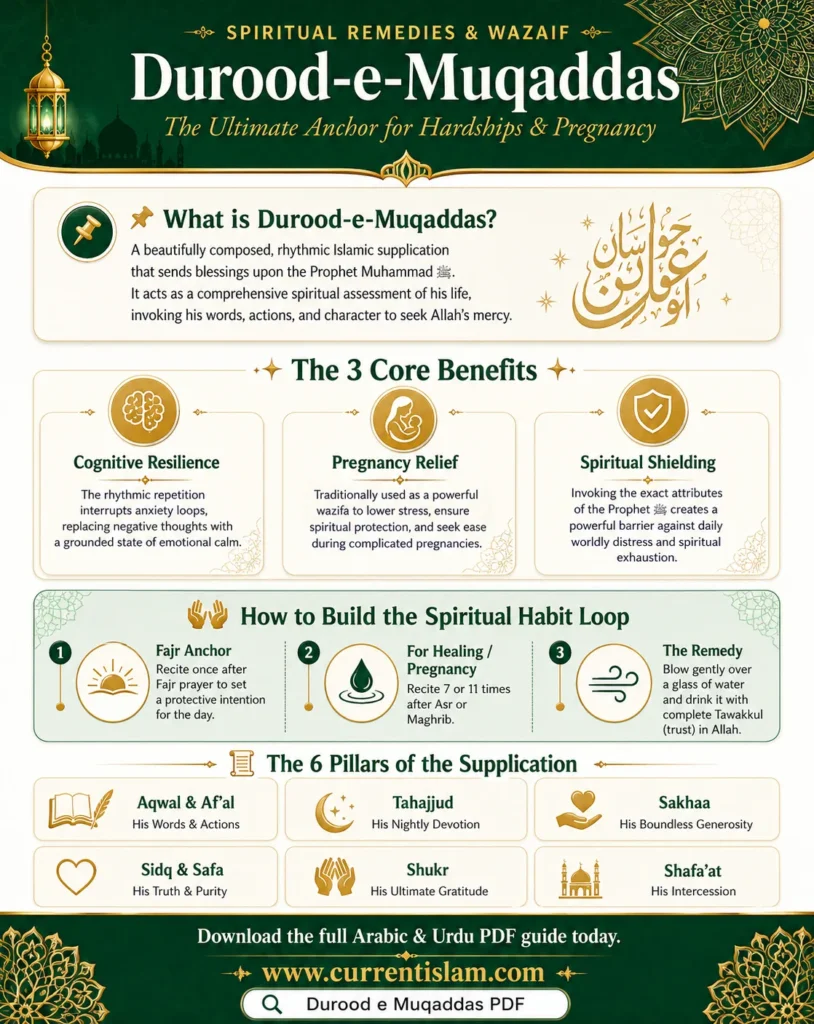
Reciting Durood e Muqaddas creates a powerful spiritual habit loop that builds cognitive resilience. The rhythmic repetition shifts the brain away from negativity and anxiety, replacing mental chaos with a grounded state of emotional and spiritual calm.
Modern psychology speaks frequently about the “negativity bias”—our brain’s tendency to fixate on stress, fears, and worst-case scenarios. When you sit on your prayer mat and begin reciting the rhythmic verses of this Durood, you actively interrupt that negative loop.
Every time you say Ya ilahi behurmati aqwal e muhammadi (O my Lord, by the sanctity of the words of Muhammad), you are anchoring your mind. This repetitive phrasing requires focus, which regulates breathing and lowers the heart rate. Over time, practicing this daily—perhaps right after Fajr—wires your brain to associate this specific sound and rhythm with safety and divine protection. It transitions your faith from a conceptual belief into a practical, daily mechanism for mental toughness and emotional survival.
Durood e Muqaddas for Pregnancy and Hardships
Many families use Durood e Muqaddas as a wazifa (spiritual remedy) during challenging times, particularly for pregnancy complications. The profound peace it brings helps lower stress hormones, combining spiritual trust in Allah with emotional stability for the mother.
When medical journeys become frightening, faith steps in to carry the emotional load. For expectant mothers dealing with complicated pregnancies, anxiety is often the greatest enemy. Reciting this specific Durood acts as a spiritual shield.
Traditionally, elders advise reciting it 11 times after Asr or Maghrib prayers, blowing gently over a glass of water, and drinking it. While this is a cultural wazifa rather than a rigid Masnoon command, the underlying mechanism is incredibly sound: it forces the mother to pause, breathe, focus on the love of the Prophet ﷺ, and place her ultimate trust (Tawakkul) in Allah’s decree. Often, believers will alternate between composed wazaif and the foundational Durood Shareef Allahumma Salli Ala Muhammadin for maximum spiritual benefit and peace of mind.
People Also Ask:
There is no strict, obligatory number for reciting this specific Durood. For general peace of mind and building a spiritual habit loop, reciting it once after Fajr is an excellent start. For specific wazaif, such as seeking relief during illness, communities often recommend 7 or 11 times daily.
This phrase translates to “O my Lord, by the sanctity of the words of Muhammad.” It is a form of Tawassul, where the reciter asks Allah to accept their prayer not because of their own perfection, but out of honor for the truthful and blessed words spoken by the Prophet ﷺ.
Yes, you can read the transliteration in Roman Urdu or Hindi if you struggle with the Arabic script. The most important elements are maintaining purity of intention (niyyah) and trying your best to pronounce the Arabic phonetics as accurately as possible while understanding the profound meaning behind the words.
Secure Your Spiritual Remedy
Ready to bring this profound practice into your daily routine? We have prepared a beautifully formatted, easy-to-read document specifically designed for those seeking ease during childbirth and daily trials.
To help you seamlessly integrate this into your life without the stress of searching for authentic texts, you can download our complete guide. This resource is carefully compiled for accessibility, ensuring you have the exact phrasing right on your device whenever anxiety strikes.
[Download the PDF Durood e Muqaddas for Pregnancy and Hardships Here]
