Have you ever noticed how the final minutes before Maghrib feel heavier than the entire day of fasting? It’s not just hunger. In those seconds, you are standing at a spiritual finish line where the veil between you and your Creator is at its thinnest. Most people rush to the dates and water, but the “game changer” is knowing exactly what to say to seal your reward.
What is the Roza Kholne ki Dua?
The Roza kholne ki dua is the specific supplication (dhikr) recited at the time of Iftar to break the Islamic fast. While many recite it before eating, the Sunnah also emphasizes a specific prayer after the first sip of water to acknowledge the physical relief and spiritual gain.
The Authentic Sunnah Dua (Post-Iftar)
According to the Hadith in Abu Dawood (2357), the Prophet Muhammad (PBUH) would recite a specific phrase that focused on the physical sensation of the fast ending.
- Arabic: ذَهَبَ الظَّمَأُ وَابْتَلَّتِ الْعُرُوقُ وَثَبَتَ الأَجْرُ إِنْ شَاءَ اللَّهُ
- Transliteration: Dhahaba-z-zama’u, wabtallati-l-‘urooqu, wa thabata-l-ajru in sha Allah.
- English (Saheeh): “The thirst is gone, the veins are moistened, and the reward is certain, if Allah wills.”
- Urdu (Jalandhari): پیاس بجھ گئی، رگیں تر ہوگئیں اور اللہ نے چاہا تو اجر ثابت ہوگیا۔
Word-by-Word Breakdown: Understanding the Depth
To truly connect with the prayer, you need to understand the anatomy of the words. This isn’t just a ritual; it’s a physiological and spiritual reset.
| Arabic Word | Transliteration | Meaning |
| ذَهَبَ | Dhahaba | Is gone / Departed |
| الظَّمَأُ | Az-Zama’u | The thirst |
| وَابْتَلَّتِ | Wab-tallati | And are moistened |
| الْعُرُوقُ | Al-Urooqu | The veins |
| وَثَبَتَ | Wa thabata | And is established/certain |
| الأَجْرُ | Al-Ajru | The reward |
The “Allahumma Inni Laka Sumtu” Prayer
While the previous dua is for after the first sip, the most commonly recited prayer before breaking the fast is widely used across the Ummah. Here is why this matters: it sets your intention (Niyyah) as the reason for your sacrifice.
The Multi-Lingual Proof:
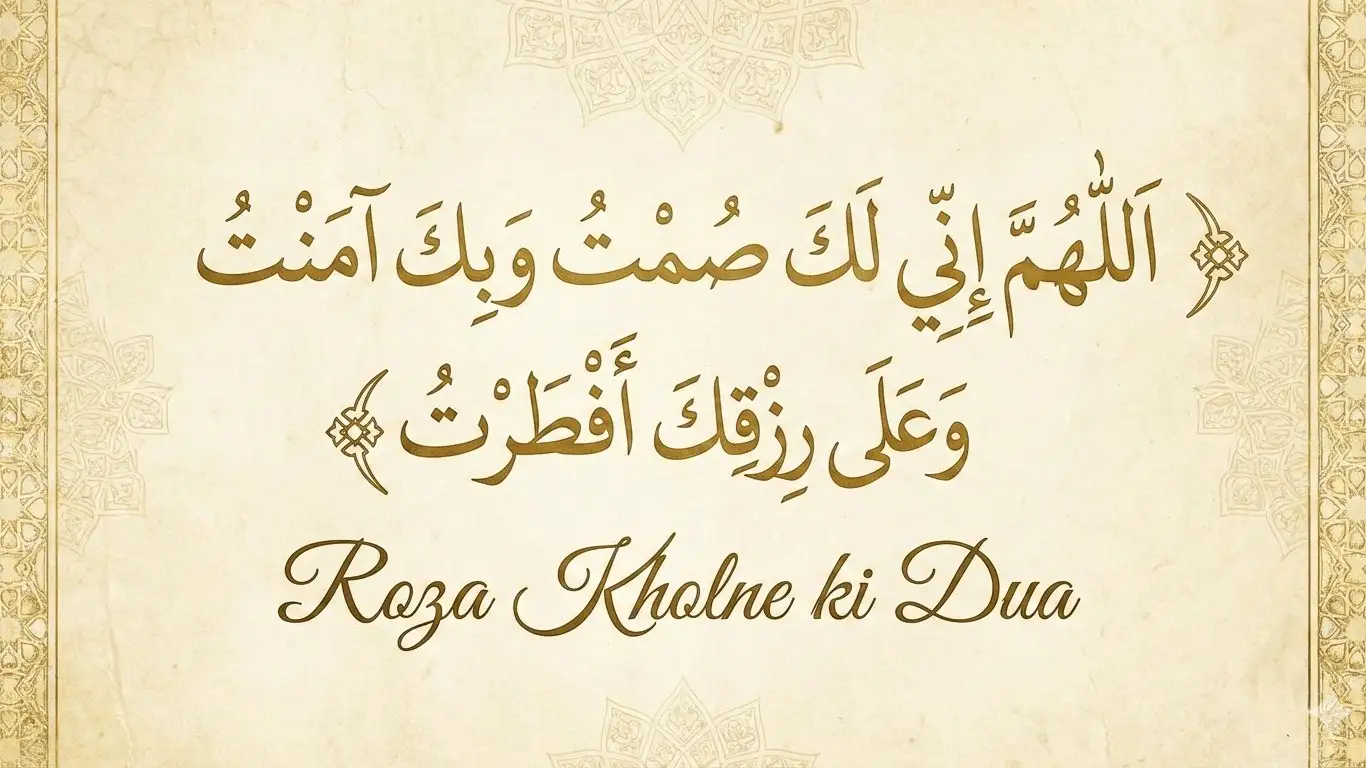
- Arabic: اللَّهُمَّ إِنِّي لَكَ صُمْتُ وَبِكُ آمَنْتُ وَعَلَى رِزْقِكَ أَفْطَرْتُ
- Transliteration: Allahumma inni laka sumtu wa bika aamantu wa ‘ala rizqika aftartu.
- English (Saheeh): “O Allah, I fasted for You, and in You I believe, and with Your provision I break my fast.”
- Urdu (Jalandhari): اے اللہ! میں نے تیرے ہی لیے روزہ رکھا اور تجھ پر ہی ایمان لایا اور تیرے ہی دیے ہوئے رزق سے افطار کیا۔
Why This Matters for You: The Digital Sunnah
In 2026, our lives are fast-paced and cluttered with notifications. We often treat Iftar like a scheduled “break” in a work shift. Classical scholars like Imam Nawawi emphasized that the state of the heart during the dua is what triggers the acceptance.
Think of the Iftar dua as a “Spiritual Habit Loop.”
- The Cue: The sound of the Adhan.
- The Action: Reciting the Masnoon Dua with presence of mind.
- The Reward: The dopamine hit of the first sip, coupled with the “Thabata-l-Ajr” (certainty of reward).
People Also Ask:
The most authentic dua according to Hadith is Dhahaba-z-zama’u, wabtallati-l-‘urooqu, wa thabata-l-ajru in sha Allah, recited after drinking water. It acknowledges that the hardship of the fast has passed and the eternal reward remains.
You should recite the intention Allahumma inni laka sumtu just before eating. However, the specific Sunnah of the Prophet (PBUH) was to recite the prayer of gratitude immediately after the thirst was quenched by water or dates.
Yes. While the Arabic words are Sunnah and hold special Barakah (blessing), Allah hears every language. Scholars suggest saying the Arabic first to follow the Sunnah, then asking for your personal needs in your own language.
Most people think iftar dua is just a sentence. But in 2026, distraction is the real enemy.
Let’s apply a simple framework: Cue → Pause → Dua → Reward
- Cue: The adhan of Maghrib.
- Pause: 5-second silence before eating.
- Dua: Recite consciously.
- Reward: Emotional gratitude + spiritual certainty.
This turns iftar into a daily spiritual reset system.
Call it the Digital Sunnah: even if your phone is in your hand, your heart is still connected to Allah.
Final Reflection
The iftar table is not just food.
It is testimony.
Your thirst disappears.
Your veins moisten.
Your reward is written.
And all of it… begins with a whisper.
#RozaKholneKiDua #IftarDua #RamadanDua #DuaForBreakingFast #IslamicDua
