Have you ever felt like your prayers are hitting a ceiling? Like you are calling out into a void, hoping someone is listening? Imagine for a moment that you could walk into a room where the Creator of the Universe and billions of angels are already having a conversation. By reciting one specific verse, you aren’t just saying words—you are pulling up a chair and joining that Divine gathering.
This isn’t just a ritual; it is the “Celestial Echo Chamber,” and it starts with Innallaha wa malaikatahu…
What is Innallaha Wa Malaikatahu? (Full Meaning & Source)
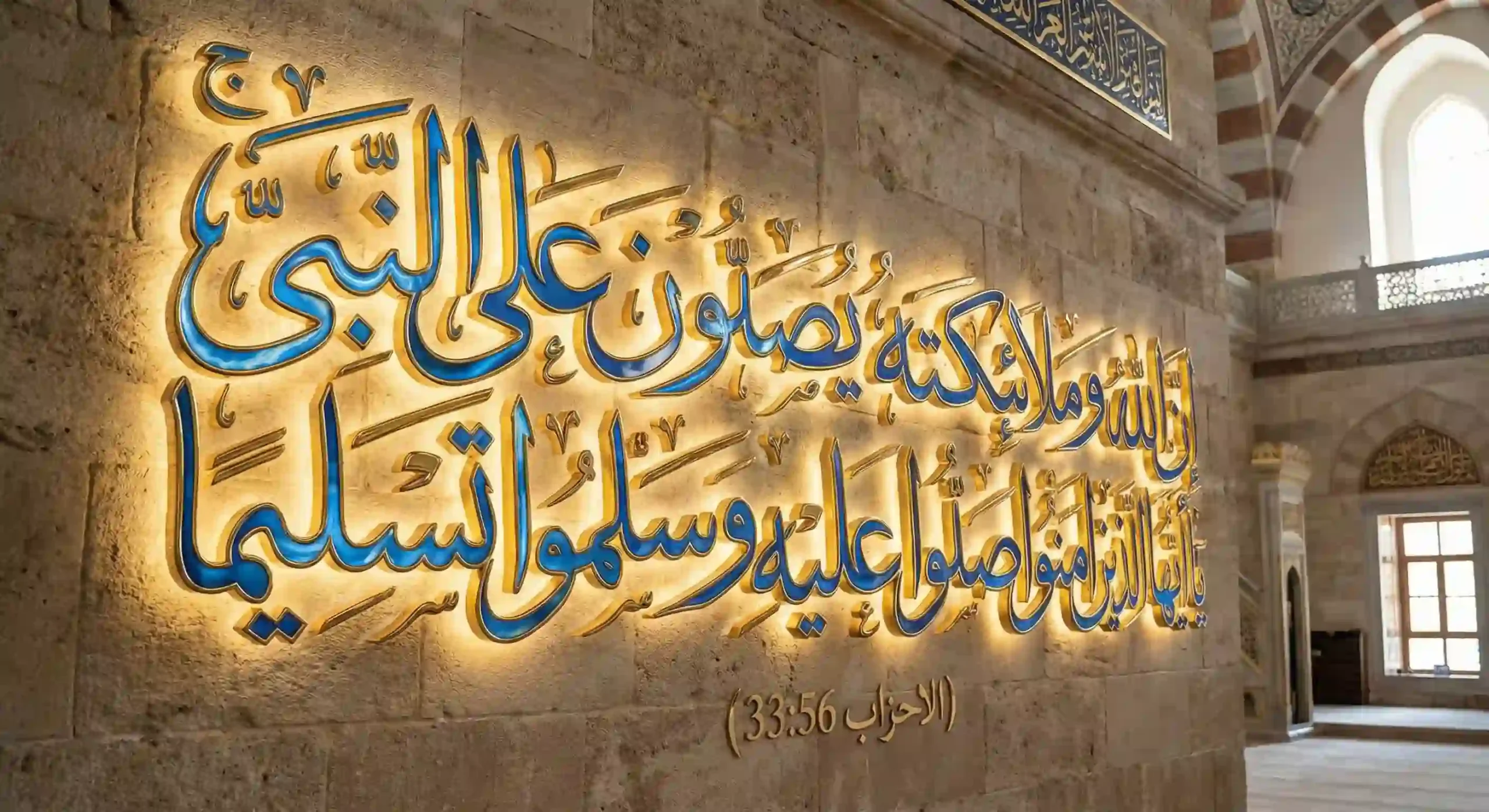
This phrase is the opening of Surah Al-Ahzab, Verse 33:56, declaring that Allah and His angels constantly send blessings upon the Prophet Muhammad (ﷺ). It serves as a divine command for believers to join this celestial act by sending their own peace and blessings.
This verse is the origin of Durood Shareef (Salawat). It is unique because it is the only command in the Quran where Allah tells us He performed the action first before asking us to do it.
The Multilingual Breakdown
To truly understand the depth of this verse, we must look at it through the lens of classical Arabic and accepted translations.
| Language | Text / Translation |
| Arabic | إِنَّ ٱللَّهَ وَمَلَـٰٓئِكَتَهُۥ يُصَلُّونَ عَلَى ٱلنَّبِىِّ ۚ يَـٰٓأَيُّهَا ٱلَّذِينَ ءَامَنُوا۟ صَلُّوا۟ عَلَيْهِ وَسَلِّمُوا۟ تَسْلِيمًا |
| Transliteration | Innallaha wa malaikatahu yusalluna alan-nabi. Ya ayyuhal ladhina amanu sallu alayhi wa sallimu taslima. |
| English (Saheeh Intl) | Indeed, Allah confers blessing upon the Prophet, and His angels [ask Him to do so]. O you who have believed, ask [Allah to confer] blessing upon him and ask [Allah to grant him] peace. |
| Urdu (F.M. Jalandhari) | خدا اور اس کے فرشتے پیغمبر پر درود بھیجتے ہیں۔ مومنو تم بھی ان پر درود اور سلام بھیجا کرو |
Word-by-Word Analysis
- Inna: Indeed / Verily.
- Allah: The Almighty God.
- Wa-Malaikatahu: And His Angels.
- Yusalluna: They send blessings (Note: Present continuous tense, meaning it is happening right now).
- Ala An-Nabi: Upon the Prophet (Muhammad ﷺ).
The “Celestial Echo Chamber”
Instead of viewing Durood as a transactional obligation, view it as tuning into a cosmic frequency that is constantly broadcasting. Since Allah is already sending blessings, reciting this verse allows you to align your voice with the Divine and the angelic realm instantly.
Most people treat Islamic rituals as a task list. But this verse introduces the Celestial Echo Chamber. When you start reciting Innallaha wa malaikatahu, you aren’t starting a car engine from cold; you are jumping onto a moving high-speed train. You are synchronizing your intention with the Will of Allah. This shifts your mindset from “I have to do this to get a reward” to “I get to join Allah in this act.”
Scholar’s Note: This is why this verse is considered the most honorable for the Prophet (ﷺ). Allah commands us to fast and pray, but He does not fast or pray. However, in this verse, Allah participates in the act Himself.
Tafseer: What Does “Blessings” Actually Mean?
According to Imam Ibn Kathir, the “Salah” (blessings) from Allah signifies His mercy and praise of the Prophet in the highest heavens, while the “Salah” from angels signifies their supplication for his forgiveness. When believers do it, it is a request for Allah to elevate the Prophet’s rank.
There is often confusion about how Allah “prays” upon the Prophet. Classical scholarship clarifies this distinction:
- From Allah: It is Rahmah (Mercy) and Thana (Praise).
- From Angels: It is Istighfar (Seeking forgiveness/mercy for him).
- From Us: It is Du’a (Supplication/Prayer).
When you recite this verse, you are essentially saying: “Oh Allah, I cannot praise him as he deserves to be praised, so You please praise him on my behalf.”
Benefits and Hadith of Reciting This Verse
Reciting this verse and the subsequent Durood washes away sins, elevates your spiritual status by ten degrees, and ensures the Prophet’s intercession on Judgment Day. It is cited by scholars as the ultimate cure for anxiety and the key to having suspended prayers accepted.
Here is the heart of the matter. Why should you make this a daily habit?
- The 10x Return Policy: The Prophet (ﷺ) said: “Whoever sends blessings upon me once, Allah will send blessings upon him tenfold.” (Sahih Muslim).
- The Removal of Worries: In a famous Hadith, Ubayy ibn Ka’b asked if he should dedicate all his designated prayer time to Salawat. The Prophet (ﷺ) replied: “Then your worries will be taken care of, and your sins will be forgiven.” (Tirmidhi).
- Acceptance of Dua: Scholars mention that a Dua remains suspended between heaven and earth until Salawat is recited upon the Prophet.
How to Perform the Wazifa (Spiritual Practice)
To perform this Wazifa effectively, recite the full verse (33:56) followed by Durood Ibrahimi 11, 33, or 100 times after Fajr or Isha prayers. Consistency is vital to seeing relief from debts, sickness, or spiritual stagnation.
If you are facing a heavy burden, try this spiritual routine for 11 days:
- Cleanse: Perform Wudu.
- Focus: Sit in a quiet spot facing the Qibla.
- Open: Recite Bismillah.
- The Verse: Recite Innallaha wa malaikatahu yusalluna alan-nabi… (3 times).
- The Action: Recite Durood Ibrahimi (the one read in Salah) 100 times.
- The Closing: Make Dua for your specific need, asking Allah through the honor of His Prophet.
People Also Ask
Yes, you can recite Durood and this verse from memory without Wudu, as it is a form of Dhikr (remembrance). However, if you are touching the Quranic text itself to read it, Wudu is required.
We ask Allah to bless the Prophet not because he needs our prayers, but because we need the connection to him. It is a way for us to show gratitude and to be included in the flow of Divine Mercy.
Yes, Imams traditionally recite this verse during the Friday Khutbah to remind the congregation to send blessings upon the Prophet (ﷺ), specifically on Fridays when the reward is amplified.

1 thought on “Innallaha Wa Malaikatahu Yusalluna Alan Nabi”