
The spiritual landscape of the modern world often leaves us feeling disconnected and restless. For parents in the Asian diaspora and across the globe, preparing children for Milads or simply trying to instil a love for the Prophet ﷺ in a hyper-digital age can feel overwhelming. You want a resource that not only teaches but transforms the heart.
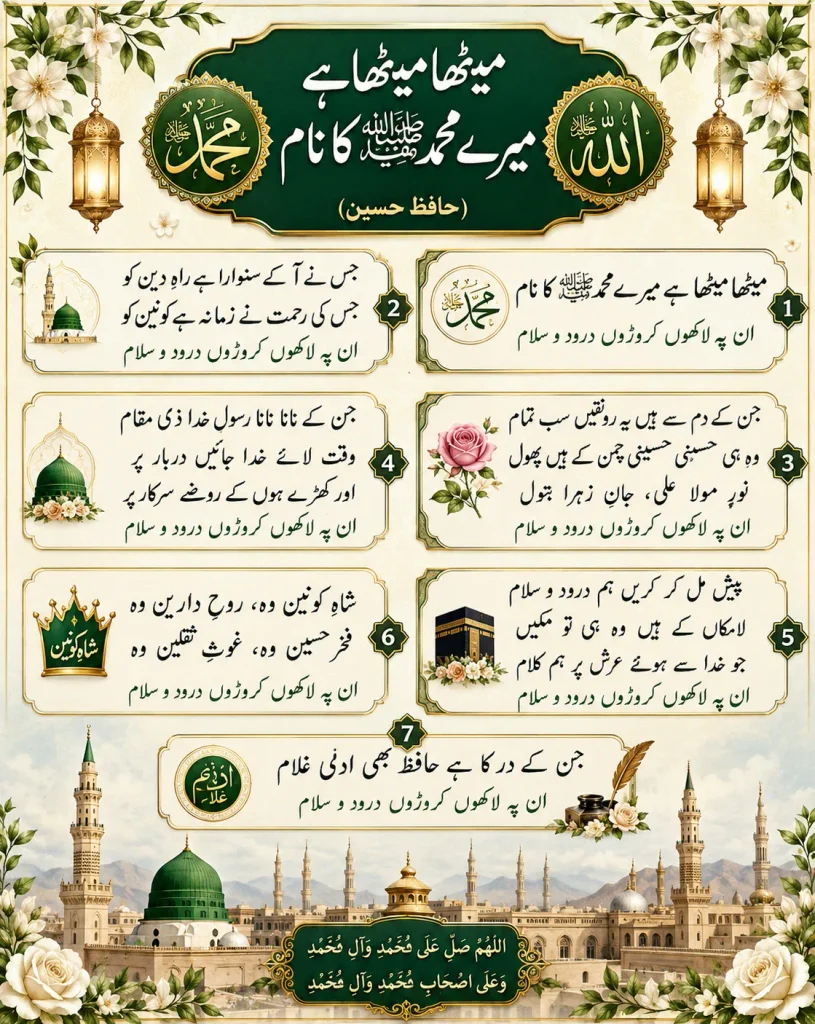
The extended verses of the “meetha meetha hai mere muhammad ka naam lyrics” move beyond simple praise, weaving in deep love for the Prophet’s family (Ahl al-Bayt) and his miraculous night journey (Mi’raj). Reciting these specific themes provides profound spiritual grounding, acting as the ultimate Islamic guide to overcoming modern anxiety.
Here is exactly why these extended themes resonate so deeply in households and spiritual gatherings today, and how to harness their full power.
The Foundation of Spiritual Sweetness
At its core, this Naat acts as a spiritual anchor. The physical repetition of blessings upon the Prophet ﷺ shifts human consciousness away from daily stressors and toward divine mercy.
Here are the beautiful opening lines that set the foundation for the entire Kalaam:
میٹھا میٹھا ہے میرے محمد ﷺ کا نام ان پہ لاکھوں کروڑوں درود و سلام جس نے آ کے سنوارا ہے راہِ دین کو جس کی رحمت نے زمانہ ہے کونین کو
Meetha meetha hai mere Muhammad ﷺ ka naam Un pe lakhon karoron durood-o-salam Jis ne aa ke sanwara hai rah-e-deen ko Jis ki rehmat ne zamana hai kaunain ko
(Sweet, sweet is the name of my Muhammad ﷺ / Upon him be millions and billions of blessings and peace / Who came and beautified the path of religion / Whose mercy encompasses both the worlds)
Note: You can find the full, extended lyrics featuring the Ahl al-Bayt and the Mi’raj by searching for the song on Google.
Deconstructing the Masterpiece: Beyond the Opening Refrain
While the opening lines are famous for teaching toddlers, the extended stanzas contain profound theological depth. They trace the spiritual lineage and the highest divine honors bestowed upon the Prophet ﷺ.
1. The Ahl al-Bayt Connection
The wider poetry beautifully references the “flowers of the garden”—Imam Hasan and Imam Hussain—alongside the spiritual light of Maula Ali and Syeda Fatima (Zahra Batool). Teaching this to your children ensures they understand that loving the Prophet ﷺ necessitates loving his family. This pure lineage is the spiritual heart of Islam.
2. The Journey Beyond Time (Mi’raj)
The lyrics also touch upon a breathtaking concept: the Prophet ﷺ as the dweller of Lamakan (the placeless place, beyond space and time) where he spoke directly with Allah. This elevates the reciter’s mind, reminding us of the ultimate majesty of the Messenger. When you combine this realization with the daily recitation of Durood Shareef Allahumma Salli Ala Muhammadin, it supercharges your spiritual focus.
3. The Yearning for the Green Dome
Finally, the Kalaam expresses the universal Muslim desire: the prayer that Allah grants us the time to stand at the blessed tomb (Roza) in Madinah to present our Salams directly. If you are planning to make this dream a reality, understanding how to perform Umrah according to Sunnah is the practical next step to this poetic yearning.
The Scriptural Proof: Purity of the Ahl al-Bayt
Because this specific version of the Naat highlights the Prophet’s family, it directly mirrors the Quranic decree of their spiritual purity. When reciting these verses in a Mehfil, grounding the poetry in the Quran provides massive educational value.
Transliteration: Innama yureedu Allahu liyudhhiba ‘ankumu ar-rijsa ahlal-bayti wayutahhirakum tatheera.
English Translation: Allah intends only to remove from you the impurity [of sin], O people of the [Prophet’s] household, and to purify you with [extensive] purification. (Quran 33:33)
Urdu Translation:
اے نبی کے گھر والو! اللہ تو یہی چاہتا ہے کہ تم سے ہر طرح کی گندگی کو دور کر دے اور تمہیں خوب پاکیزہ کر دے۔
Hindi Translation: ऐ नबी के घर वालो! अल्लाह तो यही चाहता है कि तुम से हर तरह की गन्दगी को दूर कर दे और तुम्हें खूब पाकीज़ा कर दे।
(Read our complete Tafsir on Ayat e Tatheer Quran 33:33 for a deeper understanding of this divine command).
The Spiritual Habit Loop for Families
Transforming these lyrics from a simple performance piece into a daily spiritual habit requires structure. Here is how you can use the themes of this Naat to build confidence and spiritual awareness in your home:
Broadening Your Spiritual Repertoire
Mastering this Naat is the perfect entry point. Once your family connects with these lyrics, it becomes much easier to introduce classic, heavier spiritual recitations.
For instance, the profound Arabic phrasing of the Darood Taj carries similar themes of majestic praise and spiritual protection. Alternatively, if your children are preparing for multiple school competitions, adding the beloved Zahe Muqaddar Naat Lyrics to their repertoire builds immense vocal confidence.
Ultimately, the act of sending blessings is a guaranteed pathway to divine acceptance. Whether you are seeking peace of mind or looking for the ultimate Dua for success, the constant remembrance of the Prophet ﷺ is the master key.
Meetha Meetha hai mere muhammad ka naam lyrics pdf
People Also Ask
They are the beloved grandsons of the Prophet ﷺ, famously referred to as the “leaders of the youth of Paradise.” Mentioning them, along with Syeda Fatima and Maula Ali, signifies that true devotion to the Prophet ﷺ includes deep reverence for his blessed household.
It translates to “the dweller of the placeless.” It refers to the Night Journey (Mi’raj) when the Prophet Muhammad ﷺ transcended the physical boundaries of the universe (space and time) to meet with Allah.
Focus on the rhythmic Roman Urdu transliteration. Break the Naat down into small two-line sections, practicing them immediately after daily prayers when the child’s mind is calm and focused on worship.
Take Action: Secure Your Milad Resources
Do not let language barriers prevent your family from participating in these beautiful traditions. Ensure you have the exact pronunciations and translations ready for your next gathering.
[Click Here to Download the Full PDF Lyrics Sheet] Download the complete Urdu, traditional script, translation guide—perfectly formatted for printing, teaching, and sharing.
