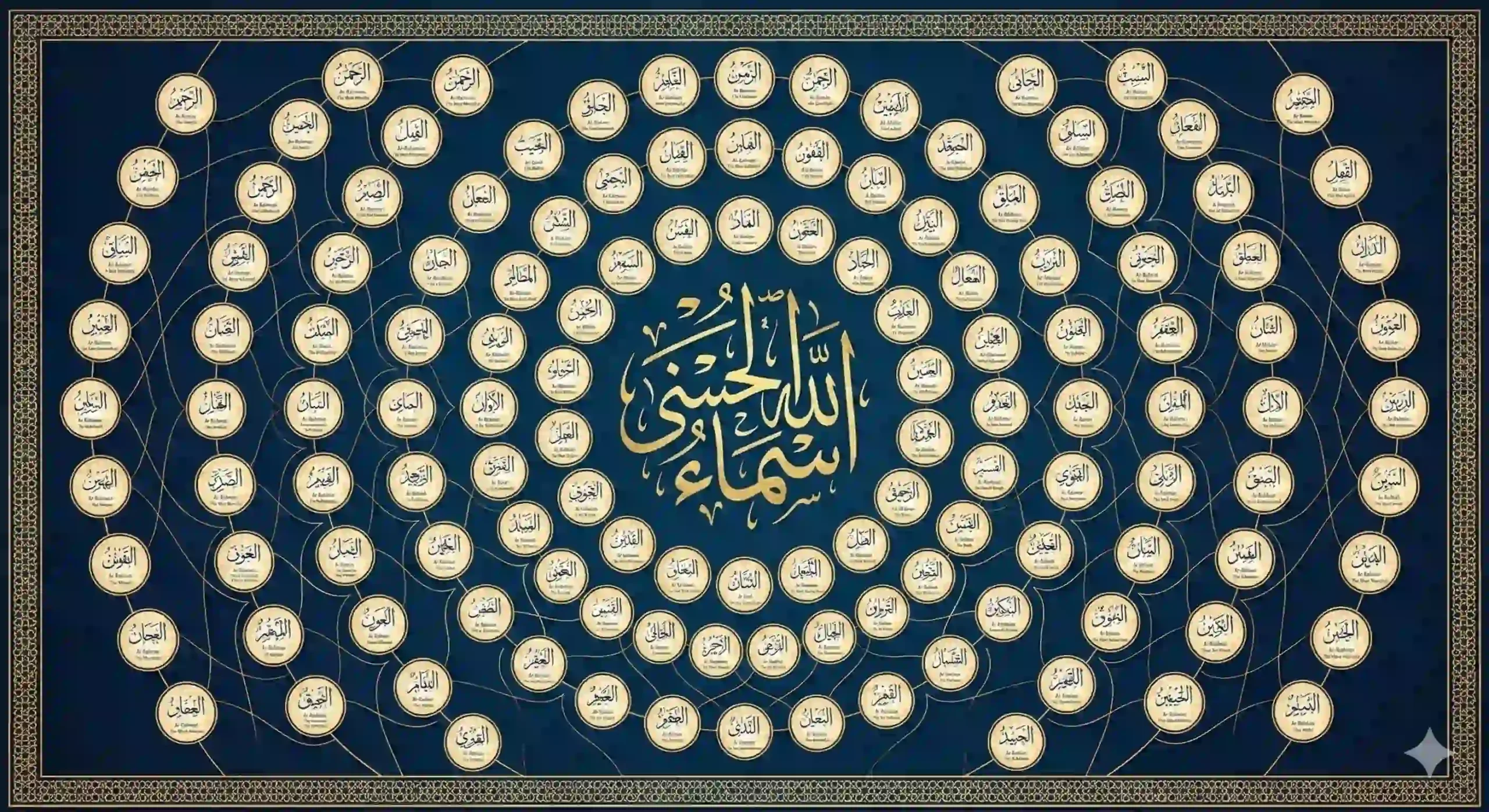
This comprehensive guide goes beyond a simple list of the 99 Names of Allah (Asma ul Husna). It serves as a spiritual roadmap, offering accurate Arabic, English, and Urdu translations for every name. Designed for the modern heart, it features practical ‘Micro-Duas’ and authentic Wazaif to help you connect with the Divine attributes specifically for healing anxiety, increasing provision (Rizq), and finding inner peace.
Asma Ul Husna With Urdu Meaning (PDF)
The 99 Beautiful Names of Allah (Asma ul Husna)
1. Ar-Rahman (ٱلرَّحْمَـٰنُ)
- English: The Most Merciful
- Urdu: بڑا مہربان (Bara Meherban)
2. Ar-Rahim (ٱلرَّحِيمُ)
- English: The Especially Merciful
- Urdu: نہایت رحم والا (Nihayat Reham Wala)
3. Al-Malik (ٱلْمَلِكُ)
- English: The King / The Sovereign
- Urdu: حقیقی بادشاہ (Haqeeqi Badshah)
4. Al-Quddus (ٱلْقُدُّوسُ)
- English: The Holy / The Pure
- Urdu: نہایت پاک (Nihayat Paak)
5. As-Salam (ٱلسَّلَامُ)
- English: The Source of Peace
- Urdu: سلامتی والا (Salamati Wala)
6. Al-Mu’min (ٱلْمُؤْمِنُ)
- English: The Giver of Faith & Security
- Urdu: امن دینے والا (Aman Dene Wala)
7. Al-Muhaimin (ٱلْمُهَيْمِنُ)
- English: The Guardian / The Overseer
- Urdu: نگہبان (Nigehbaan)
8. Al-Aziz (ٱلْعَزِيزُ)
- English: The All-Mighty
- Urdu: غالب / زبردست (Ghalib / Zabardast)
9. Al-Jabbar (ٱلْجَبَّارُ)
- English: The Compeller / The Restorer
- Urdu: زبردست بگڑی بنانے والا (Zabardast Bigri Banane Wala)
10. Al-Mutakabbir (ٱلْمُتَكَبِّرُ)
- English: The Supreme / The Majestic
- Urdu: بڑائی والا (Barai Wala)
11. Al-Khaliq (ٱلْخَالِقُ)
- English: The Creator
- Urdu: پیدا کرنے والا (Paida Karne Wala)
12. Al-Bari’ (ٱلْبَارِئُ)
- English: The Evolver / The Maker
- Urdu: جان ڈالنے والا (Jaan Dalne Wala)
13. Al-Musawwir (ٱلْمُصَوِّرُ)
- English: The Fashioner
- Urdu: صورت بنانے والا (Soorat Banane Wala)
14. Al-Ghaffar (ٱلْغَفَّارُ)
- English: The Constant Forgiver
- Urdu: بہت بخشنے والا (Bohat Bakshne Wala)
15. Al-Qahhar (ٱلْقَهَّارُ)
- English: The Subduer
- Urdu: سب کو قابو میں رکھنے والا (Sab Ko Qabu Mein Rakhne Wala)
16. Al-Wahhab (ٱلْوَهَّابُ)
- English: The Bestower
- Urdu: بہت عطا کرنے والا (Bohat Ata Karne Wala)
17. Ar-Razzaq (ٱلرَّزَّاقُ)
- English: The Provider
- Urdu: روزى دینے والا (Rozi Dene Wala)
18. Al-Fattah (ٱلْفَتَّاحُ)
- English: The Opener
- Urdu: کھولنے والا / مشکل کشا (Kholne Wala / Mushkil Kusha)
19. Al-‘Alim (ٱلْعَلِيمُ)
- English: The All-Knowing
- Urdu: سب کچھ جاننے والا (Sab Kuch Janne Wala)
20. Al-Qabid (ٱلْقَابِضُ)
- English: The Withholder
- Urdu: تنگی کرنے والا (Tangi Karne Wala)
21. Al-Basit (ٱلْبَاسِطُ)
- English: The Expander
- Urdu: فراخی کرنے والا (Farakhi Karne Wala)
22. Al-Khafid (ٱلْخَافِضُ)
- English: The Abaser
- Urdu: پست کرنے والا (Past Karne Wala)
23. Ar-Rafi’ (ٱلرَّافِعُ)
- English: The Exalter
- Urdu: بلند کرنے والا (Buland Karne Wala)
24. Al-Mu’izz (ٱلْمُعِزُّ)
- English: The Giver of Honor
- Urdu: عزت دینے والا (Izzat Dene Wala)
25. Al-Mudhill (ٱلْمُذِلُّ)
- English: The Giver of Dishonor
- Urdu: ذلت دینے والا (Zillat Dene Wala)
26. As-Sami’ (ٱلسَّمِيعُ)
- English: The All-Hearing
- Urdu: سب کچھ سننے والا (Sab Kuch Sunne Wala)
27. Al-Basir (ٱلْبَصِيرُ)
- English: The All-Seeing
- Urdu: سب کچھ دیکھنے والا (Sab Kuch Dekhne Wala)
28. Al-Hakam (ٱلْحَكَمُ)
- English: The Judge
- Urdu: فیصلہ کرنے والا (Faisla Karne Wala)
29. Al-‘Adl (ٱلْعَدْلُ)
- English: The Just
- Urdu: انصاف کرنے والا (Insaaf Karne Wala)
30. Al-Latif (ٱللَّطِيفُ)
- English: The Subtle One
- Urdu: مہربان / باریک بین (Meherban / Bareek Been)
31. Al-Khabir (ٱلْخَبِيرُ)
- English: The All-Aware
- Urdu: باخبر (Ba Khabar)
32. Al-Halim (ٱلْحَلِيمُ)
- English: The Forbearing
- Urdu: بردبار (Burd-baar)
33. Al-‘Azim (ٱلْعَظِيمُ)
- English: The Magnificent
- Urdu: عظمت والا (Azmat Wala)
34. Al-Ghafoor (ٱلْغَفُورُ)
- English: The Forgiving
- Urdu: معاف کرنے والا (Maaf Karne Wala)
35. Ash-Shakur (ٱلشَّكُورُ)
- English: The Appreciative
- Urdu: قدردان (Qadar Daan)
36. Al-‘Aliyy (ٱلْعَلِيُّ)
- English: The Most High
- Urdu: بہت بلند (Bohat Buland)
37. Al-Kabir (ٱلْكَبِيرُ)
- English: The Most Great
- Urdu: بہت بڑا (Bohat Bara)
38. Al-Hafiz (ٱلْحَفِيظُ)
- English: The Preserver
- Urdu: حفاظت کرنے والا (Hifazat Karne Wala)
39. Al-Muqit (ٱلْمُقِيتُ)
- English: The Sustainer
- Urdu: روزی پہنچانے والا (Rozi Pohanchane Wala)
40. Al-Hasib (ٱلْحَسِيبُ)
- English: The Reckoner
- Urdu: حساب لینے والا (Hisaab Lene Wala)
41. Al-Jalil (ٱلْجَلِيلُ)
- English: The Majestic
- Urdu: جلال والا (Jalal Wala)
42. Al-Karim (ٱلْكَرِيمُ)
- English: The Generous
- Urdu: کرم کرنے والا (Karam Karne Wala)
43. Ar-Raqib (ٱلرَّقِيبُ)
- English: The Watchful
- Urdu: نگہبان (Nigehbaan)
44. Al-Mujib (ٱلْمُجِيبُ)
- English: The Responsive
- Urdu: قبول کرنے والا (Qubool Karne Wala)
45. Al-Wasi’ (ٱلْوَاسِعُ)
- English: The All-Encompassing
- Urdu: وسعت والا (Wusat Wala)
46. Al-Hakim (ٱلْحَكِيمُ)
- English: The Wise
- Urdu: حکمت والا (Hikmat Wala)
47. Al-Wadud (ٱلْوَدُودُ)
- English: The Loving
- Urdu: محبت کرنے والا (Mohabbat Karne Wala)
48. Al-Majid (ٱلْمَجِيدُ)
- English: The Glorious
- Urdu: بزرگی والا (Buzurgi Wala)
49. Al-Ba’ith (ٱلْبَاعِثُ)
- English: The Resurrecter
- Urdu: اٹھانے والا (Uthane Wala)
50. Ash-Shahid (ٱلشَّهِيدُ)
- English: The Witness
- Urdu: گواہ (Gawah)
51. Al-Haqq (ٱلْحَقُّ)
- English: The Truth
- Urdu: سچا (Saccha)
52. Al-Wakil (ٱلْوَكِيلُ)
- English: The Trustee
- Urdu: کارساز (Kaarsaz)
53. Al-Qawiyy (ٱلْقَوِيُّ)
- English: The Strong
- Urdu: طاقتور (Taqatwar)
54. Al-Matin (ٱلْمَتِينُ)
- English: The Firm
- Urdu: مضبوط (Mazboot)
55. Al-Waliyy (ٱلْوَلِيُّ)
- English: The Protecting Friend
- Urdu: مددگار دوست (Madadgar Dost)
56. Al-Hamid (ٱلْحَمِيدُ)
- English: The Praiseworthy
- Urdu: قابل تعریف (Qabil-e-Tareef)
57. Al-Muhsi (ٱلْمُحْصِيُ)
- English: The Counter
- Urdu: گیننے والا (Ginne Wala)
58. Al-Mubdi’ (ٱلْمُبْدِئُ)
- English: The Originator
- Urdu: پہلی بار پیدا کرنے والا (Pehli Bar Paida Karne Wala)
59. Al-Mu’id (ٱلْمُعِيدُ)
- English: The Restorer
- Urdu: دوبارہ پیدا کرنے والا (Dobara Paida Karne Wala)
60. Al-Muhyi (ٱلْمُحْيِي)
- English: The Giver of Life
- Urdu: زندگی دینے والا (Zindagi Dene Wala)
61. Al-Mumit (ٱلْمُمِيتُ)
- English: The Taker of Life
- Urdu: موت دینے والا (Maut Dene Wala)
62. Al-Hayy (ٱلْحَيُّ)
- English: The Ever-Living
- Urdu: زندہ / جاوید (Zinda / Javed)
63. Al-Qayyum (ٱلْقَيُّومُ)
- English: The Self-Subsisting
- Urdu: قائم رہنے والا (Qaim Rehne Wala)
64. Al-Wajid (ٱلْوَاجِدُ)
- English: The Finder
- Urdu: پانے والا (Paane Wala)
65. Al-Majid (ٱلْمَاجِدُ)
- English: The Noble
- Urdu: بزرگی والا (Buzurgi Wala)
66. Al-Wahid (ٱلْوَاحِدُ)
- English: The One
- Urdu: اکیلا (Akela)
67. Al-Ahad (ٱلْأَحَد)
- English: The Unique One
- Urdu: ایک (Aik)
68. As-Samad (ٱلصَّمَدُ)
- English: The Eternal Refuge
- Urdu: بے نیاز (Be-Niaz)
69. Al-Qadir (ٱلْقَادِرُ)
- English: The Capable
- Urdu: قدرت والا (Qudrat Wala)
70. Al-Muqtadir (ٱلْمُقْتَدِرُ)
- English: The Powerful
- Urdu: مقتدر (Muqtadir)
71. Al-Muqaddim (ٱلْمُقَدِّمُ)
- English: The Expediter
- Urdu: آگے کرنے والا (Aage Karne Wala)
72. Al-Mu’akhkhir (ٱلْمُؤَخِّرُ)
- English: The Delayer
- Urdu: پیچھے کرنے والا (Peeche Karne Wala)
73. Al-Awwal (ٱلْأَوَّلُ)
- English: The First
- Urdu: سب سے پہلا (Sab Se Pehla)
74. Al-Akhir (ٱلْآخِرُ)
- English: The Last
- Urdu: سب سے پچھلا (Sab Se Pichla)
75. Az-Zahir (ٱلظَّاهِرُ)
- English: The Manifest
- Urdu: ظاہر (Zahir)
76. Al-Batin (ٱلْبَاطِنُ)
- English: The Hidden
- Urdu: چھپا ہوا (Chupa Hua)
77. Al-Wali (ٱلْوَالِي)
- English: The Governor
- Urdu: مالک / والی (Maalik / Wali)
78. Al-Muta’ali (ٱلْمُتَعَالِي)
- English: The Most Exalted
- Urdu: بلند تر (Buland Tar)
79. Al-Barr (ٱلْبَرُّ)
- English: The Source of Goodness
- Urdu: نیکی کرنے والا (Naiki Karne Wala)
80. At-Tawwab (ٱلتَّوَّابُ)
- English: The Acceptor of Repentance
- Urdu: توبہ قبول کرنے والا (Tauba Qabool Karne Wala)
81. Al-Muntaqim (ٱلْمُنْتَقِمُ)
- English: The Avenger
- Urdu: بدلہ لینے والا (Badla Lene Wala)
82. Al-‘Afuww (ٱلْعَفُوُّ)
- English: The Pardoner
- Urdu: معاف کرنے والا (Maaf Karne Wala)
83. Ar-Ra’uf (ٱلرَّؤُوفُ)
- English: The Compassionate
- Urdu: بہت نرمی کرنے والا (Bohat Narmi Karne Wala)
84. Malik-ul-Mulk (مَالِكُ ٱلْمُلْكِ)
- English: The Owner of All Sovereignty
- Urdu: ملکوں کا مالک (Mulkon Ka Maalik)
85. Dhul-Jalali-wal-Ikram (ذُو ٱلْجَلَالِ وَٱلْإِكْرَامِ)
- English: Lord of Majesty and Generosity
- Urdu: عظمت اور جلال والا (Azmat Aur Jalal Wala)
86. Al-Muqsit (ٱلْمُقْسِطُ)
- English: The Equitable
- Urdu: انصاف کرنے والا (Insaaf Karne Wala)
87. Al-Jami’ (ٱلْجَامِعُ)
- English: The Gatherer
- Urdu: اکٹھا کرنے والا (Ikatha Karne Wala)
88. Al-Ghaniyy (ٱلْغَنِيُّ)
- English: The Self-Sufficient
- Urdu: بے پرواہ (Be-Parwah)
89. Al-Mughni (ٱلْمُغْنِيُ)
- English: The Enricher
- Urdu: بے نیاز کرنے والا (Be-Niaz Karne Wala)
90. Al-Mani’ (ٱلْمَانِعُ)
- English: The Preventer
- Urdu: روکنے والا (Rokne Wala)
91. Ad-Darr (ٱلضَّارُّ)
- English: The Distressor
- Urdu: نقصان دینے والا (Nuqsan Dene Wala)
92. An-Nafi’ (ٱلنَّافِعُ)
- English: The Propitious
- Urdu: نفع دینے والا (Nafa Dene Wala)
93. An-Nur (ٱلنُّورُ)
- English: The Light
- Urdu: روشن کرنے والا (Roshan Karne Wala)
94. Al-Hadi (ٱلْهَادِي)
- English: The Guide
- Urdu: ہدایت دینے والا (Hidayat Dene Wala)
95. Al-Badi’ (ٱلْبَدِيعُ)
- English: The Incomparable
- Urdu: نئی طرح پیدا کرنے والا (Nayi Tarah Paida Karne Wala)
96. Al-Baqi (ٱلْبَاقِي)
- English: The Everlasting
- Urdu: ہمیشہ رہنے والا (Hamesha Rehne Wala)
97. Al-Warith (ٱلْوَارِثُ)
- English: The Inheritor
- Urdu: وارث (Waris)
98. Ar-Rashid (ٱلرَّشِيدُ)
- English: The Guide to the Right Path
- Urdu: ہدایت دینے والا (Hidayat Dene Wala)
99. As-Sabur (ٱلصَّبُورُ)
- English: The Patient
- Urdu: صبر کرنے والا (Sabar Karne Wala)
Spiritual Benefits & Wazaif (Healing)
4. Which Name of Allah is best for anxiety and depression?
For anxiety and lack of peace, the names As-Salam (The Source of Peace) and Al-Mu’min (The Giver of Security) are most effective. Reciting “Ya Salam” constantly can help calm a racing heart and bring tranquility to the mind.
5. Which Asma ul Husna should be recited for wealth and Rizq (Provision)?
To increase sustenance and financial stability, Muslims often recite Ar-Razzaq (The Provider) and Al-Wahhab (The Bestower). A common spiritual practice is to recite “Ya Razzaq” 100 times after Fajr prayer to open the doors of provision for the day.
6. Is there a specific Name for forgiveness of major sins?
Yes, Al-Ghaffar (The Constant Forgiving) and At-Tawwab (The Acceptor of Repentance) are powerful for seeking forgiveness. Unlike humans who may hold grudges, invoking Al-Ghaffar reminds the believer that Allah forgives repeatedly, no matter how many times the mistake is made, as long as the repentance is sincere.
Practical Rules & Naming
7. Can I name my child one of Allah’s names?
It depends on the name.
- Allowed: You can name a child using names that are shared attributes, like Rashid (Guide) or Ali (High), though it is better to add “Abdul” (Slave of).
- Prohibited: You cannot use names that belong exclusively to Allah, such as Al-Khaliq (The Creator), Al-Quddus (The Holy), or Ar-Rahman (The Most Merciful).
- Best Practice: The Prophet Muhammad (PBUH) said the most beloved names to Allah are Abdullah and Abdur-Rahman.
8. How do I memorize the 99 Names of Allah easily?
The best strategy is “Chunking.” Do not try to memorize all 99 at once.
- Group them by meaning (e.g., The Names of Mercy: Rahman, Rahim, Ra’uf).
- Memorize 3 names per day.
- Use audio recitation (Nasheeds) to use melody as a memory aid.
- Focus on the meaning, not just the sound, to make it stick.
Nasruminallah Wa Fathun Qareeb: Urdu & Arabic Meaning
Read Article →Hadith: Amar Bil Maroof Wa Nahi Anil Munkar
Read Article →FAQs:
Asma ul Husna (Arabic: الأسماء الحسنى) literally translates to “The Most Beautiful Names.” In Islamic theology, these are the attributes and titles of Allah that describe His perfection, majesty, and beauty. Knowing these names is the primary way Muslims get to know their Creator.
While the famous Hadith in Sahih Bukhari and Muslim mentions that “Allah has ninety-nine names, one hundred minus one,” the majority of scholars (including Imam An-Nawawi) agree that Allah’s names are infinite. The number 99 refers to a specific set of names that, if memorized and internalized (Ihsa), guarantee Paradise. There are other names revealed only to angels or kept within the knowledge of the Unseen (Ilm al-Ghayb).
The Ism-e-Azam is the Greatest Name of Allah. It is believed that if you call upon Allah by this name, your dua is assuredly accepted. While scholars differ, the strongest opinions suggest it is likely “Allah” (as it encompasses all attributes) or “Al-Hayy Al-Qayyum” (The Ever-Living, The Self-Subsisting).
Yes. This concept is known as Al-Ism Al-A’zam (The Greatest Name). Prophet Muhammad (ﷺ) once heard a man praying:
“O Allah, I ask You by the fact that You are the One, the Eternal Refuge, who begets not nor was begotten, and there is none comparable to Him.”
The Prophet (ﷺ) reacted immediately, saying: “By Him in Whose Hand is my soul, he has asked Allah by His Greatest Name. When He is called by it, He answers; and when He is asked by it, He gives.”
Scholars (including Ibn Hajar and Al-Albani) conclude that the Ism-e-Azam is found within these names combined:
Allah (The Proper Name)
Al-Ahad (The Unique One)
As-Samad (The Eternal Refuge)
Al-Hayy Al-Qayyum (The Ever-Living, The Self-Sustaining)
How to use it: Before making your specific request, start your Dua by calling upon these names with total conviction.

3 thoughts on “99 Names of Allah -Asma ul Husna with Urdu Meaning”