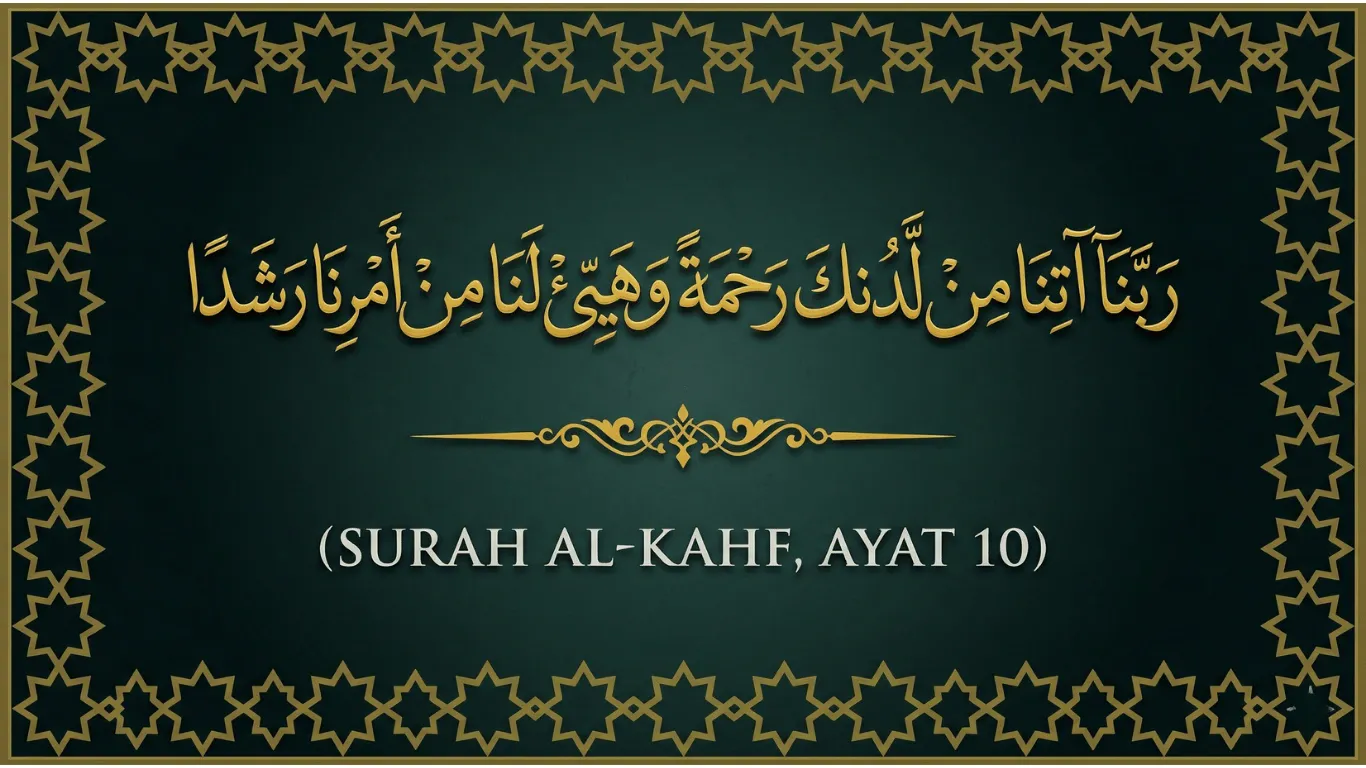
Have you ever felt like you’re backed into a corner with absolutely no worldly options left? When your resources run dry, your connections cannot help you, and every door seems bolted shut, human logic tells us to panic. But Islamic history tells us to look at the Companions of the Cave, who walked into a dead end and found a miracle by uttering a single, profoundly powerful dua.
Here is the complete guide to understanding, reciting, and applying Surah Al-Kahf, Ayat 10 to your daily life.
What Does Rabbana Atina Min Ladunka Rahmatan Mean?
“Rabbana atina min ladunka rahmatan” is a powerful Quranic dua from Surah Al-Kahf, verse 10. It means “Our Lord, grant us from Yourself mercy.” Muslims recite this to ask Allah for divine intervention, special protection, and absolute guidance when facing seemingly impossible challenges.Rabbana Atina Min Ladunka Rahmatan in Arabic, English & Urdu
Arabic Script:
رَبَّنَا آتِنَا مِن لَّدُنكَ رَحْمَةً وَهَيِّئْ لَنَا مِنْ أَمْرِنَا رَشَدًا
Transliteration (Pronunciation):
Rabbanaa aatinaa min ladunka rahmatan wa hayyi’ lanaa min amrinaa rashadaa.
English Translation (Sahih International):
“Our Lord, grant us from Yourself mercy and prepare for us from our affair right guidance.”
Urdu Translation (Fateh Muhammad Jalandhari):
اے ہمارے پروردگار ہم پر اپنے ہاں سے رحمت نازل فرما۔ اور ہمارے کام میں درستی (کے سامان) مہیا کر۔
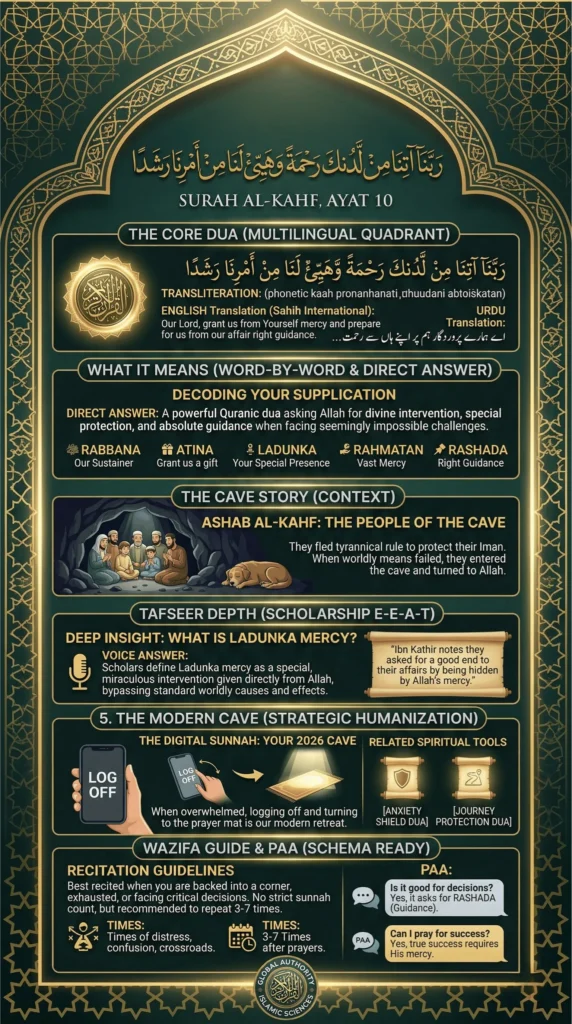
Surah Al-Kahf (18:10) teaches us to ask Allah for mercy and guidance beyond our understanding.
The Word-by-Word Meaning
To truly feel the weight of this supplication, we must look at the exact vocabulary Allah chose to preserve in the Quran:
- Rabbana (رَبَّنَا): Our Lord / Our Sustainer.
- Aatinaa (آتِنَا): Grant us (a gift we cannot earn ourselves).
- Min (مِن): From.
- Ladunka (لَّدُنكَ): Yourself (Specifically: from Your hidden, special presence).
- Rahmatan (رَحْمَةً): Vast, unimaginable mercy.
- Wa hayyi’ (وَهَيِّئْ): And prepare / facilitate.
- Lanaa (لَنَا): For us.
- Min amrinaa (مِنْ أَمْرِنَا): From our affair / our current situation.
- Rashadaa (رَشَدًا): Right guidance / the right way out.
The Story Behind the Dua: Ashab al-Kahf
This dua was first recited by the Ashab al-Kahf (Companions of the Cave), a group of righteous youths who fled a tyrant king. Seeking refuge in a dark cave, they made this supplication, entirely relying on Allah for their survival, sustenance, and ultimate protection.
The youth in this story lived in a society drowning in disbelief. To protect their Iman (faith), they made the terrifying decision to leave their homes, wealth, and families behind. The Companions of the Cave physically fled their city to protect their faith. Whenever you embark on any journey—whether seeking safety from a trial or simply traveling for sustenance—it is a Sunnah to recite the Safar ki dua to ensure Allah’s protection on the road.
They stepped into the pitch-black cave with zero provisions. It was at this exact moment of total vulnerability that they asked for mercy min ladunka—a direct, miraculous intervention.
Tafseer Insights from Classical Scholars
In Islamic scholarship, mercy min ladunka refers to a special, miraculous intervention directly from Allah, bypassing standard worldly laws. Classical scholars note this implies profound spiritual peace, physical safety, and divine guidance given directly to believers in extreme distress.
Imam Ibn Kathir explains in his renowned Tafseer that the youths effectively said, “O Allah, bestow upon us a mercy from You, by which You will conceal us from our people, and grant us a good end in our affair.”
Furthermore, texts like the Maarif-ul-Quran highlight that the youths didn’t just ask for safety; they asked for Rashada (guidance). This proves that even in matters of life and death, a true believer’s priority is ensuring their actions remain on the straight path.
The “Digital Sunnah”: Finding Your Cave Today
Here’s why this matters for you right now. You might not be running from a literal sword-wielding king, but we are constantly bombarded by the noise, trials, and relentless pressures of the modern world.
Sometimes, the “cave” is simply logging off, stepping away from the overwhelming demands of society, and turning to the prayer mat. We often face career dead-ends, financial roadblocks, or emotional burnout where human advice falls short. If you are currently facing similar overwhelming distress, pairing this Quranic verse with the Prophetic dua for anxiety and sorrow creates a powerful spiritual shield for your mental well-being.
Wazifa: When and How Many Times to Recite?
There is no strict sunnah dictating a specific number of times to recite this dua. However, scholars recommend reciting it 3 to 7 times after obligatory prayers, or repeatedly during times of severe distress, decision-making, or when feeling completely overwhelmed by a situation.
Practical Application:
- During Sujood (Prostration): The closest a servant is to Allah is in prostration. Recite the Arabic text here during your voluntary (Nafl) prayers.
- When Making Life Choices: If you are unsure about a job, a marriage proposal, or a move, recite this alongside Salat al-Istikhara.
- Friday Routine: Since it is highly recommended to read Surah Al-Kahf every Friday, pause at verse 10 and repeat this dua with deep intention.
People Also Ask:
Yes. Because the dua specifically asks for Allah to prepare “right guidance” (Rashada) from your affairs, it is perfect to recite when you are confused, at a crossroads, or needing clarity on a difficult life decision.
Absolutely. True success requires divine facilitation. Reciting this verse asks Allah to intervene in your worldly and spiritual matters, ensuring that the outcome is blessed and guided directly by His mercy.
The primary benefit is securing Allah’s special protection and guidance when you have exhausted your own human efforts. It brings peace of mind, removes anxiety about the future, and invites miraculous solutions to seemingly impossible problems.
May Allah grant us the unwavering faith of the Companions of the Cave. To explore more authentic supplications and build your daily spiritual habits, continue reading on Current Islam.
