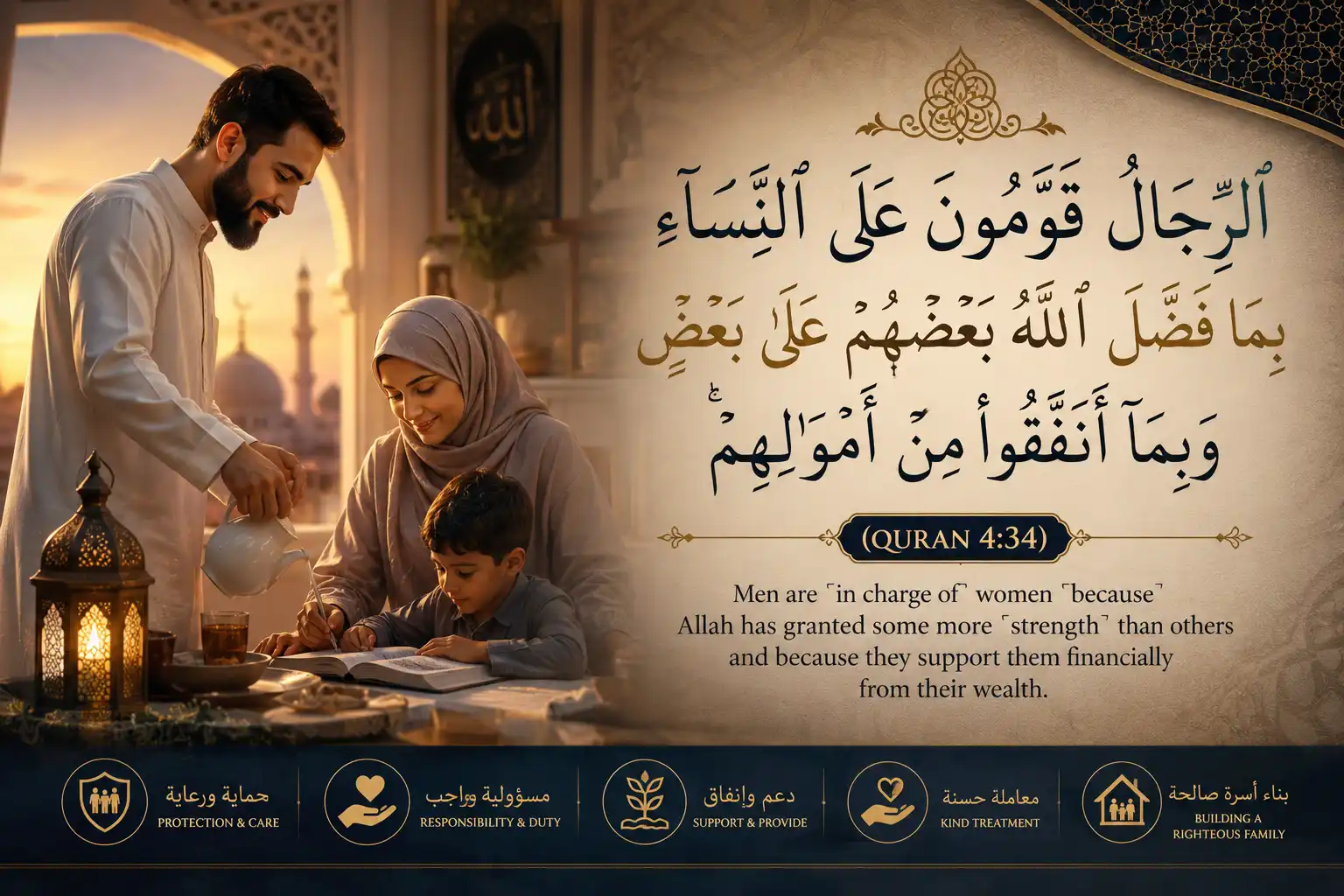
Surah An-Nisa (The Women) is a profound chapter of the Quran that provides the legal and ethical framework for Muslim family life. Among its most cited and discussed verses is Quran 4:34, which begins with the phrase “Ar-rijalu qawwamuna ‘alan-nisa.”
Understanding this verse requires moving beyond superficial translations and looking at the linguistic depth, historical context, and the concept of Qiwamah (divine protection and maintenance).
1. The Arabic Text and Transliteration
To ensure the highest accuracy for our readers, we begin with the authentic Arabic text:
Arabic:
ٱلرِّجَالُ قَوَّٰمُونَ عَلَى ٱلنِّسَآءِ بِمَا فَضَّلَ ٱللَّهُ بَعْضَهُمْ عَلَىٰ بَعْضٍ وَبِمَآ أَنفَقُوا۟ مِنْ أَمْوَٰلِهِمْ ۚ
Transliteration:
Ar-rijālu qawwāmūna ‘alan-nisā’i bimā faḍḍalallāhu ba‘ḍahum ‘alā ba‘ḍin wa bimā anfaqū min amwālihim…
2. Translations
English Translation (Sahih International)
“Men are the protectors and maintainers of women, because Allah has made one of them excel over the other, and because they spend [to support them] from their means…”
Urdu Translation (Kanzul Iman)
“مرد عورتوں پر حاکم ہیں اس وجہ سے کہ اللہ نے ان میں ایک کو دوسرے پر فضیلت دی ہے اور اس وجہ سے کہ مردوں نے اپنے مال خرچ کیے ہیں…”
3. Deep Dive: What is Qiwamah?
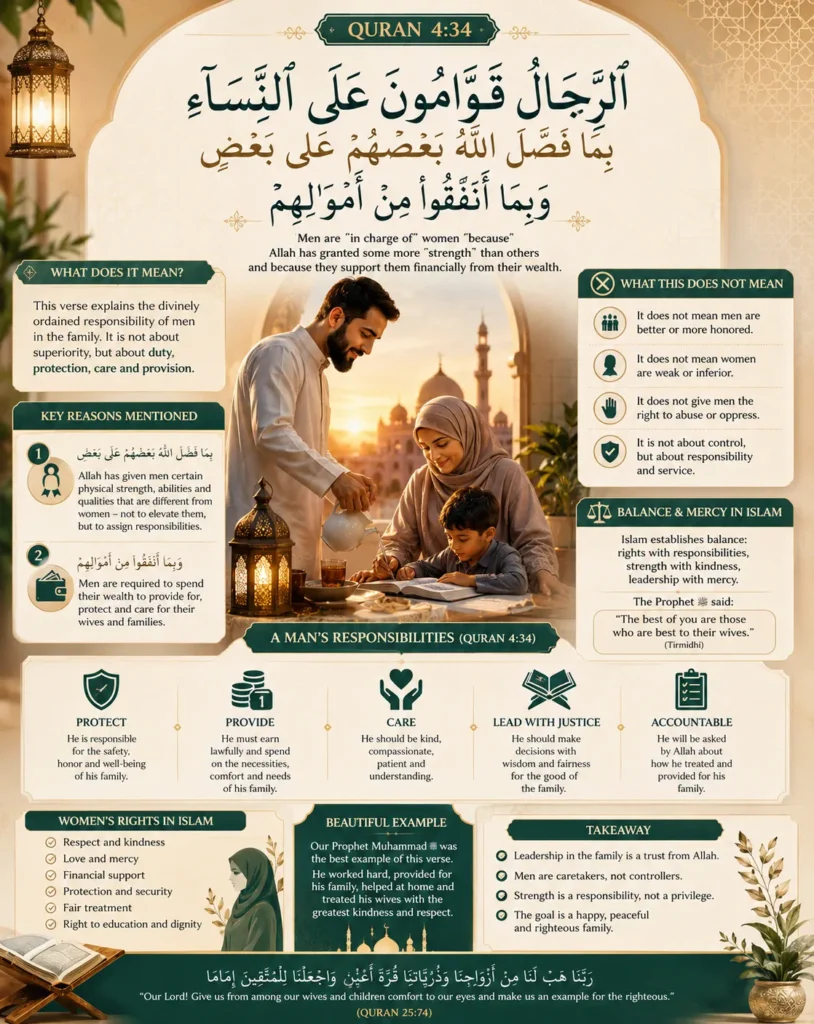
The core of this verse is the term Qawwamun. In Arabic, this term is derived from Qiyam, meaning “to stand.” A Qawwam is one who stands up for another, manages their affairs, protects them, and provides for them.
- Financial Responsibility: In Islamic jurisprudence, the husband’s leadership role is strictly tied to his financial obligation (Nafaqah). He is required to provide food, shelter, and clothing, regardless of his wife’s personal wealth.
- Protection vs. Domination: Qiwamah is a duty of service. It is not an excuse for tyranny or emotional abuse. The Prophet Muhammad (SAW) taught that the best among men are those who are best to their wives. For a deeper understanding of marital ethics, read our guide on The Rights of Spouses in Islam.
4. Addressing Misconceptions
It is a common misunderstanding that this verse implies the inferiority of women. However, classical Tafsir (commentary) emphasizes that the “excellence” mentioned refers to the specific roles and burdens assigned to each gender within the family unit to ensure societal stability.
Just as men are commanded to protect and provide, women are honored for their roles in nurturing and maintaining the sanctity of the home. This balance is the foundation of a healthy Muslim household. You can learn more about this harmony in our article on The Islamic Perspective on Family Roles.
5.FAQs:
It translates to “Men are the protectors and maintainers of women,” emphasizing the husband’s responsibility to guard, support, and facilitate the well-being of his family.
Absolutely not. Islamic law strictly forbids oppression. Any interpretation that contradicts the kindness and mercy shown by the Prophet (SAW) toward his wives is considered a cultural corruption, not an Islamic one.
It should be applied through mutual consultation (Shura) and compassion. A husband fulfills his Qiwamah by listening to his wife, supporting her personal and spiritual growth, and acting as a servant-leader.
