Have you ever entered a new job, home, marriage, or major life chapter and quietly wondered, “Will this path bring barakah, or will it drain my peace?” Surah Al-Isra 17:80 answers that fear with a dua built for clean beginnings, honest transitions, and Allah’s help in every serious change in life.
The verse at a glance
This verse teaches a believer to ask Allah for a truthful entry, a truthful exit, and a supporting authority from Him. It is both a Qur’anic dua and a practical spiritual model for major life decisions, especially when a person is moving, starting over, or stepping into a new responsibility.
The Arabic verse
Arabic:
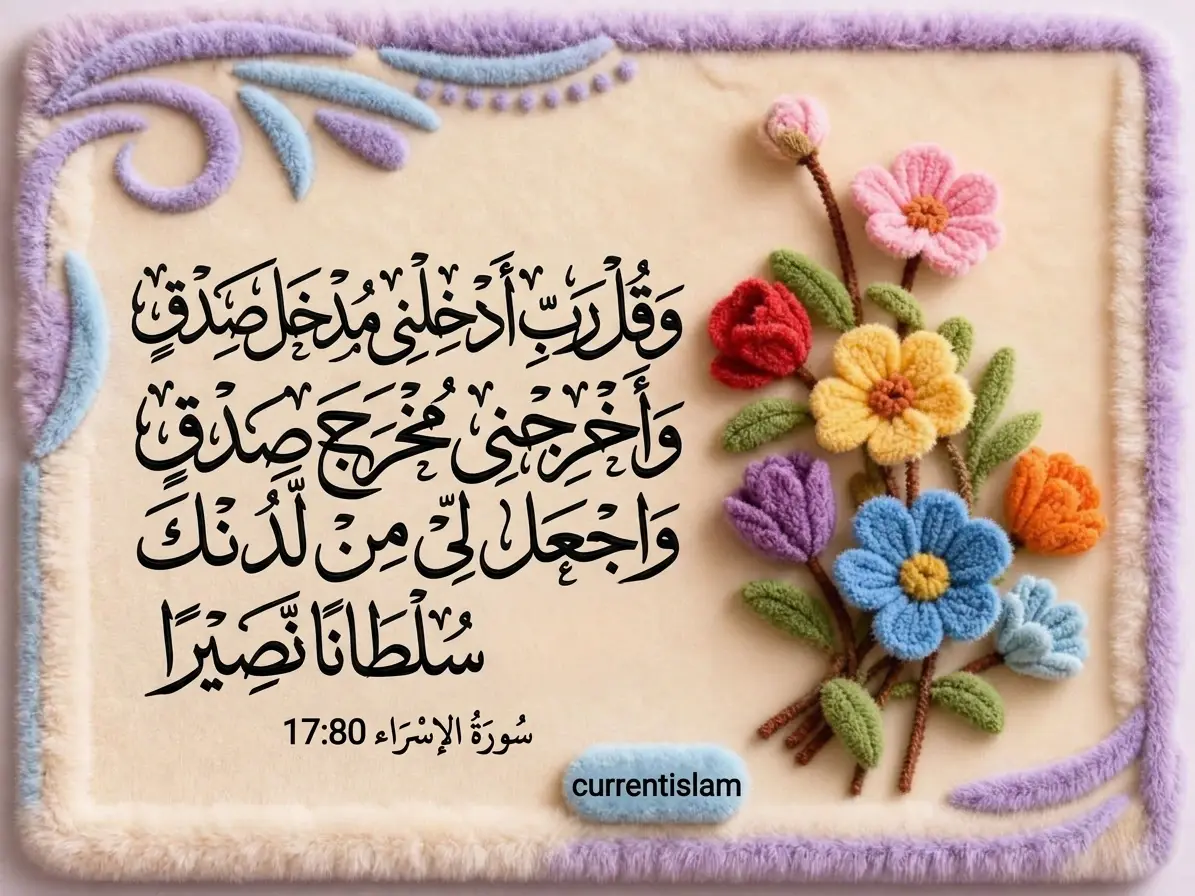
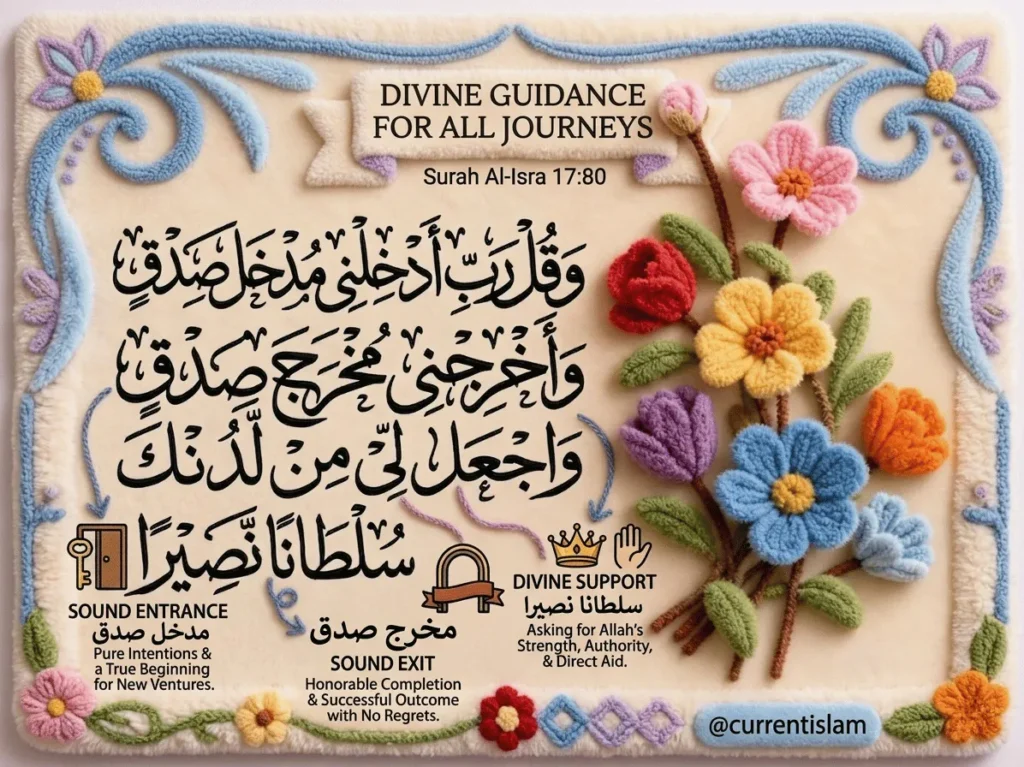
وَقُلْ رَبِّ أَدْخِلْنِي مُدْخَلَ صِدْقٍ وَأَخْرِجْنِي مُخْرَجَ صِدْقٍ وَاجْعَل لِّي مِن لَّدُنكَ سُلْطَانًا نَّصِيرًا
Transliteration:
Wa qul rabbi adkhilni mudkhala sidqin wa akhrijni mukhraja sidqin واج‘al li min ladunka sultanan naseera
Saheeh International:
“And say, ‘My Lord, cause me to enter a sound entrance and to exit a sound exit and grant me from Yourself a supporting authority.’”
Urdu (Fateh Muhammad Jalandhari):
“اور کہیے کہ اے میرے پروردگار! مجھے سچائی کے ساتھ داخل فرما اور سچائی کے ساتھ باہر نکال، اور اپنی طرف سے مجھے مددگار غلبہ عطا فرما۔”
Words by words meaning
The heart of this ayah is very simple, but very deep.
- Rabbi: My Lord.
- Adkhilni: Let me enter.
- Mudkhala sidqin: An entry of truth, sincerity, and correctness.
- Akhrijni: Let me exit.
- Mukhraja sidqin: An exit of truth, sincerity, and correctness.
- Sultanan naseera: A supporting authority, power, proof, or help that backs the truth.
This means the verse is not only about physical movement. It is about entering and leaving every stage of life with integrity, divine approval, and help from Allah.
Why this verse matters
This dua is important because life is full of entrances and exits. People enter jobs, marriages, cities, projects, and responsibilities, and they also exit them, sometimes with relief and sometimes with pain. The verse teaches that both moments should be guided by truth, not ego, deception, pressure, or fear.
For your audience, this matters especially in career decisions, marriage decisions, migration, business launches, and public online identity. In the digital age, “entry” includes how you present yourself online, and “exit” includes how you leave a job, a platform, a contract, or a relationship. That is why this verse fits your Digital Sunnah of Trustworthy Entry & Exit angle so well.
Qur’anic reference
Surah Al-Isra is also called Surah Bani Israel, and this ayah is 17:80. The verse is often linked with the Prophet’s ﷺ migration context, where a truthful departure from Makkah and a truthful entrance into Madinah carried both spiritual and historical meaning. It is a Qur’anic dua for a turning point in life.
Tafsir and scholarship
Classical and modern tafsir discussions connect this ayah with the Prophet’s ﷺ Hijrah, but the meaning goes beyond one historical event. The core lesson is that a believer should ask Allah for a clean start, a clean transition, and a clean outcome. That includes sincerity in intention, safety in action, and legitimacy in result.
Ibn Kathir-style tafsir summaries and later explanations emphasize that sidq here carries the idea of truthfulness, correctness, and soundness, not just verbal honesty. In other words, you are not only asking to speak truth; you are asking to live truthfully through the whole process of moving from one state to another.
Direct meaning for daily life
Here is why this matters for you personally. If you are starting a new job, ask Allah for a truthful entry so your income, conduct, and intention stay halal and blessed. If you are getting married, ask for a truthful exit from loneliness and a truthful entry into a lawful, peaceful home. If you are moving cities, ask for a truthful departure from hardship and a truthful arrival into stability.
This dua also teaches you how to leave things properly. Many people know how to start, but not how to exit with dignity. Surah 17:80 trains the believer to leave without lies, broken trust, hidden harm, or spiritual confusion.
Wazifa and recitation
This verse is a dua from the Qur’an, so it can be recited as supplication whenever you need Allah’s help in a transition. Many people recite it before travel, relocation, interviews, marriage steps, business launches, or any major decision. The main point is not a fixed magic number, but sincere repetition with focus, trust, and action.
A simple practice is to recite it:
- after salah,
- before making a big decision,
- during tahajjud,
- or whenever you are asking Allah for a new beginning.
If you use it as a wazifa, pair it with repentance, halal effort, and clear intention. The verse works best when your action matches your dua.
Benefits of this ayah
This ayah is loved because it speaks to real human need. It offers spiritual strength for:
- job changes,
- marriage decisions,
- relocation,
- leadership roles,
- business openings,
- leaving harmful situations,
- and rebuilding after failure.
It also builds a powerful mindset: your future is not secured only by planning, but by truthful movement under Allah’s care. That is why readers often find comfort in this verse when they feel uncertain about the next step.
Surah bani israel ayat 80 benefits
- Truthful beginnings and endings
This ayah teaches you to ask Allah for a sincere, clean entry into any new phase and a dignified exit from any hardship, job, relationship, or city. - Help in major life decisions
It is often recited when someone is unsure about marriage, work, travel, business, or relocation, because it asks Allah for guidance and protection in transition. - Spiritual protection and support
The phrase asking for “supporting authority” reflects Allah’s help, strength, and backing when you are facing pressure, confusion, or opposition. - Better intention and sincerity
The verse reminds a believer to enter every situation with honesty and leave it with integrity, not with deception, ego, or fear. - Peace during change
This ayah brings comfort when life is unstable. It helps a person trust that Allah can make the beginning sound, the middle safe, and the ending blessed.
About hadith and context
The search results point to the Prophet’s ﷺ recitation of this dua in connection with migration and transition, which fits the meaning of the ayah very well. That historical connection strengthens the verse’s relevance for people making major changes today.
At the same time, the verse remains a general Qur’anic principle. A believer does not need to limit it to one event. It can be used for any truthful entry and exit in life, as long as the supplication stays grounded in sincerity and obedience to Allah.
From where this verse comes
This verse comes from Surah Al-Isra, also known as Surah Bani Israel, in the Qur’an. It is not a later prayer added by scholars; it is directly from the Qur’an itself. That is why it carries deep authority for dua, reflection, and daily spiritual practice.
Digital Sunnah today
Here is the modern framework behind this verse. In the digital world, people enter spaces with their profiles, posts, bios, brands, and reputations. They also exit spaces with screenshots, records, comments, and public memory. Surah Al-Isra 17:80 teaches that a Muslim should seek truthfulness in both presence and departure.
That means:
- enter online with honest identity,
- leave online without dishonesty or harm,
- protect trust,
- keep your word,
- and ask Allah for a supporting authority that makes truth clear.
This is the Digital Sunnah: a believer’s public and private life should match, both offline and online.
Related verse links
If you want to deepen this theme, two related concepts work very well inside the article cluster.
For how Allah’s power supports honest entry and exit, you can connect to the meaning of innallaha ala kulli shayin qadeer.
🚀🚀🚀
For linking forgiveness with starting fresh in a new city or job, you can connect to innallaha ghafoor ur raheem.
These internal links help the reader move from one Qur’anic attribute to another: Allah’s power, Allah’s mercy, and Allah’s guidance in life transitions.
People also ask:
It is a dua asking Allah for a truthful entrance, a truthful exit, and supporting help from Him.
Yes, it is part of Surah Al-Isra 17:80.
There is no fixed number in the verse itself; recite it sincerely as much as needed.
It is often recited for safe transitions, good decisions, truthful beginnings, and Allah’s support.
Yes, because the meaning applies to any major life change where you want truth, clarity, and barakah.
Your personal dua request
If you are asking Allah for a job, marriage, relocation, business opening, or relief from confusion, make this your dua of the heart. Write your request clearly, keep it halal, and ask Allah for a truthful entrance and a truthful exit in that matter.
You can send your personal dua request next, and I will help shape it into a short, powerful Qur’anic dua based on Surah Al-Isra 17:80.
