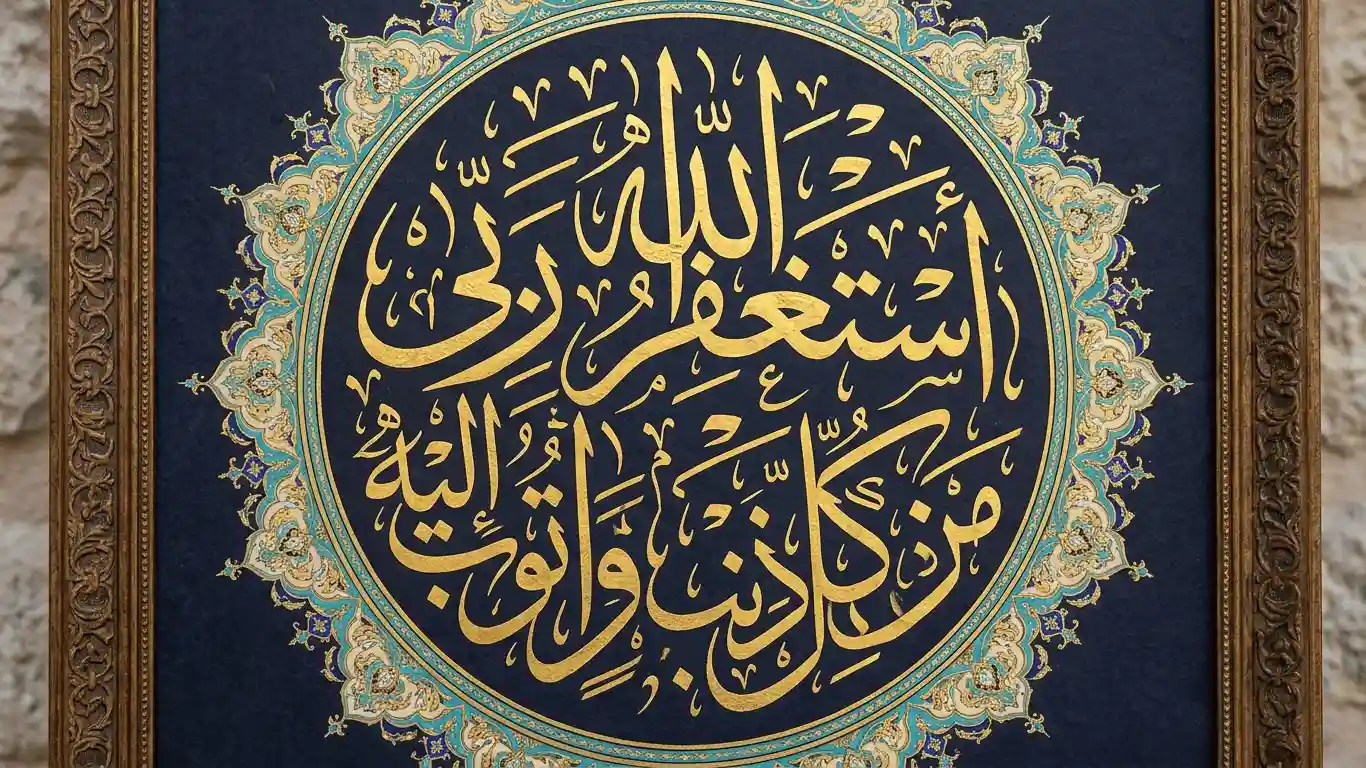
Have you ever wondered why the Prophet ﷺ repeated one short phrase every single day, even though he was already forgiven by Allah? That phrase is “Astaghfirullah Rabbi.” A few sincere words of Istighfar can purify the heart, erase sins, open doors of rizq, and bring deep spiritual peace into your life.
Here’s why this simple dua matters so much for you today.
What is Astaghfirullah Rabbi Dua?
Astaghfirullah Rabbi means “I seek forgiveness from Allah, my Lord.” It is a powerful form of Istighfar (seeking forgiveness) taught in Islam. Muslims recite it to repent from sins, purify the heart, and ask Allah for mercy, blessings, and relief from difficulties.
This short dhikr is among the most beloved acts of worship, and it was regularly practiced by the Prophet ﷺ.
Word-by-Word Meaning of Astaghfirullah Rabbi
The phrase Astaghfirullah Rabbi is composed of two Arabic words that express repentance and humility before Allah. Understanding the word-by-word meaning helps Muslims reflect on their sins and sincerely ask Allah for forgiveness with awareness and devotion.
Arabic Phrase
أَسْتَغْفِرُ اللّٰهَ رَبِّي
Transliteration
Astaghfirullāha Rabbī
Word by Word Meaning
| Arabic | Transliteration | English Meaning | Urdu Meaning |
|---|---|---|---|
| أستغفر | Astaghfiru | I seek forgiveness | میں بخشش مانگتا ہوں |
| الله | Allah | Allah | اللہ |
| ربي | Rabbi | My Lord | میرا رب |
Full Meaning
English:
“I seek forgiveness from Allah, my Lord.”
Urdu:
“میں اللہ اپنے رب سے بخشش مانگتا ہوں۔”
Astaghfirullah Rabbi Dua Meaning Transliteration and Translation
Arabic
أَسْتَغْفِرُ اللهَ رَبِّي مِنْ كُلِّ ذَنْبٍ وَأَتُوبُ إِلَيْهِ
Transliteration
Astaghfirullāha Rabbī min kulli dhanbin wa atūbu ilayh
English Translation
“I seek forgiveness from Allah, my Lord, for every sin, and I turn to Him in repentance.”
Urdu Meaning
“میں اللہ اپنے رب سے ہر گناہ کی بخشش مانگتا ہوں اور اسی کی طرف توبہ کرتا ہوں۔”
Word-by-Word Meaning
| Arabic | Transliteration | English | Urdu |
|---|---|---|---|
| أستغفر | Astaghfiru | I seek forgiveness | میں بخشش مانگتا ہوں |
| الله | Allah | Allah | اللہ |
| ربي | Rabbi | My Lord | میرا رب |
| من | Min | From | سے |
| كل | Kulli | Every | ہر |
| ذنب | Dhanbin | Sin | گناہ |
| و | Wa | And | اور |
| أتوب | Atūbu | I repent | میں توبہ کرتا ہوں |
| إليه | Ilayh | To Him | اسی کی طرف |
Quran Evidence for Istighfar
The Qur’an repeatedly commands believers to seek forgiveness from Allah. Istighfar removes sins, brings mercy, and even increases sustenance. Two powerful verses from the Qur’an explain how asking forgiveness opens doors of blessings, wealth, rain, and children.
Istighfar Brings Rizq and Blessings
Arabic
وَقُلْتُ اسْتَغْفِرُوا رَبَّكُمْ إِنَّهُ كَانَ غَفَّارًا
يُرْسِلِ السَّمَاءَ عَلَيْكُم مِّدْرَارًا
وَيُمْدِدْكُم بِأَمْوَالٍ وَبَنِينَ
Transliteration
Wa qultu istaghfirū rabbakum innahu kāna ghaffāra
Yursilis-samā’a ‘alaykum midrārā
Wa yumdidkum bi-amwālin wa banīn
English (Saheeh International)
“And said, ‘Ask forgiveness of your Lord. Indeed, He is ever a Perpetual Forgiver. He will send rain from the sky upon you in showers and give you increase in wealth and children.’”
Urdu (Fateh Muhammad Jalandhari)
“اور میں نے کہا اپنے پروردگار سے بخشش مانگو، بے شک وہ بڑا بخشنے والا ہے۔ وہ تم پر آسمان سے موسلا دھار بارش برسائے گا اور تمہیں مال اور اولاد سے مدد دے گا۔”
Source: Surah Nuh (71:10-12)
Istighfar Removes Hardship
Arabic
وَأَنِ اسْتَغْفِرُوا رَبَّكُمْ ثُمَّ تُوبُوا إِلَيْهِ يُمَتِّعْكُم مَّتَاعًا حَسَنًا
Transliteration
Wa anis-taghfirū rabbakum thumma tūbū ilayh
English
“And ask forgiveness of your Lord and repent to Him. He will let you enjoy a good provision.”
Urdu
“اور اپنے رب سے بخشش مانگو پھر اس کی طرف توبہ کرو، وہ تمہیں اچھی زندگی عطا کرے گا۔”
Source: Surah Hud (11:3)
Hadith About Seeking Forgiveness
The Prophet ﷺ made Istighfar daily and encouraged Muslims to do the same. Authentic hadith explain that seeking forgiveness regularly removes sins, relieves hardship, and opens unexpected doors of provision and blessings.
The Prophet ﷺ Practiced Istighfar Daily
Arabic
وَاللَّهِ إِنِّي لَأَسْتَغْفِرُ اللَّهَ وَأَتُوبُ إِلَيْهِ فِي الْيَوْمِ أَكْثَرَ مِنْ سَبْعِينَ مَرَّةً
Transliteration
Wallāhi innī la-astaghfirullāha wa atūbu ilayhi fil-yawm akthara min sab‘īna marratan
English
“By Allah, I seek forgiveness from Allah and repent to Him more than seventy times a day.”
Urdu
“اللہ کی قسم! میں ایک دن میں ستر مرتبہ سے زیادہ اللہ سے استغفار اور توبہ کرتا ہوں۔”
Source: Sahih Bukhari
Istighfar Brings Relief from Difficulties
Arabic
مَنْ لَزِمَ الِاسْتِغْفَارَ جَعَلَ اللَّهُ لَهُ مِنْ كُلِّ ضِيقٍ مَخْرَجًا
Transliteration
Man lazimal-istighfār ja‘alallāhu lahu min kulli dīqin makhrajā
English
“Whoever constantly seeks forgiveness, Allah will make a way out for him from every hardship.”
Urdu
“جو شخص کثرت سے استغفار کرے، اللہ اس کے لئے ہر تنگی سے نکلنے کا راستہ بنا دیتا ہے۔”
Source: Sunan Abu Dawud
The Spiritual Habit Loop of Istighfar
The Spiritual Habit Loop explains how regular Istighfar transforms a Muslim’s life. When a believer repeatedly says Astaghfirullah with sincerity, the heart becomes purified, Allah’s blessings increase, and the habit becomes a daily spiritual routine that strengthens faith and inner peace.
Step 1 – Istighfar
You begin by acknowledging your mistakes.
Step 2 – Heart Purification
Repeated repentance softens the heart.
Step 3 – Barakah
Allah opens doors of mercy and provision.
Step 4 – Consistency
The dhikr becomes a lifelong habit.
Benefits of Astaghfirullah Rabbi
Reciting Astaghfirullah regularly brings many spiritual benefits. It erases sins, increases blessings, opens doors of rizq, removes stress, and strengthens the connection between a believer and Allah. This simple phrase can completely transform a person’s spiritual life.
Major Benefits
✔ Forgiveness of sins
✔ Peace of heart
✔ Increase in sustenance
✔ Removal of hardships
✔ Protection from punishment
✔ Strengthening faith
According to Imam Ibn Kathir, the verses in Surah Nuh show that Istighfar is a means for worldly and spiritual blessings.
Powerful Wazifa of Astaghfirullah Rabbi
A simple wazifa of Astaghfirullah Rabbi is to recite it daily with sincerity and concentration. Many scholars recommend repeating Istighfar 100 times after Fajr or before sleeping to seek forgiveness, remove worries, and attract Allah’s blessings.
Recommended Wazifa
1️⃣ After Fajr prayer, recite
Astaghfirullah Rabbi 100 times.
2️⃣ Reflect on your mistakes and repent sincerely.
3️⃣ Make dua after Istighfar.
How Many Times Should You Say Astaghfirullah?
Islam does not fix a strict number for Istighfar, but many scholars recommend saying Astaghfirullah at least 100 times daily. The Prophet ﷺ himself sought forgiveness more than seventy times each day, showing the importance of constant repentance.
Daily Istighfar Challenge
Try this simple 7-day spiritual challenge:
Day 1-2 → 50 Istighfar daily
Day 3-4 → 100 Istighfar daily
Day 5-7 → 200 Istighfar daily
Within a few days many people notice:
- inner peace
- emotional relief
- stronger connection with Allah
Remember the Ummah in Your Duas
Along with seeking forgiveness, Muslims should also pray for oppressed believers around the world. Powerful duas for the people of Gaza and Palestine can be found here:
People Also Ask:
Astaghfirullah Rabbi means “I seek forgiveness from Allah, my Lord.” It is a short dua used by Muslims to repent from sins and ask Allah for mercy.
Yes. The Qur’an in Surah Nuh explains that seeking forgiveness can bring blessings such as rain, wealth, and children.
Istighfar can be recited anytime, but the best moments include after prayers, before sleeping, and during the last third of the night.
Scholars commonly recommend 100 times daily, following the practice of the Prophet ﷺ.
A Final Reflection
The words Astaghfirullah Rabbi may be short, but their impact is enormous. Every time you say them sincerely, sins are erased, the heart becomes lighter, and Allah’s mercy draws closer.
So start today.
Say it once.
Then say it again.
And let your heart return to Allah. ✨
