
The Best Dua for Exams: Where Effort Meets Faith
Every exam season, students search for the perfect dua for exams to help them pass. However, in Islamic tradition, making supplication (dua) is not viewed as a magic spell to bypass hard work. It is a comprehensive psychological, spiritual, and practical framework.
A deep analysis of making dua for success in exams reveals that it is about aligning human effort with divine reliance—a concept known as Tawakkul. You do the work, and you trust Allah with the results.
Here is the ultimate “Mindset & Timeline” framework to help you achieve academic and spiritual success, fully optimized with translations to help you memorize and understand every word.
Part 1: The Psychological Anchor of Supplication
From a psychological standpoint, reciting specific duas during high-stress study blocks or right before walking into an exam hall serves as a powerful grounding technique. Here is why this practice is so deeply effective:
- Regulating the Nervous System: Exam panic triggers a “fight or flight” response, which temporarily shuts down the prefrontal cortex—the part of your brain responsible for logic and memory recall. Pausing to take a deep breath and recite a familiar, rhythmic prayer helps lower cortisol levels and signals to your brain that you are safe.
- Cognitive Reframing: Duas force a shift in perspective. Instead of focusing on the fear of failure, the student’s mind is redirected toward concepts of divine mercy, ease, and purposeful knowledge.
- Outcome Independence: True dua comes with the understanding that whatever happens is ultimately part of a broader, beneficial plan (Qadr). This softens the blow of disappointment if a grade isn’t what you hoped for, framing it as a redirection rather than a dead end.
Part 2: The Chronological Toolkit for Students
The Islamic tradition provides specific prayers for different phases of the learning process, ensuring that the student remains anchored from the first study session to the moment the results are released.
Quick Reference Timeline
| Phase | Purpose | Transliteration |
| 1. Starting to Study | Focus & Growth | Rabbi zidnee ‘ilma |
| 2. After Studying | Retention | Allahumma inni astaudi’uka ma qara’tu… |
| 3. Exam Morning | Clarity | Rabbi ishrah li sadri… |
| 4. Hitting a Blank | Finding Ease | Allahumma la sahla illa… |
| 5. Post-Exam | Gratitude | Alhamdulillah |
Part 3: Deep Dive Translations (Arabic, English, Urdu & Hindi)
Understanding the exact meaning of what you are reciting deepens your connection and focus. Here are the complete prayers in Arabic text, alongside their transliterations and multi-language translations.
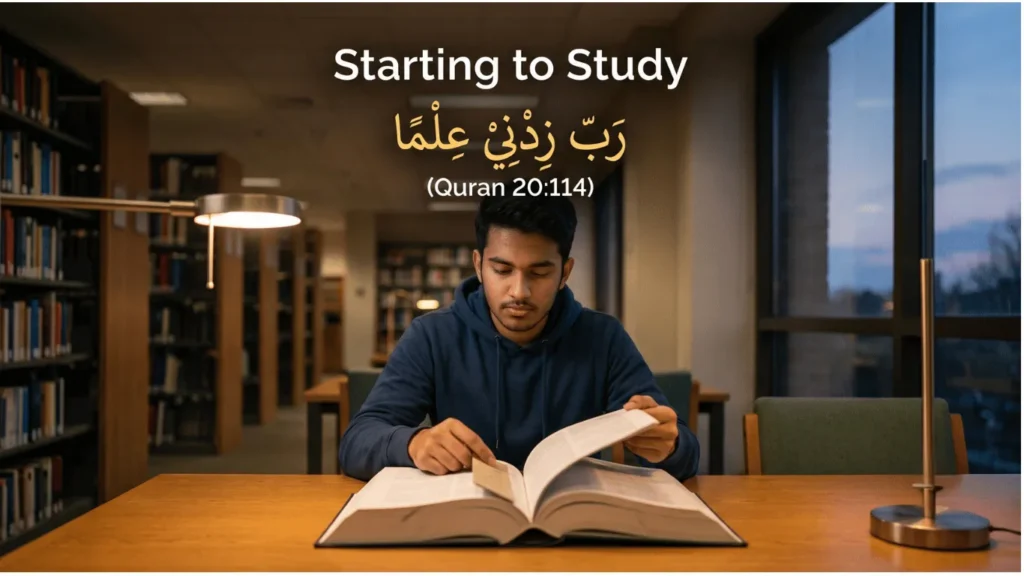
1. Starting to Study (For Focus & Growth)
Recite this short Quranic verse before opening your books to seek divine expansion of your intellect.
- Arabic Text: رَّبِّ زِدْنِي عِلْمًا
- Transliteration: Rabbi zidnee ‘ilma
- English: “My Lord, increase me in knowledge.” (Quran 20:114)
- Urdu (اردو): اے میرے رب! میرے علم میں اضافہ فرما۔
- Hindi (हिंदी): ऐ मेरे रब! मेरे ज्ञान (इल्म) में वृद्धि कर।
2. After Studying (For Memory & Retention)
Use this dua when closing your books to entrust your hard work to Allah, asking Him to return the information to you when you need it most.
- Arabic Text: اللَّهُمَّ إِنِّي أَسْتَوْدِعُكَ مَا قَرَأْتُ وَمَا حَفِظْتُ، فَرُدَّهُ عَلَيَّ عِنْدَ حَاجَتِي إِلَيْهِ
- Transliteration: Allahumma inni astaudi’uka ma qara’tu wa ma hafiztu, faruddahu ‘alayya ‘inda hajati ilayhi.
- English: “O Allah, I entrust You with what I have read and what I have memorized. Bring it back to me when I am in need of it.”
- Urdu (اردو): اے اللہ! جو کچھ میں نے پڑھا اور یاد کیا ہے وہ میں تیرے سپرد کرتا ہوں، پس جب مجھے اس کی ضرورت ہو تو وہ مجھے لوٹا دے۔
- Hindi (हिंदी): ऐ अल्लाह! जो कुछ मैंने पढ़ा और याद किया है, वह मैं आपको सौंपता हूँ, अतः जब मुझे इसकी आवश्यकता हो तो इसे मुझे लौटा दें।

3. Exam Morning (For Clarity & Communication)
Recite this prayer of Prophet Musa (Moses) when heading to the exam hall. It is especially powerful for written essays, oral exams, or presentations.
- Arabic Text: رَبِّ اشْرَحْ لِي صَدْرِي وَيَسِّرْ لِي أَمْرِي وَاحْلُلْ عُقْدَةً مِّن لِّسَانِي يَفْقَهُوا قَوْلِي
- Transliteration: Rabbi ishrah li sadri, wa yassir li amri, wahlul ‘uqdatan min lisani, yafqahu qawli.
- English: “My Lord, expand my chest, ease my task, and untie the knot from my tongue, that they may understand my speech.” (Quran 20:25-27)
- Urdu (اردو): اے میرے رب! میرا سینہ کھول دے، اور میرا کام میرے لیے آسان کر دے، اور میری زبان کی گرہ کھول دے، تاکہ وہ میری بات سمجھ سکیں۔
- Hindi (हिंदी): ऐ मेरे रब! मेरा सीना खोल दे, और मेरा काम मेरे लिए आसान कर दे, और मेरी ज़बान की गाँठ खोल दे, ताकि वे मेरी बात समझ सकें।

4. Hitting a Blank in the Exam (For Finding Ease)
If you encounter a difficult question and your mind goes blank, take a deep breath and recite this to remove the mental block.
- Arabic Text: اللَّهُمَّ لاَ سَهْلَ إِلاَّ مَا جَعَلْتَهُ سَهْلاً، وَأَنْتَ تَجْعَلُ الْحَزْنَ إِذَا شِئْتَ سَهْلاً
- Transliteration: Allahumma la sahla illa ma ja’altahu sahla, wa anta taj’alul-hazna idha shi’ta sahla.
- English: “O Allah, nothing is easy except what You make easy, and You make the difficult easy if You wish.”
- Urdu (اردو): اے اللہ! کوئی کام آسان نہیں مگر جسے تو آسان کر دے، اور تو جب چاہے مشکل کو آسان کر دیتا ہے۔
- Hindi (हिंदी): ऐ अल्लाह! कोई काम आसान नहीं सिवाय उसके जिसे तू आसान कर दे, और तू जब चाहे मुश्किल को आसान कर देता है।

5. Post-Exam (For Surrendering the Outcome)
Once the paper is handed in, release your anxiety. The effort is done; the result is now in divine hands.
- Arabic Text: الْحَمْدُ لِلَّهِ
- Transliteration: Alhamdulillah
- English: “All praise is for Allah.”
- Urdu (اردو): تمام تعریفیں اللہ کے لیے ہیں۔
- Hindi (हिंदी): सारी प्रशंसा अल्लाह के लिए है।
The Ultimate Goal: “Beneficial” Knowledge
It is deeply insightful that many of these prayers do not specifically ask for an “A+” or a perfect score. Instead, they ask for clarity, retention, and beneficial knowledge.
A core supplementary dua often recited is: “O Allah, benefit me with what You have taught me, teach me what will benefit me, and increase me in knowledge.” This reminds the student that an exam is simply a hurdle; the true ultimate goal is to acquire knowledge that makes you a more capable, helpful, and grounded human being in the real world.
