When you wake up in New York at 6 AM and feel a sharp physical ache or overwhelming stress before your day even starts, this ancient dua from Prophet Muhammad (PBUH) becomes your first weapon against anxiety and pain. Whether you are rushing out the door to catch the London Underground at 8 AM GMT or navigating heavy traffic on the US Pacific Coast, dealing with physical illness requires more than just a quick medical fix. For Western Muslims, diaspora communities, and converts building their faith in secular societies, bridging the gap between modern medical care and spiritual healing is essential.
Here is your comprehensive, scholar-backed guide to the authentic dua for pain, designed to bring immediate spiritual relief and focus to your modern routine.
What Is the Authentic Dua for Pain?
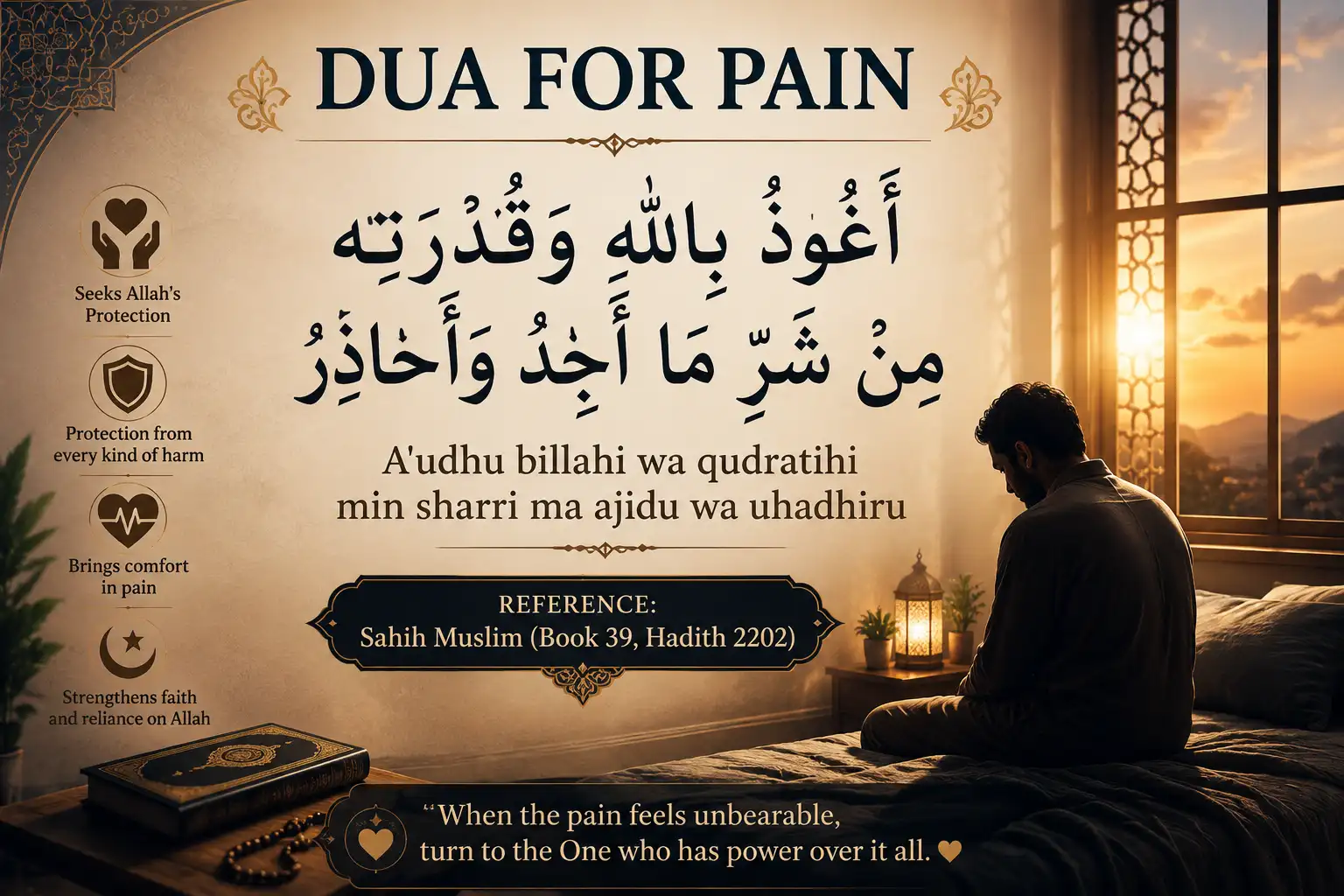
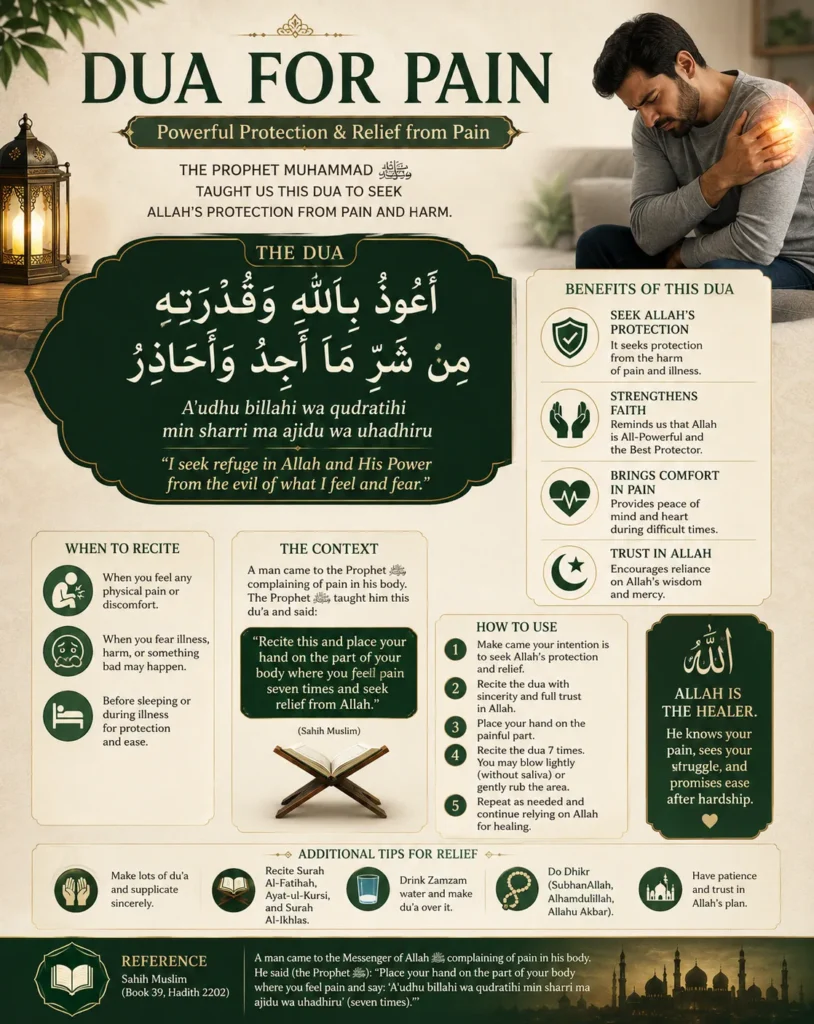
The most powerful and authentic dua for pain involves placing your hand directly on the aching part of your body, saying “Bismillah” three times, and reciting a specific Prophetic supplication seven times to seek divine protection.
This practice originates directly from the Sunnah. In Sahih Muslim (Book 39, Hadith 2202), a companion named Uthman bin Abi Al-As complained to the Prophet Muhammad (PBUH) about a severe pain he had felt in his body since he became Muslim. The Prophet (PBUH) provided him with this exact, physical-spiritual prescription.
Here is why this matters for you: it combines physical touch—which modern science recognizes for its ability to soothe the nervous system—with absolute reliance on the Creator.
Multilingual Proof Format: The Core Dua
- Arabic: بِسْمِ اللَّهِ (٣ مَرَّات) أَعُوذُ بِاللَّهِ وَقُدْرَتِهِ مِنْ شَرِّ مَا أَجِدُ وَأُحَاذِرُ (٧ مَرَّات)
- Transliteration: Bismillah (3 times). A’udhu billahi wa qudratihi min sharri ma ajidu wa uhadhiru (7 times).
- English: In the Name of Allah (three times). I seek refuge with Allah and with His Power from the evil that I find and that I fear (seven times).
- Urdu: اللہ کے نام سے (تین بار)۔ میں اللہ کی ذات اور اس کی قدرت کی پناہ مانگتا ہوں اس برائی سے جو میں محسوس کرتا ہوں اور جس سے ڈرتا ہوں (سات بار)۔
How Many Times to Recite This Dua?
You should recite “Bismillah” exactly three times, followed by the main supplication exactly seven times. Sticking strictly to this Sunnah count aligns your practice with the Prophetic tradition, establishing a focused spiritual habit that calms the mind.
For those looking for variations based on different traditional texts, some scholars also reference a slightly expanded wording that answers the search query for the bismillahi wa billahi auzu billahi wa qudratihi min sharri ma feeha variation. The core meaning remains the same: a profound declaration of trust in Allah’s power over our physical ailments.
Quran Verse for Stress UK Muslims and US Believers Rely On
The Quran verse for stress and healing is found in Surah Ash-Shu’ara (Chapter 26, Verse 80). It states that ultimate healing comes from Allah alone, providing deep psychological comfort for believers facing both physical illness and mental anxiety.
When managing a demanding desk job in Los Angeles or facing a stressful morning commute in Manchester, physical pain is often magnified by mental exhaustion. Turning to the Quran recalibrates our perspective.
Multilingual Proof Format: Surah Ash-Shu’ara (26:80)
- Arabic: وَإِذَا مَرِضْتُ فَهُوَ يَشْفِينِ
- Transliteration: Wa idha maridtu fahuwa yashfeen.
- English: And when I am ill, it is He who cures me.
- Urdu: اور جب میں بیمار ہوتا ہوں تو وہی مجھے شفا دیتا ہے۔
Let’s understand the real meaning of this Arabic verse. In his classical exegesis, Tafseer Ibn Kathir highlights the profound humility in this statement made by Prophet Ibrahim (Abraham). Ibn Kathir explains that Ibrahim attributed illness to himself (“when I am ill”) out of etiquette before Allah, while attributing the cure entirely to the Creator (“it is He who cures me”). For a modern believer dealing with chronic back pain at the office or sudden illness, this teaches us to actively seek medical treatment while firmly believing the actual cure rests in Allah’s hands.
Faith in American and British Life: The Daily Application
Integrating these practices into a Western lifestyle requires intentionality. How to recite dua for American Muslims balancing work, school, and family? It takes less than 90 seconds.
This becomes important when you look at your morning routine. Imagine you wake up at 7 AM EST in Washington, D.C., with a migraine. Before reaching for your phone to check emails, you place your right hand on your forehead. You breathe deeply, saying Bismillah three times, slowing your heart rate. You recite the dua seven times. You are actively utilizing a 1,400-year-old tradition to manage cortisol levels and center your faith before stepping into a secular corporate environment.
Whether you are a born Muslim living in the diaspora, or a recent convert building your daily habits, this physical action anchors your faith in your immediate reality. It is a portable, completely free, and highly effective spiritual medicine.
Building a Comprehensive Healing Strategy
While the specific dua for localized pain is powerful, maintaining spiritual and physical health requires a holistic approach to your daily supplications. We recommend expanding your knowledge to cover all aspects of wellness.
Read our full guide on the dua for health to learn how to ask Allah for long-term physical, mental, and spiritual vitality. Additionally, if you are caring for an elderly parent or visiting a sick community member, you need to know the specific prayers for visiting the ill. Check out our comprehensive breakdown of the Bimari ki dua for patient (Allahumma Rabban Naas Azhibil Basi) to comfort those you love.
People Also Ask:
The morning dua is: “All praise is for Allah who gave us life after having taken it from us and unto Him is the resurrection.” In Arabic, it is Alhamdulillahil-ladhi ahyana ba’da ma amatana wa ilaihin-nushur.
Surah Ar-Ra’d (13:28) is the most powerful verse for anxiety: “Verily, in the remembrance of Allah do hearts find rest.” Reciting this helps calm the nervous system during panic attacks or heavy stress.
For the specific pain dua, you must recite Bismillah 3 times, followed by “A’udhu billahi wa qudratihi min sharri ma ajidu wa uhadhiru” exactly 7 times while placing your hand on the pain.
Yes. Before starting work, recite: “O Allah, I ask You for beneficial knowledge, goodly provision, and acceptable deeds.” (Allahumma inni as’aluka ‘ilman nafi’an, wa rizqan tayyiban, wa ‘amalan mutaqabbalan).
Prophet Muhammad (PBUH) said that whoever performs the Fajr (morning) prayer is under the protection of Allah for the rest of the day (Sahih Muslim). Starting your day with prayer shields you from harm.
Ready to build a stronger daily habit?
Do not let the stress of modern life disconnect you from the healing power of the Sunnah. Download our Free Daily Dua Guide to keep these authentic prayers saved on your phone, ensuring you have the exact Arabic, English, and transliterations ready whenever pain or anxiety strikes.

1 thought on “Dua for pain — Bismillahi wa billahi auzu billahi wa qudratihi min”