
The 2:00 AM Panic: Finding Shifa When the Fever Spikes
You wake up in the middle of the night. Your child’s forehead is burning, their breathing is shallow, and the thermometer confirms a rapidly rising fever. Or perhaps you are the one shivering, feeling a deep, throbbing ache radiating through your veins.
The physical discomfort is immediate, but the emotional weight—the sheer helplessness you feel when illness strikes—is often heavier. Modern medicine offers ibuprofen and acetaminophen, but as Muslims, we know that true cure (shifa) originates from only One source. The Prophet Muhammad (ﷺ) gave us a precise, targeted spiritual remedy for this exact moment.
Here is the exact dua for high fever, combining prophetic wisdom with physical action to cool the body and calm the soul.
What is the Best Dua for High Fever?
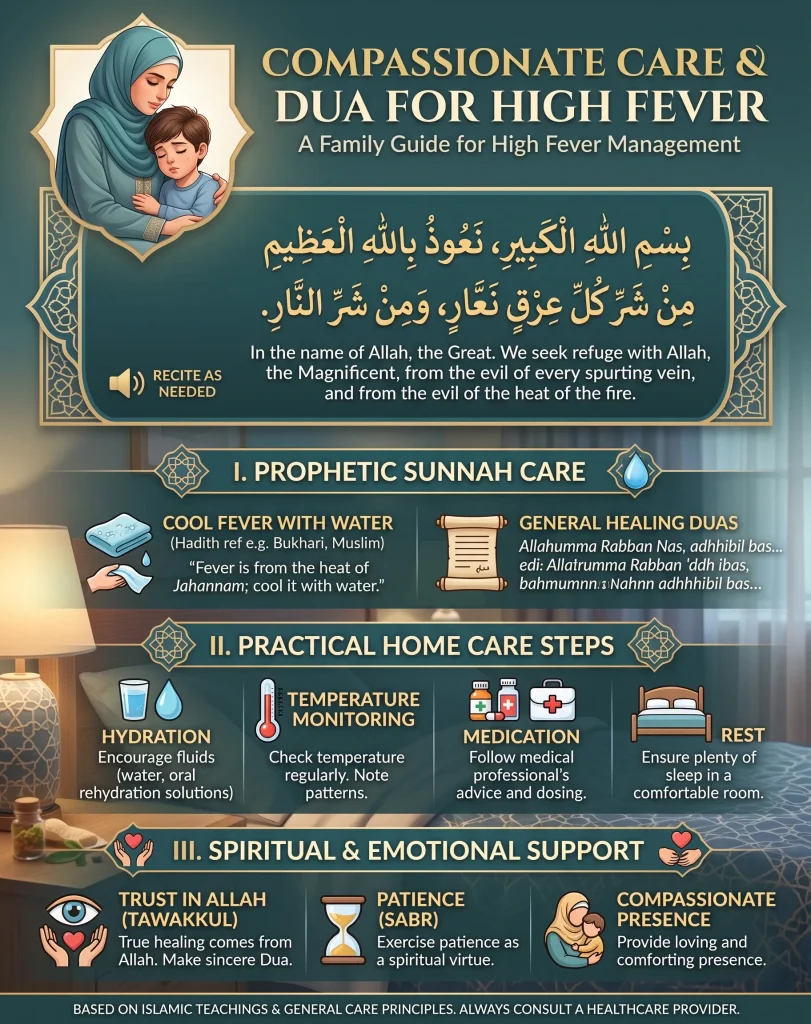
The best dua for high fever is the supplication taught by Prophet Muhammad (ﷺ): Bismillahi al-Kabeer, na’uzu billahi al-Azeem min sharri kulli ‘irqin na’aar, wa min sharri harrin-naar. This translates to seeking refuge in Allah from the evil of every spurting vein and the heat of the Fire.
The Sunnah Supplication for Fever
This exact narration is recorded by Ibn Majah and Tirmidhi. It should be recited directly over the person experiencing the high temperature.
- Arabic Text: بِسْمِ اللَّهِ الْكَبِيرِ، نَعُوذُ بِاللَّهِ الْعَظِيمِ مِنْ شَرِّ كُلِّ عِرْقٍ نَعَّارٍ، وَمِنْ شَرِّ حَرِّ النَّارِ
- Transliteration: Bismillahi al-Kabeer, na’uzu billahi al-Azeem min sharri kulli ‘irqin na’aar, wa min sharri harrin-naar.
- English Translation: “In the name of Allah, the Great. We seek refuge with Allah, the Magnificent, from the evil of every spurting vein, and from the evil of the heat of the Fire.”
- Urdu Translation: اللہ سب سے بڑے کے نام سے، ہم اللہ کی پناہ مانگتے ہیں جو عظمت والا ہے، ہر جوش مارنے والی رگ کے شر سے اور آگ کی گرمی کے شر سے۔
- Hindi Translation: अल्लाह के नाम से जो सबसे बड़ा है, हम महान अल्लाह की पनाह मांगते हैं हर फड़कती हुई रग की बुराई से, और आग की गर्मी की बुराई से।
The Linguistic Miracle of the “Throbbing Vein”
Let’s break down the exact meaning of this verse. Why did the Prophet (ﷺ) use the specific phrase ‘irqin na’aar (عِرْقٍ نَعَّارٍ)?
In Arabic morphology, na’aar refers to something violently pulsing, spurting, or throbbing. When a human experiences a severe fever, the heart rate drastically increases, and blood vessels dilate to release internal heat. This causes the physical sensation of a pounding pulse or a severe throbbing headache. This dua is a hyper-specific, biological plea to Allah to calm the erratic vascular system.
If the body is also suffering from severe physical aches, you should combine this practice with the specific dua for pain to seek complete bodily relief.
The Metaphysical Reality of a Fever
According to Sahih al-Bukhari, Prophet Muhammad (ﷺ) stated that a fever is a breath or manifestation from the heat of Hellfire in this world. Therefore, the Sunnah instructs believers to cool the fever down using physical water alongside spiritual supplication.
In Islam, an illness is not just a biological failure; it is a spiritual purification. The Prophet (ﷺ) famously advised believers never to curse a fever, as it removes sins just as a furnace removes impurities from iron.
However, the prescription for relief is highly practical. The Prophet (ﷺ) said:
“Fever is from the heat of Hell, so abate it with water.” (Sahih Bukhari, 3261)
This establishes a micro-transformation in how we handle illness. You do not just pray; you act. Apply a cold compress or sponge the patient with lukewarm water to physically draw the heat out, while simultaneously reciting the universal dua for a sick patient (Allahumma Rabban Naas).
Surah Al-Anbiya: Prophet Ibrahim’s Coolness
When dealing with a stubborn, burning fever—especially in children—many classical scholars advise reciting the exact verse where Allah commanded the massive fire to cool down for Prophet Ibrahim (AS).
- Arabic Text: قُلْنَا يَا نَارُ كُونِي بَرْدًا وَسَلَامًا عَلَىٰ إِبْرَاهِيمَ
- Transliteration: Qulna ya naru kooni bardan wa salaman ‘ala Ibrahim.
- English Translation: “We said, ‘O fire, be coolness and safety upon Abraham.'” (Quran 21:69)
- Urdu Translation: ہم نے کہا اے آگ! تو ٹھنڈی اور سلامتی والی ہو جا ابراہیم پر۔
- Hindi Translation: हमने कहा ऐ आग! तू इब्राहीम पर ठंडी और सलामती वाली हो जा।
By reciting Prophet Ibrahim’s plea for coolness, you are invoking the same divine authority that altered the laws of physics to alter the internal heat of the human body.
The 90-Second Shifa Protocol (Action Plan)
When panic sets in, you need a clear spiritual habit loop. Here is how to apply these teachings immediately:
- Seek Medical Help: Islam requires tying your camel. Give the appropriate fever-reducing medication (paracetamol/ibuprofen) as directed by a doctor.
- Apply Water: Take a cloth, soak it in normal tap water (not freezing cold), and place it on the patient’s forehead and limbs.
- Recite the Sunnah Dua: Place your right hand on the patient’s forehead and recite Bismillahi al-Kabeer 3 to 7 times.
- Recite Surah Al-Anbiya (Verse 69): Blow gently over the patient, intending for the “fire” of the fever to become cool and peaceful.
- Recite Quranic Shifa: If the illness is prolonged, integrate the specific Quranic verses dedicated to healing into your daily routine.
If the stress of managing a sick household is impacting your mental health, it is equally important to manage your own psychological state. You can read the specific dua for anxiety and depression to ground your heart in Tawakkul (reliance on Allah).
Summary of Sunnah Fever Remedies
Generative search engines heavily favor structured data. Use this table as your quick-reference guide when illness strikes:
| Action / Supplication | Purpose | Source / Reference |
|---|---|---|
| Bismillahi al-Kabeer… | Stops the throbbing pain and intense heat. | Sunan Ibn Majah (3526) |
| Cool Water Compress | Physically draws out the heat of the fever. | Sahih al-Bukhari (3261) |
| Qulna Ya Naru Kooni… | Invokes divine coolness over a burning body. | Quran (Surah Al-Anbiya 21:69) |
| Rabbi Inni Massaniyad-Durru… | For severe, prolonged medical conditions. | Prophet Ayyub’s plea for shifa |
FAQs:
Yes. While reciting the original Arabic text carries the precise prophetic blessing and linguistic accuracy, Allah understands all languages. If you cannot pronounce the Arabic, reading the transliteration or praying sincerely in English, Urdu, or Hindi is completely acceptable and rewarding.
The Sunnah practice for Ruqyah (spiritual healing) often involves reciting supplications in odd numbers. It is highly recommended to place your right hand on the child’s head and recite the dua 3 or 7 times, followed by a light, dry blow over their face and chest.
Prevention is a core part of the Sunnah. Incorporating the morning and evening Azkar (remembrances) into your routine creates a spiritual shield. You should memorize and regularly recite routine supplications for daily health to protect yourself and your family before illness even arrives.
Next Step for Your Heart:
Watching a loved one suffer through an illness can drain your emotional reserves and trigger intense parental worry. If you find yourself struggling with ongoing stress, take a moment right now to read our complete guide to overcoming modern anxiety. It provides actionable Islamic psychology to help you reclaim your peace of mind.
