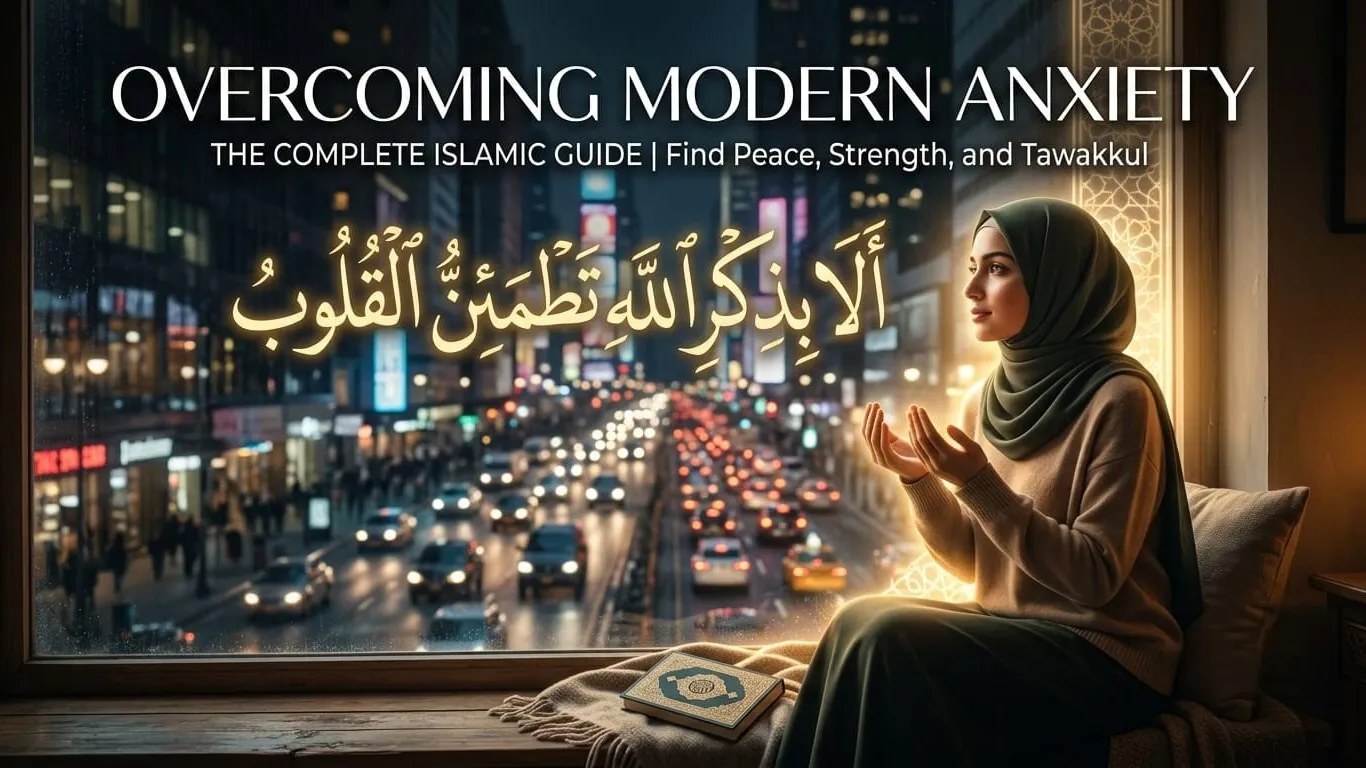
Your alarm goes off at 6:00 AM, and before your feet even touch the floor, your chest is already tight. The screen lights up with urgent emails, group chat notifications, and the looming weight of the day ahead. Whether you are bracing for the relentless pace of a corporate office in New York or navigating the damp chill of a morning commute on the London Underground, the modern world is fundamentally designed to keep you in a state of perpetual fight-or-flight.
We live in an era of unprecedented convenience, yet we are drowning in burnout. When the pressure mounts, society tells us to simply manage it. We download mindfulness apps, read up on emotional intelligence, and try to “life-hack” our way out of exhaustion. But when office politics turn toxic, financial stresses pile up, and you feel entirely cornered by life, those surface-level solutions often shatter.
You are left feeling outmaneuvered, overwhelmed, and spiritually drained.
But what if the most comprehensive framework for navigating this exact psychological overload was established 1,400 years ago?
Islam does not view anxiety as a personal failure, nor does it offer empty platitudes telling you to just “be happy.” Instead, it acknowledges the heavy reality of this world and provides a profound, practical system for navigating it. The practices of Prophet Muhammad (PBUH) are not just rituals; they are anchors for the modern mind.
This guide explores the intersection of everyday mental health and Islamic spirituality. We will break down how to transform ancient supplications into your strongest defense against modern anxiety.
Starting the Day: Grounding Your Morning Routine
The first hour of your day dictates your psychological baseline. Reaching immediately for your phone floods your brain with cortisol, putting you in a reactive state. Islamic tradition interrupts this cycle through intentional, physical grounding.
The Psychology of Wudu
Before you check a single email, the act of Wudu (ablution) forces you to disconnect from digital noise and reconnect with your physical body. It brings Khushu (presence and focus) to a distracted mind. Transforming a routine physical wash into a profound spiritual anchor is your first defense against the day’s stress. Learn the powerful Dua after wudu to lock in this mindset before you even leave the house.
Intentionality Through Supplication
Once grounded, the next step is setting your intention. Supplication is not just repeating words; it is an active psychological release. It is the verbal acknowledgment that while you will put in the effort, you are handing the ultimate outcome over to a higher power. Master this practice with our Step-by-step guide on how to make dua.
Surviving Workplace Toxicity and Burnout
The modern workplace can be a breeding ground for anxiety. Between passive-aggressive emails, toxic team dynamics, and the constant fear of falling behind, maintaining your peace requires spiritual armor.
Protecting Your Peace from Slander
When you are dragged into workplace drama, office politics, or toxic WhatsApp groups, the mental toll is heavy. Finding Sabr (patience) during corporate burnout is incredibly difficult when surrounded by negativity. This is exactly what the revelation of Surah Humazah addresses, offering a shield against the culture of backbiting and slander.
When You Feel Completely Cornered
Sometimes the environment becomes so toxic that human effort simply runs out. You might face an injustice you cannot fight or a project that is failing despite your best efforts. In these moments of complete exhaustion, reciting Rabbi inni maghloobun fantasir (Surah Al-Qamar 54:10) provides a profound lifeline. It is the ultimate declaration of seeking divine intervention when your own resources are depleted.
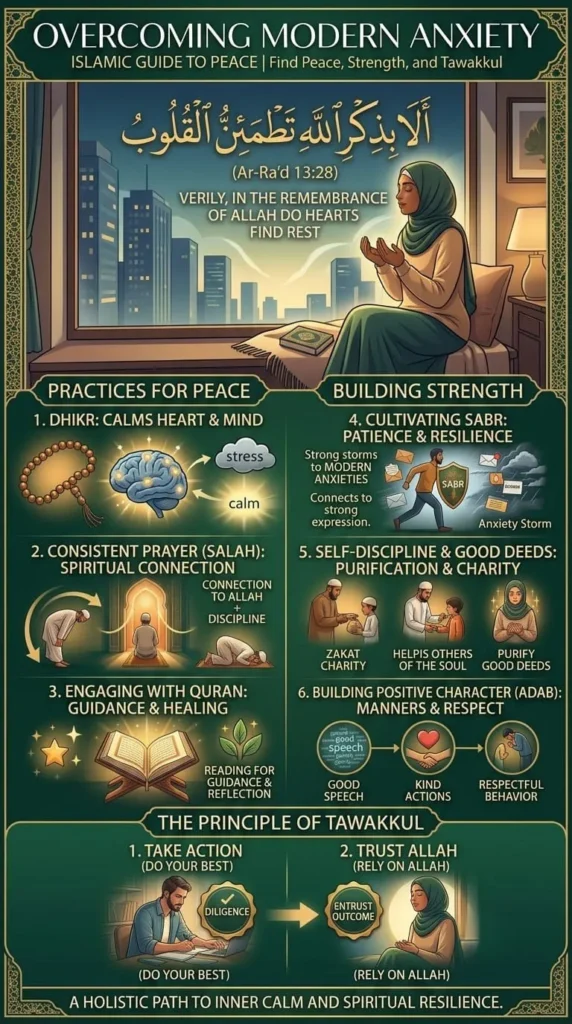
Key Takeaway: Tawakkul (trusting in Allah) is not passive. It is doing everything in your power to succeed, and then finding complete peace in knowing the final result is out of your hands.
Managing the Physical Toll of Modern Stress
Unchecked mental anxiety does not stay in the mind; it manifests in the body. The tight shoulders, the tension headaches, and the physical exhaustion are your body’s response to carrying too much weight.
The prophetic tradition recognizes this deep connection between the mind and the physical body. When stress turns into a sharp physical ache, the Dua for pain (Bismillahi wa billahi…) acts as a spiritual and psychological soothe, reminding you that ultimate healing and relief come from a source greater than your immediate environment.
Academic and Professional Pressures
Whether you are navigating heavy university study loads, sitting for professional certifications, or trying to hit demanding corporate KPIs, the pressure to perform is relentless.
In Islam, effort must meet faith. Making dua is not a magic spell to bypass the hard work of studying or preparing; it is a framework for ensuring your hard work yields the best possible results. If you are struggling with imposter syndrome or performance anxiety, integrating the Best duas for exams and studying success will help you lock in a healthy, focused mindset.
Relinquishing Control: Trusting the Ultimate Plan
At the core of modern anxiety is the illusion of control. We overthink, over-plan, and stress because we believe we must orchestrate every detail of our lives to be safe.
When you feel outmaneuvered by life’s sudden shifts—a lost job, a delayed train, a failed project—remember that the ultimate planner is always at work. The most liberating shift in emotional intelligence is realizing you do not have to carry the weight of the world. Find comfort in the profound truth of Wamakaru wamakarallah wallahu khairul makirin.
Your anxiety wants you to focus on the chaos; your faith asks you to focus on the Creator of order.
Share Your Morning Anchor
Navigating the modern world is heavy, but you don’t have to carry it alone. Which of these Duas do you turn to when the morning commute feels overwhelming?
Drop a comment below and let us know your routine. If you found this guide helpful, tap the share button to send it to a friend, coworker, or family member who might need a reminder today that Allah is the best of planners.

7 thoughts on “The complete Islamic guide to overcoming modern anxiety”