Waking up with a heavy chest is a reality for many. Whether you are a college student facing crushing academic pressure, a working professional dealing with corporate burnout, or a diaspora parent managing cultural expectations in a Western society, the weight of the “now” can feel suffocating. When you are trapped in a cycle of immediate failure or intense stress, you become convinced that your current pain is permanent.
The cure for this specific paralysis is not just positive thinking. It is an active, profound spiritual reframing found directly in Surah Ad-Duha (Quran 93:4). This verse is a timeless, divine guarantee that your current hardship is merely the first chapter, not the end of your story.
Here is the exact linguistic, psychological, and spiritual breakdown of why this single verse is the ultimate anchor for modern believers.
What Does Walal Akhiratu Khairul Laka Minal Ula Mean?
The phrase means “And the Hereafter [or the future] is better for you than the first [life or the past].” Found in Quran 93:4, it is Allah’s direct promise to Prophet Muhammad (PBUH) that his upcoming days will bring far more peace and success than his early struggles.
Quran 93:4 (Surah Ad-Duha)
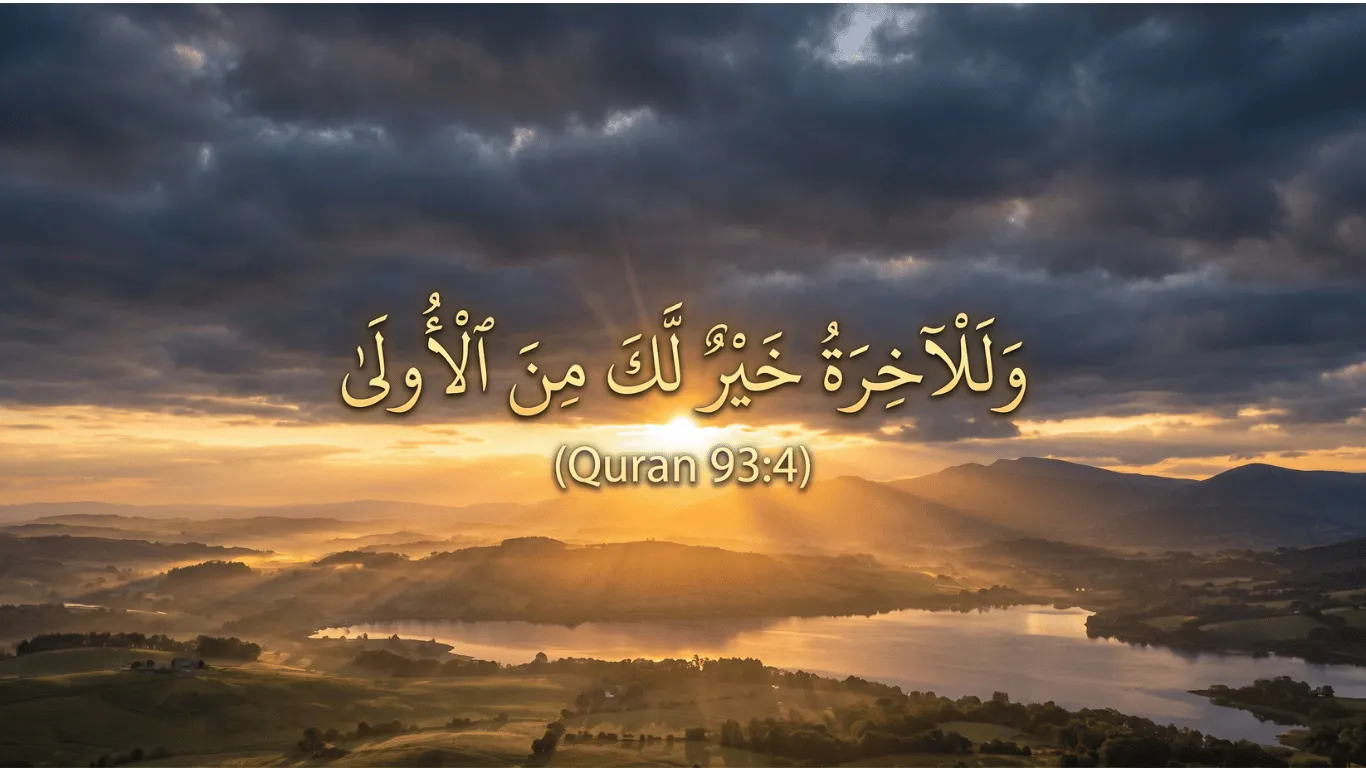
- Arabic Text: وَلَلْآخِرَةُ خَيْرٌ لَّكَ مِنَ الْأُولَىٰ
- Transliteration: Wa lal-akhiratu khairul laka minal ula
- English Translation: And the Hereafter is better for you than the first [life].
- Urdu Translation: اور بے شک آخرت آپ کے لیے دنیا (یا پہلی حالت) سے بہتر ہے۔
- Hindi Translation: और बेशक आख़िरत आपके लिए दुनिया (या पहली हालत) से बेहतर है।
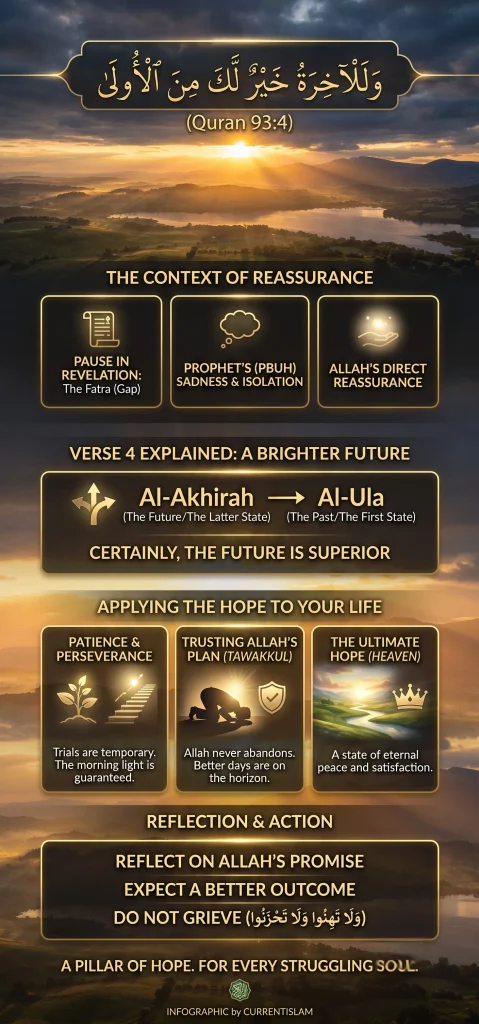
This verse functions on two distinct levels. While Al-Akhirah traditionally refers to the eternal life after death, classically trained scholars also translate Al-Ula as “the beginning” and Akhirah as “what comes next.” Therefore, God is literally assuring you that the next phase of your life will be better than this current, difficult beginning.
The Historical Context and Modern Emotional Relief
Surah Ad-Duha was revealed during Fatra al-Wahy, a painful period when divine revelation paused. The Prophet (PBUH) felt isolated and anxious. This verse was revealed as a psychological anchor, proving that divine silence is never divine absence, and better days were guaranteed.
When facing severe academic anxiety or financial instability, modern Muslims often internalize the same fear the Prophet (PBUH) briefly felt: Has Allah abandoned me?
Understanding the Islamic guide to managing modern anxiety begins with recognizing that feeling overwhelmed is a human experience, not a flaw in your faith. This verse intercepts catastrophic thinking. When you recite it, you are actively participating in a sunnah of emotional regulation. For individuals dealing with clinical sadness, coupling this verse with powerful duas for depression and heavy hearts creates a robust spiritual defense system.
Micro-Transformations: Building a Daily Spiritual Habit
You can apply this verse through micro-transformations—using it as a short, daily affirmation during high-stress triggers. Reciting it shifts your brain’s focus from immediate panic to guaranteed future relief, rewiring your neurological response to temporary worldly setbacks.
You do not need an hour of free time to benefit from this verse. You implement it through small, intentional habits throughout your day:
- The Morning Reset: Before looking at your phone or checking emails, start your day by grounding yourself. Recite this verse alongside your standard supplications after waking up.
- The Commute Anchor: When leaving your home for a difficult exam or a stressful boardroom meeting, pair the recitation of 93:4 with the standard prayer for leaving the house to seal your trust in God’s plan.
- The Crisis Breaker: When an unexpected bill arrives or a project fails, repeat wa lal-akhiratu khairul laka minal ula. It forces your mind to zoom out and view the timeline of your life through a lens of ultimate victory.
Semantic Connections: Hardship and Ease in the Quran
The promise of a better future in Surah Ad-Duha is permanently linked to Surah Ash-Sharh (94:5), which guarantees that ease exists alongside hardship. Together, these Surahs establish a divine law: no period of suffering is permanent for a true believer.
To build true Tawakkul (absolute reliance on God), you must look at how the Quran clusters its promises of relief. God does not just promise that the future is better; He explicitly states that the ease is already attached to your current pain.
Quran 94:5 (Surah Ash-Sharh)
- Arabic Text: فَإِنَّ مَعَ الْعُسْرِ يُسْرًا
- Transliteration: Fa inna ma’al ‘usri yusra
- English Translation: For indeed, with hardship [will be] ease.
- Urdu Translation: پس یقیناً مشکل کے ساتھ آسانی ہے۔
- Hindi Translation: तो यक़ीनन मुश्किल के साथ आसानी है।
When you understand that with every hardship comes ease, the panic of the present moment dissolves. This semantic link is exactly why the Quran is filled with reminders not to grieve because Allah is with us. We also know that relying on Allah creates a way out of situations that logic says are impossible to escape.
Data Summary: The Framework of Surah Ad-Duha 93:4
The table below structures the core components of Quran 93:4. It breaks down the exact linguistic elements, the ideal practical application, and the specific emotional distress it is designed to alleviate for modern practicing Muslims.
People Also Ask
To provide immediate clarity, here are the direct answers to the most common questions regarding Surah Ad-Duha 93:4, its translation, and its application for daily emotional regulation and spiritual strength.
Quran 93:4 (Surah Ad-Duha) states: “Wa lal-akhiratu khairul laka minal ula,” meaning “And the Hereafter is better for you than the first [life].” It guarantees that the coming days hold more peace than previous hardships.
Stop overthinking by actively shifting your reliance from yourself to God. Recite Surah Ad-Duha to reframe your timeline, and frequently recite the Dua of Prophet Yunus to ask for immediate rescue from the darkness of your own thoughts.
Prophet Muhammad (PBUH) experienced deep human sadness, grief, and anxiety, particularly during the pause in revelation. Islam does not view sadness as a weakness; it views it as a human state requiring divine comfort, which God provided through Surah Ad-Duha.
Next Steps: Complete Your Healing Journey
You have learned that your present struggles are temporary and that God has guaranteed a better reality for your future. But God’s promise in this Surah does not stop at verse 4.
To fully understand the magnitude of what Allah is preparing for you, you must read the very next verse. Continue your reading and discover the ultimate promise of emotional satisfaction: read our complete breakdown of how Allah will give you so much that you will be satisfied.
If you are looking for a broader framework to manage stress, explore our complete Islamic guide to overcoming modern anxiety to build a permanent, faith-based routine.

1 thought on “What does Walal akhiratu khairul laka minal ula mean?”