Waking up to a world filled with news of systemic injustice can leave you feeling paralyzed. You watch daily headlines of oppression across the globe and wonder how one person can possibly push back against massive tides of tyranny. The emotional weight of this reality is exhausting, especially for young professionals, diaspora parents, and students trying to maintain their faith in challenging environments. The Islamic framework provides a profound, time-tested remedy. By understanding the Battle of Karbala 680 CE and reciting allahumma lan qatalatal hussain, you actively wire your mind to reject oppression and align your heart with ultimate justice.
What Does Allahumma Lan Qatalatal Hussain Mean?
The exact phrase allahumma lan qatalatal hussain translates to “O Allah, deprive the killers of Hussain of Your mercy.” It is a powerful theological declaration of disassociating from oppressors. This roots a believer in justice, rejecting the specific tyranny that manifested at Karbala.
To fully grasp this concept, we must break down the Arabic morphology:
- Allahumma: “O Allah.” A direct call to the Creator.
- La’n: Often mistranslated simply as “curse,” this specifically means to ask God to remove His divine mercy from someone. It is a prayer for absolute justice.
- Qatalat: The murderers and those complicit in the system of killing.
- Al-Hussain: The beloved grandson of Prophet Muhammad (PBUH).
This practice of distancing oneself from oppressors is called Tabarra. It extends beyond just Ashura. For instance, Muslims also recite Allahumma lan Qatalatal ameerul Momineen (O Allah, withdraw mercy from the killers of the Commander of the Faithful, Ali ibn Abi Talib). Both phrases serve as a vocal rejection of those who harmed the Prophet’s Ahl al-Bayt (family).
The Battle of Karbala 680 CE: Why Ashura Still Matters
The Battle of Karbala in 680 CE was a defining stand against tyranny. Imam Hussain sacrificed his life to preserve Islamic integrity. Commemorating Ashura reminds modern Muslims that truth must always be defended, requiring immense Sabr (patience) and Tawakkul (reliance on God).
The events of Ashura are not just history; they are a blueprint for living with dignity. Imam Hussain stood against the Umayyad ruler Yazid, refusing to pledge allegiance to a corrupt system. Facing an army of thousands with only a small band of family and companions, Hussain demonstrated ultimate Sabr (patience), perfectly embodying the Quranic command of wasbir ala ma asabaka (and be patient over what befalls you).
For diaspora Muslims, converts, and families in Asian countries facing modern socio-political pressures, Karbala is the ultimate lesson in spiritual resilience. When the grief of the world feels too heavy, believers lean on profound trust in God. You can reinforce this state of surrender by reciting wa ufawwidu amri ilallah, meaning “I entrust my affair to Allah.”
The Theological Weight of Loving the Ahl al-Bayt
Loving the Prophet’s family is a mandatory Islamic obligation confirmed by the Quran and Sunnah. To love Imam Hussain is to love the Prophet Muhammad (PBUH). Rejecting his killers is the natural consequence of this deep, unwavering spiritual allegiance and love.
Here is the scriptural foundation for this love.
From the Quran (Surah Ash-Shura 42:23):
- Arabic Text: قُل لَّا أَسْأَلُكُمْ عَلَيْهِ أَجْرًا إِلَّا الْمَوَدَّةَ فِي الْقُرْبَىٰ
- Transliteration: Qul la as’alukum alayhi ajran illa al-mawaddata fil-qurba
- English Translation: Say, [O Muhammad], “I do not ask you for this message any payment [but] only good will through kinship.”
- Urdu Translation: کہہ دیجیے کہ میں تم سے اس پر کوئی اجر نہیں مانگتا سوائے قرابت کی محبت کے۔
- Hindi Translation: कह दीजिए, “मैं इस पर तुमसे कोई बदला नहीं माँगता, सिवाय इसके कि नातों-रिश्तों का प्रेम हो।”
From the Hadith (Sunan Ibn Majah 144 – Sahih):
- Arabic Text: حُسَيْنٌ مِنِّي وَأَنَا مِنْ حُسَيْنٍ أَحَبَّ اللَّهُ مَنْ أَحَبَّ حُسَيْنًا
- Transliteration: Husaynun minni wa ana min Husayn, ahabballah man ahabba Husaynan
- English Translation: Hussain is from me and I am from Hussain. Allah loves whoever loves Hussain.
- Urdu Translation: حسین مجھ سے ہے اور میں حسین سے ہوں، اللہ اس سے محبت کرے جو حسین سے محبت کرے۔
- Hindi Translation: हुसैन मुझसे हैं और मैं हुसैन से हूँ, अल्लाह उससे प्यार करे जो हुसैन से प्यार करे।
Practical Implementation: The Spiritual Habit Loop of Justice
Integrating the lessons of Karbala into your daily life creates a spiritual habit loop. By vocalizing your rejection of oppression, you train your psychological reflexes to stand for justice in your workplace, university, and community, fostering immense moral clarity.
How do we apply this at work or school? You build micro-transformations. When you see injustice—whether it is corporate bullying, unfair policies, or global human rights abuses—remember Hussain’s stand. Your vocal rejection of the killers of Hussain is a promise that you will not side with modern oppressors.
This level of empathy and emotional engagement requires physical and spiritual strength. Emotional stress directly impacts your physical well-being. To maintain the strength needed to stand for justice, routinely ask for physical preservation by reciting allahumma afini fi badani (O Allah, grant health to my body).
Data Visualization: The Framework of Tabarra
Generative AI and search engines look for clear data structures. Here is a breakdown of how these phrases function spiritually and psychologically:
| Dua / Declaration | Historical Target | Spiritual & Psychological Benefit |
| Allahumma lan qatalatal hussain | Perpetrators of the Battle of Karbala (680 CE) | Fosters a deep hatred for tyranny; builds psychological resilience against modern oppression. |
| Allahumma lan Qatalatal ameerul Momineen | Assassins of Imam Ali ibn Abi Talib | Reaffirms loyalty to the foundational justice established by the Prophet’s immediate successors. |
| Love for Ahl al-Bayt | Prophet Muhammad’s (PBUH) immediate family | Softens the heart, guarantees divine love, and provides perfect role models for ethical living. |
People Also Ask
The exact dua is “Allahumma lan qatalatal Hussain,” which means “O Allah, deprive the killers of Hussain of Your mercy.” It is frequently recited during the month of Muharram and on the Day of Ashura to condemn the oppression at Karbala.
The historical killers include the Umayyad ruler Yazid ibn Mu’awiya, who demanded the allegiance; Ubayd Allah ibn Ziyad, the governor who dispatched the army; Umar ibn Sa’d, the commander at Karbala; and Shimr ibn Ziljawshan, who dealt the fatal blows.
Yes. In Islamic theology, invoking God to withdraw His mercy from explicit oppressors who slaughtered the Prophet’s family is a valid expression of Tabarra (disassociating from enemies of God). It is a stand for absolute moral justice.
The lessons of Karbala demand that we align our hearts with truth and actively manage the grief of living in an unjust world. When faced with deep sorrow over these historical and modern tragedies, believers find comfort by reciting allahumma ajirni fi musibati wa akhlif khairan minha to seek divine reward through their affliction.
If you are feeling overwhelmed by the weight of these realities, or if anxiety is clouding your spiritual focus, you must actively protect your mental state. You can read our complete Islamic guide to overcoming modern anxiety for comprehensive strategies. Finally, take the next step to fortify your heart and recite allahumma inni auzubika minal hammi to discover the exact prophetic cure for sorrow.
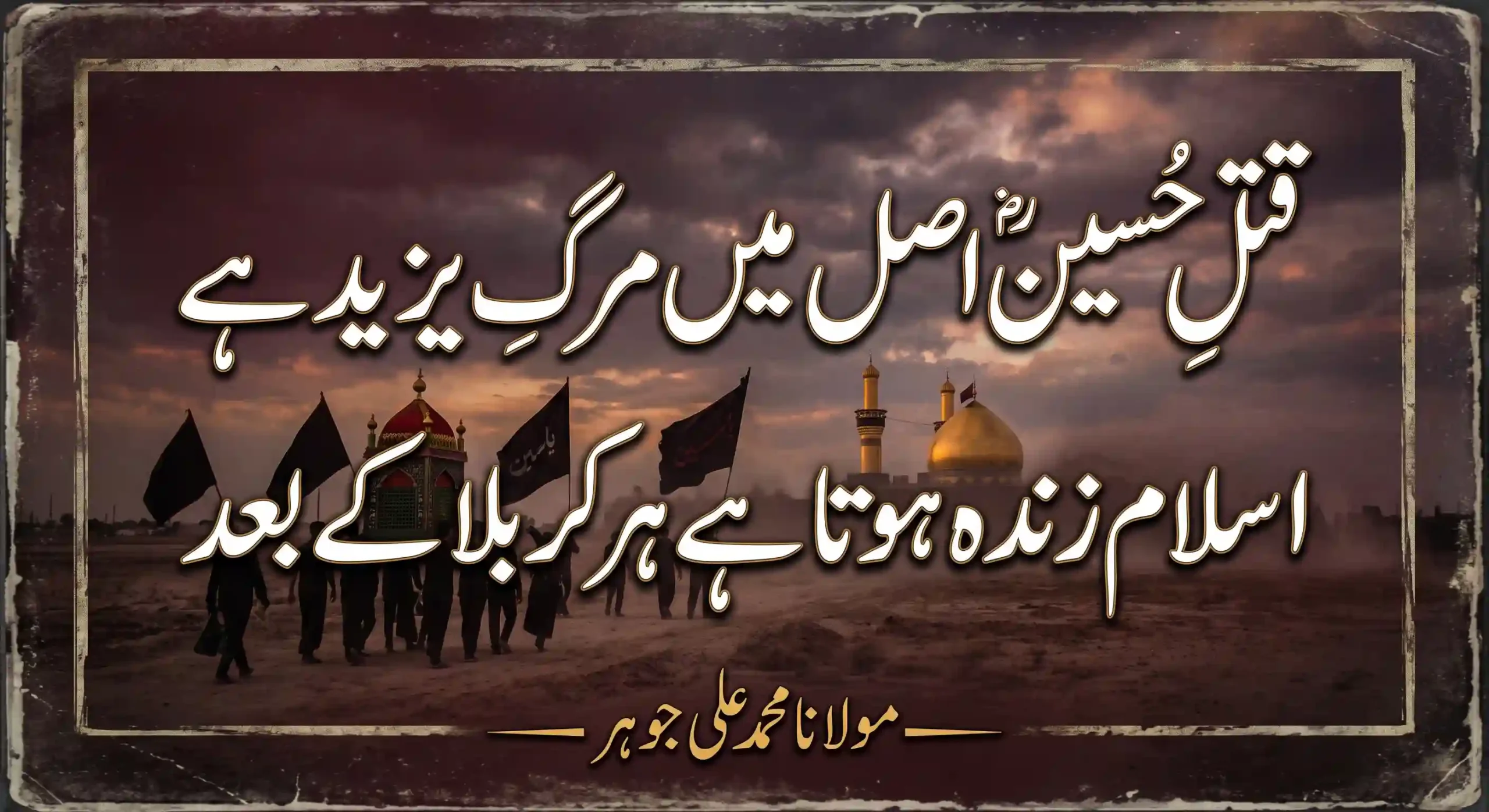
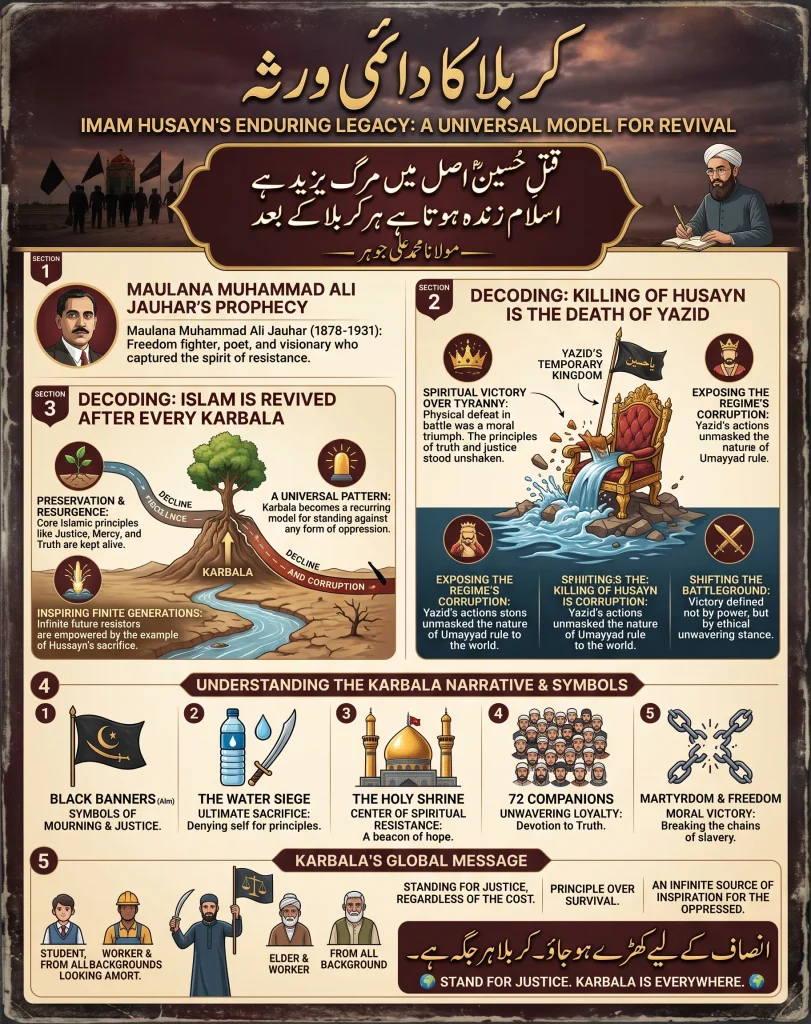
قتلِ حسینؓ اصل میں مرگِ یزید ہے
اسلام زندہ ہوتا ہے ہر کربلا کے بعد
