
For many college students, working professionals, and parents in the diaspora, modern life can feel like a relentless pursuit. Between career pressures, societal expectations, and the daily grind, a common emotional pain point emerges: exhaustion and anxiety. We constantly search for a sense of lasting peace and delight.
The Quran provides a powerful antidote to this worldly fatigue in a profound, repeating declaration: “Innal abrara lafi naim” (إِنَّ الْأَبْرَارَ لَفِي نَعِيمٍ), which translates to, “Indeed, the righteous will be in bliss.”
This verse serves as a divine anchor, reminding us that the ultimate comfort we seek is guaranteed for the virtuous. Let’s deeply analyze this beautiful promise by looking at its appearances in Surah Al-Infitar and Surah Al-Mutaffifin.
The Dual Context: Surah Al-Infitar and Surah Al-Mutaffifin
The primary keyword, Innal abrara lafi naim, is so significant that Allah (SWT) mentions it verbatim in two distinct chapters of the Quran.
1. Surah Al-Infitar (Chapter 82, Verse 13)
In this Surah, the verse is placed in the context of the Day of Judgment. The chapter opens with cosmic events—the sky breaking apart and the stars scattering. Amidst this terrifying imagery, Allah draws a sharp contrast between two groups:
“Indeed, the righteous will be in pleasure, And indeed, the wicked will be in Hellfire.” (Quran 82:13-14)
The message is clear: while the physical world is temporary and will eventually collapse, moral integrity provides eternal safety. If you are struggling with the chaos of this world, remembering that the Hereafter is better for you than the present brings immediate psychological relief.
2. Surah Al-Mutaffifin (Chapter 83, Verse 22)
Here, the angle shifts slightly to focus on worldly dealings and ethics. Surah Al-Mutaffifin begins by condemning those who cheat in business—those who demand full measure for themselves but give less to others.
“Indeed, the righteous will be in pleasure. On adorned couches, observing. You will recognize in their faces the radiance of pleasure.” (Quran 83:22-24)
The Abrar (righteous) are those who maintain impeccable integrity, even when they could easily cheat to get ahead. Their reward is a state of luxury and physical radiance. It is a direct answer to the Quranic rhetorical question: Is the reward for goodness anything but goodness?
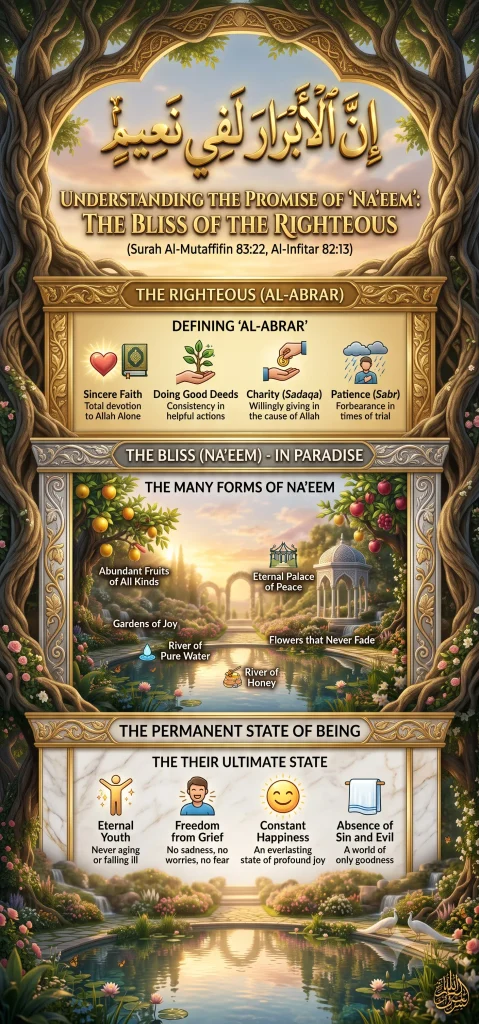
Who Are The Abrar (The Righteous)?
To attain the Naim (bliss), we must strive to become among the Abrar. The root word is Birr (righteousness).
Allah defines exactly what constitutes Birr in Surah Al-Baqarah (2:177). It is not just about outward rituals; it requires deep faith in Allah, the Last Day, the angels, the books, and the prophets. Furthermore, it demands giving wealth to relatives, orphans, and the needy, establishing prayer, keeping promises, and being patient in poverty and hardship.
Being among the Abrar means cultivating a heart that relies entirely on Allah during difficult times. When faced with trials, they turn to a powerful dua for ease in difficulty and maintain their composure, knowing their ultimate destination is Paradise.
Understanding the Reality of Naim (Bliss)
The word Naim implies a state of absolute, encompassing delight that satisfies both physical desires and emotional needs. It is the complete absence of anxiety, fear, and sorrow.
The Prophet Muhammad (ﷺ) described the reality of this bliss, stating:
“A space in Paradise equal to the distance between the middle and the end of a bow will be better than all that upon which the sun rises and sets.” (Sahih al-Bukhari 6568)
In this world, even our moments of joy are tainted by the fear of losing them. In Paradise, Naim is permanent. This concept is vital for overcoming modern anxiety. When we understand that our current struggles are temporary, we can face them with resilience. We internalize the divine reassurance that hearts find peace in the remembrance of Allah.
Practical Steps to Attain This Bliss
How can we integrate the qualities of the Abrar into our daily lives today?
- Maintain Ethical Integrity: Whether you are a student taking an exam or a professional closing a deal, never compromise your honesty.
- Seek Divine Mercy: Regularly ask Allah for His grace. A beautiful way to do this is by reciting: Rabbana atina min ladunka rahmatan (Our Lord, grant us from Yourself mercy).
- Stay Positive in Hardship: Life in the diaspora or the corporate world can be isolating. When feeling down, remind yourself: do not grieve; indeed Allah is with us.
The promise of “Innal abrara lafi naim” is an invitation to elevate our character and find peace in our Creator. The ultimate goal for every believer is to hear Allah welcome them into this exact state of bliss at the end of their journey.
To learn more about the beautiful verses that describe the peaceful soul entering Paradise, read our detailed breakdown of Ya Ayyuhan Nafsul Muthmainnah next.
