When you step onto the London Tube at 8 AM GMT or catch the subway in New York City, your phone is likely already buzzing with notifications. Before you even reach the office, you might be pulled into a toxic WhatsApp group, exposed to social media takedowns, or dragged into workplace politics. The mental toll is heavy, fueling anxiety and spiritual burnout. This is where the ancient wisdom of Surah Al-Humazah becomes your ultimate spiritual shield, transforming how you navigate the modern landscape of digital and corporate gossip.
What Is Surah Al-Humazah?
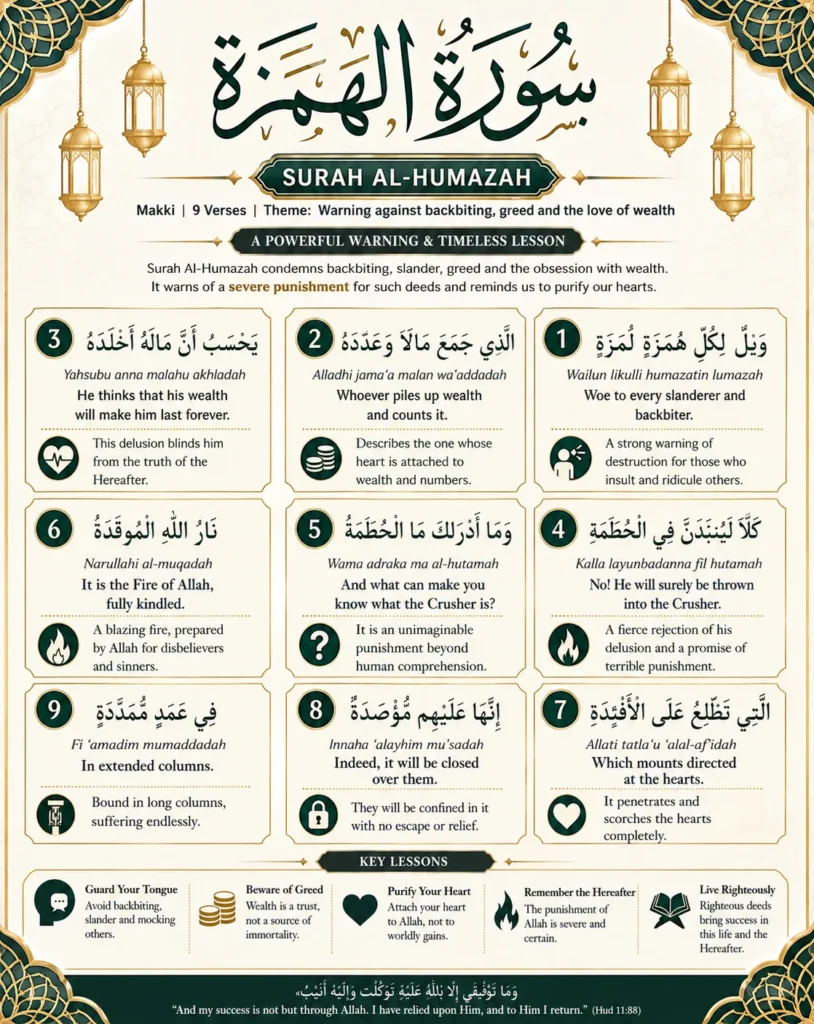
Surah Al-Humazah is the 104th chapter of the Quran. It strongly condemns slander, backbiting, and the arrogant hoarding of wealth. For modern Muslims, it serves as a daily spiritual reminder to protect our character and avoid participating in harmful gossip, both online and in daily life.
Here’s why this matters for you. As Western Muslims navigating high-pressure careers and social environments, it is easy to fall into the habit of casual fault-finding. This Surah provides a clear framework for a Daily Islamic Transformation—a way to audit our speech, protect our hearts from arrogance, and build a resilient Muslim identity that does not rely on tearing others down.
The Meaning of Humazah and Lumazah
The Arabic terms “Humazah” and “Lumazah” refer to two distinct types of character assassination.
Humazah refers to the one who mocks others behind their back through gossip or subtle gestures, while Lumazah is the one who openly insults and belittles someone to their face. Both behaviors destroy community trust and individual dignity.
This becomes important when you look at your morning routine. Whether you are dealing with aggressive clients at 9 AM in Manchester or navigating office politics at 2 PM EST in Washington DC, understanding these terms helps you identify and step away from toxic environments.
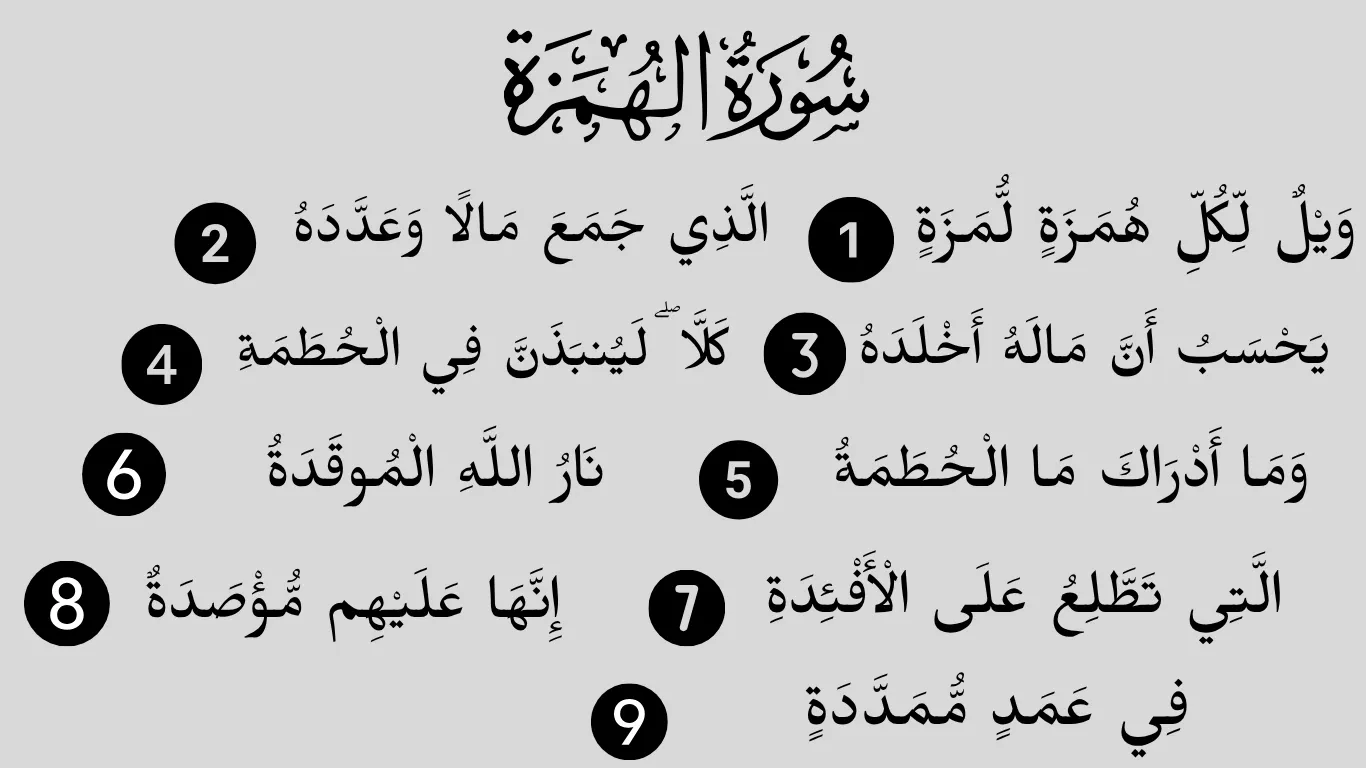
Surah Humazah Full Text: Arabic, Transliteration, and Multilingual Translation
Verse 1
- Arabic: وَيْلٌ لِّكُلِّ هُمَزَةٍ لُّمَزَةٍ
- Transliteration: Waylul-likulli humazatil-lumazah
- English: Woe to every scorner and mocker.
- Urdu: ہلاکت ہے ہر اس شخص کے لیے جو (پیٹھ پیچھے) عیب نکالنے والا (اور منہ پر) طعنہ دینے والا ہو۔
- Hindi: तबाही है हर उस शख्स के लिए जो (पीठ पीछे) ऐब निकालने वाला (और मुँह पर) ताना देने वाला हो।
Verse 2
- Arabic: الَّذِي جَمَعَ مَالًا وَعَدَّدَهُ
- Transliteration: Allathee jama’a malan wa’addadah
- English: Who collects wealth and [continuously] counts it.
- Urdu: جس نے مال جمع کیا اور اسے گن گن کر رکھا۔
- Hindi: जिसने माल जमा किया और उसे गिन-गिन कर रखा।
Verse 3
- Arabic: يَحْسَبُ أَنَّ مَالَهُ أَخْلَدَهُ
- Transliteration: Yahsabu anna malahu akhladah
- English: He thinks that his wealth will make him immortal.
- Urdu: وہ سمجھتا ہے کہ اس کا مال اسے ہمیشہ زندہ رکھے گا۔
- Hindi: वह समझता है कि उसका माल उसे हमेशा ज़िंदा रखेगा।
Verse 4
- Arabic: كَلَّا ۖ لَيُنبَذَنَّ فِي الْحُطَمَةِ
- Transliteration: Kalla layumbathanna fil-hutamah
- English: No! He will surely be thrown into the Crusher.
- Urdu: ہرگز نہیں! وہ ضرور توڑ پھوڑ دینے والی آگ (حطمہ) میں پھینک دیا جائے گا۔
- Hindi: हरगिज़ नहीं! वह ज़रूर तोड़-फोड़ देने वाली आग (हुतमा) में फेंक दिया जाएगा।
Verse 5
- Arabic: وَمَا أَدْرَاكَ مَا الْحُطَمَةُ
- Transliteration: Wa ma adraka mal-hutamah
- English: And what can make you know what is the Crusher?
- Urdu: اور تم کیا جانو کہ توڑ پھوڑ دینے والی آگ (حطمہ) کیا ہے؟
- Hindi: और तुम क्या जानो कि तोड़-फोड़ देने वाली आग (हुतमा) क्या है?
Verse 6
- Arabic: نَارُ اللَّهِ الْمُوقَدَةُ
- Transliteration: Narul-lahil-mooqadah
- English: It is the fire of Allah, [eternally] fueled,
- Urdu: وہ اللہ کی بھڑکائی ہوئی آگ ہے۔
- Hindi: वह अल्लाह की भड़काई हुई आग है।
Verse 7
- Arabic: الَّتِي تَطَّلِعُ عَلَى الْأَفْئِدَةِ
- Transliteration: Allatee tattali’u ‘alal-af’idah
- English: Which mounts directed at the hearts.
- Urdu: جو دلوں تک پہنچ جائے گی۔
- Hindi: जो दिलों तक पहुँच जाएगी।
Verse 8
- Arabic: إِنَّهَا عَلَيْهِم مُّؤْصَدَةٌ
- Transliteration: Innaha ‘alayhim mu’sadah
- English: Indeed, it will be closed down upon them,
- Urdu: بے شک وہ ان پر ہر طرف سے بند کر دی جائے گی۔
- Hindi: बेशक वह उन पर हर तरफ से बंद कर दी जाएगी।
Verse 9
- Arabic: فِي عَمَدٍ مُّمَدَّدَةٍ
- Transliteration: Fee ‘amadin mumaddadah
- English: In extended columns.
- Urdu: لمبے لمبے ستونوں میں۔
- Hindi: लम्बे-लम्बे खंभों में।
Tafseer Insights from Classical Scholars
To truly grasp the gravity of this chapter, we look to the classical commentary provided by renowned Islamic scholars.
According to Ibn Kathir in his renowned Tafsir al-Quran al-Azim, this verse was revealed regarding individuals among the Quraysh who used their wealth and status to mock the Prophet Muhammad (PBUH) and the early Muslims. Ibn Kathir explains that the punishment described later in the Surah—the crushing fire of Al-Hutamah—is specifically designed to shatter the false pride of those who thought their wealth made them untouchable.
Similarly, in Tafsir al-Jalalayn, the scholars explain that the fire leaping over the “hearts” (verse 6) is a direct consequence of where the sin originated. The heart is the seat of arrogance, greed, and malice. Because the mocker’s heart was devoid of empathy for others, it becomes the primary target of divine retribution.
The Daily Islamic Transformation: Guarding Your Mind at Work
We live in an era where “cancel culture” and character defamation are often treated as entertainment. This Surah offers a unique strategy for Daily Islamic Transformation: the spiritual habit loop of guarding your speech.
Just as we seek protection from external threats in our comprehensive guide to Surah Al-Feel (Alam Tara Kaifa Fala Rabbuka), Surah Humazah protects us from the internal decay caused by adopting a bad character.
Instead of absorbing the anxiety of workplace drama, use this Surah as a trigger. Every time someone initiates a conversation designed to mock a colleague, let the mental recitation of Waylul-likulli humazatil-lumazah be your cue to walk away or change the subject. This simple 90-second practice can drastically reduce your daily work stress and preserve your spiritual connection.
Hadith on Backbiting and Slander
Prophet Muhammad (PBUH) explicitly warned against the behaviors described in Surah Al-Humazah. The Sunnah provides practical context for why this matters.
The Messenger of Allah (PBUH) warned us about the spiritual bankruptcy caused by backbiting, reminding us that it consumes our good deeds faster than fire consumes wood.
Sahih Muslim (Book 32, Hadith 6265):
- Arabic: أَتَدْرُونَ مَا الْغِيبَةُ؟ قَالُوا: اللَّهُ وَرَسُولُهُ أَعْلَمُ. قَالَ: ذِكْرُكَ أَخَاكَ بِمَا يَكْرَهُ
- Transliteration: Atadruna mal-ghibah? Qalu: Allahu wa Rasuluhu a’lam. Qala: Dhikruka akhaka bima yakrah.
- English: Do you know what backbiting is? They said, “Allah and His Messenger know best.” He said, “Saying something about your brother that he dislikes.”
- Urdu: کیا تم جانتے ہو غیبت کیا ہے؟ صحابہ نے عرض کیا، اللہ اور اس کا رسول بہتر جانتے ہیں۔ آپ ﷺ نے فرمایا، اپنے بھائی کا ذکر اس طرح کرنا جو اسے ناپسند ہو۔
How Many Times Should I Recite This Dua?
There is no prescribed, fixed Sunnah count for reciting Surah Al-Humazah as a daily Wazifa, but reading it with reflection during your five daily prayers is highly recommended.
Reciting it during your daily Salah, especially during periods of social stress, acts as a spiritual reset. Many Muslims find peace by incorporating it into their early morning prayers or right before stepping into a challenging social environment.
To build a robust spiritual routine, you might also reinforce your daily practices by reading our guide on Surah Ikhlas with English transliteration (Qul Huwallahu Ahad) to purify your faith and keep your intentions grounded.
People Also Ask
What is the dua for waking up in English?
The morning dua is: “All praise is for Allah who gave us life after having taken it from us and unto Him is the resurrection.” It sets a tone of gratitude before facing the day’s challenges.
Which Quran verse helps with anxiety?
Surah Ash-Sharh (Chapter 94) is highly effective for anxiety, specifically the verse: “For indeed, with hardship [will be] ease.” Reciting this helps calm the heart during stressful workdays in London or Los Angeles.
How many times should I recite this dua?
You should recite Surah Al-Humazah whenever you need a reminder to avoid gossip, or integrate it naturally into your Fard (obligatory) or Sunnah prayers throughout the day.
Is there a dua for before work?
Yes, before starting work, Muslims often recite: “O Allah, I ask You for beneficial knowledge, acceptable action, and good provision.” This helps align your career goals with spiritual integrity.
What did Prophet Muhammad say about morning prayers?
Prophet Muhammad (PBUH) stated that whoever offers the Fajr prayer is under the protection of Allah for the entire day. This protection extends to shielding your character from engaging in harmful behaviors like those mentioned in Surah Humazah.
Equip Yourself for Daily Transformation
Protecting your peace and character in today’s demanding world requires consistent practice. Whether you are battling the anxiety of a long commute on the US Pacific Coast or navigating complex social circles in the UK diaspora, the words of the Quran are your ultimate anchor.
Take the next step in your Daily Islamic Transformation. Download our free daily dua guide to keep these powerful supplications on your phone, ensuring you always have the right words to protect your heart, manage your stress, and elevate your spiritual connection wherever you go.
