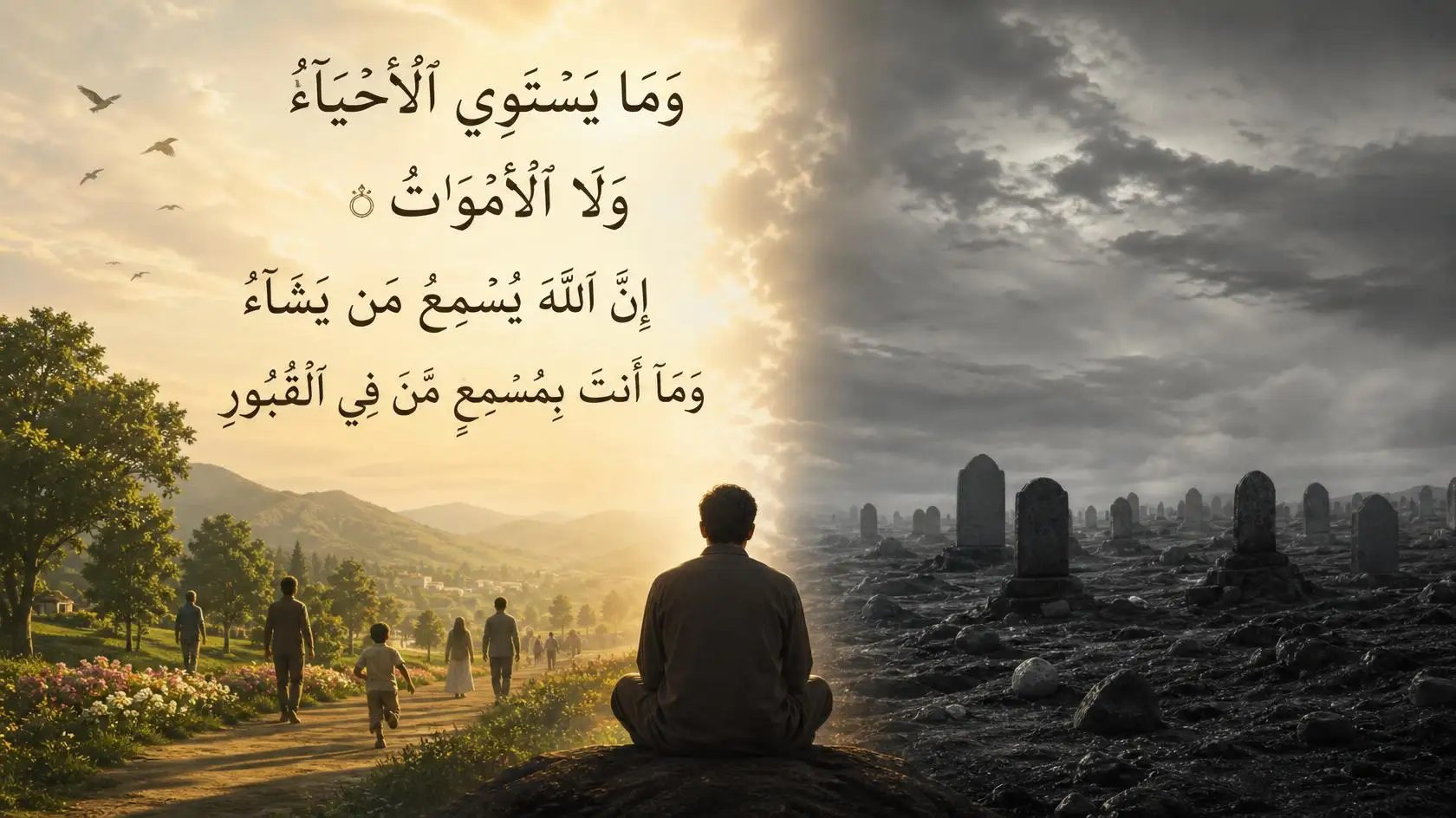
The Quran is filled with verses that offer both profound theological insights and deep spiritual comfort. Among these is Surah Fatir ayat 22 (Chapter 35, Verse 22). While it carries a powerful message about the state of the human heart, it has also become widely searched by believers looking for its spiritual benefits and its use as a Wazifa (spiritual remedy) for softening stubborn hearts.
Whether you are here to understand the classical Tafsir (exegesis) or seeking guidance on how to recite it for resolving relationship disputes, this comprehensive guide covers everything you need to know.
Surah Fatir Ayat 22 in Arabic, Transliteration, and Translation
To truly connect with the Quran, it is best to start with the original Arabic text.
Arabic Text:
وَمَا يَسْتَوِى ٱلْأَحْيَآءُ وَلَا ٱلْأَمْوَٰتُ ۚ إِنَّ ٱللَّهَ يُسْمِعُ مَن يَشَآءُ ۖ وَمَآ أَنتَ بِمُسْمِعٍۢ مَّن فِى ٱلْقُبُورِ
Transliteration: Wa maa yastawil ahyaaa’u wa lal amwaat; innal laaha yusmi’u mai yashaaa’u wa maaa anta bimusmi’im man fil quboor.
English Translation:
“And not equal are the living and the dead. Indeed, Allah causes to hear whom He wills, but you cannot make hear those in the graves.”
Urdu Translation:
اور زندہ اور مردہ برابر نہیں ہو سکتے، بیشک اللہ جسے چاہتا ہے سنا دیتا ہے، اور آپ ان کو نہیں سنا سکتے جو قبروں میں
Hindi Translation:
और जीवित और मृत बराबर नहीं हो सकते। निस्संदेह अल्लाह जिसे चाहता है सुना देता है, और आप उन्हें नहीं सुना सकते जो क़ब्रों में हैं।
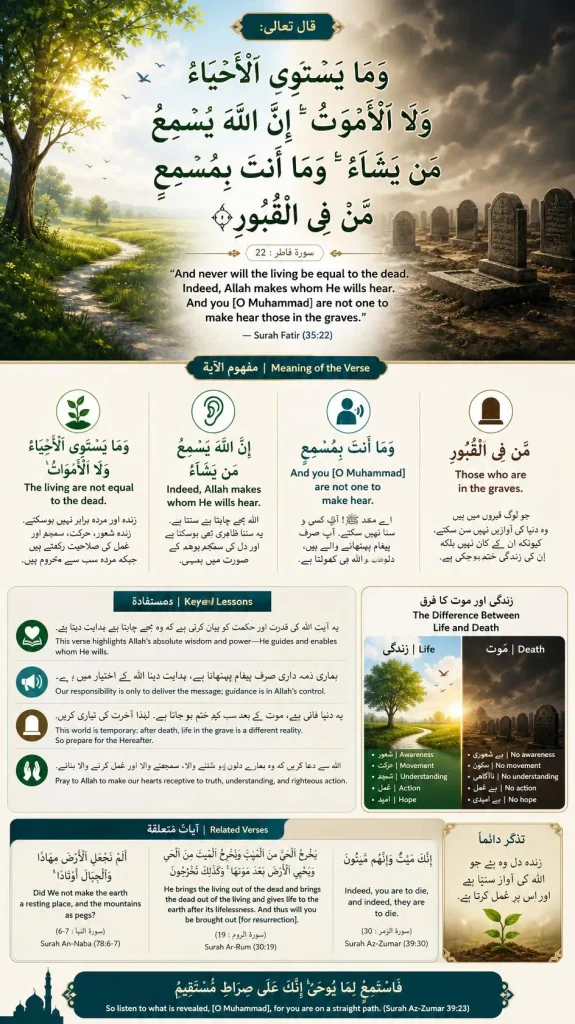
Tafsir and Meaning: The “Living” vs. The “Dead”
To understand the immense power of this verse, we must look at its context and how classical scholars (such as Ibn Kathir) have explained it.
The Metaphor of Life and Death
In this ayat, Allah is not speaking about physical life and death. Instead, He uses a profound metaphor for spiritual consciousness:
- The “Living” (Al-Ahyaa): This refers to the believers. Their hearts are alive, receptive to the truth, and open to divine guidance.
- The “Dead” (Al-Amwaat): This refers to those who arrogantly reject the truth. Their hearts are hardened and spiritually lifeless.
“Allah Causes to Hear Whom He Wills”
The verse brings comfort to the Prophet Muhammad (PBUH) who was grieving over those who refused to listen to his message. Allah reminds him—and all of us—that true guidance is not in our hands. Just as you cannot speak to a person in a physical grave and expect them to reply, you cannot force a spiritually “dead” heart to understand the truth. It is only Allah who can open up a closed mind and cause a deaf heart to truly “hear.”
Spiritual Benefits and Wazifa of Surah Fatir Ayat 22
Because this verse focuses entirely on Allah’s ultimate power to make the “deaf hear” and to bring life to “dead” hearts, spiritual elders and scholars have traditionally prescribed it as a remedy for interpersonal difficulties.
Why is this Verse Used as a Wazifa?
Many people struggle with a spouse, family member, or friend who refuses to listen to reason, is extremely stubborn, or has cut off communication. Reciting Surah Fatir ayat 22 is a plea to Allah—the only One who can turn hearts—to soften the stubbornness of the other person and make them receptive to reconciliation.
Step-by-Step Guide to the Wazifa
If you are facing a permissible (Halal) relationship issue, here is the traditional method to recite this verse as a spiritual remedy:
- Perform fresh Wudu (ablution): Ensure you are physically and spiritually clean. It is important to know the proper step-by-step method for Ghusal and Wudu.
- Recite Durood Sharif: Send blessings upon the Prophet (PBUH) 11 times.
- Recite the Verse: Read Surah Fatir ayat 22 abundantly (many scholars suggest 41 or 101 times, depending on the severity of the issue). Focus on the meaning that only Allah can change hearts.
- Recite Durood Sharif again: Conclude with the same Durood Sharif 11 times.
- Make a sincere Dua: Pray to Allah to soften the specific person’s heart. If you are unsure of the correct etiquette, learning exactly how to make Dua ensures your prayers are presented respectfully to Al-Mujeeb, the One who answers prayers.
Important Etiquette and Disclaimer
While Wazifas are a beautiful way to connect with Allah in times of distress and anxiety, they are not magic spells. Success is entirely dependent on the Will of Allah. For your prayers to be accepted, ensure that you are fulfilling your fundamental obligations:
- Praying your five daily obligatory prayers (Salah).
- Ensuring your income and food are Halal.
- Having pure intentions and constantly seeking forgiveness from Allah—this Wazifa should never be used for unlawful (Haram) relationships or to manipulate others unjustly.
Frequently Asked Questions (FAQs)
What chapter is Surah Fatir in the Quran? Surah Fatir is the 35th chapter of the Quran and is located in the 22nd Juz (part).
Can I recite this Wazifa for someone who is angry with me? Yes, it is highly recommended for resolving anger and disputes among spouses or family members. You are asking Allah to make them “hear” your perspective.
Do I need to be in a state of Wudu to recite this verse? While you can recite verses from memory without Wudu, it is highly recommended to have Wudu when performing a specific Wazifa or Dua to maximize its blessings and show respect.
