Have you ever felt a weight on your chest so heavy that no amount of sleep, distraction, or screen time could lift it? What if the heaviest burdens of your past—the mistakes that keep you awake at night—could be wiped entirely clean in under ten seconds?
Let’s look at the heart of the issue. We often carry spiritual baggage for years, unaware that the Prophet Muhammad ﷺ gave us a precise, targeted phrase to drop that weight instantly.
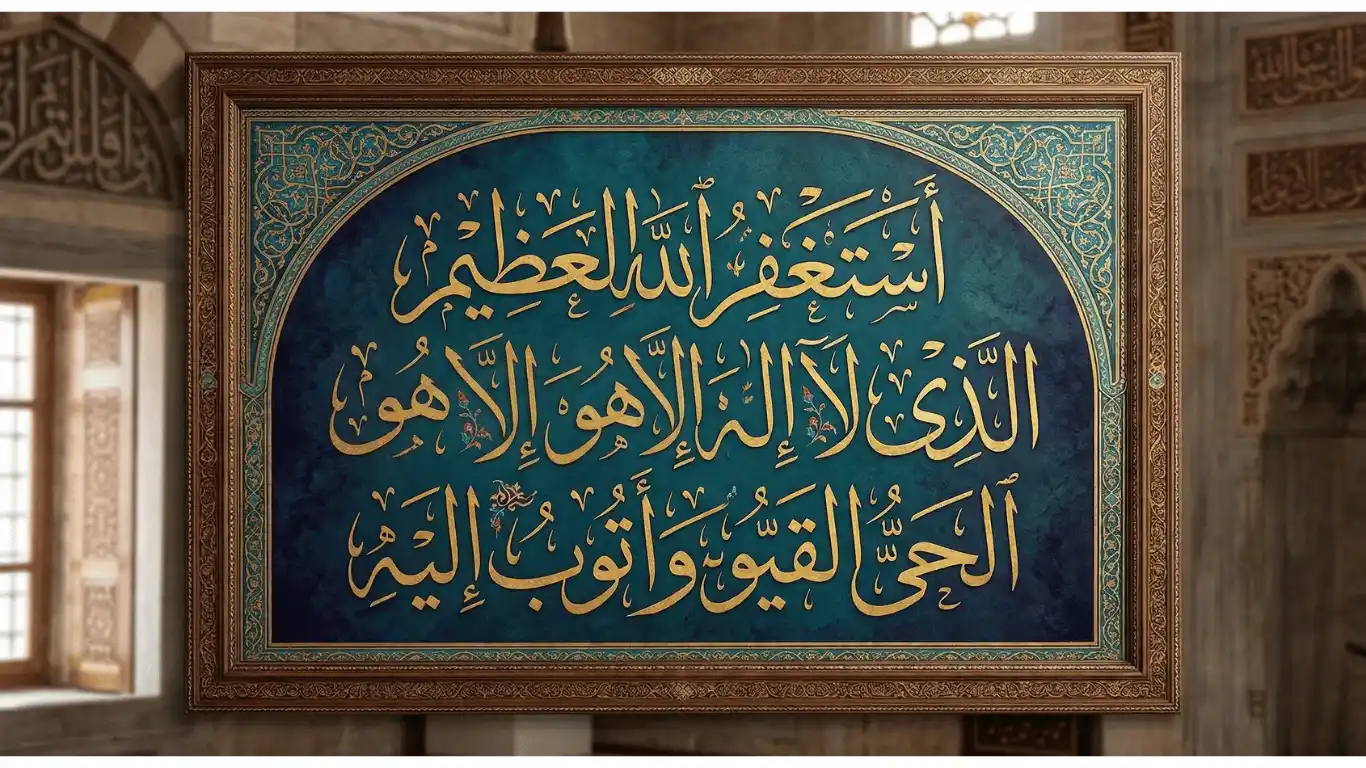
What is Astaghfirullah Al-Azim Allazi La Ilaha Illa Huwa?
This powerful dua is a comprehensive prayer of repentance in Islam. It translates to seeking forgiveness from Allah, the Mighty, the only true God, the Ever-Living and Sustainer, and turning back to Him. Reciting it sincerely erases even major sins.
This specific phrasing goes beyond a standard apology; it is a profound declaration of Tawheed (monotheism) combined with an urgent plea for mercy.
The Multilingual Proof (Hadith)
The foundational evidence for this exact wording is found in Sunan Abi Dawud (1517) and Jami’ at-Tirmidhi (3577). The Prophet ﷺ guaranteed that whoever recites this will be forgiven, even if they had committed the major sin of fleeing from the battlefield.
- Arabic: أَسْتَغْفِرُ اللَّهَ الْعَظِيمَ الَّذِي لاَ إِلَهَ إِلاَّ هُوَ الْحَيُّ الْقَيُّومُ وَأَتُوبُ إِلَيْهِ
- Transliteration: Astaghfirullah al-Azim allazi la ilaha illa Huwal-Hayyul-Qayyum wa atubu ilaih.
- English (Saheeh International): “I seek the forgiveness of Allah the Mighty, Whom there is none worthy of worship except Him, The Living, The Sustainer of [all] existence, and I repent to Him.”
- Urdu (Fateh Muhammad Jalandhari): میں اللہ عظمت والے سے بخشش مانگتا ہوں، جس کے سوا کوئی معبود نہیں، جو ہمیشہ زندہ اور سب کو قائم رکھنے والا ہے، اور میں اسی کی طرف رجوع (توبہ) کرتا ہوں۔
Word-by-Word Meaning and Tafsir
Every word in this dua serves a specific spiritual purpose. It begins by asking Allah to shield your sins, acknowledges His immense power, invokes His greatest names of life and sustenance, and finalizes your sincere commitment to positive behavioral change.
Here is why this matters for you on a psychological level:
- Astaghfirullah (أَسْتَغْفِرُ اللَّهَ): The root Gha-Fa-Ra means to cover or shield. You are asking Allah to hide your flaws from the public eye and shield you from their spiritual consequences. While a comprehensive Astaghfirullah Rabbi min kulli zanbin dua covers all types of daily shortcomings, adding the names of Allah elevates the plea.
- Al-Azim (الْعَظِيمَ): The Mighty. When your sins feel overwhelmingly huge, you remind yourself that Allah’s might and mercy are infinitely larger.
- Al-Hayyul-Qayyum (الْحَيُّ الْقَيُّومُ): Classical scholars like Imam Nawawi and Ibn Kathir emphasize the immense gravity of these two names. Ibn Kathir notes in his Tafsir of Ayatul Kursi that these names represent the Ism-e-Azam (The Greatest Name of Allah). By calling upon the Ever-Living and the Sustainer, you acknowledge that He never sleeps, never forgets, and is constantly maintaining your existence even when you fall short.
- Wa Atubu Ilaih (وَأَتُوبُ إِلَيْهِ): This is the action step. Istighfar addresses the past; Tawbah secures the future.
The Spiritual Reset Protocol (Modern Context)
The spiritual reset protocol is a modern approach to daily Islamic mindfulness. By reciting this specific istighfar three times after formal prayers, Muslims can actively clear digital anxiety, daily stress, and the heavy spiritual weight of modern life.
In 2026, we are bombarded by a constant stream of information, algorithmic distractions, and screen-time anxiety. This mental clutter often leads to spiritual distance. The Spiritual Reset Protocol uses this specific dua as a daily detox. It forces a hard stop on worldly panic and re-centers the heart on the Sustainer (Al-Qayyum).
How to Practice This Wazifa Daily
To practice this wazifa effectively, recite the dua three times immediately following your obligatory prayers. For overwhelming anxiety or financial difficulty, scholars recommend reciting it one hundred times daily with full focus on its meaning and power.
- The Post-Salah Reset: Sit quietly after your Fard prayers and recite it three times with absolute focus.
- The Crisis Response: When feeling sudden guilt, financial stress, or a wave of anxiety, use this phrase as a grounding technique.
- The Seal of Acceptance: After completing your daily wazifa, it is a beautiful sunnah to seal your efforts by understanding the Rabbana Taqabbal Minna meaning and benefits to ask Allah for ultimate acceptance of your repentance.
People Also Ask
Reciting Astaghfirullah 100 times daily aligns with the authentic Sunnah of the Prophet Muhammad ﷺ. It actively removes the daily rust from the heart, opens closed doors of sustenance (Rizq), relieves chronic anxiety, and brings a profound sense of spiritual peace and clarity.
The shortest, most effective dua for major sins is “Astaghfirullah al-Azim allazi la ilaha illa Huwal-Hayyul-Qayyum wa atubu ilaih.” Hadith literature confirms that reciting this with sincere remorse guarantees forgiveness, even for major offenses like fleeing a battlefield.
Astaghfirullah is the verbal request for Allah to cover and forgive past mistakes. Tawbah is the practical, physical action of turning away from the sin, feeling deep remorse, and making a firm internal commitment never to return to that specific behavior again.
Take the Next Step in Your Spiritual Journey
If this breakdown helped clarify your daily practice, make it a habit starting today. Bookmark this guide to keep the precise Arabic and Urdu translations on hand, and share it with someone who might be struggling with the weight of their own past.

1 thought on “Astaghfirullah hallazi la ilaha illallah wa atubu ilaih”